
Understanding the potential income stream from Social Security is a cornerstone of retirement planning for millions. Far from a simple fixed sum, the amount you “make” from Social Security is a complex calculation influenced by your earnings history, claiming age, and various other factors. It’s a vital component of financial security, providing a predictable, inflation-adjusted income that can significantly impact your post-career lifestyle. Delving into the mechanics of how these benefits are determined and what strategies can maximize your payout is crucial for a well-rounded financial future.
The Fundamentals of Social Security Benefits
Social Security is a federal insurance program primarily funded through payroll taxes. Workers pay into the system during their working years, and in return, they (and often their families) become eligible for retirement, disability, and survivor benefits. The core principle is that your past contributions translate into future benefits, but the exact amount is not a direct reflection of what you paid in.

Eligibility and the Role of Work Credits
To qualify for Social Security retirement benefits, you generally need to accumulate 40 “work credits.” You can earn up to four credits each year. In 2024, one work credit is earned for every $1,730 in wages or self-employment income, meaning you need to earn at least $6,920 ($1,730 x 4) to get the maximum four credits in a year. Most people earn 40 credits over a 10-year working career. These credits establish your eligibility, but they do not determine the amount of your benefit.
Understanding Your Primary Insurance Amount (PIA)
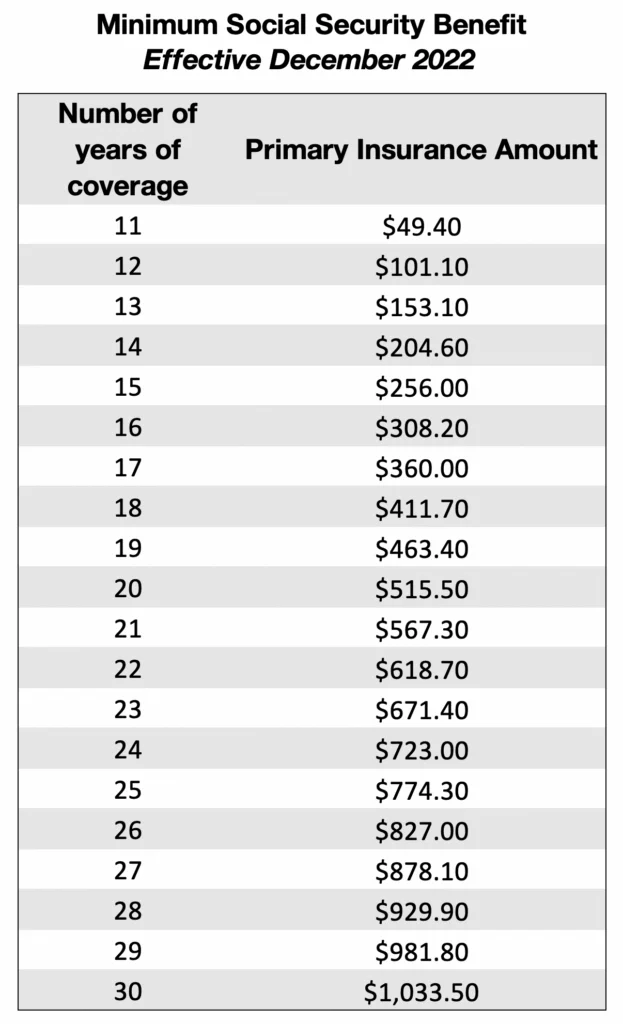
Your monthly Social Security benefit is primarily based on your Primary Insurance Amount (PIA). The PIA is the benefit you would receive if you start receiving benefits at your Full Retirement Age (FRA). It’s derived from your Average Indexed Monthly Earnings (AIME), which is an average of your highest 35 years of earnings, adjusted for inflation to reflect their value in today’s dollars.
The Social Security Administration (SSA) applies a progressive formula to your AIME using “bend points.” These bend points are income thresholds that determine the percentage of your AIME that will be included in your PIA. For instance, in 2024, the formula is:
-
90% of the first $1,174 of AIME
-
32% of AIME between $1,174 and $7,078
-
15% of AIME over $7,078
This progressive formula means that lower-income earners receive a higher percentage of their average earnings back as benefits, providing a safety net. Higher earners receive a larger absolute dollar amount, but a smaller percentage of their lifetime average earnings.
The Importance of Your Earnings Record
The accuracy of your earnings record is paramount. The SSA calculates your AIME based on the earnings reported by you or your employers over your working life. Any errors, such as unreported income or incorrect amounts, can directly reduce your eventual benefit. It is wise to regularly check your Social Security Statement, which you can access online through your My Social Security account, to ensure all your earnings are correctly recorded. If you find discrepancies, it’s crucial to address them with the SSA promptly, as correcting old records can become more challenging over time.
Key Factors Influencing Your Benefit Amount
While your earnings history forms the foundation, several other dynamic factors significantly adjust the final dollar amount you receive from Social Security. Being aware of these variables allows for strategic planning to optimize your benefits.
The Impact of Your Claiming Age
The most significant factor influencing your monthly Social Security check, apart from your earnings history, is the age at which you decide to start receiving benefits.
Full Retirement Age (FRA) Explained
Your Full Retirement Age (FRA) is the age at which you are entitled to receive 100% of your PIA. FRA varies based on your birth year. For those born in 1943 through 1954, FRA is 66. It gradually increases for later birth years, reaching 67 for those born in 1960 or later. Claiming benefits at your FRA means you receive precisely what the PIA calculation determines.
Early Claiming: Reductions and Consequences
You can elect to begin receiving retirement benefits as early as age 62. However, claiming before your FRA results in a permanent reduction of your monthly benefit. The reduction is approximately 5/9 of 1% for each month before FRA, up to 36 months. If you claim more than 36 months early, the reduction is 5/12 of 1% per month. For someone with an FRA of 67, claiming at age 62 means a benefit reduction of about 30%. This reduction is permanent and applies for the rest of your life. While you receive benefits for more years, the monthly amount is substantially smaller, potentially leading to a lower total lifetime payout, especially if you live a long life.
Delayed Claiming: Boosting Your Monthly Payout
Conversely, if you delay claiming benefits past your FRA, your monthly benefit will increase. For each year you delay, up to age 70, you earn “Delayed Retirement Credits” (DRCs). These credits increase your benefit by 8% per year for every year past your FRA, up to age 70. This translates to an additional two-thirds of 1% per month. For example, if your FRA is 67 and you delay claiming until age 70, your monthly benefit will be 124% of your PIA (an increase of 24%). This can be a powerful strategy for those who are in good health, can afford to delay, and seek to maximize their guaranteed income in later retirement. Beyond age 70, there are no further increases for delaying.
Cost-of-Living Adjustments (COLAs)
Once you start receiving Social Security benefits, your payments are generally protected against inflation through annual Cost-of-Living Adjustments (COLAs). COLAs are determined by changes in the Consumer Price Index for Urban Wage Earners and Clerical Workers (CPI-W). If the CPI-W increases from the third quarter of the previous year to the third quarter of the current year, benefits are adjusted upward in January of the following year. This means your “income” from Social Security has the potential to grow over time, helping to maintain your purchasing power throughout retirement.
Earnings Test and Taxation Considerations
If you claim Social Security benefits before your FRA and continue to work, your benefits may be temporarily reduced or withheld due to the Social Security earnings test.
-
Before FRA: For 2024, if you are under your FRA for the entire year, the SSA will deduct $1 from your benefits for every $2 you earn above $22,320.
-
In the year you reach FRA: The deduction rate changes. For 2024, the SSA will deduct $1 from your benefits for every $3 you earn above $59,520 until the month you reach FRA. Starting the month you reach FRA, the earnings test no longer applies, and you can earn any amount without a reduction in benefits.
-
At or after FRA: There is no earnings limit.
It’s also important to consider that Social Security benefits can be subject to federal income tax, depending on your “provisional income” (which includes your adjusted gross income, tax-exempt interest, and 50% of your Social Security benefits).
-
Up to 50% of your benefits may be taxable if your provisional income is between $25,000 and $34,000 (single filers) or $32,000 and $44,000 (married filing jointly).
-
Up to 85% of your benefits may be taxable if your provisional income is above $34,000 (single filers) or $44,000 (married filing jointly).
A handful of states also tax Social Security benefits. These tax considerations impact the net amount you actually “make” from Social Security.
Spousal and Survivor Benefits
While the primary question is “how much I can make,” it’s worth noting that Social Security also provides benefits to spouses and survivors, which can indirectly affect a household’s overall financial picture. A spouse may be eligible for up to 50% of their partner’s PIA (if they claim at their own FRA), potentially increasing household income. Survivor benefits ensure a degree of financial stability for a surviving spouse or dependent children after the death of a covered worker. Understanding these related benefits can be part of a broader strategy for maximizing household income and security.
Strategies to Maximize Your Social Security Income
Maximizing your Social Security benefits involves strategic decisions throughout your working life and into retirement. It’s not about finding loopholes, but about understanding and utilizing the program rules to your advantage.
The Power of Continued Earning
Since your Social Security benefit is based on your 35 highest-earning years, continuing to work, especially in your later career, can significantly boost your AIME. If you’ve had years with low or no earnings, working an extra year or two at a higher salary can replace a “zero” year or a low-earning year in your top 35, thus increasing your average. This is particularly impactful for those who took time out of the workforce for caregiving or other reasons. Even if you’ve already completed 35 years, a higher-earning year can replace an earlier, lower-earning year, further increasing your average.
Strategic Claiming Decisions
The decision of when to claim benefits is arguably the most critical for maximizing your monthly income.
-
Delaying to Age 70: For many, especially those with good health, sufficient other retirement assets, and a desire for guaranteed higher income, delaying Social Security until age 70 is the most effective way to maximize their monthly check. The 8% annual increase from DRCs is a substantial, risk-free return on delaying.
-
Coordinating Spousal Benefits: For married couples, strategic claiming can become more complex but also more rewarding. One common strategy is for the higher earner to delay claiming until age 70, maximizing their benefit, which will also become the basis for the survivor benefit their spouse could receive. The lower-earning spouse might claim earlier, providing some income in the interim. Professional financial advice is often beneficial for optimizing these complex scenarios.
-
Considering Break-Even Points: While delaying provides a higher monthly benefit, it means fewer years of receiving benefits. Financial calculators can help estimate the “break-even point”—the age at which the total cumulative benefits from delaying equal or surpass the total cumulative benefits from claiming early. However, this is just a mathematical exercise; the value of a larger, guaranteed monthly income that keeps pace with inflation, especially later in life, often outweighs a purely numerical break-even.
Reviewing and Correcting Your Earnings History
As mentioned earlier, regularly checking your Social Security Statement is crucial. Discrepancies, no matter how small, can collectively reduce your lifetime benefits. If you identify any errors, gather supporting documentation (W-2s, tax returns) and contact the SSA to correct your record. This proactive step ensures that all your hard work contributes to your rightful benefit amount.
Integrating Social Security Into Your Overall Retirement Plan
It is essential to view Social Security not as your sole source of retirement income, but as a foundational component within a comprehensive financial plan.
Social Security as a Foundation, Not the Sole Pillar
For most retirees, Social Security benefits alone will not be enough to maintain their pre-retirement standard of living. On average, Social Security replaces about 37% of pre-retirement earnings for average earners. For lower earners, it might replace closer to 50%, while for high earners, it could be around 20%. This highlights the necessity of other income sources, such as personal savings (401(k)s, IRAs), pensions, and investments, to bridge the gap and ensure a comfortable retirement. Understanding how much Social Security will contribute allows you to accurately assess your savings targets and investment strategies.
Planning for Income Gaps and Longevity
The predictability and inflation protection of Social Security make it an invaluable income stream, particularly for covering essential living expenses. By maximizing your Social Security benefit, you can reduce the pressure on your other retirement assets, potentially allowing them to grow longer or providing a buffer against market downturns. Moreover, as people live longer, the longevity protection offered by Social Security’s lifetime, inflation-adjusted payments becomes even more critical. Strategic claiming, especially delaying to maximize benefits, acts as an effective form of longevity insurance, ensuring a higher income stream precisely when other assets might be depleting.
In conclusion, “how much you can make with Social Security” is a dynamic figure shaped by your life and financial decisions. By understanding the intricate rules, diligently managing your earnings record, and making informed choices about when to claim, you can significantly enhance your Social Security income, solidifying a key pillar of your financial well-being in retirement.
aViewFromTheCave is a participant in the Amazon Services LLC Associates Program, an affiliate advertising program designed to provide a means for sites to earn advertising fees by advertising and linking to Amazon.com. Amazon, the Amazon logo, AmazonSupply, and the AmazonSupply logo are trademarks of Amazon.com, Inc. or its affiliates. As an Amazon Associate we earn affiliate commissions from qualifying purchases.