
For millions of Americans, Social Security represents a cornerstone of retirement planning, a vital safety net, and a significant component of their financial future. Yet, despite its widespread importance, the intricacies of how Social Security benefits are calculated, what factors influence the final payout, and how best to optimize these benefits often remain a mystery. Understanding “how much can I get from Social Security” is not just about a number; it’s about comprehending a complex system that impacts your financial well-being, the timing of your retirement, and your overall security in later life.
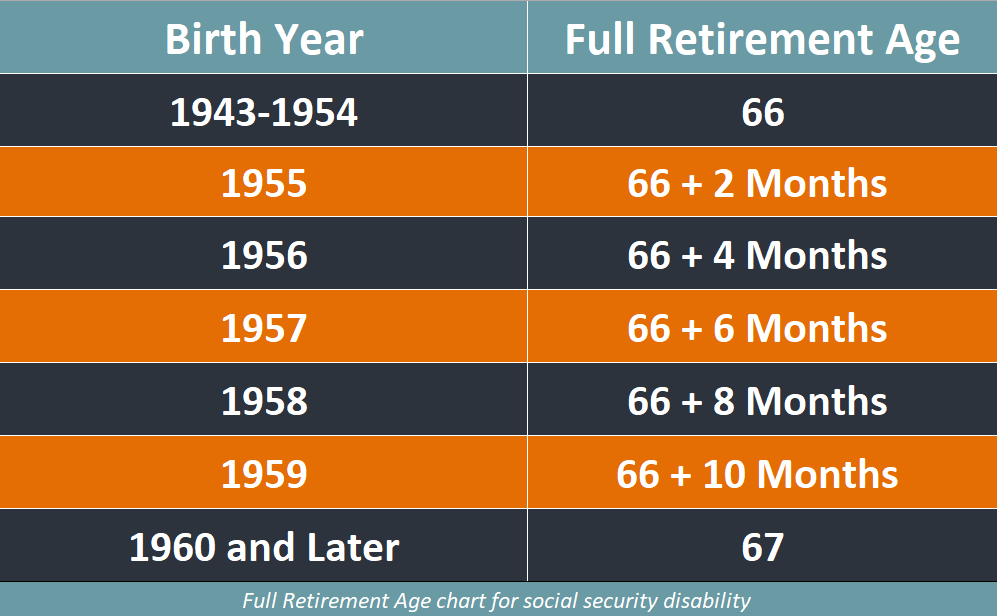
This article delves into the mechanisms that determine your Social Security benefits, explores the critical variables that can significantly alter your monthly check, and provides strategic insights to help you make informed decisions. Far from being a one-size-fits-all solution, your Social Security benefit is uniquely tailored to your individual work history, earning patterns, and claiming decisions. By demystifying this process, we aim to empower you with the knowledge needed to estimate your potential benefits, plan effectively, and integrate Social Security wisely into your broader financial strategy.
The Formula Behind Your Future: Understanding Social Security Benefit Calculation
At its core, your Social Security benefit is a reflection of your lifetime earnings. The Social Security Administration (SSA) employs a specific, albeit somewhat complex, formula to convert your work history into a monthly benefit amount. This process involves several key steps designed to ensure that benefits broadly reflect earnings while also providing a progressive slant, meaning lower earners receive a higher percentage of their past earnings than high earners.
The Average Indexed Monthly Earnings (AIME)
The first critical step is calculating your Average Indexed Monthly Earnings (AIME). The SSA takes your earnings from your entire work history, up to the annual Social Security taxable earnings limit for each year. It then “indexes” these earnings to account for the general increase in wages over time. This indexing process brings earlier years’ earnings up to a comparable level with more recent earnings, ensuring that your benefits accurately reflect your career-long earning power in today’s economic terms.
From this indexed earnings record, the SSA selects the 35 years in which you had the highest indexed earnings. If you have fewer than 35 years of earnings, the missing years are counted as zeros, which can significantly lower your AIME. The total of these 35 highest indexed earnings is then divided by 420 (the number of months in 35 years) to arrive at your AIME. This AIME is the fundamental figure upon which your Primary Insurance Amount (PIA) is based.
The Bend Points and Primary Insurance Amount (PIA)
Once your AIME is determined, the SSA applies a progressive formula using “bend points” to calculate your Primary Insurance Amount (PIA). The PIA is the benefit you would receive if you start collecting Social Security at your Full Retirement Age (FRA). The bend points are specific dollar amounts in the AIME formula that separate the different percentages of your AIME used to calculate your PIA.
For example, a certain percentage (e.g., 90%) of your AIME up to the first bend point is included. Then, a lower percentage (e.g., 32%) of your AIME between the first and second bend points is added. Finally, an even lower percentage (e.g., 15%) of your AIME above the second bend point is included. These bend points are adjusted annually based on the national average wage index. This progressive structure ensures that individuals with lower lifetime earnings receive a higher percentage of those earnings back in benefits compared to those with higher earnings, reflecting a core principle of Social Security.
The Role of Your Work History
Your work history is paramount. To be eligible for Social Security retirement benefits, you generally need to have accumulated 40 work credits. You can earn up to 4 credits each year, meaning you typically need at least 10 years of work to qualify. The more credits you have and, more importantly, the higher your indexed earnings during your 35 highest-earning years, the greater your AIME and, consequently, your PIA. Consistent, high earnings over a long career are the best way to maximize this foundational calculation.
Primary Factors Shaping Your Monthly Payout
While the PIA forms the baseline, several other critical factors can significantly alter the actual monthly Social Security benefit you receive. Understanding these variables is crucial for accurately estimating your future income and making strategic decisions.
Your Earning History: The Foundation of Your AIME
As discussed, your earnings over your working life are the most significant determinant. The higher your taxed earnings, up to the annual limit, the higher your AIME will be. It’s important to understand that only earnings on which you paid Social Security taxes are counted. Maximum taxable earnings change each year. If you consistently earned above this maximum, your benefits will still be capped based on the highest possible AIME, reflecting the earnings limit.
The “35 Years” Rule
The requirement to include 35 years of earnings in the AIME calculation cannot be overstated. If you worked for less than 35 years, every year short of that count will be filled with a zero in the calculation, drastically reducing your AIME and, by extension, your benefit. This emphasizes the importance of a long and consistent work history. Conversely, if you’ve worked for more than 35 years, your lowest earning years (after indexing) will simply be dropped from the calculation, meaning continued work even after 35 years, especially if your current earnings are higher than past low-earning years, can still increase your benefit.
Cost-of-Living Adjustments (COLAs)
Once you begin receiving benefits, your monthly payout isn’t fixed forever. Social Security benefits are subject to annual Cost-of-Living Adjustments (COLAs). These adjustments are designed to help your benefits keep pace with inflation, maintaining your purchasing power over time. COLAs are determined by the Consumer Price Index for Urban Wage Earners and Clerical Workers (CPI-W) and are announced in October for the following year. While COLAs are essential for long-term financial stability, they are not guaranteed to be substantial every year and can even be zero in periods of low inflation.
Taxation of Social Security Benefits
A common surprise for many retirees is that their Social Security benefits may be subject to federal income tax. Whether or not your benefits are taxed, and to what extent, depends on your “provisional income.” Provisional income is calculated as your adjusted gross income (AGI) plus non-taxable interest plus one-half of your Social Security benefits.
-
If your provisional income is between $25,000 and $34,000 (single filer) or $32,000 and $44,000 (married filing jointly), up to 50% of your benefits may be taxable.
-
If your provisional income exceeds $34,000 (single) or $44,000 (married filing jointly), up to 85% of your benefits may be taxable.
Some states also tax Social Security benefits, so it’s essential to understand the tax implications both federally and at the state level when planning your retirement income.
The Age-Old Question: When to Claim Your Benefits
One of the most impactful decisions you’ll make regarding your Social Security is when to start receiving benefits. This choice can significantly alter your monthly payout for the rest of your life.
Full Retirement Age (FRA) Explained
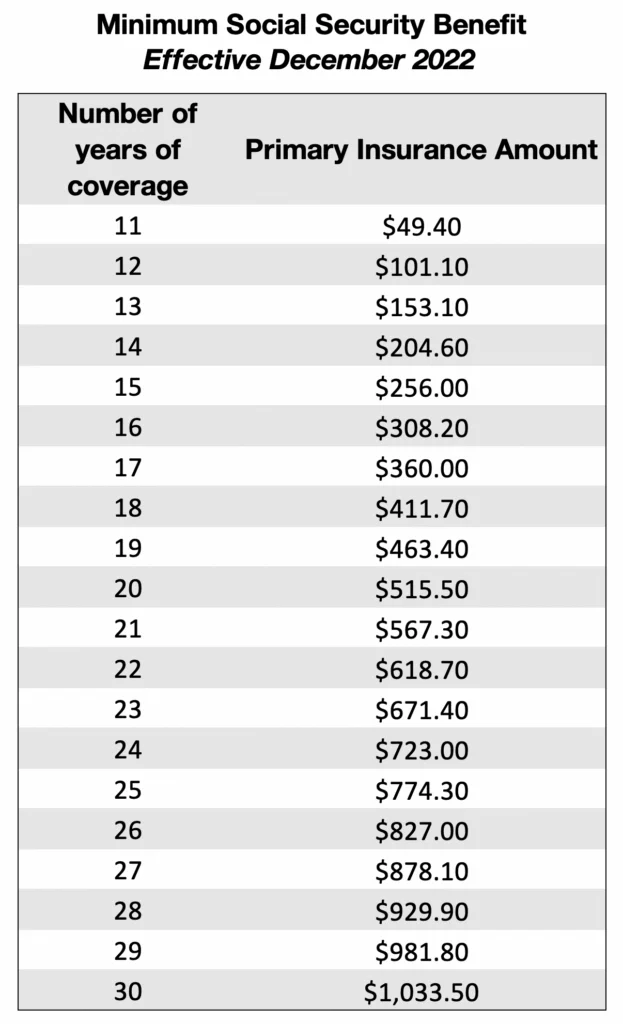
Your Full Retirement Age (FRA), also known as your normal retirement age, is the age at which you are entitled to receive 100% of your PIA. FRA depends on your birth year. For those born between 1943 and 1954, FRA is 66. It gradually increases by a few months for those born in later years, reaching 67 for anyone born in 1960 or later. Understanding your specific FRA is crucial, as it serves as the baseline for calculating reductions or increases to your benefit.
Claiming Early: The Trade-offs
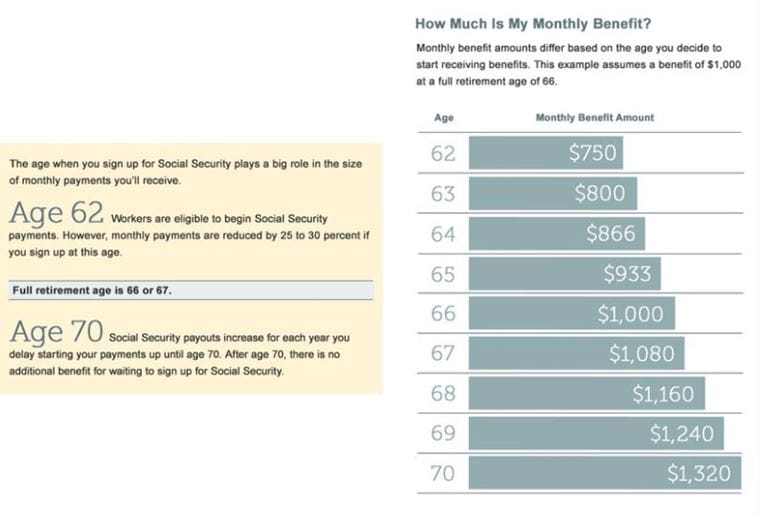
You can begin collecting Social Security benefits as early as age 62. However, choosing to claim early comes with a significant and permanent reduction in your monthly benefit. For each month you claim before your FRA, your benefit is reduced. For instance, if your FRA is 67, claiming at age 62 would result in a permanent reduction of about 30% of your PIA.
While receiving benefits earlier might seem appealing, especially if you face health issues, job loss, or simply want to retire sooner, it’s vital to weigh this permanent reduction against your financial needs and life expectancy. The total amount you receive over your lifetime could be less, even if you start earlier.
Delaying Benefits: The Longevity Bonus
Conversely, if you delay claiming Social Security benefits beyond your FRA, you can earn delayed retirement credits. For each month you delay, up to age 70, your monthly benefit increases. These increases amount to approximately 8% per year (or 2/3 of 1% per month) past your FRA. This means if your FRA is 67 and you delay claiming until age 70, your monthly benefit could be approximately 24% higher than your PIA – a substantial increase that lasts for the rest of your life.
Delaying benefits is often a powerful strategy for those who are in good health, have sufficient other retirement funds to cover expenses until age 70, and anticipate a long lifespan. It serves as a form of longevity insurance, providing a higher guaranteed income stream in your later years.
Spousal and Survivor Benefits
It’s also important to consider spousal and survivor benefits, particularly for married couples. A spouse may be eligible to receive up to 50% of their partner’s PIA if they claim at their own FRA, even if they never worked under Social Security themselves. Survivor benefits are paid to a spouse or eligible dependent children after a worker’s death. Strategic claiming decisions for married couples, often involving one spouse delaying benefits, can maximize the total household benefits, including potential survivor benefits.
Strategic Moves to Enhance Your Social Security Income
While the Social Security calculation formula is fixed, there are proactive steps you can take throughout your career and into retirement to potentially increase your future benefits.
Working Longer and Earning More
The most straightforward way to increase your Social Security benefit is to consistently work and earn more, especially during your peak earning years. Remember, your benefit is based on your 35 highest-earning, indexed years. If you’re currently in a high-earning phase later in your career, those new higher earnings can replace lower-earning years from earlier in your work history, boosting your AIME. Working longer, particularly if it means working into your 60s, also allows you to delay claiming benefits, capitalizing on delayed retirement credits.
Understanding Spousal Benefits for Married Couples
For married couples, understanding spousal benefit rules is crucial for maximization. If one spouse has significantly higher earnings, the lower-earning spouse might be eligible for a higher benefit based on their partner’s work record than on their own. The higher-earning spouse can maximize their benefit by delaying claiming until age 70, which not only increases their own benefit but also provides a higher potential survivor benefit for their spouse. Coordinated claiming strategies can significantly enhance the total household Social Security income.
The Importance of Your Earnings Record
Regularly checking your Social Security statement is a simple yet powerful step. This statement, available online through mySocialSecurity account, provides a personalized estimate of your future benefits at different claiming ages and a detailed record of your earnings history. Reviewing this record periodically allows you to spot any errors or omissions, such as incorrect wage reporting, which could negatively impact your future benefits. Correcting these errors proactively can ensure your benefits are calculated accurately.
Planning Ahead: Integrating Social Security into Your Retirement Strategy
Social Security is a vital component of retirement income, but it’s rarely sufficient on its own. A holistic approach to retirement planning requires integrating your estimated Social Security benefits with other financial resources.
Don’t Rely Solely on Social Security
Financial experts generally advise against relying solely on Social Security for retirement. On average, Social Security benefits replace about 40% of an average earner’s pre-retirement income. For most individuals, this is not enough to maintain their desired lifestyle in retirement. Therefore, it’s essential to supplement Social Security with personal savings, investments (such as 401(k)s, IRAs, and brokerage accounts), and potentially other income streams like pensions or part-time work. Diversifying your retirement income sources provides greater financial security and flexibility.
Regular Review of Your Social Security Statement
As mentioned, reviewing your Social Security statement at least once a year is critical. Beyond checking for errors, it allows you to track your projected benefits as your earnings change and as you get closer to retirement. This regular check-in helps you adjust your retirement savings goals and strategies, ensuring your financial plan remains aligned with your estimated Social Security income.
Seeking Professional Financial Advice
Navigating the complexities of Social Security, particularly when considering your personal financial situation, tax implications, and spousal benefits, can be challenging. Consulting a qualified financial advisor can be invaluable. A professional can help you understand your specific options, model different claiming scenarios, and integrate your Social Security benefits into a comprehensive retirement plan that considers your other assets, liabilities, and life goals. They can help you make an informed decision that maximizes your long-term financial well-being.
In conclusion, understanding “how much can I get social security” involves much more than a simple number. It requires a grasp of the calculation formula, an awareness of the factors that influence benefits, and strategic thinking about when and how to claim. By educating yourself and planning proactively, you can optimize your Social Security benefits and build a more secure financial foundation for your retirement years.
aViewFromTheCave is a participant in the Amazon Services LLC Associates Program, an affiliate advertising program designed to provide a means for sites to earn advertising fees by advertising and linking to Amazon.com. Amazon, the Amazon logo, AmazonSupply, and the AmazonSupply logo are trademarks of Amazon.com, Inc. or its affiliates. As an Amazon Associate we earn affiliate commissions from qualifying purchases.