
Navigating the landscape of retirement income can be complex, especially when considering the interplay between continued earnings and Social Security benefits. For many, the idea of completely ceasing work at retirement age is neither desirable nor financially feasible. Whether driven by a desire to stay active, pursue a passion, or simply supplement their income, a significant number of retirees choose to continue working. However, understanding the rules that govern how much you can earn without impacting your Social Security checks is crucial. This article delves into the specifics, offering insights into earnings limits, tax implications, and strategic approaches to maximize your financial well-being while drawing Social Security.
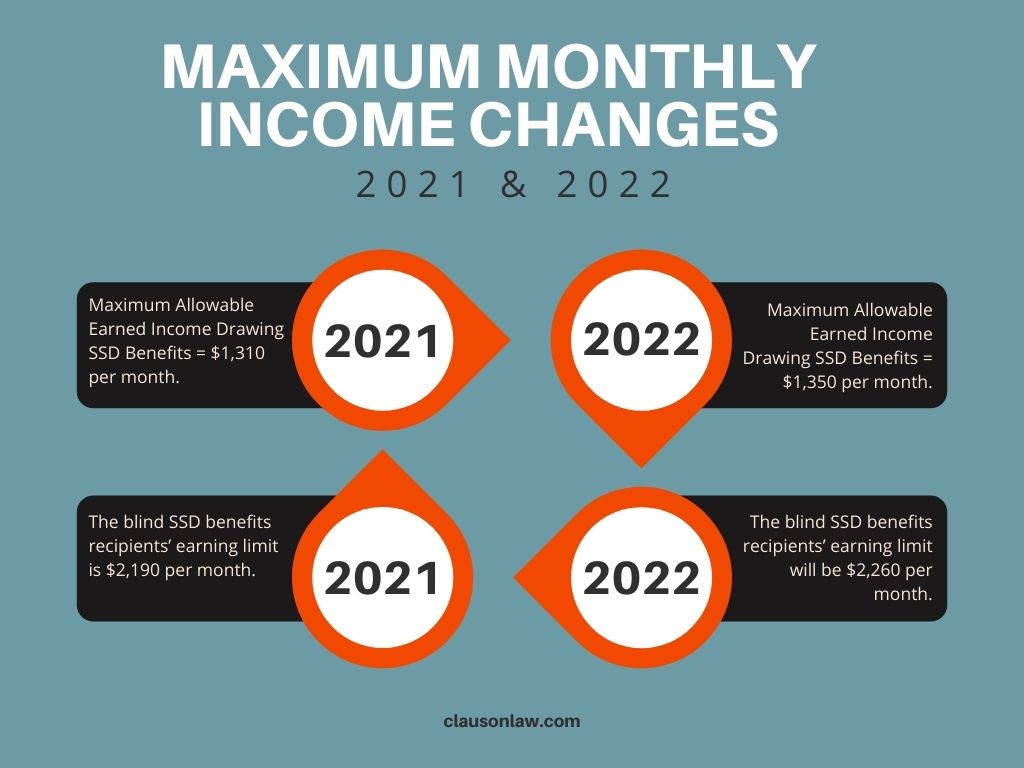
Understanding Social Security’s Earnings Limit
The Social Security Administration (SSA) has specific rules regarding how much you can earn from work before your benefits are reduced. These rules are not universal; they depend significantly on your age relative to your Full Retirement Age (FRA). Your FRA is the age at which you are entitled to receive your full Social Security retirement benefits, typically between 66 and 67, depending on your birth year.
The Basics of the Annual Earnings Limit
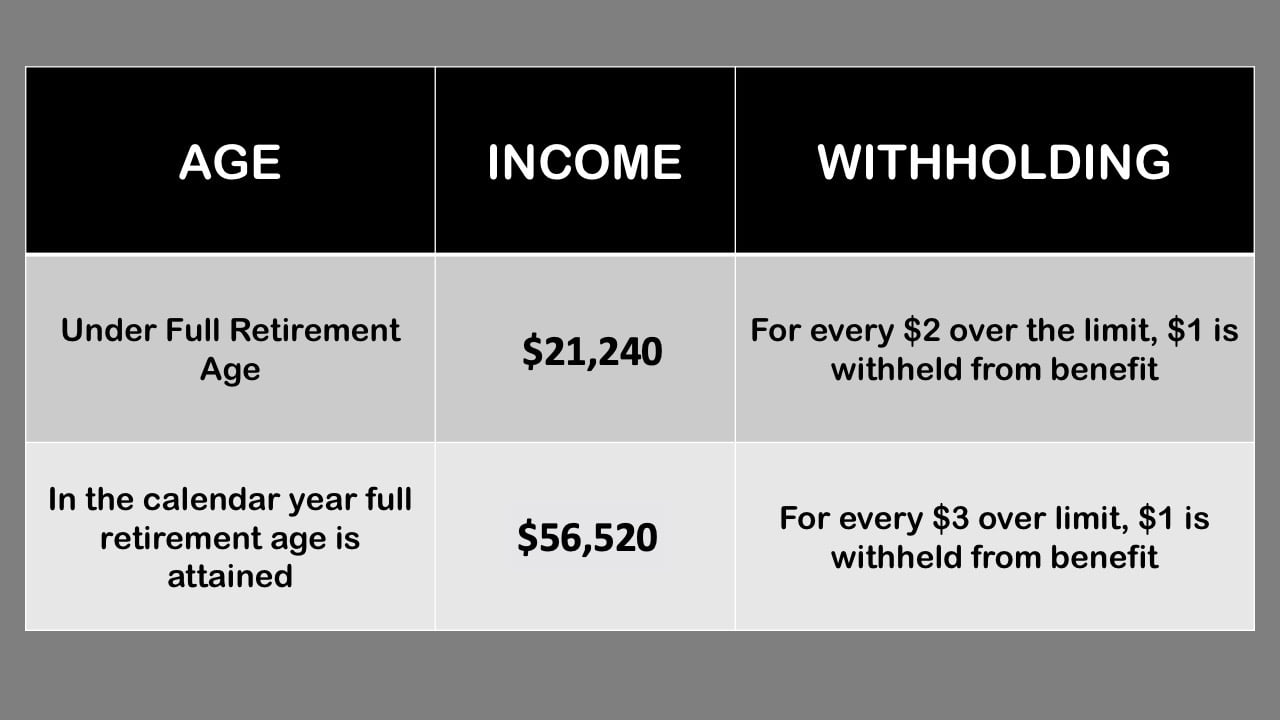
Before you reach your Full Retirement Age (FRA), the SSA imposes an annual earnings limit. If your earnings from work exceed this limit, a portion of your Social Security benefits will be temporarily withheld. This isn’t a permanent loss; the withheld benefits are typically returned to you in the form of higher monthly payments once you reach your FRA. For instance, in 2024, the annual earnings limit for those who will not reach FRA in the year is $22,320. For every $2 you earn above this limit, $1 will be deducted from your benefits.
It’s important to clarify what “earnings” mean in this context. The SSA considers wages from employment and net earnings from self-employment as countable earnings. Income from investments, pensions, annuities, interest, or capital gains typically does not count towards the earnings limit, making these attractive options for retirees seeking additional income without affecting their benefits.
Age-Based Earning Limits: Before vs. Full Retirement Age (FRA)
The earnings limit operates on a tiered system based on your age:
- Before the Year You Reach FRA: As mentioned, a stricter limit applies. For example, in 2024, the limit is $22,320. For every $2 over this limit, $1 in benefits is withheld. This is the period where careful planning is most critical.
- In the Year You Reach FRA: The rules become a bit more lenient. A higher earnings limit applies, and the deduction rate is different. For 2024, if you reach your FRA during the year, you can earn up to $59,520 (this specific limit applies only to earnings before the month you reach FRA). For every $3 you earn above this limit, $1 will be deducted from your benefits. Crucially, the SSA only counts earnings up to the month you reach your FRA. Once you hit your FRA, the earnings limit no longer applies, and you can earn any amount without your Social Security benefits being reduced.
- After You Reach FRA: This is the most straightforward scenario. Once you have reached your Full Retirement Age, there are no earnings limits whatsoever. You can earn any amount from work, and your Social Security benefits will not be reduced. In fact, if your earnings are significantly higher, they could eventually lead to a recalculation of your benefits, potentially increasing them based on your continued contributions to Social Security through payroll taxes.
How Earnings Limits Impact Your Benefits
The impact of exceeding the earnings limit is not a permanent forfeiture of benefits. Instead, the SSA “withholds” a portion of your benefits. They will typically withhold an entire month’s benefit until the total withheld amount equals the amount required by the earnings test. For example, if you’re projected to have $6,000 in benefits withheld, and your monthly benefit is $1,500, the SSA might withhold four full months of benefits.
Upon reaching your FRA, the SSA will recalculate your benefits. Any benefits that were withheld due to the earnings limit are not lost forever. Instead, your future monthly benefits are increased to account for the months you didn’t receive your full payment. This adjustment essentially gives you credit for the past withheld benefits, spread out over your remaining years. This mechanism ensures that while there’s an immediate reduction, the long-term value of your benefits is preserved. Understanding this “catch-up” feature can alleviate some of the anxiety around exceeding the earnings limit in early retirement.
Strategies for Earning Income Without Jeopardizing Benefits
Given the complexity of the earnings limits, developing a strategic approach to working in retirement is essential. The goal is often to maximize your total income—combining earned wages with Social Security benefits—without triggering significant reductions or, at the very least, understanding the implications.
Working Below the Annual Limit
The most straightforward strategy for those below FRA is to simply ensure your annual earnings from work remain below the established limit. This allows you to supplement your income without any reduction to your Social Security benefits. This might involve part-time work, seasonal employment, or taking on contract roles that offer flexibility in hours and pay. For many, this offers a comfortable balance, allowing them to remain engaged professionally or pursue hobbies that generate income, while fully receiving their Social Security checks. Careful tracking of income throughout the year is advisable to avoid unexpected withholdings.
Strategic Timing: The Year You Reach Full Retirement Age
The year you reach your FRA presents a unique opportunity. As discussed, a higher earnings limit applies, and only earnings before the month you reach FRA count towards that limit. This means you can work more intensively early in that year without impacting your benefits as severely, and once you hit your FRA, you can earn as much as you wish. Some retirees might front-load their work schedule, earning a significant portion of their income in the months leading up to their FRA, then scaling back or changing their work focus once they reach it. Others might consider delaying claiming Social Security until their FRA if they anticipate high earnings in the years immediately preceding it, thereby avoiding the earnings test altogether while allowing their benefits to grow.
The “Sweet Spot” of Post-FRA Earning
Once you’ve reached your Full Retirement Age, the earnings limit disappears entirely. This is the “sweet spot” for many retirees who wish to continue working full-time, part-time, or even launch a new career or business. At this point, you can earn unlimited income without any reduction to your Social Security benefits. Furthermore, if your earnings are substantial enough, they can even lead to an increase in your future Social Security benefits. The SSA automatically recalculates your benefit amount each year to include any new higher earnings that might replace a lower-earning year in your record. This can result in a slight increase in your monthly benefit, providing an additional incentive to continue working post-FRA if desired.
Tax Implications of Working While Receiving Social Security
Beyond the earnings limit, it’s crucial to understand how additional income can affect the taxation of your Social Security benefits and your overall tax liability. The tax rules surrounding Social Security can be intricate and vary based on your total income.
Taxation of Social Security Benefits
Social Security benefits themselves can be subject to federal income tax. Whether they are taxed, and to what extent, depends on your “provisional income.” Provisional income is calculated as your adjusted gross income (AGI), plus any tax-exempt interest income, plus half of your Social Security benefits.
- If your provisional income is between $25,000 and $34,000 (for individuals) or $32,000 and $44,000 (for those filing jointly), up to 50% of your Social Security benefits may be taxable.
- If your provisional income exceeds $34,000 (for individuals) or $44,000 (for those filing jointly), up to 85% of your Social Security benefits may be taxable.
The income you earn from work—whether from employment or self-employment—will directly increase your AGI, and consequently, your provisional income. This means that earning more can push you into a higher tax bracket for your Social Security benefits, resulting in a larger portion of your benefits being taxed.
Impact of Additional Income on Your Taxable Benefits
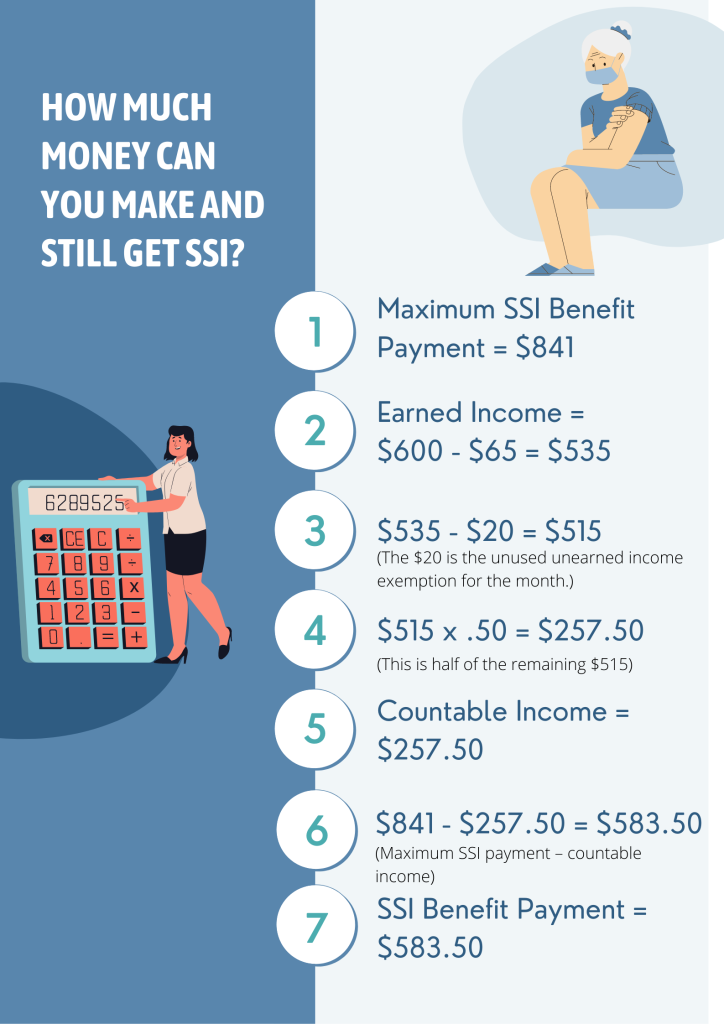
The interplay between earned income and the taxation of Social Security benefits is one of the most significant financial considerations for working retirees. For example, if you earn just enough to push your provisional income over one of the thresholds, a significant portion of your Social Security benefits could become taxable, effectively reducing your net benefit. This is not a penalty, but rather a consequence of how the tax system treats combined income streams.
It’s important to factor this into your financial planning. While earning more income generally means you have more money, a substantial portion of that additional income might go towards taxes, including those on your Social Security benefits. This emphasizes the need for a holistic view of your financial picture, rather than just focusing on the gross amount of your earnings or benefits.
Medicare Premiums and Higher Income
Another important consideration is the impact of higher income on your Medicare premiums, particularly for Part B and Part D. Medicare Part B and Part D premiums are subject to an income-related monthly adjustment amount (IRMAA). If your modified adjusted gross income (MAGI) exceeds certain thresholds, you will pay a higher premium.
The MAGI used to determine IRMAA is typically based on your tax return from two years prior. So, if you increase your earnings significantly this year, it could lead to higher Medicare premiums two years down the line. For example, in 2024, an individual with a MAGI over $103,000 (based on their 2022 tax return) would pay higher Part B premiums. These surcharges can be substantial, adding another layer of cost to consider when increasing your earned income in retirement.
Exploring Income-Generating Opportunities for Retirees
The modern economy offers a myriad of ways for retirees to earn income, many of which provide the flexibility needed to manage earnings limits and personal preferences. Choosing the right path depends on your skills, interests, and desired level of commitment.
Flexible Work Options: Part-Time, Consulting, Freelancing
Traditional part-time employment remains a popular choice. Many companies are open to hiring experienced individuals for fewer hours, often in roles that value expertise and reliability. Beyond that, the rise of the gig economy and remote work has opened doors to consulting and freelancing. If you have a specialized skill set—whether in finance, marketing, writing, IT, or project management—you can offer your services on a contract or project basis. This provides immense flexibility, allowing you to set your own hours, choose your projects, and control your income flow, making it easier to stay below earnings limits if desired. Platforms like Upwork, Fiverr, or specific industry consulting networks can connect you with opportunities.
Entrepreneurship and Gig Economy Roles
Retirement can also be an ideal time to pursue an entrepreneurial venture, whether it’s turning a hobby into a business or starting a small service-based enterprise. This could involve anything from crafting and selling handmade goods online (e-commerce via Etsy or Shopify) to offering local services like tutoring, pet-sitting, or home repair. The gig economy also includes roles like ridesharing (Uber, Lyft), food delivery (DoorDash, Uber Eats), or task-based services (TaskRabbit). These roles typically offer highly flexible schedules, allowing you to work as much or as little as you want, which is invaluable for managing Social Security earnings limits. Starting a small business or working as an independent contractor provides the autonomy many retirees seek.
Passive Income Streams: Investments and Royalties
For those looking to generate income without it impacting their Social Security earnings limit, passive income streams are an excellent alternative. As mentioned earlier, income from investments, pensions, annuities, interest, and capital gains does not count towards the SSA’s earnings test. This category includes:
- Investment Dividends and Interest: From stocks, bonds, mutual funds, or savings accounts.
- Rental Income: From real estate properties you own.
- Royalties: If you’ve authored a book, composed music, or created intellectual property that generates ongoing payments.
- Annuity Payments: From previously purchased insurance products.
Building or maintaining these passive income streams can provide a stable financial foundation that complements your Social Security benefits and any active work you choose to undertake, all without triggering any benefit reductions due to earnings limits.
Making an Informed Decision: Financial Planning and Professional Advice
The decision to work while drawing Social Security is multifaceted, requiring careful consideration of personal goals, financial needs, and the complex rules set by the SSA and IRS. A well-thought-out strategy can significantly impact your financial security and overall quality of life in retirement.
Personalizing Your Income and Benefit Strategy
There is no one-size-fits-all answer to how much you can or should earn. Your ideal strategy will depend on several personal factors:
- Your Financial Needs: Do you need supplemental income to cover essential living expenses, or are you working for discretionary spending?
- Your Health and Energy Levels: How much do you realistically want and feel capable of working?
- Your Desired Lifestyle: Do you prioritize leisure, travel, or continued professional engagement?
- Your Full Retirement Age: This is a critical factor in determining how the earnings limits apply to you.
- Other Income Sources: Do you have pensions, substantial savings, or other investments that provide income?
By outlining these factors, you can start to formulate a personalized plan that balances your desire to work with the goal of optimizing your Social Security benefits and minimizing tax liabilities.
The Role of Financial Planners and Tax Professionals
Given the intricate rules surrounding Social Security earnings limits, taxation of benefits, and Medicare premiums, seeking professional advice is highly recommended.
- Financial Planners: A Certified Financial Planner (CFP) can help you create a comprehensive retirement income plan. They can model various scenarios (e.g., working part-time for X years, delaying benefits, increasing passive income) to show you the long-term financial implications of different choices. They can also help integrate your Social Security strategy with your overall investment and spending plans.
- Tax Professionals: A tax advisor (such as a CPA or Enrolled Agent) specializing in retirement income can provide invaluable guidance on minimizing your tax burden. They can help you understand how earned income will affect your AGI, provisional income, and ultimately the taxation of your Social Security benefits and Medicare premiums. They can also advise on tax-efficient ways to structure your earnings, especially if you’re self-employed.
These professionals can help you navigate the complexities, ensure compliance, and make informed decisions that align with your financial goals.
Long-Term Financial Security and Lifestyle Goals
Ultimately, the decision of how much you can earn while drawing Social Security should be viewed through the lens of your long-term financial security and lifestyle goals. For some, working well past FRA allows them to build a larger nest egg, enjoy a more lavish retirement, or leave a greater legacy. For others, working just enough to stay engaged and cover a few extras without hitting the earnings limit provides the perfect balance.
By thoroughly understanding the rules, exploring available income-generating options, and leveraging professional expertise, you can confidently navigate the complexities of working in retirement. This approach empowers you to make choices that not only supplement your income but also enhance your overall financial well-being and allow you to enjoy your retirement years on your own terms.
aViewFromTheCave is a participant in the Amazon Services LLC Associates Program, an affiliate advertising program designed to provide a means for sites to earn advertising fees by advertising and linking to Amazon.com. Amazon, the Amazon logo, AmazonSupply, and the AmazonSupply logo are trademarks of Amazon.com, Inc. or its affiliates. As an Amazon Associate we earn affiliate commissions from qualifying purchases.