
In the traditional financial world, the concept of “unlimited” is often a reality. Central banks can, and frequently do, print more currency to manage economic cycles, a process known as quantitative easing. However, in the realm of digital assets, Bitcoin introduced a revolutionary concept: programmed scarcity. For anyone looking at Bitcoin through the lens of personal finance and investing, the question “how much Bitcoin is there?” is not just a matter of curiosity—it is the fundamental bedrock of its value proposition.
Unlike the US Dollar or the Euro, which have no theoretical limit on their supply, Bitcoin is governed by a strict mathematical protocol that limits the total number of coins that will ever exist. Understanding the nuances of this supply, how it is distributed, and how much of it is actually accessible is crucial for any investor seeking to hedge against inflation or diversify their portfolio.
The 21 Million Hard Cap: Why Scarcity Matters for Your Portfolio
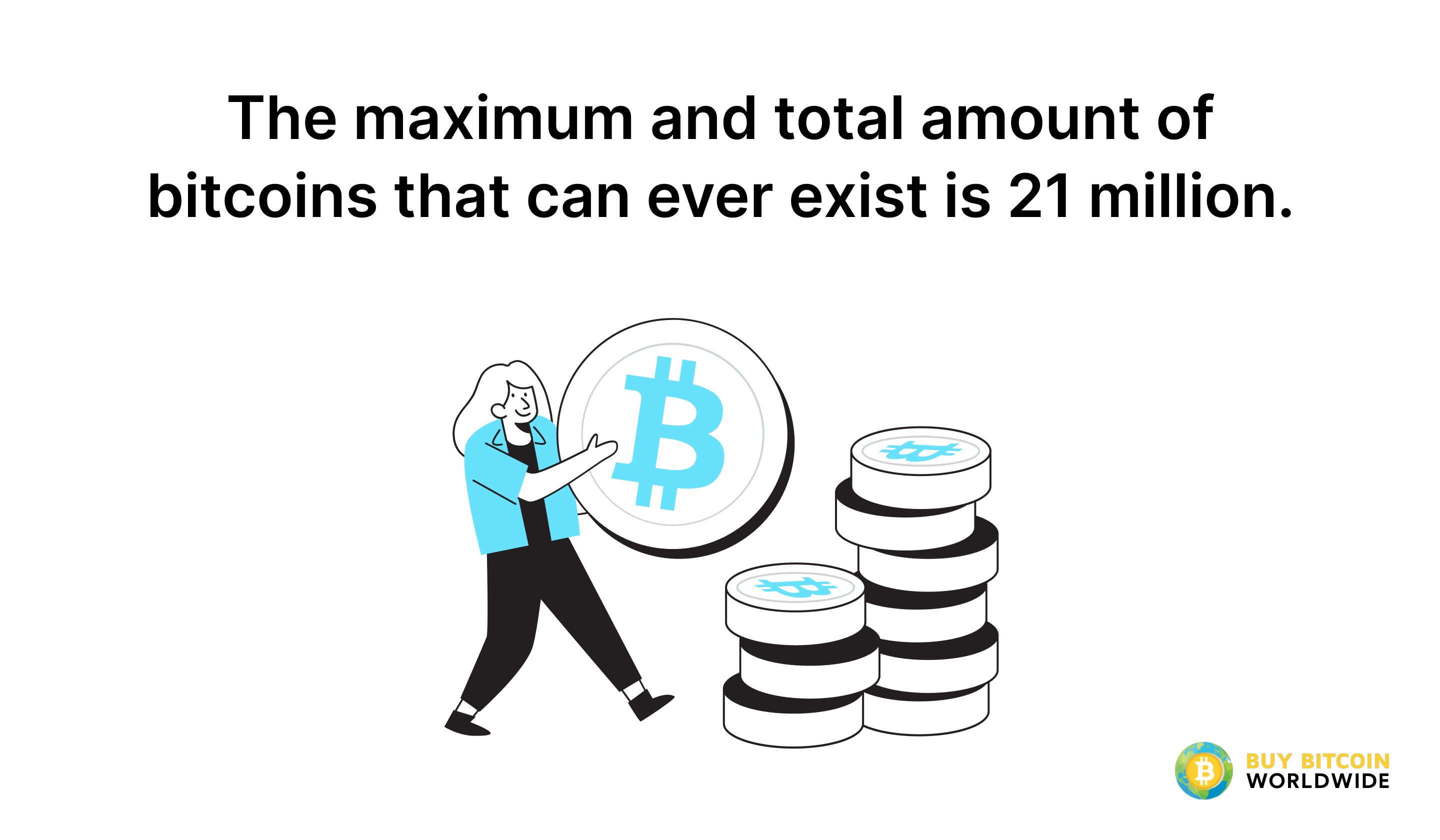
The most important number in the Bitcoin ecosystem is 21 million. This is the maximum supply of Bitcoin that can ever be mined. This hard cap was hardcoded into the software by its anonymous creator, Satoshi Nakamoto, and remains the primary driver of Bitcoin’s identity as “digital gold.”
Satoshi’s Formula: Scarcity by Design
The limit of 21 million was not an arbitrary choice but a calculated move to ensure that Bitcoin would be a deflationary asset. In the traditional “Money” niche, we understand that value is often a function of supply and demand. When the supply of an asset is fixed or limited while demand increases, the price naturally trends upward.
Bitcoin’s supply is released through a process called mining, where computers solve complex mathematical problems to secure the network and validate transactions. As a reward, miners receive newly minted Bitcoin. However, this issuance is not constant. Every 210,000 blocks (roughly every four years), the reward given to miners is cut in half. This event, known as “The Halving,” ensures that the rate of new Bitcoin entering the market slows down over time until the year 2140, when the final satoshi (the smallest unit of Bitcoin) will be mined.
Contrasting Bitcoin with Fiat Currency Inflation
From a personal finance perspective, Bitcoin’s fixed supply offers a stark contrast to fiat currencies. Since 1971, when the gold standard was abandoned, the purchasing power of the US Dollar has steadily declined as the total supply of money (M2) has expanded.
Investors often turn to Bitcoin specifically because they know the “monetary policy” of the network cannot be changed by a central authority. There is no “Bitcoin Central Bank” that can decide to double the supply to bail out a failing industry. For a long-term investor, this predictability is a powerful tool for wealth preservation. When you buy Bitcoin, you are buying a piece of a fixed pie, ensuring that your ownership percentage cannot be diluted by the arbitrary creation of more units.
The Current State of Supply: Circulation vs. Accessibility
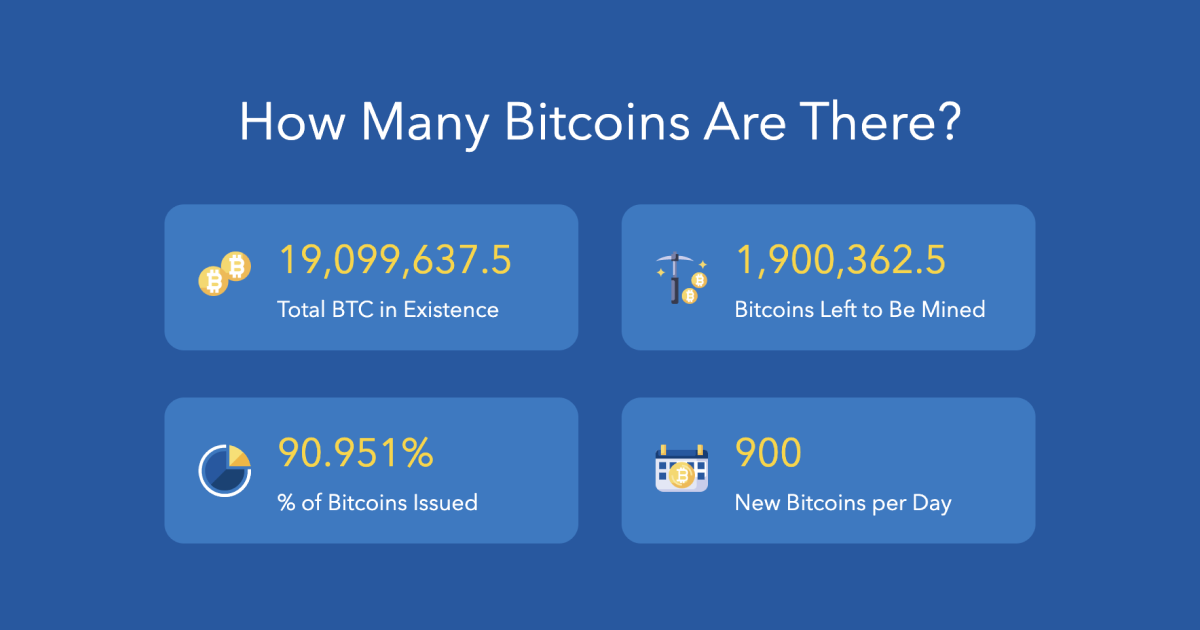
While the total cap is 21 million, the amount of Bitcoin currently in “circulation” is a different story. As of mid-2024, approximately 19.7 million Bitcoins have already been mined. This means that over 93% of all Bitcoin that will ever exist is already in the market. However, “in the market” does not necessarily mean “available for purchase.”
The “Lost” Millions: The Reality of Irretrievable Bitcoin
One of the most fascinating aspects of Bitcoin’s supply is the “lost” coins. Unlike a bank account where you can reset your password, Bitcoin relies on private keys. If a user loses their private key or passes away without sharing it, those coins are essentially removed from the circulating supply forever. They still exist on the blockchain, but they can never be moved or spent.
Research from blockchain analysis firms like Chainalysis suggests that between 3 to 4 million Bitcoins may be lost forever. These include coins from the early days when Bitcoin was worth pennies and users weren’t diligent about backups, as well as the famous “Satoshi stash”—roughly 1.1 million Bitcoins mined by the creator that haven’t moved in over a decade. For the investor, this means the effective supply of Bitcoin is likely closer to 17 million rather than 21 million, making the asset even scarcer than it appears on paper.
The Halving Cycle and the Slowing Rate of Issuance
Because of the halving mechanism mentioned earlier, the remaining 1.3 million Bitcoins will take over a century to mine. We are currently in an era where the daily production of Bitcoin is significantly lower than it was a decade ago.
For someone focused on “Online Income” or “Side Hustles,” this slowing issuance makes Bitcoin mining a highly competitive corporate endeavor rather than a hobbyist’s game. For the passive investor, however, the halving cycles are often viewed as bullish catalysts. Historically, the reduction in new supply entering the market, combined with steady or growing demand, has led to significant price appreciation in the 12–18 months following a halving event.
Distribution and Market Liquidity: Who Holds the Supply?
Knowing how much Bitcoin exists is only half the battle; the other half is knowing who holds it. The distribution of Bitcoin has shifted dramatically from a niche experimental asset to a cornerstone of institutional finance.
Institutional Adoption and the Rise of Bitcoin ETFs
The landscape of Bitcoin ownership changed forever in early 2024 with the approval of Spot Bitcoin ETFs (Exchange-Traded Funds) in the United States. Major financial institutions like BlackRock and Fidelity began purchasing massive quantities of Bitcoin to back their fund shares.
This institutional “wall of money” has a profound impact on supply. When an ETF buys Bitcoin, that Bitcoin is often moved into “cold storage” (offline wallets) for long-term security. This reduces the “liquid supply”—the amount of Bitcoin available on exchanges for trading. As more institutions add Bitcoin to their balance sheets as a reserve asset, the “supply shock” becomes more pronounced. When demand from retail and institutional investors meets a dwindling liquid supply, the volatility can be intense, but the long-term price floor often rises.
Retail Holders and the “HODL” Mentality
In the “Personal Finance” niche, the term “HODL” (Hold On for Dear Life) has become a legitimate investment strategy. Data shows that a significant portion of Bitcoin supply is held by “long-term holders”—wallets that haven’t moved their coins in over a year.
This behavior effectively removes Bitcoin from the active circulating market. Many retail investors see Bitcoin not as a medium of exchange for daily coffee, but as a “savings account” or a “digital vault.” This cultural shift toward long-term holding further tightens the available supply. If 70% of the supply is held by people who refuse to sell regardless of price fluctuations, the remaining 30% must absorb all the market’s buying and selling pressure, leading to the dramatic price swings Bitcoin is known for.
Investment Implications: Price Discovery and Scarcity Models
For those interested in financial tools and valuation, Bitcoin’s fixed supply allows for unique economic modeling that isn’t possible with fiat currencies or even most commodities.
Stock-to-Flow Model and Future Valuation
One of the most popular frameworks used by investors to value Bitcoin is the Stock-to-Flow (S2F) model. This model measures the current “stock” (total supply) against the “flow” (annual new production). Commodities like gold have a high stock-to-flow ratio, which is why they have historically been used as stores of value.
Bitcoin’s S2F ratio doubles every four years due to the halving. Following the most recent halving, Bitcoin’s stock-to-flow ratio surpassed that of gold, making it the scarcest liquid asset in human history. While the S2F model is not a perfect predictor of price, it provides a logical foundation for why Bitcoin’s value tends to increase over time: it is becoming harder and harder to produce relative to the existing supply.
Risk Management in a Finite Asset Class
Understanding that there is only so much Bitcoin to go around should also inform an investor’s risk management strategy. Because the supply is fixed, Bitcoin is highly sensitive to changes in global liquidity. When central banks lower interest rates and money is “cheap,” investors tend to move into scarce assets like Bitcoin. Conversely, when liquidity tightens, Bitcoin can experience sharp drawdowns.
For a balanced financial plan, Bitcoin should be viewed as a high-upside, volatile component of a diversified portfolio. Its scarcity makes it an excellent “insurance policy” against currency devaluation, but its fixed nature means it doesn’t have a “lender of last resort” to stabilize its price during a panic.
Conclusion: The Finality of the 21 Million
In the world of money and investing, certainty is a rare commodity. We cannot be certain what the inflation rate will be in ten years, nor can we be certain of a company’s future earnings. However, we can be mathematically certain that there will never be more than 21 million Bitcoin.
This absolute scarcity is what transforms Bitcoin from a mere technological experiment into a powerful financial tool. Whether you are looking for a long-term store of value, a hedge against institutional instability, or a high-growth asset for your retirement portfolio, the “supply side” of Bitcoin is its most compelling feature. As the world continues to digitize and traditional currencies face the pressures of debt and expansion, the value of owning a piece of a finite, unchangeable supply becomes increasingly clear. There are 19.7 million coins today, only 21 million ever, and several million already lost—the math of Bitcoin is the math of value.
aViewFromTheCave is a participant in the Amazon Services LLC Associates Program, an affiliate advertising program designed to provide a means for sites to earn advertising fees by advertising and linking to Amazon.com. Amazon, the Amazon logo, AmazonSupply, and the AmazonSupply logo are trademarks of Amazon.com, Inc. or its affiliates. As an Amazon Associate we earn affiliate commissions from qualifying purchases.