
In the dynamic world of cryptocurrency, few questions hold as much significance for investors and market participants as the daily supply of new Bitcoin. Understanding “how much Bitcoin is mined per day” is not merely a technical curiosity; it’s a crucial insight into the economic principles governing Bitcoin’s value, its inherent scarcity, and its long-term investment potential. Bitcoin, often hailed as “digital gold,” derives much of its appeal from its predictable, limited supply, a stark contrast to traditional fiat currencies subject to inflationary pressures. This article delves into the mechanics of Bitcoin’s daily issuance, its economic ramifications, and what it means for those navigating the exciting, yet volatile, landscape of digital assets.
The Core Mechanics of Bitcoin Mining and Supply
Bitcoin’s supply mechanism is deliberately designed to be transparent, predictable, and finite. Unlike conventional monetary systems where central banks can print more money, Bitcoin’s creation is governed by a decentralized network and a pre-defined set of rules embedded in its protocol. New Bitcoin enters circulation exclusively through the process of “mining.”
Understanding the Bitcoin Block Reward
At the heart of Bitcoin’s daily issuance is the “block reward.” Bitcoin miners compete to solve complex computational puzzles. The first miner to find the solution to a new block is rewarded with a set amount of new Bitcoin, along with transaction fees from the transactions included in that block. This reward incentivizes miners to dedicate computational power to secure the network, process transactions, and maintain the integrity of the blockchain.
Initially, when Bitcoin launched in 2009, the block reward was 50 Bitcoin. This reward isn’t static; it undergoes a pre-programmed reduction over time, a mechanism critical to Bitcoin’s scarcity model.
The Role of Halving in Supply Reduction
One of the most distinctive features of Bitcoin’s monetary policy is the “halving” event. Approximately every four years, or more precisely, every 210,000 blocks, the block reward is automatically cut in half. This phenomenon is known as “halving” (or sometimes “halvening”). The purpose of halving is to control inflation and ensure Bitcoin’s long-term scarcity.
The halving schedule looks like this:
- 2009-2012: 50 BTC per block
- 2012-2016: 25 BTC per block
- 2016-2020: 12.5 BTC per block
- 2020-2024 (current period): 6.25 BTC per block
- Next Halving (expected 2024): Will reduce the reward to 3.125 BTC per block
Each halving event significantly reduces the rate at which new Bitcoin enters the market, making it an anticipated economic event that historically has preceded significant price increases, reflecting the impact of reduced supply on market dynamics.
The Dynamic Nature of Mining Difficulty
While the block reward is fixed between halving events, the actual rate of new block creation is also influenced by “mining difficulty.” Bitcoin’s protocol is programmed to aim for an average block time of approximately 10 minutes. To achieve this, the network automatically adjusts the mining difficulty every 2,016 blocks (roughly every two weeks).
If more miners join the network and hash power increases, blocks would be found faster than 10 minutes. The difficulty algorithm then increases, making it harder to find the next block, thus maintaining the 10-minute average. Conversely, if hash power decreases, difficulty adjusts downwards to prevent block times from becoming excessively long. This dynamic adjustment ensures that, regardless of how many miners are active, new Bitcoin is consistently issued at a predictable rate, averaging around one block every 10 minutes.
Calculating Daily Bitcoin Production
With an understanding of the block reward and the targeted block time, we can calculate the approximate amount of Bitcoin mined per day. This figure is not perfectly precise due to the slight variations in block times, but it provides a very reliable estimate for financial planning and market analysis.
Average Block Time and Daily Block Count
The Bitcoin protocol aims for a new block to be found every 10 minutes. In a 24-hour day, there are 1,440 minutes (24 hours * 60 minutes/hour).
Dividing 1,440 minutes by the target 10 minutes per block gives us:
1,440 / 10 = 144 blocks per day.
So, on average, approximately 144 new blocks are added to the Bitcoin blockchain every day.
Impact of Current Block Reward on Daily Output
As of the current period (following the May 2020 halving), the block reward is 6.25 BTC. To find the daily production, we multiply the average daily blocks by the current block reward:
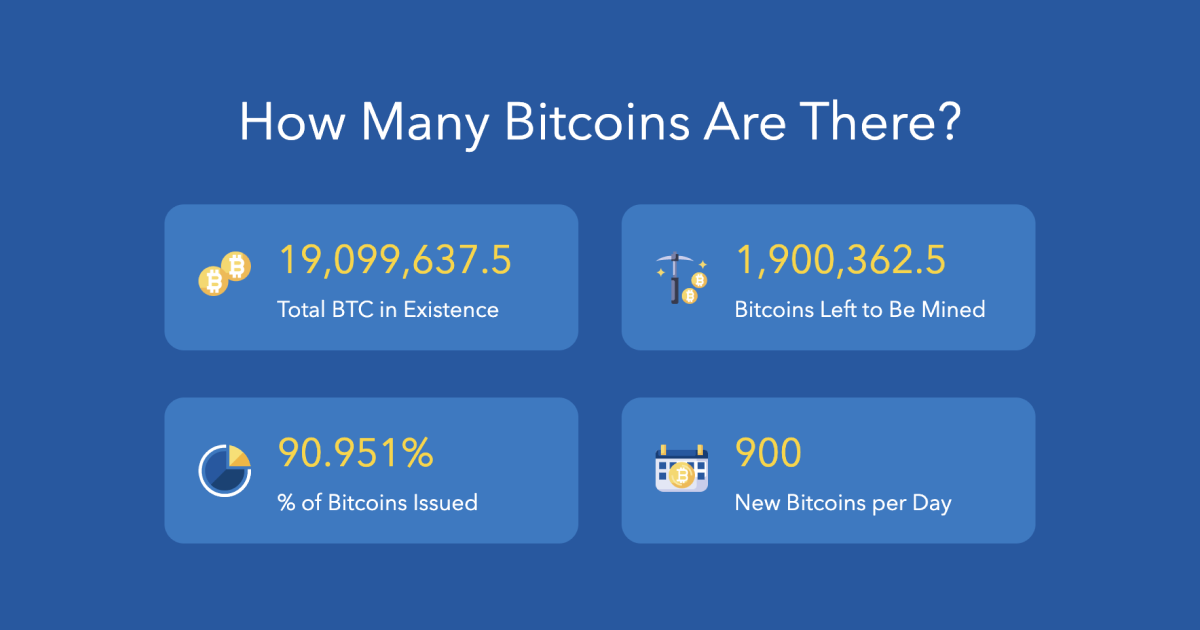
144 blocks/day * 6.25 BTC/block = 900 BTC per day.
Therefore, currently, approximately 900 new Bitcoin are mined every single day. This figure remains constant until the next halving event, expected around 2024, at which point it will reduce to approximately 450 BTC per day.
Why the Daily Figure Isn’t Always Static
While 900 BTC per day is a very close approximation, it’s essential to understand why it isn’t always an exact figure. The 10-minute block time is an average. In reality, some blocks might be found in 5 minutes, others in 15 minutes. Over a short period, like a single day, the actual number of blocks might fluctuate slightly above or below 144. However, over longer periods, these fluctuations average out, making 144 blocks and 900 BTC per day an extremely reliable long-term average for new supply. For investors, this slight variability does not significantly impact the overall supply dynamics or long-term investment strategy.
Economic Implications of Bitcoin’s Scarcity
The meticulously designed supply schedule of Bitcoin has profound economic implications, forming the bedrock of its value proposition as a store of value and an investment asset.
Supply-Side Economics and Price Dynamics
In traditional economics, when demand for an asset remains constant or increases while its supply diminishes or remains limited, its price tends to rise. Bitcoin’s supply schedule is a textbook example of this principle. With a capped total supply of 21 million Bitcoin and a progressively decreasing rate of new issuance, Bitcoin is engineered for scarcity.
Each halving event creates a supply shock: the inflow of new Bitcoin into the market is abruptly cut in half, while demand, fueled by increasing adoption and awareness, often continues to grow. This supply-demand imbalance has historically driven significant price rallies in the months following a halving, making these events keenly watched by investors and financial analysts.
Bitcoin as a Scarce Digital Asset
Bitcoin’s absolute scarcity — its fixed cap of 21 million units — sets it apart from fiat currencies, which can be printed indefinitely, and even from commodities like gold, whose total supply is unknown and can increase with new discoveries and mining technologies. This predictable, unalterable scarcity is a core tenet of Bitcoin’s value proposition. It acts as a hedge against inflation and currency debasement, making it attractive to investors seeking a reliable store of value in an era of quantitative easing and economic uncertainty. Many view Bitcoin as “digital gold,” not just because of its scarcity but also its divisibility, portability, and censorship resistance.
Investment Perspectives on Diminishing Supply
For investors, the diminishing daily supply of Bitcoin presents a compelling long-term thesis. As the total available supply decreases relative to growing demand, each Bitcoin potentially becomes more valuable. This perspective encourages a “hodl” (hold on for dear life) mentality among many long-term investors, who see Bitcoin not just as a speculative asset but as a foundational component of a diversified investment portfolio. Understanding the daily mining rate helps investors gauge the current rate of new supply pressure on the market and anticipate future supply shocks, informing their investment decisions and risk assessments.
The Business of Bitcoin Mining
Mining Bitcoin is not just a technical endeavor; it’s a significant industrial activity with substantial financial implications. It represents a multi-billion-dollar industry where companies invest heavily in hardware, energy, and infrastructure to secure the network and earn Bitcoin rewards.
Revenue Streams for Miners
The primary revenue stream for Bitcoin miners comes from the block reward (currently 6.25 BTC per block). However, transaction fees are also a crucial component. As the block reward decreases with each halving, transaction fees are expected to play an increasingly important role in compensating miners. This ensures the network remains secure even as the block reward dwindles toward zero when all 21 million Bitcoin have been mined (projected around 2140). The financial viability of mining depends heavily on the price of Bitcoin, as higher prices increase the fiat value of both block rewards and transaction fees.
Operational Costs and Profitability
Running a Bitcoin mining operation involves significant operational costs. The most substantial costs are electricity, specialized hardware (ASICs – Application-Specific Integrated Circuits), and cooling infrastructure. Miners are constantly seeking cheap energy sources and efficient hardware to maintain profitability, especially as mining difficulty increases and block rewards decrease. The geographical distribution of mining operations often reflects regions with abundant and inexpensive electricity, such as parts of China, North America, and Eastern Europe, though geopolitical shifts and regulatory changes are constantly altering this landscape. Profitability calculations are complex, involving hardware efficiency, electricity costs, Bitcoin price, and mining difficulty.
Investment Opportunities in Mining Infrastructure
Beyond directly owning Bitcoin, investing in the mining sector itself has become a distinct investment opportunity. This includes investing in public or private mining companies, which own and operate vast fleets of mining hardware. It also extends to companies that manufacture mining hardware, develop mining software, or provide energy solutions for mining farms. For those looking for exposure to Bitcoin’s ecosystem but prefer a more industrial or equity-based investment, the mining infrastructure sector offers a unique avenue. However, like all investments related to crypto, it comes with its own set of risks, including hardware obsolescence, energy price volatility, and regulatory uncertainty.
The Future of Bitcoin’s Supply and Value
Bitcoin’s journey is far from over. The predefined supply schedule has long-term implications that continue to shape its potential as a global financial asset.
Anticipating Future Halving Events
The next halving, expected in 2024, will cut the daily new supply from 900 BTC to approximately 450 BTC. Subsequent halvings will continue this trend until the last Bitcoin is mined. Each event will further tighten the new supply, potentially creating new scarcity-driven demand and price dynamics. Investors and analysts meticulously track these dates, understanding their profound impact on Bitcoin’s market behavior and long-term valuation models. The predictable nature of these events allows for forward-looking financial planning and strategic investment.
The Long-Term Vision of Bitcoin’s Fixed Cap
Bitcoin’s ultimate cap of 21 million coins is a fundamental pillar of its design. This fixed supply ensures that Bitcoin will never suffer from inflation caused by an arbitrary increase in its total quantity. This makes it a unique asset in the financial world, positioning it as a potentially superior store of value compared to commodities or fiat currencies that lack such strict supply constraints. Over the very long term, as the block reward approaches zero, transaction fees will become the sole incentive for miners, highlighting the network’s reliance on sufficient transaction volume to maintain its security.
Bitcoin’s Role in a Diversified Investment Portfolio
Understanding “how much Bitcoin is mined per day” provides crucial context for its role in a diversified investment portfolio. Its predictable, diminishing supply profile makes it an attractive asset for long-term growth and as a hedge against inflation. While its volatility remains high, its unique economic properties and increasing mainstream adoption suggest that Bitcoin could play an increasingly significant role in global finance. For individual investors, integrating Bitcoin into a portfolio requires a thorough understanding of its supply dynamics, market drivers, and personal risk tolerance, recognizing its potential for both substantial gains and significant drawdowns.
In conclusion, the daily issuance of Bitcoin, currently around 900 BTC, is not a random figure but a meticulously programmed output of a decentralized economic system. This predictable and diminishing supply is central to Bitcoin’s identity as a scarce digital asset, influencing its market value, attracting a global network of miners, and shaping its long-term investment thesis. For anyone engaging with cryptocurrencies from a financial perspective, grasping the mechanics and implications of Bitcoin’s daily mining rate is indispensable to informed decision-making and strategic portfolio management.
aViewFromTheCave is a participant in the Amazon Services LLC Associates Program, an affiliate advertising program designed to provide a means for sites to earn advertising fees by advertising and linking to Amazon.com. Amazon, the Amazon logo, AmazonSupply, and the AmazonSupply logo are trademarks of Amazon.com, Inc. or its affiliates. As an Amazon Associate we earn affiliate commissions from qualifying purchases.