
Purchasing a Tesla is no longer just a statement of technological affinity; it has become a significant financial decision that requires a deep dive into capital allocation, tax incentives, and long-term asset management. As the electric vehicle (EV) market matures, the question of “how much” a Tesla costs extends far beyond the initial sticker price. To truly understand the financial impact of adding a Tesla to your portfolio—whether for personal use or as a business asset—one must analyze the intersection of MSRP, federal and state subsidies, operational expenditure (OPEX), and the projected residual value.
The Upfront Capital Requirement: Analyzing the Current Model Lineup
The entry point into the Tesla ecosystem is defined by a tiered pricing strategy that targets various segments of the market, from mass-market consumers to high-net-worth individuals. Understanding the base prices is the first step in determining the required liquidity for such an acquisition.
The Model 3 and Model Y: The Mass-Market Entry Points
The Model 3 remains the most accessible vehicle in the lineup. As of the current market cycle, the Rear-Wheel Drive variant typically starts in the high $30,000 to low $40,000 range. For those seeking better performance and range, the Long Range and Performance variants scale up toward the $50,000 mark.
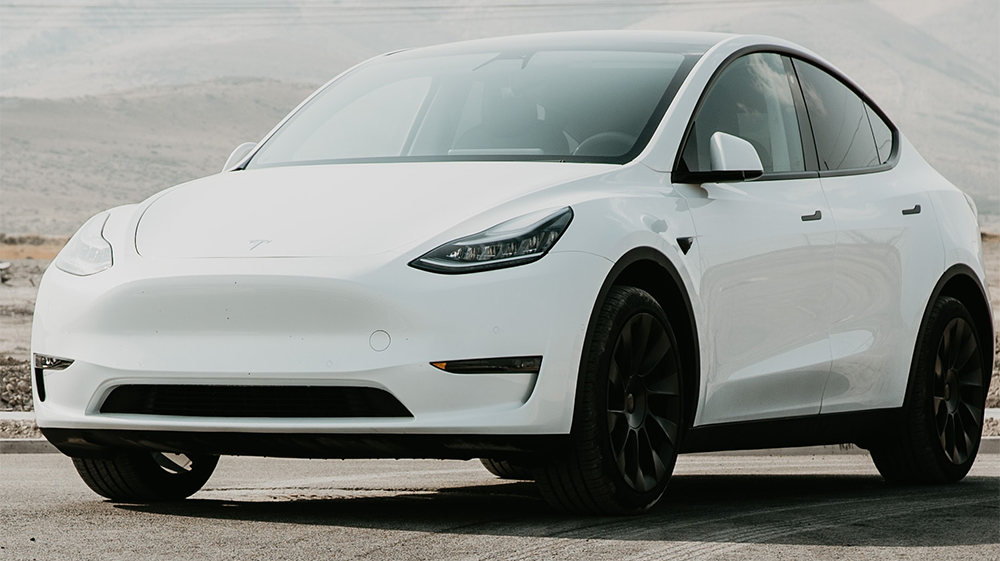
The Model Y, which currently holds the title of one of the best-selling vehicles globally, commands a premium over the Model 3 due to its SUV form factor. Prices generally fluctuate between $45,000 and $55,000 depending on the trim level. From a financial perspective, the Model Y often represents a better “value-per-square-foot” proposition for families, potentially impacting its future resale liquidity.
The Model S and Model X: The Flagship Luxury Assets
For the premium segment, the Model S and Model X represent a significant jump in capital expenditure. The Model S, Tesla’s flagship sedan, generally starts around $75,000, while the Plaid variant—offering elite-level performance—can exceed $90,000.
The Model X, featuring its signature falcon-wing doors and increased towing capacity, starts in the $80,000 range. It is important to note that the Model X often qualifies for specific business tax advantages due to its Gross Vehicle Weight Rating (GVWR), a factor that can drastically alter the “net cost” for business owners and entrepreneurs.
The Cybertruck: A New Class of Depreciation and Utility
The Cybertruck introduces a unique variable into the Tesla pricing equation. With prices ranging from approximately $60,000 for future entry-level trims to over $100,000 for the “Cyberbeast” edition, it serves as both a utility vehicle and a high-visibility branding tool. For investors and business owners, the Cybertruck’s unique stainless-steel construction may lead to a different depreciation curve compared to traditional painted aluminum or steel vehicles.
Leveraging Incentives: Reducing the Net Purchase Price
The true cost of a Tesla is often significantly lower than the MSRP thanks to a complex web of fiscal incentives. In the “Money” category of vehicle ownership, failing to account for these is a missed opportunity for immediate ROI.
Federal Tax Credits and the Inflation Reduction Act
The most substantial factor in reducing the cost of a Tesla is the Federal EV Tax Credit. Under current regulations, eligible buyers can receive up to $7,500 off the purchase price of certain Model 3 and Model Y configurations. Crucially, this credit is now “point-of-sale,” meaning it can be applied directly to the purchase price at the dealership, reducing the amount financed and the subsequent interest paid over the life of the loan.
However, these credits are subject to strict income caps ($150,000 for individuals, $300,000 for joint filers) and MSRP limits ($55,000 for sedans, $80,000 for SUVs). Navigating these thresholds is a vital part of the financial planning process when selecting a specific trim or model.
State-Level Rebates and Local Perks
Beyond federal incentives, various states offer additional financial “stacking” opportunities. For example, states like Colorado or Massachusetts have historically offered thousands of dollars in additional rebates. When combined with the federal credit, the effective cost of a Model 3 can drop into the high $20,000 range in certain jurisdictions—a price point that competes directly with traditional internal combustion engine (ICE) vehicles.
Business Deductions and Section 179
For business owners, the financial math changes entirely. Under Section 179 of the tax code, vehicles with a GVWR over 6,000 pounds—which includes the Model X and the Cybertruck—may be eligible for accelerated depreciation. This allows a business to deduct a significant portion of the vehicle’s cost in the first year of ownership, provided it is used primarily for business purposes. This can result in tens of thousands of dollars in tax savings, effectively subsidizing the luxury price tag of the vehicle.

Operational Expenditure: The Long-Term Savings Analysis
To understand “how much” a Tesla costs, one must look at the Total Cost of Ownership (TCO). This is where the Tesla often outperforms its ICE counterparts, shifting the financial burden from recurring operational costs to the initial capital outlay.
Fuel Displacement and Energy Costs
The primary driver of OPEX reduction is the displacement of gasoline. On average, charging a Tesla at home costs significantly less per mile than fueling a comparable gasoline vehicle. Depending on local utility rates, an owner might spend $10 to $15 to “fill up” a 300-mile battery, whereas a gasoline SUV might require $50 to $70 for the same distance. Over an average ownership period of five years and 75,000 miles, this can result in $6,000 to $10,000 in direct savings.
Maintenance and Repair Profiles
Teslas have fewer moving parts than traditional vehicles—no oil changes, no spark plugs, no transmission flushes, and no timing belts. This simplicity leads to lower routine maintenance costs. Furthermore, regenerative braking significantly extends the life of brake pads and rotors, often lasting well over 100,000 miles.
However, it is important to budget for specialized costs. Tesla tires tend to wear faster due to the high torque and heavy weight of the battery packs. Additionally, out-of-warranty repairs for components like the air suspension or the infotainment screen can be costly, necessitating a “sinking fund” for long-term owners.
Insurance Premiums: The Hidden Variable
One area where Tesla ownership may increase costs is insurance. Due to the high cost of specialized repairs and the sophisticated sensor suites (Tesla Vision) integrated into the bodywork, insurance premiums for Teslas are often 20% to 50% higher than for comparable luxury sedans. Using “Tesla Insurance,” where available, can mitigate this by utilizing real-time driving behavior to set rates, but it remains a critical line item in the monthly budget.
Resale Value and the Depreciation Curve
In any significant purchase, the “cost” is effectively the difference between the purchase price and the resale price. Tesla’s resale value has historically been a volatile subject, influenced heavily by the company’s aggressive pricing adjustments.
Software-Defined Longevity
Unlike traditional cars that age the moment they leave the lot, Teslas are “software-defined vehicles.” Over-the-air (OTA) updates can add performance, range efficiency, and new features years after the purchase. This technological “evergreening” can help bolster resale value, as a three-year-old Tesla may functionally outperform its original specs.
Market Volatility and Price Cuts
In recent years, Tesla has utilized price cuts as a tool to maintain market share. While this benefits new buyers, it can lead to sudden “equity hits” for existing owners. If the MSRP of a new Model Y drops by $5,000, the value of a used Model Y on the secondary market drops commensurately. For those looking at a Tesla as a short-term asset (2–3 years), this volatility represents a significant financial risk. For long-term holders (5–8 years), the impact of these fluctuations is usually smoothed out by the total fuel and maintenance savings accumulated over time.
Financing and Leasing: Optimizing Capital Allocation
The final component of the cost equation is how the purchase is structured. In a high-interest-rate environment, the method of acquisition is just as important as the purchase price.
Cash vs. Financing
While paying cash avoids interest expenses, many buyers opt for financing to keep their capital deployed in higher-yield investments. Tesla occasionally offers promotional financing rates (e.g., 0.99% or 1.99%) on specific models like the Model Y. When the cost of borrowing is significantly lower than the expected return on a diversified investment portfolio, financing becomes the mathematically superior choice.
The Leasing Strategy
Leasing a Tesla can be a prudent move for those who want to avoid the risks of depreciation and technological obsolescence. It allows the user to pay only for the “useful life” of the vehicle. Furthermore, for those who do not qualify for the federal tax credit due to income limits, leasing companies can often “pass through” the $7,500 credit as a cap-cost reduction, effectively lowering the monthly payment for high-income earners who wouldn’t otherwise benefit from the incentive.
Conclusion: The Holistic View of Tesla Pricing
How much are the Teslas? The answer is a moving target. While the sticker price provides a baseline, the true cost is a calculation of the purchase price minus tax incentives, plus insurance and tire maintenance, minus the massive savings in fuel and routine service, and finally, adjusted for the residual value at the time of exit.
For the financially savvy consumer, a Tesla represents a shift from “renting” energy via the gas pump to “owning” an energy-efficient asset. When structured correctly—leveraging tax codes, timing the market for promotional rates, and accounting for lower operational costs—the “expensive” Tesla often proves to be the most fiscally responsible vehicle choice in the modern economy.
aViewFromTheCave is a participant in the Amazon Services LLC Associates Program, an affiliate advertising program designed to provide a means for sites to earn advertising fees by advertising and linking to Amazon.com. Amazon, the Amazon logo, AmazonSupply, and the AmazonSupply logo are trademarks of Amazon.com, Inc. or its affiliates. As an Amazon Associate we earn affiliate commissions from qualifying purchases.