
In the realm of budget travel, few airlines evoke as much discussion as Spirit Airlines. Known for its ultra-low base fares, Spirit has mastered the art of unbundling services, allowing passengers to pay only for what they need. This a la carte model often leads to the ubiquitous question that can make or break a traveler’s budget: “How much are Spirit bags?” Understanding Spirit’s baggage policy is not just about knowing a price list; it’s a critical component of savvy travel budgeting and a prime example of how ancillary fees can significantly impact the true cost of your journey.
For many, the initial allure of a ridiculously cheap flight ticket can quickly dissipate when confronted with the full spectrum of fees. Baggage, in particular, stands out as one of the most substantial additional costs. This comprehensive guide will delve deep into Spirit’s baggage structure, illuminate the financial implications, and equip you with strategies to manage these expenses effectively, ensuring your dream vacation doesn’t turn into a financial headache before you even leave the ground. By dissecting the nuances of Spirit’s approach, we aim to transform potential budget pitfalls into opportunities for smart savings, demonstrating that flying ultra-low-cost can indeed be affordable if approached with knowledge and strategic planning.
Unpacking the Spirit Airlines Baggage Policy: What Travelers Need to Know
Spirit Airlines operates on a simple premise: provide the lowest possible base fare and charge separately for extras like seat selection, in-flight refreshments, and, most notably, baggage. This model empowers travelers to customize their experience, but it also places the onus on them to understand the fee structure thoroughly. Ignoring these details can lead to unpleasant surprises and inflated travel costs.
The Basic Structure: Carry-On vs. Checked Bags
Spirit distinguishes between several types of baggage, each with its own pricing tier. The most crucial distinction is between a “personal item,” a “carry-on bag,” and “checked bags.”
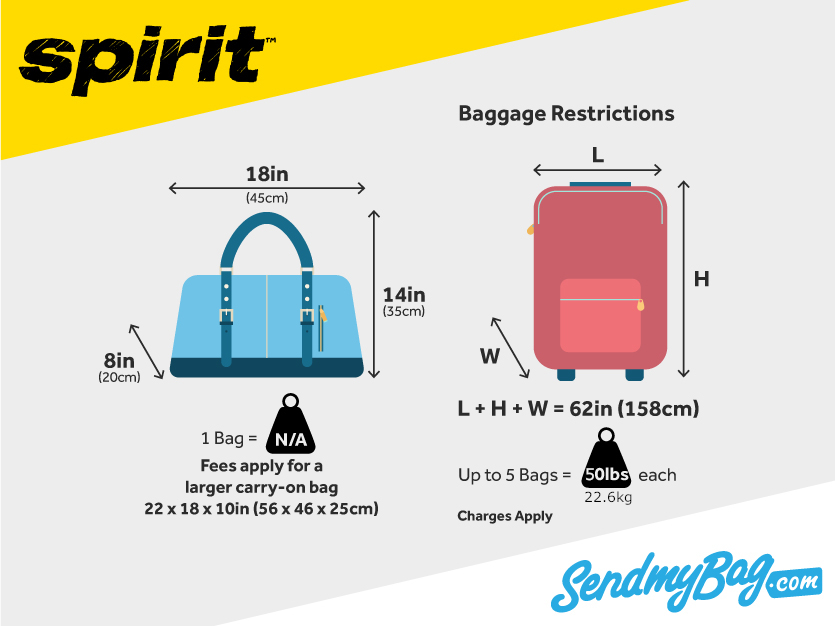
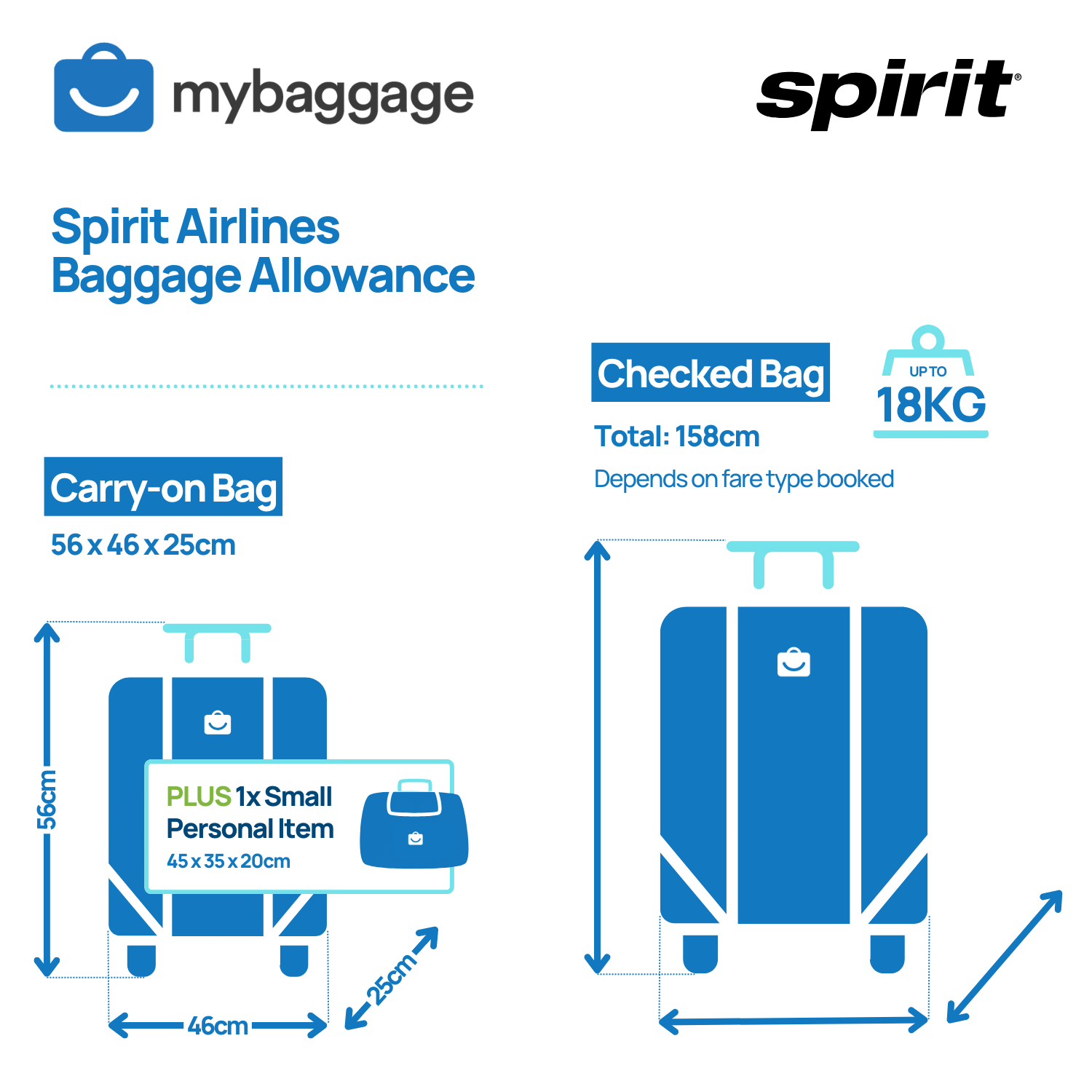
Every passenger is allowed one free personal item. This item must fit under the seat in front of you and typically includes small backpacks, purses, laptop bags, or briefcases. The dimensions for a personal item are generally around 18 x 14 x 8 inches (45 x 35 x 20 cm), including handles and wheels. This is your primary opportunity for free storage, and maximizing its use is often the first step in saving money.
A carry-on bag is larger than a personal item and is stowed in the overhead bin. Spirit’s typical carry-on dimensions are 22 x 18 x 10 inches (56 x 46 x 25 cm). Unlike many legacy carriers, Spirit charges a fee for carry-on bags. This is a critical point of difference that often catches first-time Spirit flyers off guard.
Checked bags are those you hand over at the check-in counter and are stored in the aircraft’s cargo hold. Spirit typically allows up to five checked bags per passenger, each with weight and size restrictions (usually 40 lbs or 18 kg, and a maximum linear dimension of 62 inches or 158 cm). Exceeding these limits incurs additional overweight or oversized bag fees, which can quickly become exorbitant. Each checked bag also carries its own fee, which varies based on several factors.
Dynamic Pricing: Why Fees Fluctuate
One of the most perplexing aspects of Spirit’s baggage fees for many consumers is their dynamic nature. Unlike fixed prices, Spirit’s baggage costs are not static; they change based on a variety of factors, making accurate budgeting a moving target without prior research.
Route and Destination: Fees can vary significantly depending on your specific flight route. International flights or popular destinations might see higher baggage charges.
Time of Purchase: This is perhaps the most critical factor for cost-conscious travelers. Spirit heavily incentivizes passengers to purchase baggage allowance as early as possible. Fees are typically lowest when purchased online during the initial booking process. They increase if purchased later online (e.g., during online check-in), and are significantly higher if purchased at the airport counter or, even more so, at the gate. This tiered pricing structure punishes procrastination.
Spirit’s ‘Peak’ vs. ‘Off-Peak’ Travel: Similar to flight fares, baggage fees can also fluctuate based on demand. Traveling during peak seasons, holidays, or popular times may result in higher baggage fees.
Understanding this dynamic pricing model is crucial. It’s not enough to know a price; you need to know your price at your specific time of purchase for your specific flight.
Key Factors Influencing Your Baggage Cost
To consolidate, here are the main variables that determine how much you’ll pay for Spirit bags:
- Type of Bag: Personal item (free), carry-on (fee), checked bag (fee).
- Number of Bags: Each additional bag incurs a separate fee.
- Weight and Size: Exceeding standard limits triggers overweight/oversized fees.
- Time of Purchase: Online during booking < Online post-booking < Airport kiosk/counter < Gate.
- Route: Domestic vs. International, specific city pairs.
- Travel Date: Peak vs. off-peak seasons.
- Passenger Status: Certain loyalty program members or credit card holders might receive discounts or waivers.
The True Cost of Flying Spirit: Beyond the Base Fare
Many travelers are initially drawn to Spirit by eye-poppingly low base fares—sometimes under $50 for a cross-country flight. However, it’s imperative for financial planning to look beyond this headline number and calculate the all-in cost, especially when baggage is involved.
Calculating the Total: An Example Breakdown
Let’s illustrate with a hypothetical round-trip flight from New York (LGA) to Fort Lauderdale (FLL):
- Base Fare (Round-trip): $80
- Carry-on Bag (purchased at booking, round-trip): $70 (e.g., $35 each way)
- First Checked Bag (purchased at booking, round-trip): $80 (e.g., $40 each way)
- Seat Selection (optional, round-trip): $20 (e.g., $10 each way)
In this scenario, the initial $80 base fare quickly inflates to $250 if you opt for both a carry-on and a checked bag, plus seat selection. If you were to purchase these bags at the airport, the cost could easily jump to $100+ for the carry-on and $120+ for the checked bag, pushing your total bill closer to $300-$350 or more. This example underscores how baggage fees can easily dwarf the original ticket price.
The Hidden Costs of Not Planning Ahead
The “hidden” costs are less about literal concealment and more about lack of awareness or poor planning. The biggest culprit is purchasing bags at the airport. Spirit’s airport counter and gate fees are significantly higher than online pre-purchase prices, sometimes double or triple the cost. Forgetting to pre-pay for a carry-on or checked bag can turn a budget-friendly trip into an expensive lesson in airline economics.
Another hidden cost can be the stress and time associated with dealing with unexpected fees. Scrambling to repack at the gate, paying exorbitant last-minute fees, or even missing a flight due to these issues can have a significant emotional and financial toll. This intangible cost, while not a direct dollar amount, impacts the overall value and enjoyment of your travel experience.
Comparing Spirit’s Baggage Fees to Other Budget Carriers
While Spirit’s baggage fees often face scrutiny, it’s important to contextualize them within the broader landscape of ultra-low-cost carriers (ULCCs). Airlines like Frontier, Allegiant, and even some non-ULCCs (e.g., basic economy fares on American, Delta, United) also charge for carry-on and/or checked bags.

Generally, Spirit’s fees are competitive within the ULCC segment. What often differentiates them is the extent of unbundling (e.g., charging for carry-ons when some budget airlines still include them in their basic fare, or slightly higher airport fees). The key takeaway for financial planning is that if you frequently fly budget airlines, you must integrate baggage fees into your initial cost comparisons. A slightly higher base fare on another airline might actually be cheaper if it includes a carry-on bag that you would have paid extra for on Spirit. Always perform a total cost analysis, comparing apples to apples (base fare + all necessary add-ons) before booking.
Strategies for Minimizing Your Spirit Baggage Expenses
Navigating Spirit’s fee structure doesn’t have to be a harrowing experience. With a few smart strategies, you can significantly reduce your baggage expenses and truly leverage Spirit’s low base fares.
Pre-Purchasing: The Golden Rule of Savings
This cannot be stressed enough: always pre-purchase your baggage online during the initial booking process. This is where you will find the lowest possible prices for both carry-on and checked bags. Delaying this purchase until online check-in, or worse, until you reach the airport counter or gate, will invariably cost you more, often substantially more. Make a packing plan before you book, decide what bags you need, and add them to your reservation immediately.
The Personal Item Advantage: Maximizing Space
The free personal item is your secret weapon. For short trips, many savvy travelers aim to pack everything they need into just this one item. Invest in a high-quality personal item bag that maximizes its dimensions (e.g., a well-designed travel backpack that fits under the seat). Look for bags with multiple compartments, compression straps, and intelligent layouts. Learning to pack efficiently – rolling clothes, using packing cubes, wearing your bulkiest items – becomes an essential skill. This strategy eliminates all baggage fees.
Loyalty Programs and Credit Card Perks
While Spirit’s loyalty program, Free Spirit, doesn’t typically offer free bags as a baseline benefit for all members, elite status tiers (e.g., Silver, Gold) can include complimentary checked bags. If you’re a frequent Spirit flyer, accumulating status can yield significant savings over time.
Similarly, certain co-branded Spirit Airlines credit cards may offer perks such as priority boarding (which can sometimes help with overhead bin space) or discounts on baggage fees. Reviewing the benefits of such cards might reveal a long-term cost-saving solution if Spirit is your go-to airline. However, ensure the annual fee and other benefits justify the baggage savings for your travel patterns.
Packing Smart: The Art of Ultralight Travel
Beyond maximizing your personal item, adopting an ultralight packing philosophy can be a game-changer for avoiding baggage fees on any airline, especially Spirit.
- Versatile Clothing: Pack items that can be mixed and matched, worn multiple times, and are appropriate for various occasions.
- Travel-Sized Toiletries: Decant liquids into small containers or opt for solid alternatives (shampoo bars, solid toothpaste).
- Digital Alternatives: Instead of physical books, carry an e-reader. Use your phone for maps, entertainment, and guidebooks.
- Wear Bulky Items: If you absolutely need a heavy coat or boots, wear them on the plane rather than packing them.
- Packing Cubes: While they don’t reduce weight, they compress items and make organization easier, allowing you to fit more efficiently into a smaller space.
- Laundry on the Go: For longer trips, consider doing a small load of laundry at your destination rather than packing for every single day.
Long-Term Financial Planning for Savvy Travelers
Successfully managing Spirit’s baggage fees isn’t just about day-of-travel tactics; it’s about integrating travel costs into your broader financial planning.
Integrating Travel Costs into Your Annual Budget
Instead of viewing travel as an unexpected expense, incorporate it into your annual budget. Allocate a specific line item for “Travel” that includes not just airfare, but also projected costs for accommodation, activities, and crucial add-ons like baggage fees. By budgeting for baggage as a standard expense, you remove the element of surprise and ensure you’re setting aside sufficient funds. Research average baggage fees for your preferred airlines and routes, and use those figures in your calculations.
Building an Emergency Travel Fund
Even the most meticulously planned trips can encounter unforeseen circumstances. An emergency travel fund can cover unexpected baggage fees (e.g., you return with souvenirs that require an extra checked bag), rebooking fees, or other travel disruptions. This fund provides a financial safety net, reducing stress and preventing you from dipping into other critical savings accounts should things go awry. Aim to save 10-15% more than your estimated trip cost as a buffer.
The Value of Flexibility: Off-Peak Travel and Fee Avoidance
Financial savings often correlate with flexibility. Traveling during off-peak seasons, mid-week, or red-eye flights can not only lead to lower base fares but also potentially lower baggage fees or at least less crowded flights where you might have more leeway. Being flexible with your travel dates and times empowers you to pick the most cost-effective options, minimizing both ticket prices and associated fees. Additionally, consider destinations where you genuinely need less luggage, making a personal-item-only trip more feasible.
Is Spirit Still the Most Affordable Option? A Financial Perspective
The ultimate question for many is whether, despite the fees, Spirit Airlines remains the most financially viable choice. The answer is nuanced and depends heavily on individual travel habits and needs.
When Spirit Makes Financial Sense
Spirit truly shines for the minimalist traveler. If you can travel with just a personal item, or perhaps a pre-paid carry-on, and don’t require specific seat assignments or in-flight frills, Spirit’s low base fares are genuinely unbeatable. It’s an excellent option for short, direct flights, particularly for solo travelers or couples who are disciplined packers. For college students, budget-conscious adventurers, or those visiting family nearby, Spirit offers a fantastic way to fly point-to-point without breaking the bank, provided you follow the rules.
When Other Airlines Might Be Cheaper Overall
Spirit’s competitive advantage diminishes rapidly under certain conditions. If you need to check multiple heavy bags, require specific seat assignments (especially exit row or extra legroom), travel with young children needing adjacent seats, or value amenities like free snacks, Wi-Fi, and in-flight entertainment, the cumulative cost on Spirit can quickly surpass that of a legacy carrier.
A full-service airline’s “all-inclusive” fare (which often includes a carry-on and sometimes a checked bag, along with seat selection and amenities) might end up being cheaper or comparable to a Spirit fare with all your desired add-ons. This is why the comprehensive “total cost analysis” is paramount before booking. Never assume the lowest base fare is the cheapest overall option.
The Value Equation: Price vs. Convenience
Ultimately, the decision of whether Spirit is the “cheapest” involves weighing monetary cost against personal value and convenience. For some, the minor inconvenience of limited legroom or the effort of meticulous packing is a small price to pay for significant savings. For others, the peace of mind that comes with a standard airline experience – knowing your bags are included, having more flexibility with seating, and enjoying basic amenities – is worth a higher upfront cost.
Understanding “how much are Spirit bags” is not merely about finding a price list; it’s about mastering a strategic approach to travel budgeting. By being informed about dynamic pricing, planning your baggage needs in advance, packing intelligently, and integrating travel costs into your overall financial strategy, you can unlock the true savings potential of ultra-low-cost carriers. Spirit Airlines offers a unique proposition: exceptionally low base fares with the expectation that travelers will actively manage their ancillary costs. For the financially astute traveler, this model presents an opportunity to fly further for less, transforming potential budget pitfalls into savvy savings.
aViewFromTheCave is a participant in the Amazon Services LLC Associates Program, an affiliate advertising program designed to provide a means for sites to earn advertising fees by advertising and linking to Amazon.com. Amazon, the Amazon logo, AmazonSupply, and the AmazonSupply logo are trademarks of Amazon.com, Inc. or its affiliates. As an Amazon Associate we earn affiliate commissions from qualifying purchases.