
The transition from internal combustion engines (ICE) to electric vehicles (EVs) is no longer a niche movement for early adopters; it is a global economic shift. At the center of this revolution is Tesla, a company that has redefined automotive pricing structures, sales models, and value retention. For the prospective buyer or the financially minded observer, the question “How much are new Teslas?” involves far more than a simple MSRP lookup. It requires a deep dive into government subsidies, total cost of ownership (TCO), and the unique market dynamics of the EV sector.

In this financial analysis, we break down the current cost of entry for the Tesla ecosystem, the impact of tax incentives, and the long-term fiscal implications of choosing an electric fleet.
Understanding the MSRP Landscape: Current Pricing for the Tesla Lineup
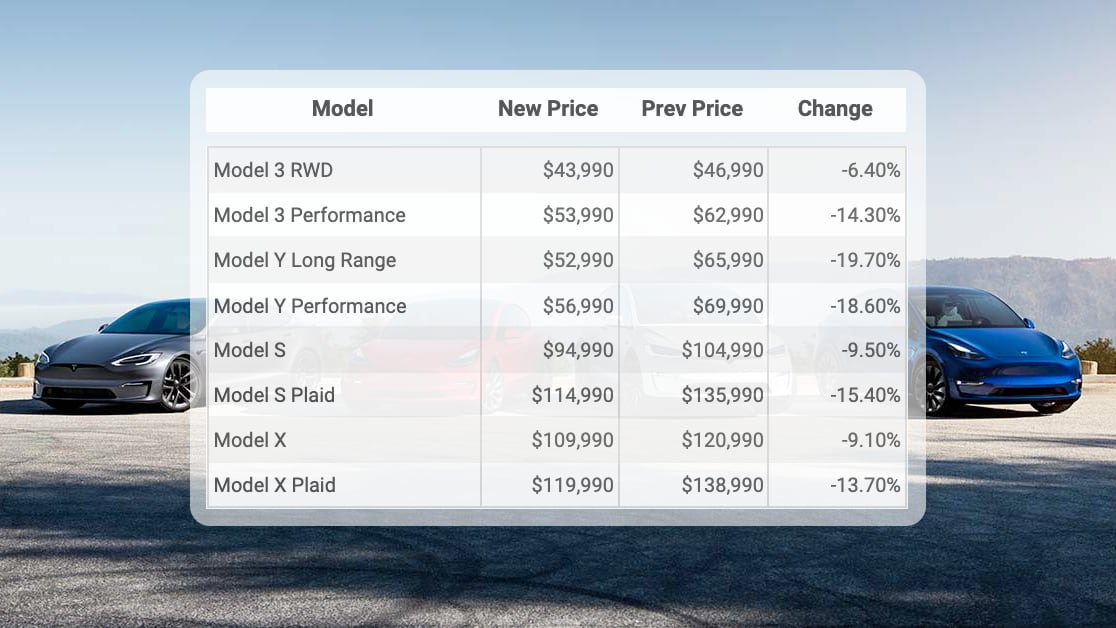
Tesla famously utilizes a direct-to-consumer sales model, eschewing the traditional dealership franchise system. This means the price you see on their website is the price you pay, free from “market adjustments” or dealer markups. However, Tesla’s pricing is notoriously fluid, often adjusting in response to supply chain costs, interest rates, and competitive pressure.
Entry-Level Accessibility: The Model 3 and Model Y
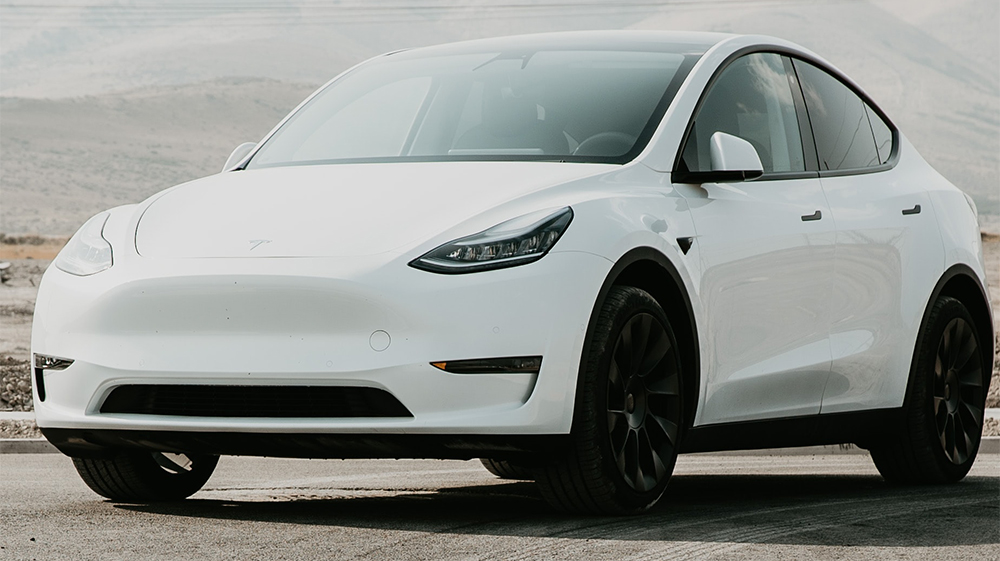
The Model 3 and Model Y represent the “Mass Market” segment of Tesla’s strategy. As of the current fiscal period, the Model 3 (a compact sedan) typically starts in the range of $39,000 to $45,000 for the Rear-Wheel Drive (RWD) base trim. The Model Y (a compact SUV), currently the best-selling vehicle globally, sits slightly higher, generally ranging from $43,000 to $53,000 depending on the configuration. For the budget-conscious consumer, these models offer the lowest barrier to entry while providing the core benefits of the Tesla ecosystem.
The Premium Tier: Model S and Model X
For those targeting the luxury and high-performance segments, the Model S and Model X remain the flagship offerings. These vehicles command a significant premium, reflecting their advanced air suspension, tri-motor powertrains (in Plaid variants), and superior interior materials. The Model S typically starts around $75,000, while the Model X, with its complex Falcon Wing doors, begins near $80,000. These figures can easily exceed $100,000 when opting for the “Plaid” performance packages, representing a different tier of capital investment.
The Cutting Edge: Cybertruck and Performance Variants
The introduction of the Cybertruck has added a new layer to Tesla’s pricing architecture. Due to its unique stainless-steel exoskeleton and specialized manufacturing process, the Cybertruck currently occupies a high-margin bracket. While “Foundation Series” models have been priced near the $100,000 mark, the long-term goal for the truck is to offer variants that compete with traditional light-duty pickups in the $60,000 to $80,000 range. Understanding these price points is essential for calculating the initial capital outlay required for a new vehicle.
Beyond the Sticker Price: The Role of Government Incentives and Tax Credits
The “out-the-door” price of a Tesla is frequently lower than the MSRP due to aggressive government intervention designed to accelerate the adoption of clean energy. In the United States, the Inflation Reduction Act (IRA) has fundamentally altered the financial calculus of buying a Tesla.
The Federal Clean Vehicle Credit (Section 30D)
Under current regulations, many new Tesla models qualify for a federal tax credit of up to $7,500. However, this is not a universal discount. From a financial planning perspective, buyers must satisfy two main criteria: income limits and vehicle price caps. For instance, the Model 3 and Model Y must stay under an MSRP of $55,000 and $80,000, respectively, to qualify. Additionally, individual filers must earn less than $150,000 (or $300,000 for joint filers) to claim the credit. One of the most significant recent changes is the “Point of Sale” rebate, allowing buyers to transfer the credit to the dealer to lower the purchase price immediately, rather than waiting for tax season.
State-Level Rebates and Local Incentives
Beyond federal help, various states offer additional financial “sweeteners.” States like California, Colorado, and Massachusetts have historically offered rebates ranging from $1,500 to $5,000. When combined with federal credits, the effective price of a Model 3 can drop into the high $20,000s in specific jurisdictions. From a money-management standpoint, identifying these regional incentives is the most effective way to maximize the Return on Investment (ROI) of the purchase.
Total Cost of Ownership (TCO): Factoring in Long-Term Financial Variables
One of the most common mistakes in personal finance is focusing solely on the purchase price while ignoring the operating costs. The financial “genius” of the Tesla lies not in its sticker price, but in its Total Cost of Ownership over a five-to-ten-year horizon.
Energy Savings vs. Fossil Fuels
The primary financial driver for EV ownership is the delta between the cost of electricity and the cost of gasoline. On average, charging a Tesla at home costs about one-third as much per mile as fueling a comparable gas-powered vehicle. For a driver covering 15,000 miles per year, this can result in annual savings of $1,000 to $2,000. Over a seven-year ownership period, the “fuel” savings alone can offset over $10,000 of the initial purchase price, a factor that must be amortized into the vehicle’s net cost.
Maintenance Costs and the Longevity of EV Components
Tesla vehicles have significantly fewer moving parts than internal combustion engines. There are no oil changes, spark plugs, timing belts, or smog checks. The regenerative braking system also dramatically extends the life of brake pads and rotors. While Teslas are not maintenance-free—they still require tires, cabin filters, and windshield wiper fluid—the scheduled maintenance costs are statistically lower than those of BMW, Mercedes, or even high-end Toyotas. This reduction in “passive” expenses is a critical component of the Tesla value proposition.
Insurance Premiums and the “Tesla Tax”
Conversely, prospective owners must account for higher insurance premiums. Because Teslas utilize advanced sensors, cameras, and unique aluminum castings, they can be more expensive to repair after an accident. Many insurance carriers charge a “premium” for EVs to cover these potential repair costs. To mitigate this, Tesla offers its own real-time-basis insurance in several states, using driving behavior data to price premiums. Financial due diligence requires getting an insurance quote before signing the purchase agreement.
Depreciation and Resale Value: Is a Tesla a Sound Financial Investment?
A vehicle is almost always a depreciating asset, but the rate of that depreciation is what determines the ultimate cost to the owner. Tesla’s relationship with depreciation has been volatile in recent years.
Historical Resale Trends in the EV Market
Historically, Teslas held their value better than almost any other vehicle on the market due to high demand and frequent over-the-air (OTA) software updates that kept older cars feeling “new.” However, as Tesla increased production capacity and lowered MSRPs in 2023 and 2024 to capture market share, the resale value of used Teslas took a significant hit. From a money-management perspective, this suggests that the “investment” quality of a Tesla is now more closely aligned with traditional luxury cars than it was during the supply-constrained years of 2020–2022.
The Impact of Price Volatility on Asset Value
Tesla’s strategy of dynamic pricing is a double-edged sword. While it makes new cars more affordable for new buyers, it can instantly erode the equity of existing owners. If you buy a Model Y for $50,000 today and Tesla cuts the price to $45,000 next month, your used car value drops accordingly. Buyers should view a Tesla as a long-term utility asset rather than a short-term speculative one, ideally planning for an ownership cycle of at least five to eight years to outlast price fluctuations.
Financing and Leasing Strategies for the Modern Buyer
How you pay for a Tesla is just as important as how much you pay. With fluctuating interest rates, the decision between cash, financing, and leasing requires careful calculation of opportunity costs.
Direct Financing through Tesla vs. Traditional Banks
Tesla offers in-house financing, often partnered with major lenders like JPMorgan Chase or Wells Fargo. While convenient, Tesla’s rates are not always the most competitive. Savvy buyers often find better rates at local credit unions, which may offer “green car loans” with interest rates 0.5% to 1.0% lower than standard auto loans. On a $50,000 loan, that difference can save several thousand dollars over a 72-month term.
The Case for Leasing in a Rapidly Advancing Tech Market
In the tech world, hardware becomes obsolete quickly. Because Teslas are essentially “computers on wheels,” leasing has become a popular financial strategy. Leasing allows a consumer to “rent” the vehicle’s most productive years and return it before the battery warranty expires or the technology becomes dated. Furthermore, for business owners, leasing a Tesla can often be written off as a business expense more easily than a purchase, providing a different type of tax shield.
In conclusion, determining “how much” a new Tesla costs is an exercise in comprehensive financial modeling. While the sticker price provides a starting point, the true cost is a mosaic of MSRP, federal incentives, fuel savings, and depreciation. By analyzing these factors through a professional financial lens, consumers can move beyond the “cool factor” of the brand and make a data-driven decision that aligns with their long-term wealth goals.
aViewFromTheCave is a participant in the Amazon Services LLC Associates Program, an affiliate advertising program designed to provide a means for sites to earn advertising fees by advertising and linking to Amazon.com. Amazon, the Amazon logo, AmazonSupply, and the AmazonSupply logo are trademarks of Amazon.com, Inc. or its affiliates. As an Amazon Associate we earn affiliate commissions from qualifying purchases.