
Purchasing a Tesla is no longer just a statement of environmental consciousness; it is a significant financial decision that sits at the intersection of high-end technology and personal asset management. For potential buyers, the “price” of a Tesla is a moving target influenced by fluctuating MSRPs, federal tax incentives, varying fuel savings, and long-term depreciation curves. To understand how much a Tesla truly costs, one must look beyond the sticker price and analyze the total cost of ownership (TCO) and the vehicle’s unique position in the automotive secondary market.
Understanding the Entry Points: A Breakdown of Current Model Pricing
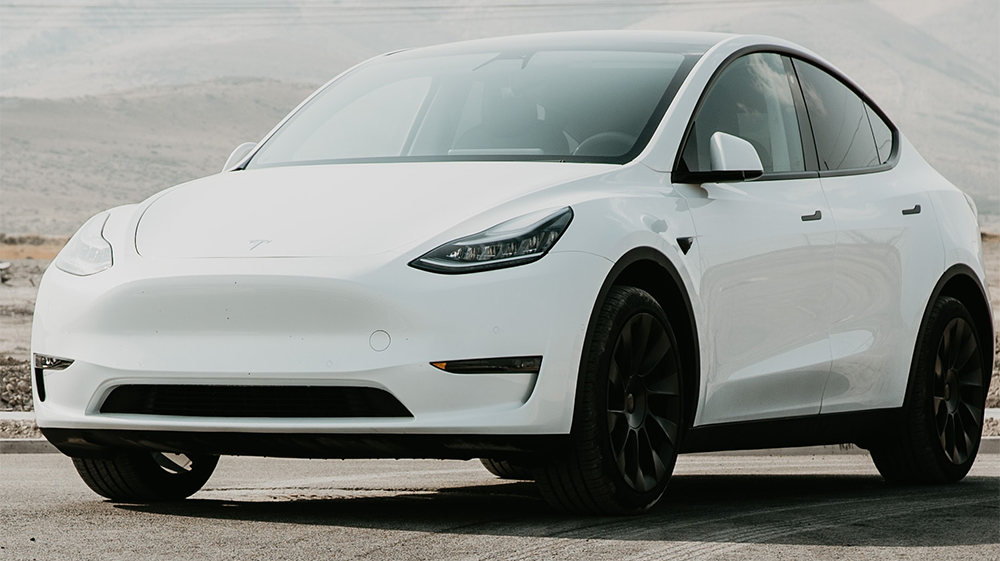
The primary driver of the cost of a Tesla is, naturally, the model and trim selection. Tesla’s pricing strategy is notoriously dynamic, often changing overnight in response to supply chain efficiencies or market demand. As of the current market cycle, the lineup is segmented into four core models and the specialized Cybertruck, each catering to a different financial bracket.
The Model 3 and Model Y: The Mass Market Pillars
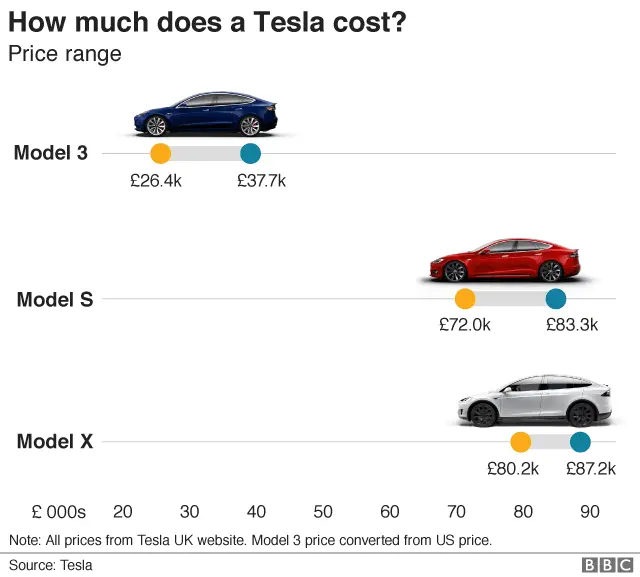
The Model 3 remains the most accessible entry point into the Tesla ecosystem. Starting roughly in the high $30,000 to low $40,000 range for the Rear-Wheel Drive (RWD) variant, it represents the brand’s attempt to capture the mid-sized sedan market. However, most buyers opt for the Long Range or Performance trims, which can push the price closer to $50,000.
The Model Y, currently the world’s best-selling vehicle, commands a premium over the Model 3 due to its SUV form factor. Starting in the mid-$40,000 range, it scales up quickly. For a family looking at a fully equipped Model Y Performance, the investment often exceeds $55,000 before taxes and fees. These two models are the primary beneficiaries of federal tax credits, making their “effective price” significantly lower for eligible buyers.
The Model S and Model X: Premium Luxury Segments
For those looking at the higher end of the financial spectrum, the Model S (sedan) and Model X (SUV) represent the flagship experience. These vehicles start significantly higher, typically beginning in the $75,000 to $80,000 range. The “Plaid” variants, which offer supercar-level acceleration, can easily drive the price north of $90,000. Unlike the Model 3 and Y, these vehicles rarely qualify for federal tax incentives due to price caps, placing them firmly in the luxury discretionary spending category.
The Cybertruck: A New Variable
The Cybertruck has introduced a new tier of pricing complexity. With the “Foundation Series” launch models commanding prices over $100,000, it currently exists as a high-capital-outlay asset. While lower-priced versions are anticipated, the Cybertruck currently represents the ceiling of Tesla’s consumer pricing, appealing to high-net-worth individuals and business owners looking for unique tax-deductible equipment.
Beyond the Sticker Price: Hidden Costs and Long-Term Expenses
When calculating how much a Tesla costs, the initial purchase price is only the first line item in a complex financial ledger. Maintaining an electric vehicle (EV) shifts the expenditure profile from variable fuel costs to fixed infrastructure and insurance costs.
Charging Infrastructure and Utility Impact
While you “save” on gasoline, the electricity must come from somewhere. For the average owner, installing a Level 2 home charging station is a mandatory upfront cost. Between the hardware (the Tesla Wall Connector) and professional electrical installation, owners should budget an additional $1,000 to $2,500. While this is a one-time investment, it is a critical component of the “out-of-the-door” price. Furthermore, while residential electricity is cheaper than gasoline, owners in high-tariff regions must calculate the impact on their monthly utility bills, which can rise by $40 to $100 depending on mileage.
The Insurance Premium Gap
One of the most overlooked financial aspects of Tesla ownership is the insurance premium. Teslas are historically more expensive to insure than their internal combustion engine (ICE) counterparts. This is due to several factors: the high cost of proprietary parts, the specialized labor required for repairs, and the advanced sensor suites (cameras and ultra-sonics) that are easily damaged in minor collisions. On average, a Tesla owner might pay 20% to 50% more for insurance than they would for a similarly priced Audi or BMW.
Maintenance and Wear-and-Tear
The financial “win” for Tesla owners is in routine maintenance. With no oil changes, spark plugs, or timing belts, the ongoing service costs are remarkably low. However, there is one significant exception: tires. Due to the immense torque of electric motors and the heavy weight of the battery packs, Teslas tend to wear through tires 20% to 30% faster than traditional cars. A set of high-performance tires for a Model Y can cost $1,200 to $1,600, a recurring expense that should be factored into the three-year cost projection.

Navigating Incentives, Tax Credits, and Financing Options
The “real” cost of a Tesla is often determined by how well the buyer navigates the landscape of government incentives and financing structures. This is where the purchase moves from a simple transaction to a strategic financial maneuver.
The Federal EV Tax Credit (Internal Revenue Code Section 30D)
Under the Inflation Reduction Act, eligible buyers can receive a credit of up to $7,500 toward the purchase of a new Tesla. However, this is subject to strict “Money” rules:
-
MSRP Caps: Vans, SUVs, and pickups must be under $80,000; sedans must be under $55,000.
-
Income Limits: Modified Adjusted Gross Income (MAGI) must be below $150,000 for individuals or $300,000 for married couples.
-
Point of Sale: Currently, this credit can be applied directly at the time of purchase, effectively acting as a down payment.
Leasing vs. Buying: The Residual Value Play
Tesla’s leasing program is unique because, for most models, the company does not allow the lessee to buy out the car at the end of the term. From a financial planning perspective, leasing a Tesla is a pure “subscription” model. It protects the consumer from the risk of rapid technological obsolescence or sudden price drops in the used market, but it builds zero equity. For those who drive high miles or want to own the asset long-term, traditional financing or a cash purchase is generally the superior financial path.
The Tesla as an Asset: Depreciation, Resale Value, and ROI
In the world of personal finance, a car is typically a depreciating asset. However, the rate at which a Tesla loses value is a subject of intense debate and varies wildly based on market timing.
Market Volatility and the “Used Tesla” Trap
In 2021 and 2022, used Teslas often sold for more than new ones due to supply shortages. In 2023 and 2024, the script flipped. Tesla’s aggressive price cuts on new models instantly wiped out billions in collective equity for existing owners. If you buy a Model 3 for $45,000 and Tesla drops the new price to $39,000 the following week, your resale value collapses. This volatility makes Tesla a “high-risk” asset compared to brands like Toyota or Porsche, which have more predictable depreciation curves.
Software as Value Retention
One factor that helps Tesla’s resale value is its Over-the-Air (OTA) updates. Unlike a traditional car that is “at its best” the day you drive it off the lot, a Tesla technically improves over time. New features, improved battery efficiency, and updated user interfaces can keep an older model feeling modern, which can buoy the resale value compared to a five-year-old luxury car with an obsolete infotainment system.
Full Self-Driving (FSD) Investment
Buyers also face the choice of purchasing the Full Self-Driving capability, often costing between $8,000 and $12,000 (or a monthly subscription). From a financial standpoint, FSD is a controversial “investment.” While Tesla has suggested that FSD-equipped cars could one day become “appreciating assets” through a robotaxi network, in the current secondary market, FSD only recovers a fraction of its original cost upon resale.
Total Cost of Ownership (TCO) Comparison: Tesla vs. Luxury ICE
To answer “how much is a Tesla,” one must ultimately compare it to the alternative. If a buyer is choosing between a $45,000 Tesla Model 3 and a $45,000 BMW 3-Series, the Tesla often wins the five-year TCO battle.
When you aggregate the $7,500 tax credit, an average of $1,500 per year in fuel savings, and approximately $400 per year in reduced maintenance, the Tesla can “pay back” its price premium within three to four years. However, if the buyer does not qualify for the tax credit or lives in an area with extremely high electricity rates, the financial advantage narrows significantly.
In conclusion, the cost of a Tesla is a multi-layered calculation. It begins with a transparent sticker price but is shaped by tax policy, insurance markets, and the owner’s ability to charge at home. For the savvy financial planner, a Tesla is not just a car; it is a calculated hedge against rising fuel costs and a bet on the high residual value of software-driven hardware. Success in “pricing” a Tesla lies in the ability to look past the monthly payment and understand the full lifecycle of the vehicle as a financial asset.
aViewFromTheCave is a participant in the Amazon Services LLC Associates Program, an affiliate advertising program designed to provide a means for sites to earn advertising fees by advertising and linking to Amazon.com. Amazon, the Amazon logo, AmazonSupply, and the AmazonSupply logo are trademarks of Amazon.com, Inc. or its affiliates. As an Amazon Associate we earn affiliate commissions from qualifying purchases.