
Understanding the intricacies of Social Security is paramount for anyone planning their financial future, especially retirement. For many, Social Security represents a cornerstone of their post-work income, providing a vital safety net. One of the most common and critical questions individuals have is: “How many years of work do I need to qualify for Social Security benefits?” While the answer isn’t a simple fixed number of years for everyone due to varying life circumstances and benefit types, there’s a clear minimum requirement based on a system of “work credits.” This article delves into the mechanics of Social Security eligibility, exploring the work credit system, different benefit types, and how your work history ultimately shapes your future financial security.
Understanding Social Security’s Work Credit System
At its core, eligibility for Social Security benefits is determined by a system of “work credits.” These credits are earned through covered employment – jobs where you pay Social Security taxes (FICA or SECA). The system is designed to ensure that those who contribute to the system through their working years are the ones who ultimately benefit.
What Are Work Credits?
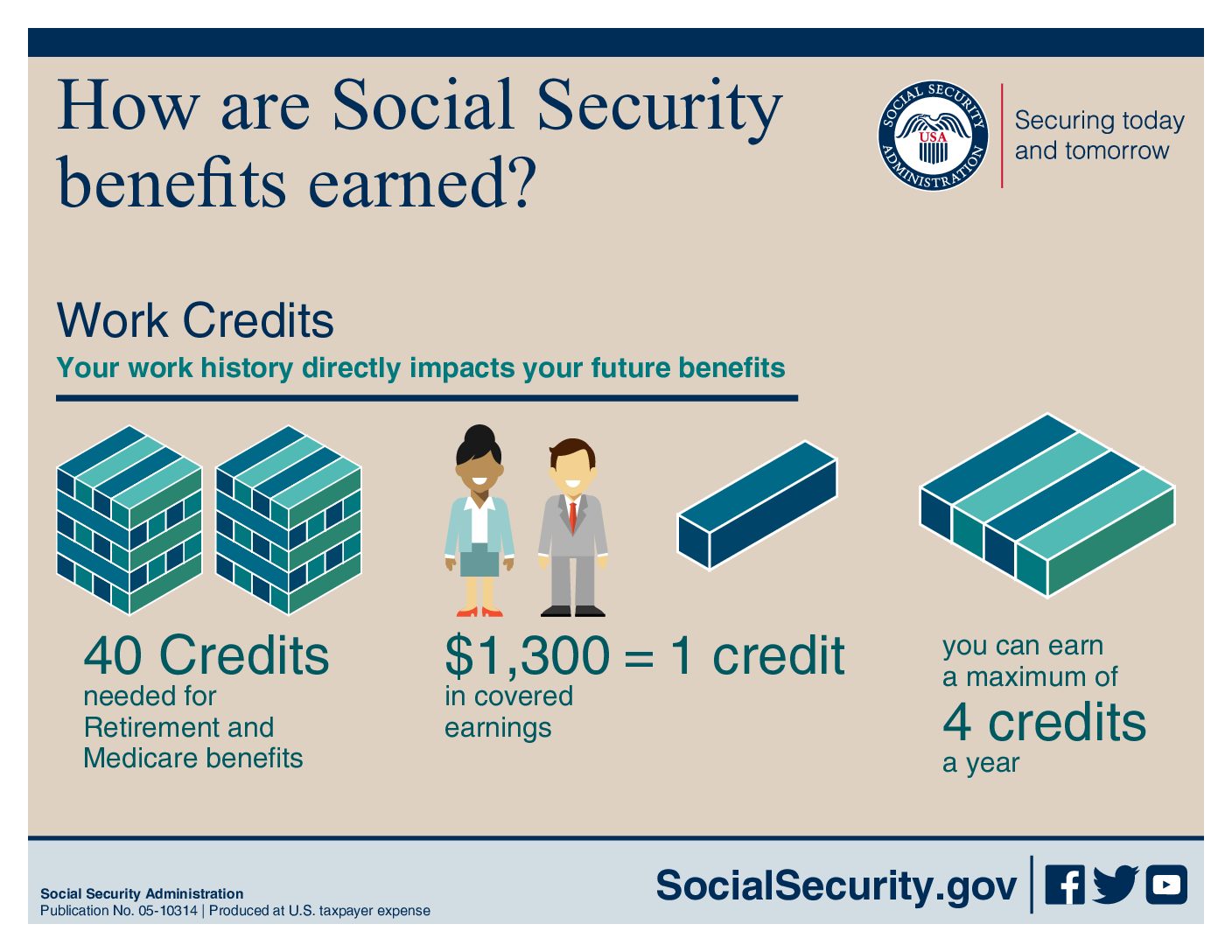
Work credits are essentially units that represent your contributions to Social Security. Each year, you can earn a maximum of four work credits. These credits are not directly tied to the number of hours you work but rather to your earnings. As long as you earn a certain amount of money within a calendar year, you earn a credit. The dollar amount required to earn one credit changes annually based on average wages. For instance, in 2024, you earn one Social Security work credit for every $1,730 in earnings, and you can earn up to four credits for the year once your earnings reach $6,920. This means even if you earn a substantial amount early in the year, you’ll still only max out at four credits for that year.
Earning Credits: The Annual Threshold
The threshold for earning a work credit is relatively low, making it accessible even for those with part-time work or intermittent employment. However, it’s crucial to understand that merely earning a small amount isn’t enough to qualify for full benefits; consistency over time is key. The maximum of four credits per year ensures that even high earners cannot fast-track their eligibility beyond the established timeline. This structure emphasizes consistent contribution over a significant portion of one’s working life, rather than merely high earnings over a short period.
The Magic Number: 40 Credits for Retirement Benefits
For the vast majority of people seeking retirement benefits, the “magic number” is 40 work credits. Since you can earn a maximum of four credits per year, this typically translates to 10 years of work where you’ve earned at least the minimum required to gain four credits each year. Once you have accumulated 40 credits, you are considered “fully insured” and are eligible to receive retirement benefits. It’s important to note that these 10 years do not have to be consecutive. You could work for a few years, take time off, and then return to work, accumulating credits over a longer span. The Social Security Administration (SSA) keeps a running tally of your earned credits throughout your lifetime.
Beyond the Basics: Different Benefit Types and Their Credit Requirements
While 40 credits are the standard for retirement, Social Security offers a range of benefits, and the credit requirements can vary significantly depending on the type of benefit you or your family members are seeking. This flexibility ensures that the system can adapt to different life circumstances, from retirement to unforeseen events like disability or death.
Retirement Benefits: The Standard
As discussed, 40 credits make you eligible for retirement benefits. Once fully insured, you can begin receiving benefits as early as age 62, though your benefit amount will be permanently reduced. Your “Full Retirement Age” (FRA) — the age at which you receive 100% of your primary insurance amount — varies based on your birth year, ranging from 66 to 67. Delaying claiming past your FRA, up to age 70, can further increase your monthly benefit through delayed retirement credits.
Disability Benefits: A Different Credit Calculation
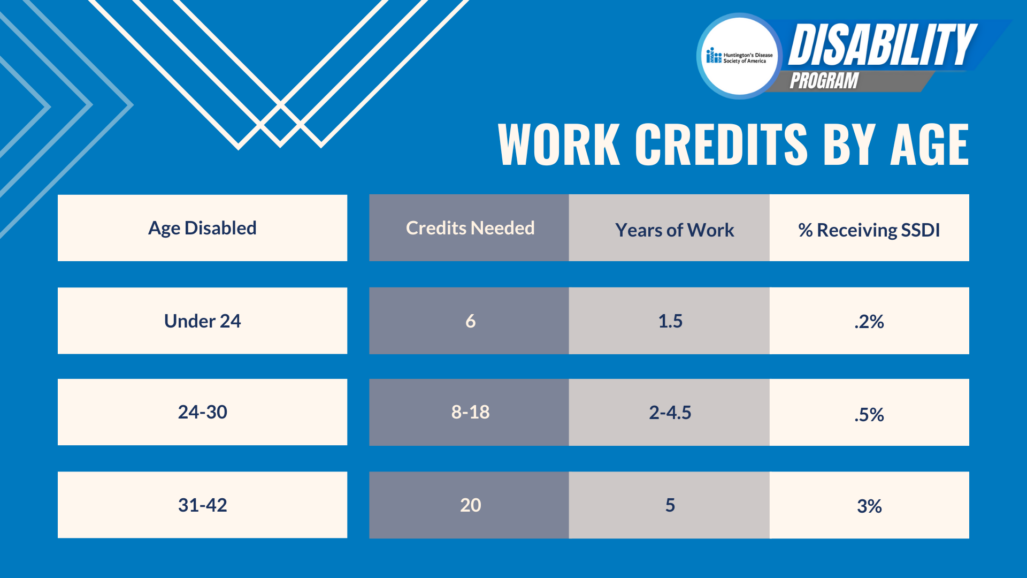
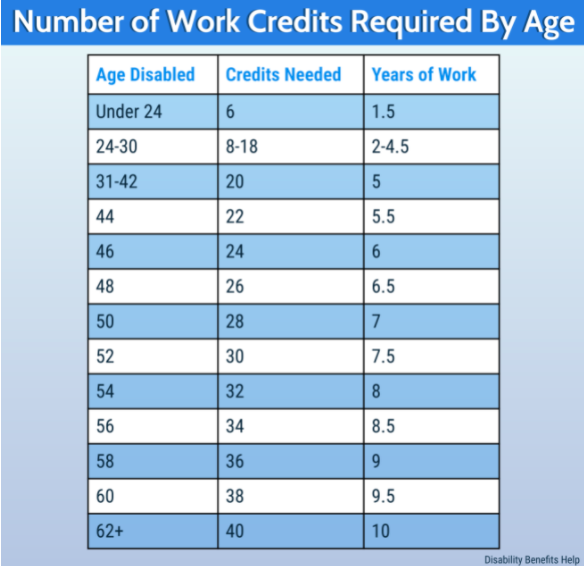
Social Security Disability Insurance (SSDI) provides a critical lifeline for those who become unable to work due due to a severe medical condition. The work credit requirement for disability benefits is more nuanced than for retirement and depends on your age when you become disabled. Generally, you need to be “fully insured” and have recent work.
-
Under age 24: You need 6 credits in the 3-year period ending when your disability starts.
-
Ages 24 to 31: You need credit for working half the time between age 21 and the time you become disabled.
-
Age 31 or older: You generally need to have earned at least 20 credits in the 10 years immediately before you became disabled, plus be fully insured (which typically means 40 credits, although the exact requirement can vary based on age).
These requirements ensure that individuals who have recently contributed to the system are covered, recognizing that disability can strike at any point in a working life.
Survivor Benefits: Protecting Your Loved Ones
In the unfortunate event of your death, Social Security can provide survivor benefits to your eligible family members, including your spouse, children, and dependent parents. The number of credits needed for your family to receive survivor benefits again depends on your age at the time of death. The younger you are, the fewer credits are generally required. If you’ve accumulated 40 credits, your family is typically fully covered. However, even if you don’t have 40 credits, survivor benefits might still be payable if you worked long enough to be “currently insured” – meaning you had 6 credits in the 3 years before your death. This provision provides a crucial safety net for young families.
Medicare Eligibility: An Important Tie-In
While not a direct cash benefit like retirement or disability, Medicare Part A (hospital insurance) eligibility is also tied to your Social Security work record. Most people automatically qualify for premium-free Part A at age 65 if they are eligible for Social Security retirement or disability benefits. This means having accumulated at least 40 work credits. If you haven’t worked long enough, you may still be able to get Medicare Part A by paying a monthly premium. This linkage highlights the comprehensive nature of Social Security as a social insurance program.
The Impact of Your Work History on Benefit Amount
Simply qualifying for Social Security by earning 40 credits is one thing; understanding how your work history determines the amount of benefit you’ll receive is another entirely. Social Security isn’t a flat payout; it’s a progressive system designed to replace a higher percentage of pre-retirement earnings for lower-income workers while still providing benefits to high earners.
Average Indexed Monthly Earnings (AIME)
Your benefit amount is primarily calculated based on your Average Indexed Monthly Earnings (AIME). The SSA takes your earnings from all years you’ve worked and indexes them to account for changes in the average wage level in the economy over time. This process brings past earnings into current dollar terms, ensuring that earlier contributions are given appropriate weight. The SSA then selects your 35 highest-earning years, sums them up, and divides by 420 (the number of months in 35 years) to arrive at your AIME. If you have fewer than 35 years of earnings, the missing years will be recorded as zeros, which will lower your overall AIME. This underscores the importance of a long and consistent work history.
The Primary Insurance Amount (PIA)
Once your AIME is calculated, it’s plugged into a formula to determine your Primary Insurance Amount (PIA). The PIA is the monthly benefit you would receive if you start collecting benefits exactly at your Full Retirement Age (FRA). The PIA formula is progressive, meaning it replaces a higher percentage of earnings for lower-income workers. It uses “bend points” – specific dollar amounts at which the percentage of earnings replaced decreases. This ensures that even those with lower lifetime earnings receive a meaningful benefit.
Factors Influencing Your Benefit: Years Worked, Earnings, and Claiming Age
Three primary factors dictate your monthly Social Security benefit:
-
Years Worked: As mentioned, the SSA uses your 35 highest-earning years. If you work for less than 35 years, each year you don’t contribute will be a zero in the calculation, significantly reducing your AIME and thus your PIA.
-
Lifetime Earnings: Simply put, the more you earn (up to the annual Social Security taxable earnings limit), the higher your potential AIME and PIA will be. However, there’s an annual cap on earnings subject to Social Security taxes. Earnings above this limit do not contribute further to your Social Security benefit calculation.
-
Claiming Age: This is perhaps the most significant factor you have direct control over. While you can claim as early as age 62, doing so results in a permanent reduction of your PIA. Conversely, delaying beyond your FRA (up to age 70) earns you delayed retirement credits, which can increase your monthly benefit by up to 8% per year. This decision can mean tens or even hundreds of thousands of dollars difference over a typical retirement lifespan.
The Importance of High-Earning Years
Given that your 35 highest-earning years are used for the AIME calculation, it becomes clear why higher earnings, especially during your peak earning years (often later in your career), are so crucial. If you have years with low earnings or no earnings, they will be replaced by higher earning years if you work longer. This incentivizes a longer career, particularly for those whose early career earnings were modest, as it allows them to replace those lower-earning years with higher ones, boosting their overall benefit.
Planning for Retirement: Social Security as Part of the Bigger Picture
While Social Security is an indispensable component of retirement planning, it’s rarely sufficient on its own. For most people, it’s designed to be a foundation, supplemented by personal savings, investments, and pensions. A holistic approach to retirement planning is essential to ensure financial security in your later years.
Don’t Rely Solely on Social Security
Financial experts widely agree that Social Security typically replaces only about 40% of an average worker’s pre-retirement income. For higher earners, this percentage is even lower. This stark reality means that personal savings and investments are absolutely critical to maintaining your desired lifestyle in retirement. Relying solely on Social Security can lead to a significant drop in living standards. This necessitates robust planning through 401(k)s, IRAs, personal investment accounts, and other savings vehicles.
Maximizing Your Social Security Benefits
Even if it’s not enough on its own, maximizing your Social Security benefit is a smart financial move. Strategies include:
-
Working Longer: To get to 35 years of high earnings and potentially delay claiming benefits.
-
Increasing Earnings: Where possible, especially during your peak earning years.
-
Strategic Claiming: Carefully considering your claiming age based on your health, other retirement assets, and family situation. For married couples, coordinating claiming strategies can significantly optimize combined benefits over a lifetime.
-
Monitoring Your Earnings Record: Regularly checking your Social Security statement for accuracy is crucial to ensure all your earnings are correctly recorded.
Integrating Social Security with Other Retirement Savings
Effective retirement planning involves integrating your expected Social Security benefits with your other income sources. Use tools like the Social Security Administration’s online calculators to estimate your future benefits. Then, factor these estimates into your overall retirement income projections. This allows you to determine how much more you need to save to bridge the gap between your Social Security benefits and your desired retirement income. It’s a continuous process of planning, saving, and adjusting.
Monitoring Your Social Security Statement
The SSA provides an annual Social Security Statement (accessible online via my Social Security account) that details your earnings history, estimated benefits at different claiming ages, and potential disability and survivor benefits. Regularly reviewing this statement is vital. It allows you to:
-
Verify Earnings: Ensure all your employers have correctly reported your earnings. Errors can reduce your future benefits.
-
Estimate Benefits: Get a personalized estimate of what you can expect, which is crucial for retirement planning.
-
Understand Eligibility: See how many credits you’ve accumulated and how many more you need for various benefits.
Common Misconceptions and Key Takeaways
Social Security is often misunderstood, leading to anxiety and poor planning. Addressing common misconceptions and reinforcing key takeaways can empower individuals to make informed decisions.
“Social Security Will Run Out” – Addressing Concerns
While Social Security faces long-term financial challenges, projections from the Social Security Administration indicate that it can pay a significant portion of promised benefits for decades to come, even if no legislative changes are made. The system is funded by ongoing payroll taxes, not a giant trust fund that is “running out.” While adjustments may be necessary in the future (e.g., changes to retirement age, tax rates, or benefit formulas), outright disappearance is highly unlikely given its role as a fundamental social program.
The Importance of Early Planning
Regardless of your age, it’s never too early to start thinking about Social Security. Understanding the work credit system, monitoring your earnings, and estimating your future benefits are steps anyone can take. Early planning allows for strategic decisions that can have a profound impact on your financial well-being in retirement, disability, or for your survivors.
Consulting Financial Professionals
For complex situations or personalized advice, consulting a financial advisor or a Social Security expert is highly recommended. They can help you navigate claiming strategies, integrate Social Security with your broader financial plan, and address any specific questions related to your unique circumstances. Their expertise can be invaluable in optimizing your benefits and securing your financial future.
In conclusion, accumulating 10 years of work to earn 40 work credits is the baseline for Social Security retirement benefits. However, the true value and impact of Social Security extend far beyond this minimum, intricately tied to your lifetime earnings, consistency of work, and strategic planning. By understanding these dynamics and proactively engaging with your Social Security benefits, you can build a more secure financial foundation for yourself and your loved ones.
aViewFromTheCave is a participant in the Amazon Services LLC Associates Program, an affiliate advertising program designed to provide a means for sites to earn advertising fees by advertising and linking to Amazon.com. Amazon, the Amazon logo, AmazonSupply, and the AmazonSupply logo are trademarks of Amazon.com, Inc. or its affiliates. As an Amazon Associate we earn affiliate commissions from qualifying purchases.