
The question of “how many total Bitcoins are there?” seems straightforward, yet its answer holds profound implications for the world of finance, investment, and economic theory. At its core, Bitcoin is designed with an absolute, unchangeable supply cap of 21 million coins. This seemingly simple number is a foundational pillar of Bitcoin’s value proposition and a radical departure from traditional monetary systems. For investors, economists, and anyone seeking to understand the future of digital assets, comprehending this finite supply is not just a matter of trivia; it’s key to grasping Bitcoin’s potential as a store of value, an inflation hedge, and a transformative financial tool.
Unlike fiat currencies, which can be printed or digitally created ad infinitum by central banks, Bitcoin’s supply is hard-coded into its protocol. This engineered scarcity is what gives Bitcoin its unique economic characteristics, fostering a deflationary environment designed to protect its purchasing power over time. As we delve deeper, we will explore not only the mechanics behind this 21-million cap but also its far-reaching consequences for investment strategies, market dynamics, and the broader financial landscape.
The Absolute Cap: A Cornerstone of Bitcoin’s Value Proposition
Bitcoin’s most revolutionary feature, from a monetary perspective, is its predetermined and finite supply. This is not a policy set by a governing body that can be altered; it’s an immutable rule embedded in its very code, a fundamental aspect of its decentralized design.
The 21 Million Limit: Why It Matters Economically
The hard cap of 21 million Bitcoins is not an arbitrary number but a deliberate design choice by its pseudonymous creator, Satoshi Nakamoto. This limit directly addresses one of the most significant challenges facing traditional fiat currencies: inflation. Central banks, in times of economic stress or policy objectives, can increase the money supply, often leading to a dilution of purchasing power over time. Bitcoin, by contrast, presents a stark counter-narrative: a digital asset with a truly fixed supply, immune to quantitative easing or inflationary pressures driven by limitless creation.
From an economic standpoint, scarcity is a fundamental driver of value. Gold, for instance, has long been revered as a store of value precisely because of its limited availability and the difficulty of its extraction. Bitcoin leverages this same principle in the digital realm. Its fixed supply means that as demand for Bitcoin potentially grows with increasing adoption and utility, the supply side remains constant, theoretically driving up its value over the long term. This makes Bitcoin a compelling proposition for investors seeking a hedge against inflation and a store of wealth outside the control of traditional financial institutions. It forces a deflationary bias, where each unit of Bitcoin is expected to increase in purchasing power over time, a concept largely foreign to modern fiat economies.
How the Cap is Enforced: Mining and Protocol Rules
The enforcement of the 21-million cap is ingeniously woven into Bitcoin’s underlying technology: the blockchain and its mining process. New Bitcoins are introduced into circulation as a reward to “miners” who validate transactions and add new blocks to the blockchain through a process called Proof-of-Work.
Every approximately ten minutes, a new block is mined, and the successful miner receives a block reward, paid in newly minted Bitcoins. This reward is how new coins enter the system. The critical aspect is that the Bitcoin protocol strictly dictates the initial block reward and, crucially, a mechanism to reduce it over time. This mechanism, known as “halving,” ensures that the issuance of new Bitcoins slows down systematically until the 21-million limit is reached.
The decentralized nature of Bitcoin means that no single entity or government can unilaterally decide to create more Bitcoins. Any attempt to alter the 21-million cap would require a consensus across the vast majority of network participants – miners, nodes, developers, and users. Such a change would fundamentally alter Bitcoin’s core value proposition and is highly improbable, given the network’s commitment to its founding principles of scarcity and decentralization. Thus, the integrity of the 21-million cap is protected by cryptographic rules and the collective self-interest of its global network participants, making it an unprecedented example of a mathematically enforced monetary policy.
The Dynamics of Bitcoin Supply: Halving and Issuance Schedule
While the 21-million cap is absolute, the rate at which new Bitcoins enter circulation is meticulously controlled by a predictable and transparent issuance schedule. This schedule is characterized by a unique event known as “halving.”
Understanding Bitcoin Halvings: Impact on Supply and Price
A Bitcoin halving is an event where the reward for mining new blocks is cut in half. This occurs approximately every four years, or more precisely, every 210,000 blocks. When Bitcoin launched in 2009, the block reward was 50 BTC. The first halving in 2012 reduced it to 25 BTC, the second in 2016 to 12.5 BTC, and the third in 2020 to 6.25 BTC. The next halving, expected around 2024, will further reduce the reward to 3.125 BTC.
The economic impact of halvings is significant. By systematically reducing the supply of new Bitcoins entering the market, halvings create a supply shock. This programmed reduction in new supply, assuming demand remains constant or increases, has historically contributed to upward price pressure. Investors often anticipate halvings, leading to cycles of accumulation and price appreciation in the months leading up to and following the event. This predictable monetary policy is a stark contrast to traditional markets, where supply adjustments are often reactive and unpredictable. From an investment perspective, understanding the halving cycle is crucial for long-term strategic planning, as it provides a predictable framework for anticipating shifts in supply dynamics and potential market reactions. It reinforces Bitcoin’s scarcity model, making it incrementally harder and more expensive to acquire newly minted coins over time.
The Current State of Bitcoin Issuance
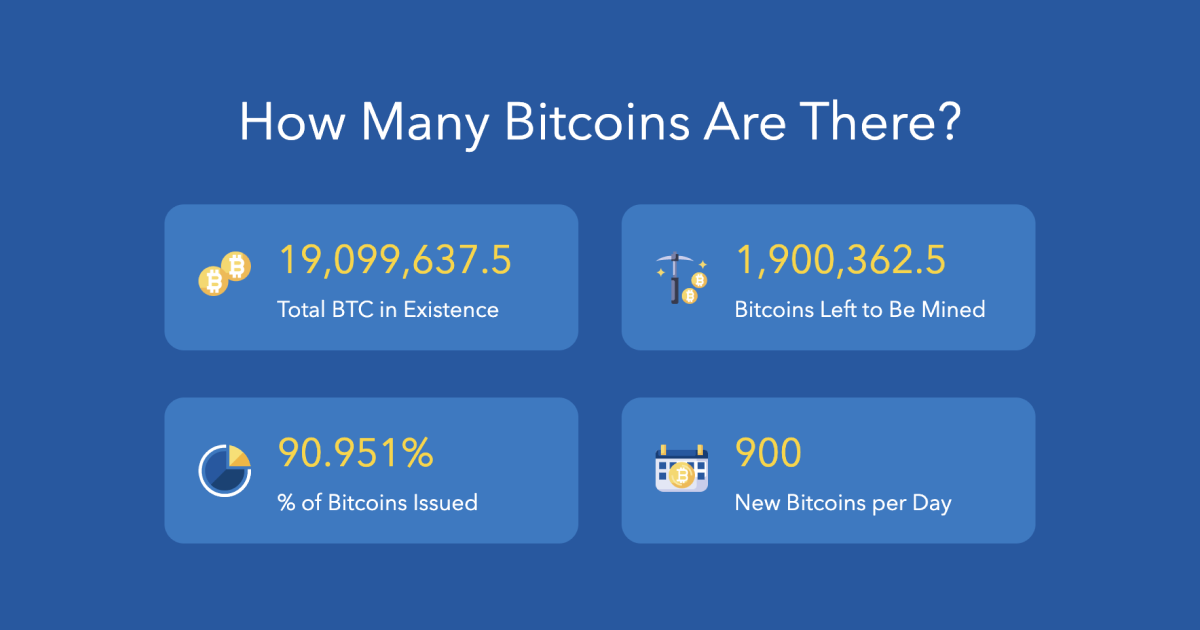
As of late 2023, well over 19 million Bitcoins have already been mined and are in circulation. With the current block reward at 6.25 BTC, and considering the approximate 10-minute block time, new Bitcoins are still being added to the supply, albeit at a significantly slower rate than in Bitcoin’s early years.
The halving events will continue until the block reward becomes so small that it effectively rounds down to zero. This trajectory means that the very last fraction of a Bitcoin will likely be mined around the year 2140. While this date seems far off, it emphasizes the long-term vision of Bitcoin’s monetary policy. The dwindling new supply contributes to Bitcoin’s long-term scarcity narrative, making it an increasingly valuable asset for holding wealth. The diminishing block reward also shifts the incentive structure for miners over time, from relying primarily on block rewards to increasingly relying on transaction fees for their revenue, ensuring the network’s security remains robust even after all 21 million Bitcoins have been mined. This gradual transition is part of Bitcoin’s carefully engineered economic model, ensuring its longevity and stability as a financial network.
Lost and Inaccessible Bitcoins: The True Circulating Supply
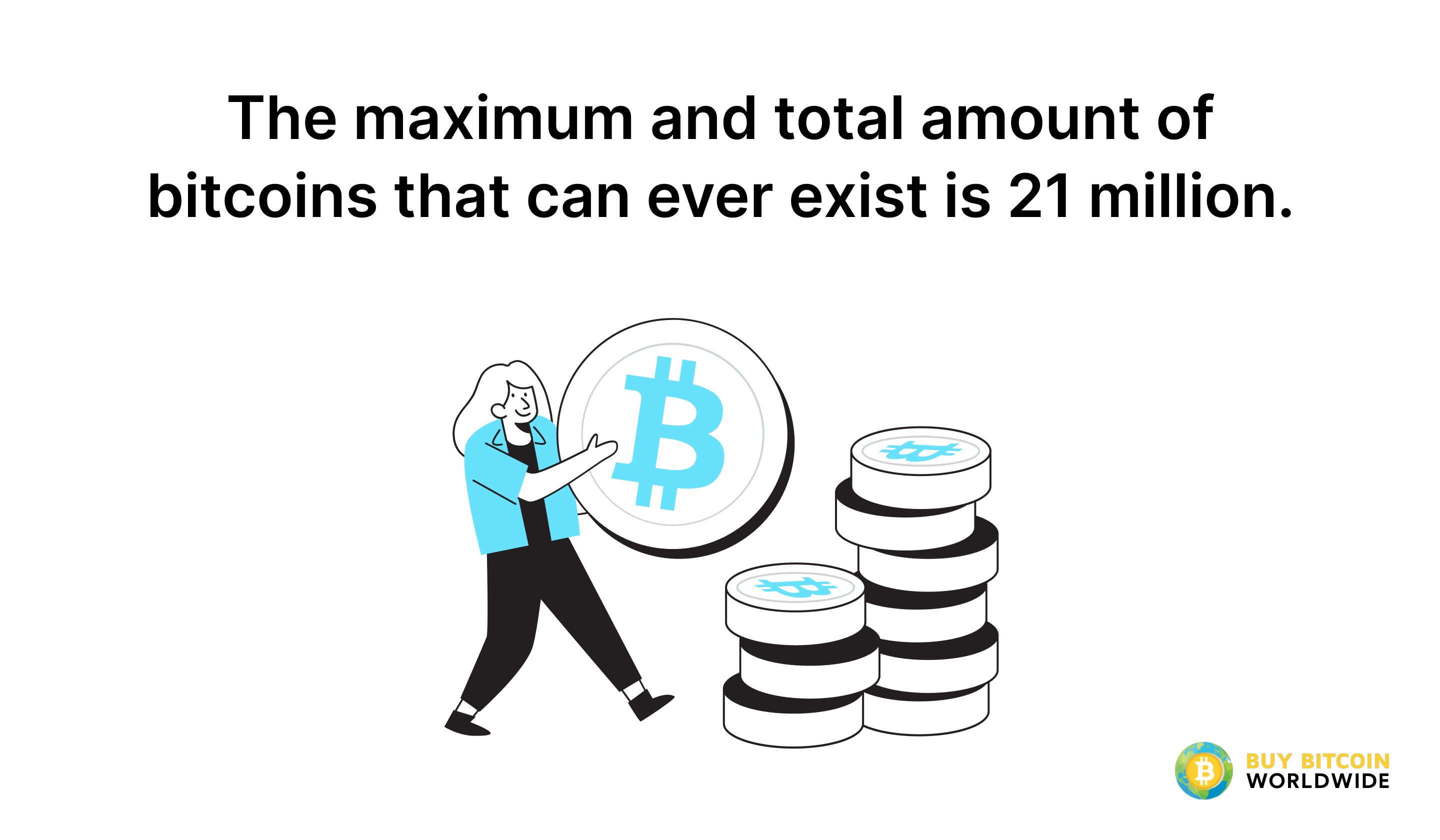
While the theoretical maximum supply of Bitcoin is 21 million, the reality of its circulating supply is somewhat different due to a phenomenon unique to digital assets: permanently lost coins. This factor further amplifies Bitcoin’s scarcity, making the truly available supply even more limited.
Unrecoverable Bitcoins: A Permanent Reduction
In the decentralized world of Bitcoin, individuals are solely responsible for safeguarding their private keys – the cryptographic codes that grant access to their Bitcoin wallets. If these private keys are lost, forgotten, or destroyed, the Bitcoins associated with them become irretrievable, effectively removed from circulation forever.
Estimates vary, but a significant percentage of the total Bitcoins ever mined are believed to be permanently lost. This includes:
- Lost Private Keys: Users who forgot their passwords, lost their hardware wallets, or had their storage devices corrupted.
- Accidental Disposal: Bitcoins sent to invalid or non-existent addresses.
- Early Adopter Hoards: Satoshi Nakamoto’s estimated 1 million Bitcoins, which have remained untouched for over a decade, are often considered effectively lost or at least permanently out of circulation. Early miners and enthusiasts who acquired Bitcoins when they were worthless may have lost access to their wallets over time, not realizing their future value.
- Security Incidents: Funds stolen and then made inaccessible by the thieves or accidentally destroyed.
These lost coins are not merely misplaced; they are cryptographically locked away with no possibility of recovery. They cannot be spent, traded, or transferred by anyone, including the original owner or any network participant. This irreversible loss effectively reduces the true circulating supply, making the asset even scarcer than the 21-million cap suggests.
Implications for Scarcity and Market Value
The existence of lost Bitcoins has profound implications for its economic model and investment thesis. From a scarcity perspective, it means the effective supply available to the market is considerably less than the theoretical maximum. If, for instance, 3-4 million Bitcoins are permanently lost, the actual pool of available Bitcoins is closer to 17-18 million, making each remaining Bitcoin even more valuable.
For investors, this phenomenon enhances Bitcoin’s deflationary characteristics. Each lost Bitcoin acts as a permanent supply sink, increasing the effective scarcity of the remaining coins. This contributes to Bitcoin’s narrative as “digital gold” – an asset whose supply is not only fixed but also diminishing through irreversible means. As global adoption increases and more investors seek exposure to this finite asset, the pressure on the limited available supply will likely intensify, influencing its long-term price discovery and reinforcing its appeal as a high-conviction store of value. Understanding the impact of lost coins is crucial for any comprehensive financial analysis of Bitcoin, as it adds another layer to its unique supply-side economics.
Economic Implications of Scarcity: Investment and Future Value
The finite supply of Bitcoin is not just a technical detail; it is the cornerstone of its economic power and its primary appeal to investors seeking alternatives to traditional financial assets.
Bitcoin as a Scarce Asset: A Hedge Against Inflation
In an era defined by increasing national debt, unprecedented quantitative easing, and rising inflation, investors are actively seeking assets that can preserve or grow their purchasing power. Bitcoin’s hard-capped supply positions it uniquely as a potential antidote to currency debasement. While central banks can expand the supply of fiat money at will, reducing its individual value, Bitcoin offers a direct contrast: a quantitatively hardening asset.
This inherent scarcity makes Bitcoin an attractive hedge against inflation. As the supply of fiat currency grows, driving down its value, the fixed supply of Bitcoin offers a predictable, unalterable alternative. For individuals and institutions concerned about the long-term erosion of wealth through inflation, allocating a portion of their portfolio to Bitcoin can be seen as a strategic move to preserve capital. It represents a shift from an inflationary, centrally controlled monetary system to a deflationary, decentralized one, aligning with macroeconomic trends and investor sentiment towards financial autonomy. This position as a scarce asset underlies its “digital gold” narrative, appealing to investors who value predictable monetary policy over discretionary central bank actions.
Long-Term Price Discovery and Market Dynamics
The immutable 21-million supply cap fundamentally shapes Bitcoin’s long-term price discovery and market dynamics. Unlike stocks, where companies can issue more shares, or commodities, where new discoveries can increase supply, Bitcoin’s supply schedule is fully transparent and known decades in advance. This predictability allows for long-term economic modeling and investment strategies.
As global adoption of Bitcoin continues to grow – from individual investors diversifying portfolios to institutional treasuries seeking inflation protection – the demand for this finite asset is projected to increase. With a fixed or even effectively diminishing supply (due to lost coins), this rising demand is likely to exert significant upward pressure on Bitcoin’s price over time. Economic principles of supply and demand dictate that when demand for a scarce good increases, its price will rise.
Furthermore, Bitcoin’s limited supply cultivates a strong holding culture among investors, often referred to as “HODLing.” Many investors are reluctant to sell their Bitcoins, anticipating future price appreciation driven by increasing scarcity and adoption. This reduced selling pressure, combined with new demand, creates a powerful dynamic for long-term price appreciation. The journey to fully understand Bitcoin’s value is ongoing, but its unyielding scarcity ensures that it will remain a subject of intense interest and a potentially transformative asset in the global financial landscape. Its finite nature positions it not merely as a speculative asset but as a foundational element in the evolving definition of wealth and money.
Conclusion
The answer to “how many total Bitcoins are there?” is a concise 21 million, but the implications of this number are anything but simple. This hard-coded limit is not merely a technical specification; it is the economic engine driving Bitcoin’s unique value proposition. In a world accustomed to flexible monetary policies and expanding fiat supplies, Bitcoin stands as a defiant counterpoint, offering an unprecedented experiment in engineered scarcity.
For investors, this finite supply translates into a compelling narrative of inflation hedging, wealth preservation, and long-term capital appreciation. The predictable halving schedule, coupled with the tragic reality of permanently lost coins, further constrains the effective circulating supply, amplifying Bitcoin’s scarcity and strengthening its appeal as a digital store of value. Understanding these monetary mechanics is crucial for navigating the evolving landscape of digital assets and making informed financial decisions in the 21st century. Bitcoin’s 21-million cap is more than just a number; it’s a testament to a revolutionary approach to money, designed for a future where trust is placed in code, not in centralized authorities.
aViewFromTheCave is a participant in the Amazon Services LLC Associates Program, an affiliate advertising program designed to provide a means for sites to earn advertising fees by advertising and linking to Amazon.com. Amazon, the Amazon logo, AmazonSupply, and the AmazonSupply logo are trademarks of Amazon.com, Inc. or its affiliates. As an Amazon Associate we earn affiliate commissions from qualifying purchases.