
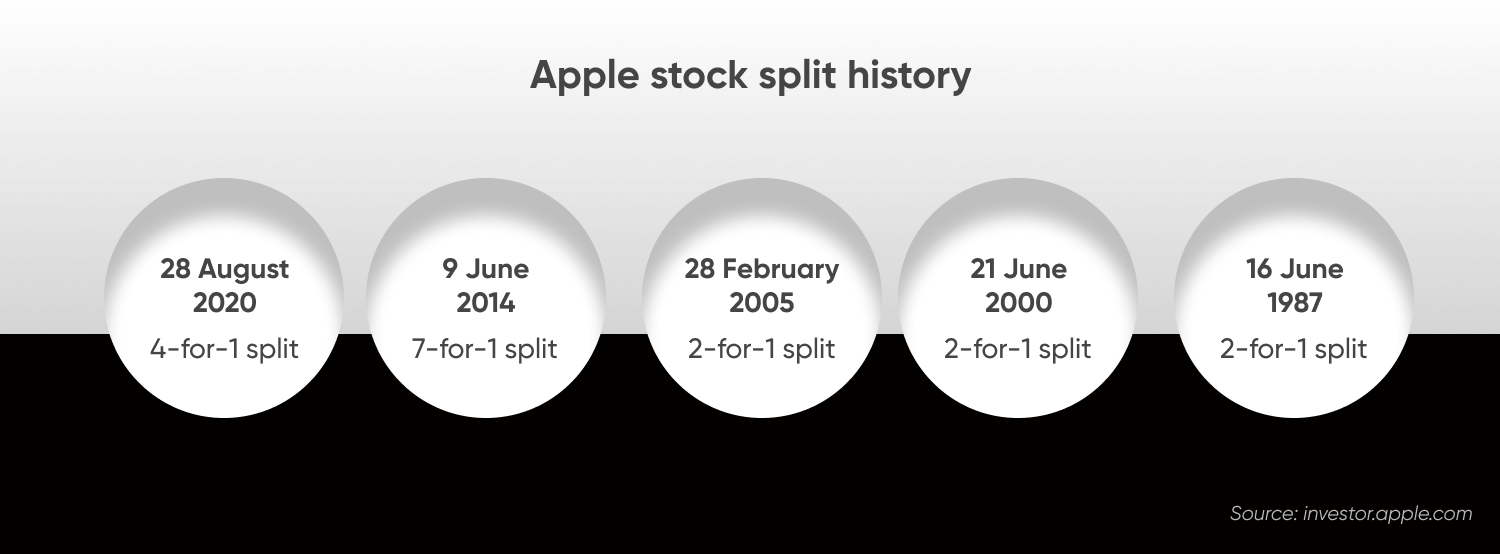
Apple Inc., a titan of technology and one of the most valuable companies globally, has captured the imagination and investment dollars of millions. For decades, its stock (AAPL) has been a cornerstone of many portfolios, delivering exceptional returns. A recurring event in the lifecycle of such high-performing stocks is the stock split. These corporate actions often spark interest and sometimes confusion among investors. The simple answer to how many times Apple’s stock has split is five. Over its trading history, Apple has initiated five stock splits, each designed to make its shares more accessible and attractive to a broader base of investors. This article will delve into the mechanics of stock splits, chronicle Apple’s specific split history, explore the financial implications for investors, and provide context on what truly drives the company’s long-term stock performance.
Understanding Stock Splits: A Primer for Investors
To fully appreciate the significance of Apple’s stock splits, it’s essential to first understand what a stock split is and why companies choose to implement them. It’s a fundamental concept in finance that often influences investor sentiment and market dynamics, even if it doesn’t alter the underlying value of the company.
What is a Stock Split?
A stock split is a corporate action in which a company divides its existing shares into multiple shares. The most common types are 2-for-1, 3-for-1, or even larger ratios like 4-for-1 or 7-for-1. For example, in a 2-for-1 stock split, each shareholder receives two shares for every one share they previously owned. Crucially, while the number of shares increases, the price per share decreases proportionately. If you owned one share trading at $200 before a 2-for-1 split, you would own two shares trading at $100 each afterward. The total value of your investment, known as your market capitalization in this context, remains precisely the same ($200 in this example). It’s akin to exchanging a $10 bill for two $5 bills – you have more bills, but the total monetary value is unchanged.
Why Do Companies Split Their Stock?
Companies typically split their stock for several strategic reasons, primarily aimed at improving liquidity and making shares more appealing. The most common motivations include:
- Increased Accessibility: When a stock’s price climbs to several hundred or even thousands of dollars per share, it can become prohibitively expensive for individual retail investors, especially those with smaller portfolios. A lower per-share price makes the stock more accessible and affordable for a wider range of investors, encouraging broader participation.
- Enhanced Liquidity: By increasing the number of outstanding shares and lowering the price, a stock split can boost trading volume. More shares trading at a lower price often leads to a more active market, making it easier for investors to buy and sell shares without significantly impacting the price.
- Psychological Appeal: There’s a powerful psychological component. Many investors perceive a lower-priced stock as “cheaper” or having more room for growth, even though the fundamental value of the company hasn’t changed. A split can make a stock appear more attractive and less intimidating, potentially drawing in new investors.
- Dividend Reinvestment Programs (DRIPs): For companies that pay dividends, a lower share price makes it easier for investors participating in DRIPs to reinvest their dividends into whole shares, rather than having leftover cash balances.
- Option Markets: Lower share prices can also make options trading on the stock more accessible to a broader range of participants, as option contracts typically cover 100 shares.
The Impact on Share Price and Market Capitalization
It’s critical for investors to understand that a stock split, by itself, does not change a company’s total market capitalization or its intrinsic value. Market capitalization is calculated by multiplying the number of outstanding shares by the current share price. While a split increases the share count and decreases the price per share, these changes perfectly offset each other, leaving the market cap untouched. Similarly, the company’s underlying fundamentals – its revenue, earnings, assets, and liabilities – are not altered by a stock split. Therefore, a stock split is often viewed as a purely cosmetic change, albeit one with significant practical implications for market accessibility and investor perception.
Apple’s History of Stock Splits: A Detailed Chronology
Apple’s journey from a garage startup to a global powerhouse has been punctuated by periods of explosive growth, reflected in its soaring stock price. To manage this success and keep its shares liquid, Apple has resorted to stock splits multiple times. Each split marks a significant point in the company’s financial timeline, responding to its growing valuation and market presence.
The Early Splits (1987, 2000): Navigating Growth
Apple’s first two stock splits occurred during periods of significant, albeit different, growth for the company.
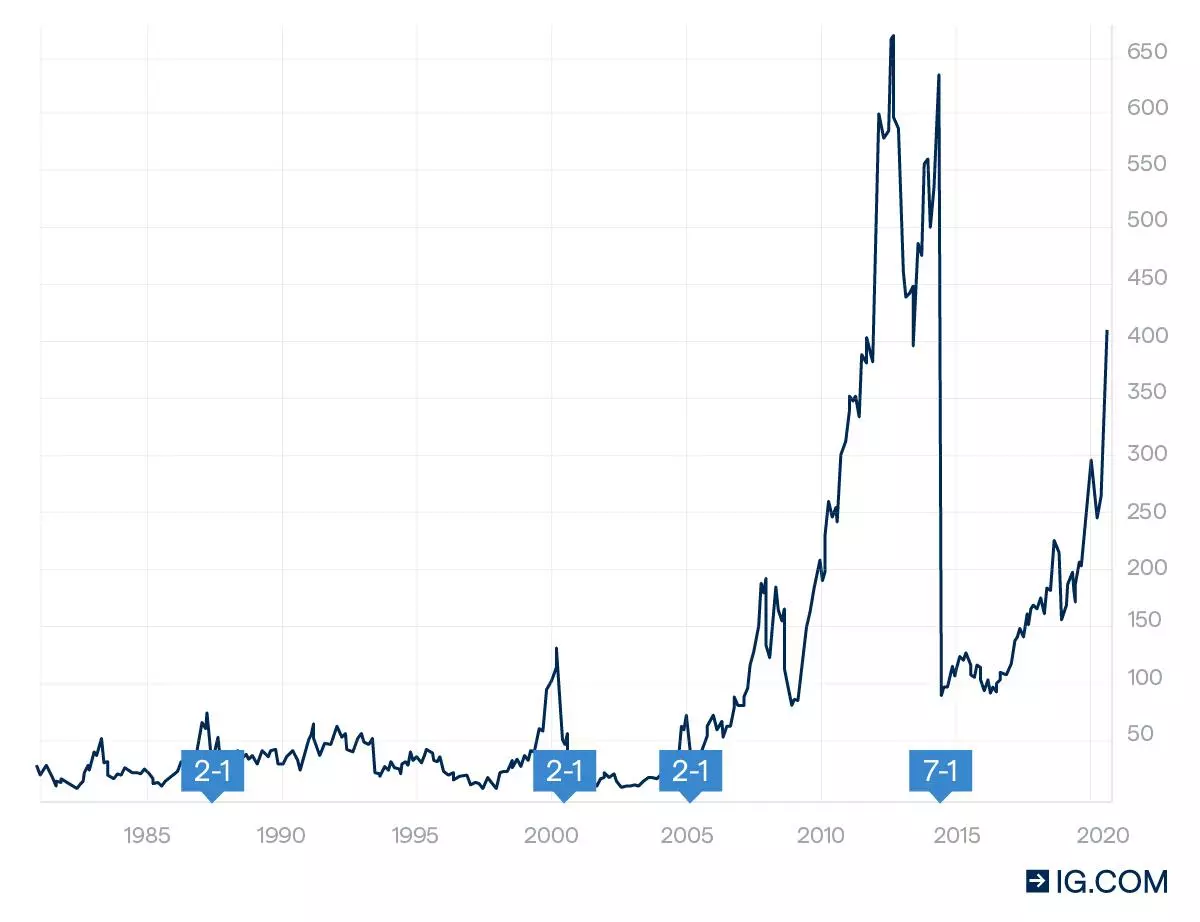
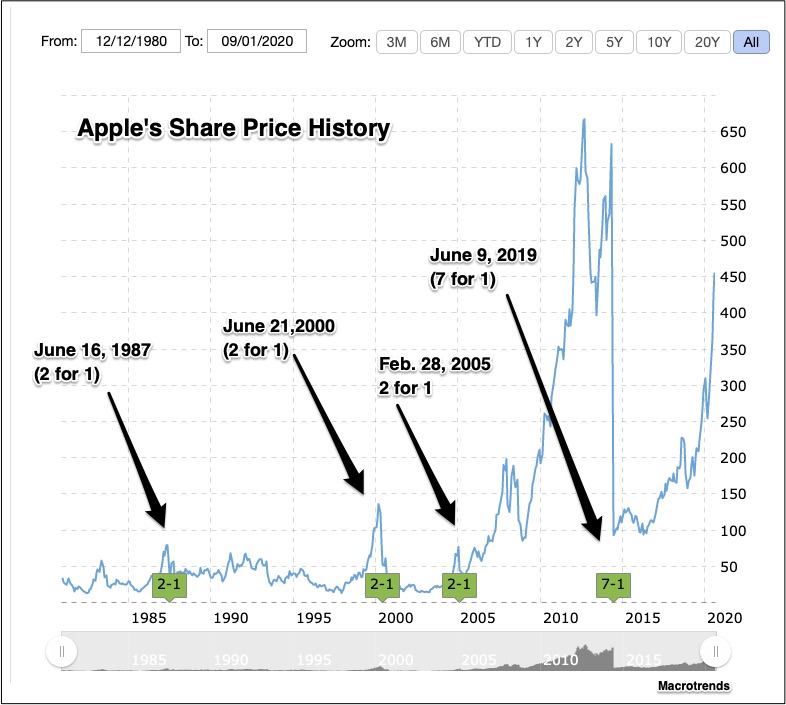
- June 16, 1987 (2-for-1 split): This was Apple’s inaugural stock split. By 1987, Apple had been public for seven years, and its Macintosh computers were gaining traction. The stock had performed well, and the split was a sign of the company’s increasing maturity and investor appeal in the burgeoning personal computer market. A shareholder owning 100 shares at $80 would suddenly own 200 shares at $40.
- June 21, 2000 (2-for-1 split): The second split came at the peak of the dot-com bubble, a tumultuous time for many tech companies. While Apple faced its own challenges and had only recently seen Steve Jobs return to lead a turnaround, the stock had still appreciated enough to warrant another split. This split made shares more affordable amidst the widespread investor enthusiasm for technology stocks.
The Mid-2010s Split (2014): Broadening Investor Appeal
After a period of immense innovation, including the launch of the iPod, iPhone, and iPad, Apple’s stock price had surged dramatically, becoming one of the most expensive large-cap stocks on the market.
- June 9, 2014 (7-for-1 split): This was Apple’s most significant stock split in terms of ratio. By 2014, the iPhone had revolutionized the mobile industry, and Apple’s market capitalization had soared. Its share price was well over $600, making it less accessible for many retail investors. The 7-for-1 split brought the price down considerably (from over $600 to under $100 per share), significantly increasing its appeal and liquidity. This move also paved the way for Apple’s inclusion in the Dow Jones Industrial Average, a price-weighted index where high-priced stocks exert a disproportionately large influence. A lower share price made its inclusion less disruptive to the index’s methodology.
The Recent Split (2020): Sustaining Momentum in a Pandemic Market
The most recent stock split occurred during an unprecedented global economic environment, yet Apple’s performance remained robust.
- August 31, 2020 (4-for-1 split): In the midst of the COVID-19 pandemic, Apple’s stock continued its upward trajectory, fueled by strong product sales, a booming services sector, and a surge in technology adoption. The share price again climbed to significant levels, crossing the $500 mark. The 4-for-1 split brought the price down to roughly $125 per share, once again making it more attainable for individual investors, particularly those looking to invest smaller amounts or participate in fractional share purchases. This split further cemented Apple’s position as a retail investor favorite.
The Financial Implications of Apple’s Stock Splits for Investors
While a stock split doesn’t change the fundamental value of an investment, it does have practical implications that investors need to be aware of, particularly concerning financial record-keeping and portfolio management.
Adjusting Cost Basis and Portfolio Tracking
One of the most important tasks for investors after a stock split is to adjust their cost basis. The cost basis is the original value of an asset for tax purposes, used to determine capital gains or losses when the asset is sold. After a split, while the total cost of your investment remains the same, the cost per share is adjusted downwards.
For instance, if you bought 100 shares of Apple at $140 per share (total cost $14,000) before the 2020 4-for-1 split, you would then own 400 shares. Your new cost basis per share would be $35 ($14,000 / 400 shares). Accurate adjustment of the cost basis is crucial for proper tax reporting. Brokerage firms typically handle these adjustments automatically, but it’s always wise for investors to verify their records, especially for long-held positions.
Accessibility for Retail Investors and DRIPs
The primary benefit of a stock split, as mentioned, is increased accessibility. A lower per-share price allows smaller retail investors to buy whole shares more easily. This is particularly beneficial for those who prefer not to deal with fractional shares or those using dollar-cost averaging strategies with limited capital. For investors participating in Dividend Reinvestment Programs (DRIPs), a lower share price means that the dividend payouts can be used to purchase more whole shares, compounding their investment more effectively over time. This democratic effect on share ownership can broaden the investor base and potentially increase overall market interest in the company.
The Perception of Value and Future Growth
Beyond the quantitative adjustments, stock splits can also influence investor psychology and market perception. A company initiating a stock split often signals confidence from management about the company’s future prospects. The decision to split usually follows a period of significant share price appreciation, indicating strong underlying business performance. Investors might interpret a split as an indication that the company expects continued growth, believing the stock price will eventually climb high enough again to warrant another split. While this is not a guarantee of future performance, it can contribute to positive investor sentiment and momentum.
Beyond the Split: What Drives Apple’s Stock Performance?
While stock splits are interesting financial events, they are merely a response to Apple’s success, not the cause of it. The true drivers of Apple’s phenomenal stock performance lie deep within its business fundamentals and strategic decisions.
Fundamental Business Strength and Innovation
Apple’s stock performance is fundamentally tied to its ability to innovate and deliver highly desirable products and services. The company’s relentless focus on user experience, design, and ecosystem integration has created a powerful brand loyalty. The launch of iconic products like the iPhone, iPad, Apple Watch, and AirPods, coupled with a growing suite of services (App Store, Apple Music, iCloud, Apple TV+), has consistently fueled revenue growth and profitability. Investors pay close attention to product cycles, supply chain efficiency, global sales figures, and the expansion of its services segment, as these are the core engines driving Apple’s financial results and, consequently, its share price.
Market Cap and Index Inclusion
Apple’s massive market capitalization, often fluctuating around $2 trillion or more, makes it a significant component of major stock market indices. Its inclusion in indices like the S&P 500 and the Dow Jones Industrial Average means that index funds and ETFs tracking these benchmarks automatically buy and hold Apple stock. This creates consistent demand for its shares. The 2014 7-for-1 split was particularly instrumental in making Apple’s inclusion in the Dow Jones Industrial Average feasible, given the index’s price-weighted methodology. Changes in Apple’s weight within these indices can have broad market implications, reflecting its systemic importance.
The Role of Share Buybacks and Dividends
Beyond stock splits, Apple employs other capital allocation strategies that directly impact shareholder value. The company has a substantial capital return program, combining significant share buybacks and a growing dividend. Share buybacks reduce the number of outstanding shares, which can boost earnings per share (EPS) and often signal management’s belief that the stock is undervalued. Apple’s regular dividend payments also attract income-focused investors, adding another layer of appeal to its stock. These actions, alongside its core business performance, are crucial considerations for investors assessing Apple’s long-term investment viability.
The Future of Apple Splits and Investor Considerations
Given Apple’s history and continued success, it’s natural for investors to ponder if and when another stock split might occur. While no one can predict the future, certain factors often precede such corporate actions.
When Might Another Split Occur?
The primary trigger for a stock split is typically a high share price that management believes is hindering accessibility or liquidity. If Apple’s stock continues its upward trajectory and its per-share price climbs into the hundreds, potentially nearing or exceeding previous split thresholds ($500+ pre-split, historically), another split could be on the horizon. The company’s board will weigh factors like market conditions, investor sentiment, and its strategic goals. However, with the rise of fractional share investing, the imperative to split solely for accessibility might diminish slightly, though the psychological benefits and broad market appeal often remain strong motivators. There is no set formula or rule, but a persistently high and rising share price is the most reliable indicator.
What Should Investors Do?
For current investors, a stock split requires no immediate action. Your brokerage will automatically adjust your share count and cost basis. For prospective investors, a split merely changes the entry price point. The fundamental analysis of Apple’s business remains paramount. Investors should focus on the company’s financial health, its innovation pipeline, market competition, and its long-term growth prospects, rather than making investment decisions solely based on the occurrence or anticipation of a stock split. A split is a symptom of success, not a driver of it. Long-term investors in Apple have historically been rewarded for their patience and belief in the company’s underlying value, regardless of its share price adjustments through splits.
In conclusion, Apple has split its stock five times throughout its history, with each instance serving to make its shares more accessible and liquid for a broader base of investors. These actions are a testament to the company’s remarkable growth and sustained appeal in the financial markets. While interesting, understanding the mechanics and implications of these splits is secondary to recognizing the core drivers of Apple’s success: relentless innovation, robust financial performance, and a powerful global brand.
aViewFromTheCave is a participant in the Amazon Services LLC Associates Program, an affiliate advertising program designed to provide a means for sites to earn advertising fees by advertising and linking to Amazon.com. Amazon, the Amazon logo, AmazonSupply, and the AmazonSupply logo are trademarks of Amazon.com, Inc. or its affiliates. As an Amazon Associate we earn affiliate commissions from qualifying purchases.