
In the landscape of modern commerce and investment, few metrics carry as much weight as the subscriber count of Amazon Prime. For investors, market analysts, and business strategists, the question of how many subscribers Amazon Prime has is more than just a curiosity about a popular service; it is a fundamental inquiry into the health of one of the world’s most powerful financial engines. As of recent estimates and internal projections, Amazon Prime boasts more than 230 million subscribers worldwide. This figure represents not just a massive audience, but a specialized class of consumers whose spending habits and loyalty underpin Amazon’s market valuation.

To understand the financial implications of these numbers, one must look beyond the surface-level count. The Prime ecosystem is a masterclass in recurring revenue, customer lifetime value (LTV), and market dominance. By examining the growth trajectory, the revenue generated per user, and the strategic expansion into emerging markets, we can uncover how this membership program transforms Amazon from a mere retailer into a global financial powerhouse.
Breaking Down the Numbers: The Global Scale of Amazon Prime
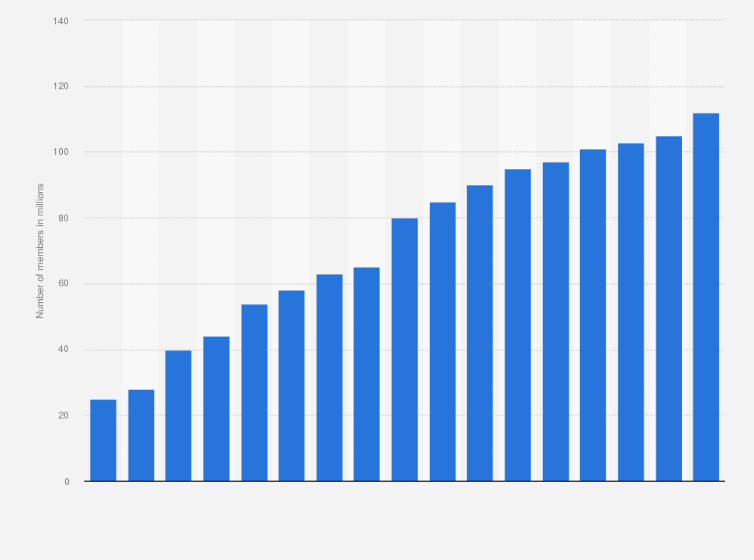
The journey of Amazon Prime from a niche shipping service to a global membership juggernaut is a significant case study in business scaling. When Jeff Bezos first announced that Prime had surpassed 100 million members in 2018, it sent shockwaves through the retail and tech sectors. By 2021, that number had climbed to 200 million. Today, analysts suggest the number sits comfortably between 230 million and 250 million, reflecting a resilient growth pattern despite increasing subscription costs and a saturated domestic market.
The Core Driver: United States Market Dominance
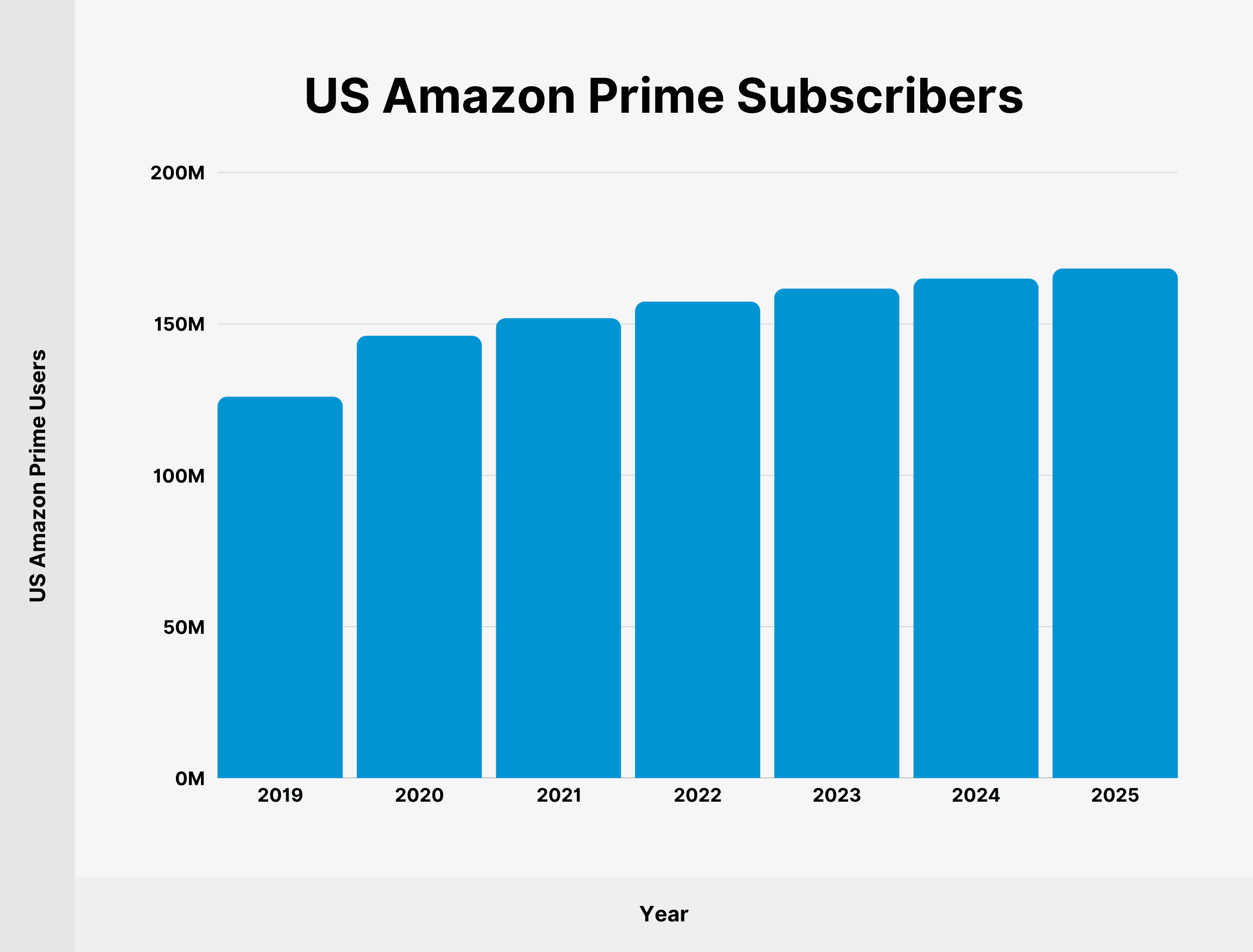
The United States remains the primary engine for Amazon Prime’s financial success. Estimates suggest that approximately 170 million to 180 million of the total Prime subscribers are based in the U.S. This represents a staggering penetration rate, with over 70% of American households holding a Prime membership. From a financial perspective, this level of saturation is nearly unprecedented in the subscription economy.
For Amazon, the U.S. market serves as a high-ARPU (Average Revenue Per User) region. With the annual membership fee currently set at $139, the domestic subscriber base alone generates over $23 billion in high-margin recurring revenue before a single product is even purchased. This predictable cash flow allows Amazon to reinvest in logistics, cloud computing (AWS), and original content, creating a self-sustaining cycle of growth that competitors find nearly impossible to replicate.
International Expansion and Growth Frontiers
While the U.S. market is approaching a plateau, Amazon’s financial future increasingly depends on its international subscriber base. Countries like the United Kingdom, Germany, and Japan have long been established strongholds, but the real growth story lies in emerging markets.
India, in particular, has become a critical battleground for Prime. Amazon has tailored its pricing strategies and localized its Prime Video content to capture the burgeoning middle class in the region. Although the ARPU in India is significantly lower than in Western markets, the sheer volume of potential subscribers offers a long-term growth lever. Similarly, Amazon has made aggressive moves in Brazil and Mexico, where digital commerce is seeing double-digit annual growth. By capturing these markets early through Prime, Amazon is securing the future spending power of millions of global consumers.
The Revenue Engine: Subscription Fees as a Predictable Asset
The most direct financial benefit of the Prime subscriber count is the membership revenue itself. In the most recent fiscal years, Amazon’s “Subscription Services” segment—which is primarily driven by Prime—has consistently reported revenues exceeding $35 billion to $40 billion annually. This revenue is uniquely valuable because it is recurring and possesses higher margins than the traditional retail business.
Understanding ARPU and Retention Rates
In the world of business finance, the stability of a revenue stream is often as important as its size. Amazon Prime exhibits one of the highest retention rates in the subscription industry. Studies indicate that after the first year, the renewal rate for Prime members sits around 90%, and it climbs even higher for those who have been members for two years or more.
This high retention rate minimizes customer acquisition costs (CAC) over the long term. Once a user is “locked in” to the Prime ecosystem, the cost of maintaining that customer is marginal compared to the revenue they generate. Financial analysts use these retention metrics to calculate the Lifetime Value (LTV) of a Prime member, which is estimated to be several multiples higher than that of a non-Prime shopper. This disparity is what justifies Amazon’s massive capital expenditures in shipping infrastructure and streaming content.
The Impact of Price Adjustments on Churn
One of the most telling indicators of Prime’s financial strength is its pricing power. In 2022, Amazon raised the price of Prime in the U.S. from $119 to $139 per year. In many European markets, price hikes were even more dramatic, with some regions seeing increases of up to 40% to account for inflation and rising logistics costs.
Despite these increases, the massive “churn” (subscriber loss) that many analysts predicted failed to materialize. This demonstrates a low price elasticity of demand, a dream scenario for any business finance professional. Consumers have integrated Prime so deeply into their daily lives—relying on it for everything from grocery delivery via Amazon Fresh to entertainment and cloud storage—that the service has transitioned from a luxury to a perceived utility. This allows Amazon to hedge against inflation by passing costs on to a loyal subscriber base.
The Multiplier Effect: Prime Members as High-Value Assets
The true genius of the Prime model lies not in the subscription fee itself, but in the “flywheel effect” it creates. The membership serves as a gateway that dictates the spending behavior of the subscriber across the entire Amazon economy. From a financial standpoint, a Prime member is a significantly more valuable asset than a non-member.
Comparative Spending Analysis: Members vs. Non-Members
The data regarding consumer spending is perhaps the most compelling argument for the Prime program. Historically, research from firms like Consumer Intelligence Research Partners (CIRP) has shown that the average Prime member spends approximately $1,400 per year on the platform. In contrast, the average non-member spends roughly $600 per year.
This 2.3x multiplier in spending is the backbone of Amazon’s retail dominance. The “sunk cost fallacy” plays a subtle but powerful role here: once a consumer has paid for a membership, they feel an psychological incentive to “get their money’s worth” by centralizing their purchases on Amazon. This behavior captures a larger share of the household wallet, moving Amazon beyond books and electronics into everyday essentials like groceries, health products, and apparel.
Leveraging the Ecosystem for Cross-Vertical Revenue
The 230+ million subscribers provide Amazon with a captive audience for its other financial ventures. The Prime ecosystem is no longer just about fast shipping; it is an integrated financial platform.
-
Advertising Revenue: Amazon’s advertising business has grown into a $40 billion+ annual behemoth. The data collected from Prime subscribers—what they watch, what they buy, and how they search—allows Amazon to offer highly targeted advertising opportunities to third-party sellers. The subscriber count is the “product” that Amazon sells to advertisers.
-
Financial Services: Through the Amazon Prime Visa card and various “Buy Now, Pay Later” (BNPL) integrations, Amazon is increasingly acting as a financial intermediary. Prime members are the primary users of these credit products, which offer cashback rewards that can only be spent back within the Amazon ecosystem, ensuring that capital never leaves the “walled garden.”
-
Prime Video and Monetization: The transition to including advertisements in Prime Video by default in 2024 is a significant move toward increasing the ARPU of the existing subscriber base. By monetizing the viewing habits of 200 million+ people, Amazon is creating a secondary revenue stream that rivals traditional media networks.
Financial Headwinds and the Path to Continued Monetization
Despite the staggering numbers, maintaining the financial health of the Prime program is not without challenges. As the global economy faces inflationary pressures and shifting consumer priorities, Amazon must balance the cost of providing “free” services with the need for profit margin expansion.
Logistics Costs vs. Subscription Income
The primary expense associated with Prime is the cost of fulfillment and shipping. As Amazon pushes for same-day and next-day delivery, the capital expenditure required for warehouses, electric delivery fleets, and regional sorting centers has skyrocketed. In some quarters, the cost of shipping exceeds the total revenue collected from Prime membership fees.
For the CFO of Amazon, the challenge is to ensure that the incremental spending of Prime members offsets these logistical burdens. This is why Amazon has been aggressive in optimizing its “last-mile” delivery and utilizing AI to predict inventory needs. The goal is to lower the per-package cost to a point where the Prime membership fee becomes pure profit, rather than a subsidy for shipping.
The Evolution of Prime Video and Advertising Revenue
In recent financial filings, Amazon has made it clear that Prime Video is no longer just a “perk” to reduce churn; it is a standalone profit center. By introducing an ad-supported tier and offering premium “channels” like HBO or Paramount+ through the Prime interface, Amazon is capturing a slice of the broader media market.
The massive subscriber count gives Amazon immense leverage in negotiations with content creators and sports leagues (such as the NFL for Thursday Night Football). The ability to reach 230 million people makes Amazon an essential partner for any entity looking to monetize digital content. From a business finance perspective, this diversification reduces Amazon’s reliance on retail margins and positions the company as a leader in the digital services economy.
Conclusion: The Strategic Moat of 230 Million Members
Ultimately, the question of how many subscribers Amazon Prime has is a question about the size of Amazon’s economic moat. With over 230 million members, Amazon has built a barrier to entry that is virtually insurmountable for traditional retailers. This subscriber base provides the capital for innovation, the data for advertising, and the recurring revenue for long-term stability.
For the investor or the business professional, these numbers signify a shift in how value is created in the modern economy. It is no longer just about the transaction; it is about the relationship. As long as Amazon continues to add value to the Prime membership, its subscriber count will remain the most important barometer of its financial destiny. The membership fee is merely the entry price; the real wealth lies in the hundreds of billions of dollars in commerce that flow through the Prime gateway every single year.
aViewFromTheCave is a participant in the Amazon Services LLC Associates Program, an affiliate advertising program designed to provide a means for sites to earn advertising fees by advertising and linking to Amazon.com. Amazon, the Amazon logo, AmazonSupply, and the AmazonSupply logo are trademarks of Amazon.com, Inc. or its affiliates. As an Amazon Associate we earn affiliate commissions from qualifying purchases.