
The question “how many stocks on the Nasdaq” seems straightforward, yet its answer unveils a complex, dynamic ecosystem central to global finance. The Nasdaq Stock Market, renowned for its technological prowess and its concentration of innovative, growth-oriented companies, is far more than just a list of tickers. It represents a vibrant marketplace where capital meets innovation, continuously reshaping industries and offering a barometer for economic sentiment. Understanding the sheer volume and dynamic nature of its listings provides invaluable insight for investors, entrepreneurs, and financial enthusiasts alike.
Far from being a static figure, the number of companies listed on the Nasdaq fluctuates daily, influenced by a constant stream of new public offerings, mergers and acquisitions, delistings due to non-compliance or private buyouts, and bankruptcies. This perpetual motion is a testament to the vitality and competitive nature of modern capital markets. While specific figures require real-time data from financial terminals, a typical range for the number of stocks listed on the Nasdaq Global Market and Nasdaq Global Select Market combined often hovers around 2,500 to 3,500 companies. This figure does not include the Nasdaq Capital Market, which lists smaller, earlier-stage companies, nor does it account for the myriad of other securities like ETFs, bonds, or derivatives that also trade on Nasdaq platforms. This article will delve into the intricacies behind this number, exploring the mechanisms that govern listings, the types of companies that call Nasdaq home, and the broader implications for the financial world.
Unpacking the Nasdaq: Beyond Just a Number
To truly grasp the significance of the Nasdaq’s listing count, one must first understand the exchange itself. It’s not merely a venue for trading shares; it’s an institution with a rich history, a unique operational structure, and a distinct identity within the global financial landscape.
A Brief History and Evolution of the Exchange
Established in 1971 by the National Association of Securities Dealers (NASD), the Nasdaq was revolutionary from its inception. Unlike the traditional floor-based exchanges that relied on human market makers shouting orders, Nasdaq pioneered electronic trading. This innovation dramatically increased efficiency, transparency, and accessibility, democratizing the stock market in ways previously unimaginable. Initially designed as an over-the-counter (OTC) market to provide liquidity for smaller, unlisted securities, it quickly evolved to become the world’s first electronic stock market. Its commitment to technology made it the natural home for the burgeoning tech companies of the late 20th century, cementing its reputation as the “tech-heavy” exchange. From Microsoft and Apple to Amazon and Google (Alphabet), Nasdaq has been the launchpad for many of the companies that have defined the modern era.
The Nasdaq’s Unique Market Structure
The Nasdaq operates as a dealer market, as opposed to an auction market like the NYSE. In a dealer market, multiple market makers stand ready to buy and sell securities, quoting both bid and ask prices. This structure fosters deep liquidity and competitive pricing, as market makers compete with each other for order flow. Furthermore, Nasdaq categorizes its listings into three distinct tiers:
- Nasdaq Global Select Market: This tier has the most stringent initial listing requirements and corporate governance standards, representing the cream of the crop in terms of financial health and market capitalization.
- Nasdaq Global Market: While slightly less demanding than the Global Select, this tier still requires significant financial strength and market liquidity.
- Nasdaq Capital Market: This tier is designed for smaller, earlier-stage companies that may not meet the higher financial thresholds of the other two markets. It serves as a vital pathway for emerging growth companies to access public capital.
Each tier caters to different stages of corporate development, reflecting Nasdaq’s commitment to fostering growth across the entire economic spectrum. This tiered structure contributes to the varied number and types of companies one finds on the exchange.
Why the Number Fluctuates: Listings and Delistings
The number of stocks listed on the Nasdaq is in a constant state of flux due to a continuous cycle of additions and removals. New listings primarily come from Initial Public Offerings (IPOs), where private companies decide to offer their shares to the public for the first time, seeking capital for expansion or to provide liquidity to early investors. Direct listings and SPAC mergers (Special Purpose Acquisition Companies) also contribute to new entries.
Conversely, companies leave the Nasdaq for several reasons. Delistings can occur voluntarily, such as when a company is acquired by another entity, goes private through a leveraged buyout, or chooses to move to another exchange (though this is less common). Involuntary delistings happen when a company fails to meet Nasdaq’s stringent listing requirements, which include minimum share prices, market capitalization, shareholder equity, and corporate governance standards. Companies struggling financially or those that have engaged in fraudulent activities may also face delisting. This dynamic ebb and flow ensures that the Nasdaq remains a marketplace of active, compliant, and generally viable companies, providing a degree of quality control for investors.
The Current Landscape: Understanding the Listing Count
Delving deeper into the actual number of listings involves understanding not just the quantity but also the characteristics of the companies populating the exchange.
The Dynamic Nature of Listed Companies
As of late 2023 and early 2024, the total number of companies listed across all Nasdaq markets (Global Select, Global Market, and Capital Market) generally hovers between 3,000 and 3,500. This number is subject to daily variations. For instance, in 2021, a robust IPO market saw a significant surge in new listings, pushing the number higher. Conversely, periods of economic downturn or market consolidation might see an increase in delistings or a slowdown in new IPOs, causing the number to contract. Financial news outlets and Nasdaq’s official investor relations pages often provide the most up-to-date figures.
It’s crucial to distinguish between the number of companies and the number of securities. A single company can have multiple classes of shares listed (e.g., Class A and Class B), or can issue other tradable instruments like warrants, all of which contribute to the total number of tradable securities on the platform but not necessarily the count of unique corporate entities.
Key Sectors Dominating the Nasdaq
The Nasdaq’s reputation as a technology exchange is well-earned. Technology companies, ranging from software giants and semiconductor manufacturers to internet services and biotech innovators, represent a significant portion of its total listings and an even larger portion of its market capitalization. Beyond tech, the Nasdaq is also a strong platform for:
- Healthcare and Biotechnology: Many pharmaceutical, medical device, and biotech firms, often in their high-growth phases, seek capital on Nasdaq.
- Consumer Discretionary: Companies involved in e-commerce, media, and consumer goods often find a natural home here, aligning with the exchange’s forward-looking investor base.
- Industrials and Financials: While less dominant than tech, innovative companies in these sectors, particularly those leveraging new technologies, also list on Nasdaq.
This sectorial concentration means that the Nasdaq’s performance often reflects the health and sentiment surrounding technological innovation and growth industries, making it a critical indicator for specific segments of the economy.
The Significance of Market Capitalization
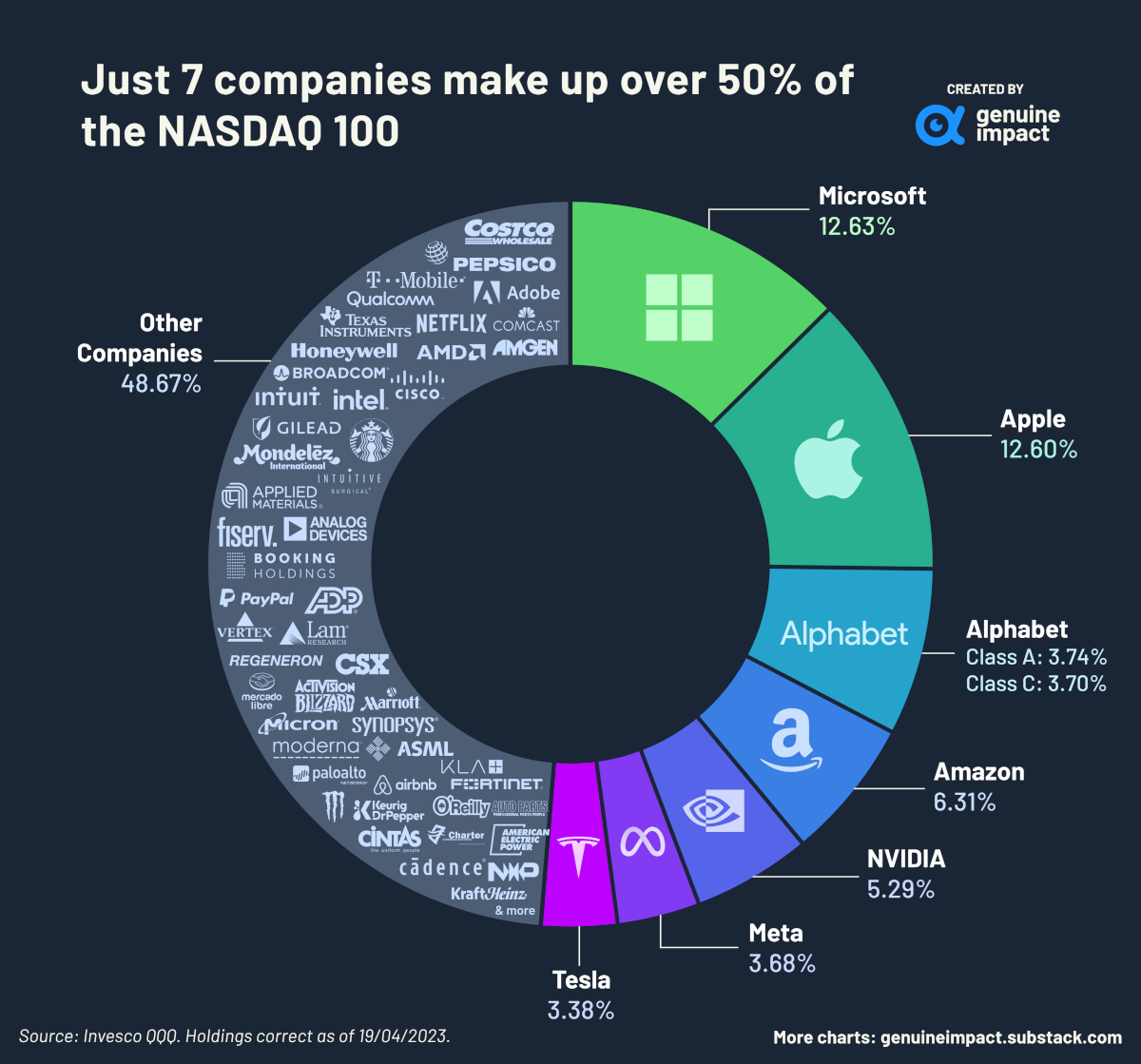
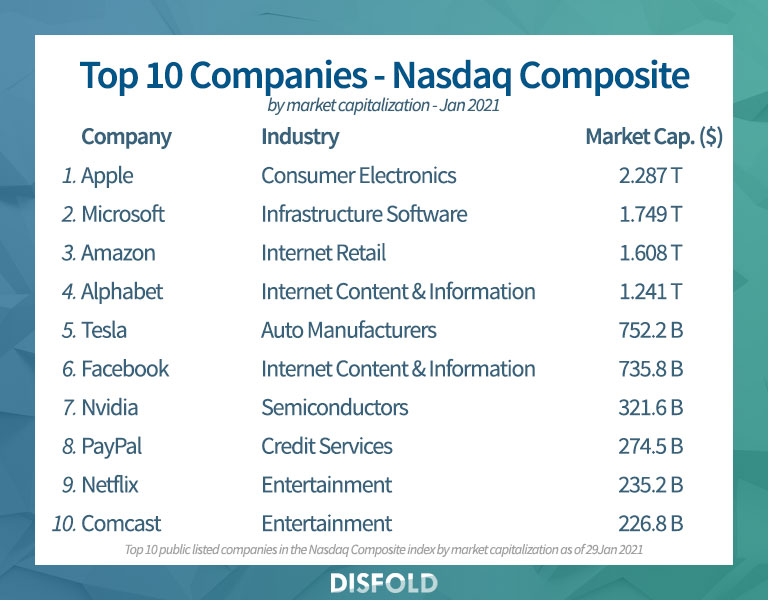
While the sheer number of listings provides a breadth of opportunity, market capitalization (the total value of a company’s outstanding shares) offers insight into depth and influence. The Nasdaq is home to some of the world’s largest companies by market cap, often trillion-dollar behemoths that wield immense economic power. These “mega-cap” companies, though few in number, can dominate market indices and significantly influence overall market performance.
Conversely, a large proportion of Nasdaq listings comprises smaller-cap and mid-cap companies. These firms, while individually less impactful on headline indices, collectively represent the engine of future growth and innovation. Their presence underscores Nasdaq’s role as a vital incubator for emerging businesses, offering investors a spectrum of opportunities from established giants to speculative startups.
Listing Requirements and Their Impact on Growth
The integrity and attractiveness of a stock exchange are heavily dependent on the rigor of its listing requirements. Nasdaq’s standards are designed to ensure that only companies meeting specific financial and governance benchmarks are admitted, protecting investors and maintaining market quality.
Initial Public Offering (IPO) Road to Nasdaq
For a private company to list its shares on the Nasdaq, it must navigate a meticulous and demanding process. The specific requirements vary by market tier (Global Select, Global Market, Capital Market), but generally include criteria related to:
- Earnings or Revenue: Companies must demonstrate a track record of profitability or substantial revenue.
- Shareholders’ Equity: A minimum amount of equity is required, indicating financial stability.
- Public Float: A certain number of shares must be available to the public, ensuring sufficient liquidity.
- Share Price: A minimum bid price per share helps maintain investor confidence and deter penny stock speculation.
- Corporate Governance: Robust corporate governance practices, including independent board members and audit committees, are mandatory.
Meeting these thresholds is a significant achievement for any company, signaling a level of maturity and transparency that instills confidence in potential investors. The IPO process itself is resource-intensive, involving investment banks, legal counsel, and rigorous regulatory scrutiny.
Maintaining Listing Standards: A Continuous Challenge
The journey doesn’t end with an IPO. Once listed, companies must continuously comply with Nasdaq’s ongoing listing requirements. These include regular financial reporting (quarterly and annually), maintaining minimum share prices (e.g., staying above $1.00 for the Nasdaq Global Market), and adhering to corporate governance rules. Failure to meet these ongoing standards can lead to a “deficiency notice” and, if uncorrected, eventually to delisting. This continuous oversight acts as a safeguard, ensuring that listed companies maintain a certain level of financial health and investor protection.
Delisting: When Companies Leave the Exchange
Delisting, while often viewed negatively, is a natural part of a healthy market cycle. As mentioned, it can be voluntary due to mergers, acquisitions, or going private. Involuntary delistings, however, signify a failure to meet the exchange’s standards. This could be due to:
- Financial Distress: Persistent losses, insufficient equity, or bankruptcy.
- Low Share Price: Falling below the minimum bid price for an extended period.
- Lack of Liquidity: Insufficient public float or trading volume.
- Corporate Governance Issues: Failure to comply with board independence rules or other governance standards.
- Illegal Activities: Fraud, market manipulation, or other severe regulatory breaches.
While delisting can be detrimental to the company and its shareholders, it serves to prune the market of non-compliant or failing entities, preserving the overall quality and reputation of the Nasdaq.
Nasdaq’s Influence on Global Investing and Finance
The Nasdaq’s sheer volume of listings and its concentration of influential companies grant it a powerful role in global finance, impacting investment strategies and serving as a bellwether for innovation.
The Nasdaq Composite vs. Nasdaq 100: Key Indices
When people talk about “the Nasdaq,” they often refer to one of two primary indices:
- Nasdaq Composite Index: This is a market-capitalization-weighted index of all common stocks and similar securities listed on the Nasdaq Stock Market. It provides the broadest measure of the Nasdaq’s performance, encompassing all sizes and sectors. Its performance is a direct reflection of the collective health of all listed companies.
- Nasdaq 100 Index: This index includes the 100 largest non-financial companies listed on the Nasdaq based on market capitalization. It’s heavily weighted towards technology and growth stocks and is often seen as a proxy for the performance of large-cap tech. Many ETFs and mutual funds track the Nasdaq 100, making it a highly liquid and widely followed benchmark.
Understanding the distinction between these indices is crucial for investors, as their compositions and, consequently, their performance characteristics, can differ significantly.
Investment Strategies Tailored to Nasdaq Listings
The nature of Nasdaq’s listings naturally attracts specific investment strategies:
- Growth Investing: Given the prevalence of tech and biotech firms, many investors gravitate towards growth strategies, seeking companies with high revenue growth, expanding market share, and innovative products, often prioritizing future potential over current profitability.
- Sector-Specific Investing: ETFs and mutual funds focused on technology, healthcare, or specific sub-sectors within these industries are popular ways to gain exposure to Nasdaq-listed companies.
- Innovation-Focused Investing: Investors looking for disruptive technologies, cutting-edge research, and companies poised to reshape industries often find their targets among Nasdaq’s diverse listings.
However, the growth-oriented nature of many Nasdaq stocks also implies higher volatility and risk compared to broader market indices, demanding a careful approach to portfolio construction and risk management.
The Nasdaq as an Innovation Barometer
Beyond its role as a trading venue, the Nasdaq serves as a vital barometer for innovation and technological progress. Companies that succeed in listing and thriving on Nasdaq are often at the forefront of their respective fields, pushing boundaries and driving economic change. The exchange’s performance frequently mirrors investor sentiment regarding future economic growth and the adoption of new technologies. A robust Nasdaq suggests optimism about innovation, while a downturn can signal caution regarding speculative growth assets. It is, in essence, a real-time report card on humanity’s technological ambition.
The Future of the Nasdaq: Sustaining Its Edge
The Nasdaq’s ability to attract and retain thousands of companies underscores its enduring relevance. However, the financial landscape is constantly evolving, presenting both opportunities and challenges for the exchange and its listed entities.
Emerging Trends and Sectorial Shifts
The Nasdaq will continue to be shaped by emerging technological trends. Areas like artificial intelligence, quantum computing, biotechnology, renewable energy, and space exploration are likely to see increased activity on the exchange. As industries evolve, the composition of Nasdaq’s listed companies will adapt, reflecting the next wave of innovation. For example, the recent surge in AI-driven companies has already begun to shift investment patterns and market valuations. The exchange must remain agile, adapting its listing standards and technological infrastructure to accommodate these new, often capital-intensive, ventures.
Regulatory Landscape and Market Adaptability
The regulatory environment plays a crucial role in shaping the future of public markets. Changes in securities laws, corporate governance requirements, and international trade policies can impact companies’ willingness and ability to go public or remain listed. Nasdaq, along with other exchanges, must continuously engage with regulators to strike a balance between investor protection and fostering capital formation. Furthermore, the rise of alternative funding mechanisms, such as private equity and venture capital, means that exchanges like Nasdaq must continue to demonstrate their unique value proposition as a source of public capital and liquidity.

Opportunities and Challenges for Investors
For investors, the Nasdaq will continue to offer unparalleled access to growth opportunities. However, navigating this dynamic market requires diligence. The high valuations often associated with growth stocks necessitate careful fundamental analysis and an understanding of market cycles. The potential for disruption, while offering immense upside, also carries inherent risks. Investors must stay informed about global economic trends, technological advancements, and regulatory changes to make sound investment decisions.
In conclusion, the question “how many stocks on the Nasdaq” unlocks a much broader understanding of market dynamics, innovation, and the intricate world of finance. While the exact number constantly shifts, ranging typically between 2,500 and 3,500 unique companies, its significance lies not just in the quantity but in the quality, diversity, and innovative spirit of the enterprises it hosts. The Nasdaq remains a vital engine of the global economy, connecting investors with the companies building tomorrow’s world.
aViewFromTheCave is a participant in the Amazon Services LLC Associates Program, an affiliate advertising program designed to provide a means for sites to earn advertising fees by advertising and linking to Amazon.com. Amazon, the Amazon logo, AmazonSupply, and the AmazonSupply logo are trademarks of Amazon.com, Inc. or its affiliates. As an Amazon Associate we earn affiliate commissions from qualifying purchases.