
The Nasdaq Stock Market, often simply referred to as “Nasdaq,” stands as a cornerstone of the global financial landscape. It is widely recognized as a hub for technology and growth companies, playing a pivotal role in capital formation and investment opportunities worldwide. For investors, financial analysts, and market observers, understanding the composition and scale of Nasdaq is crucial. One of the most frequently asked questions revolves around its sheer size: “How many stocks are actually listed on the Nasdaq?” The answer, however, is not a static figure but rather a dynamic representation of market activity, innovation, and corporate evolution.
Understanding the Nasdaq Exchange: More Than Just a Number
Nasdaq operates as a global electronic marketplace for buying and selling securities, famed for being the world’s first electronic stock market. Unlike traditional exchanges with physical trading floors, Nasdaq facilitated transactions through a computer network, revolutionizing market efficiency and accessibility. Founded in 1971, it quickly became the preferred listing venue for pioneering companies in technology, biotechnology, and telecommunications. Today, its influence extends across various sectors, though its reputation as a home for innovative, often growth-oriented, businesses remains strong.
When people inquire about the number of stocks in the Nasdaq, they might be referring to two distinct, yet related, concepts: the total number of companies listed on the Nasdaq Stock Market or the number of components within specific Nasdaq indices like the Nasdaq Composite or the Nasdaq 100. It’s vital for investors to distinguish these to accurately gauge market breadth and performance. The primary focus for answering the “how many stocks” question typically leans towards the total number of common equities traded on the exchange, which is represented by the companies comprising the Nasdaq Composite Index. This number is not fixed; it constantly fluctuates due to the ebb and flow of new listings, delistings, and corporate actions.
The Dynamic Count: Why the Number Fluctuates
The number of stocks listed on the Nasdaq is in a perpetual state of change, reflecting the vibrant and often volatile nature of the capital markets. This dynamism is driven by several key corporate events that continuously reshape the exchange’s roster.
Initial Public Offerings (IPOs): Adding New Companies
New companies regularly choose Nasdaq as their platform to “go public” through an Initial Public Offering (IPO). This process allows private companies to offer their shares to the public for the first time, raising capital for growth, expansion, or debt repayment. Nasdaq’s appeal to tech and growth firms means it often captures a significant share of high-profile IPOs. Each successful IPO adds a new ticker symbol and a new company to the Nasdaq’s overall count. The allure of public markets, coupled with Nasdaq’s global reach and reputation, ensures a steady stream of new entrants, particularly during periods of economic expansion and investor optimism. The number of IPOs can vary significantly year to year, depending on market conditions, regulatory environment, and the availability of capital.
Delistings: Companies Leaving the Exchange
Just as companies join Nasdaq, others depart through a process known as delisting. There are numerous reasons a stock might be delisted:
- Failure to Meet Listing Requirements: Nasdaq maintains strict financial and corporate governance standards. Companies that fall below minimum share price, market capitalization, or shareholder equity thresholds, or fail to comply with governance rules, may face delisting.
- Bankruptcy or Liquidation: Companies facing severe financial distress or ceasing operations will naturally be removed from the exchange.
- Mergers and Acquisitions (M&A): When one publicly traded company acquires another, the acquired company’s stock is typically delisted as it becomes part of the acquiring entity. This consolidates the number of publicly traded companies.
- Going Private: Occasionally, a public company may choose to revert to private ownership, often through a leveraged buyout, removing its shares from public trading.
Delistings serve as a critical mechanism to maintain the quality and integrity of the exchange, ensuring that only viable and compliant companies remain listed.
Mergers and Acquisitions (M&A): Consolidation and Change
Mergers and acquisitions are a fundamental aspect of corporate strategy and a significant driver of change in the number of Nasdaq-listed stocks. When two companies merge, they often combine into a single entity, resulting in the delisting of one of the original companies. Similarly, an acquisition where one company buys another typically leads to the acquired company being delisted. This corporate consolidation can lead to a net decrease in the number of unique companies trading on the exchange, even as it creates larger, potentially more dominant, entities.
Spin-offs and Reverse Mergers
Less frequent but equally impactful are corporate spin-offs and reverse mergers. A spin-off occurs when a parent company separates a division or subsidiary into a new, independent company, which then becomes publicly traded on an exchange like Nasdaq. This adds a new stock to the market. Conversely, a reverse merger involves a private company merging with a public shell company to bypass the traditional IPO process and become publicly traded. While the shell company might already be listed, the transformation effectively introduces a “new” operating company to the exchange.
Nasdaq Listing Requirements: The Gatekeepers of Quality
To maintain its reputation as a premier market for growth and innovation, Nasdaq imposes rigorous listing requirements. These standards are designed to protect investors, ensure market liquidity, and uphold the quality and financial health of listed companies. Adherence to these criteria is paramount for a company to join and remain on the exchange.
Financial Standards
Companies seeking to list on Nasdaq must meet specific financial benchmarks, which can vary across its different listing tiers (Capital Market, Global Market, Global Select Market). These often include minimum thresholds for:
- Shareholders’ Equity: The total assets minus total liabilities, representing the net worth of the company.
- Market Value of Publicly Held Shares: The total value of shares available for public trading.
- Net Income (Profit): Consistent profitability over a certain period.
- Cash Flow: Positive cash flow from operations.
These financial requirements ensure that only companies with a certain level of financial stability and operational success are admitted to the exchange.
Liquidity Standards
Liquidity is crucial for efficient trading, allowing investors to buy and sell shares easily without significant price impact. Nasdaq’s liquidity standards include:
- Minimum Number of Publicly Held Shares: Ensuring a sufficient float of shares for public trading.
- Minimum Bid Price: A sustained minimum share price to avoid penny stock volatility.
- Number of Market Makers: A minimum number of financial firms actively quoting buying and selling prices for the stock, facilitating trade execution.
These standards aim to guarantee a robust trading environment for investors.
Corporate Governance Standards
Beyond financial metrics, Nasdaq emphasizes strong corporate governance to protect shareholder interests. These rules dictate:
- Independent Directors: A majority of the board of directors must be independent, meaning they have no material relationship with the company other than their board service.
- Audit Committee: An independent audit committee is required to oversee financial reporting and internal controls.
- Shareholder Meetings: Regular annual meetings are mandated to allow shareholders to vote on key issues.
- Code of Conduct: Companies must adopt and disclose a code of business conduct and ethics.
These governance requirements instill investor confidence and promote transparency and accountability within listed companies.
The Nasdaq Composite vs. Nasdaq 100: Key Distinctions for Investors
When discussing “how many stocks are in the Nasdaq,” it’s essential to differentiate between the entire exchange’s listings and the components of its most prominent indices.
Nasdaq Composite Index
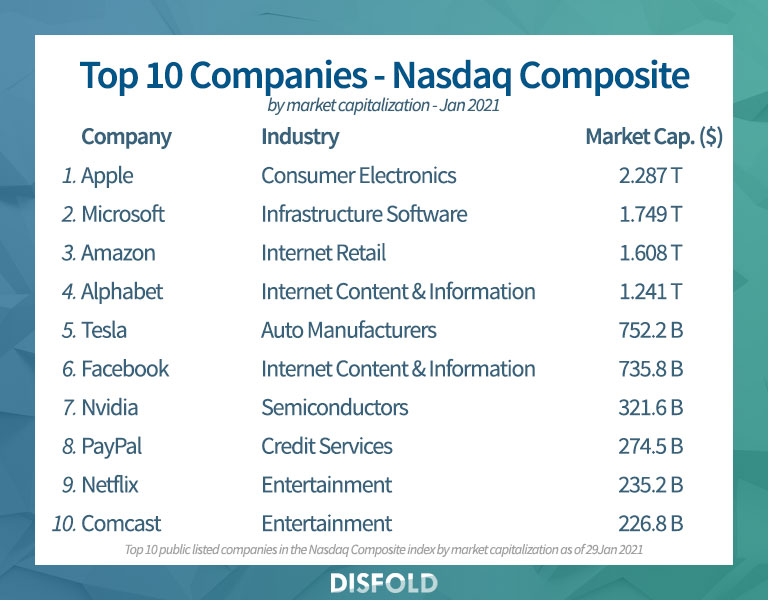
The Nasdaq Composite Index is a market-capitalization-weighted index of all common stocks and similar securities listed on the Nasdaq stock market. This means it includes virtually every company trading on the exchange that meets its criteria, encompassing not only tech giants but also companies from various other sectors like healthcare, industrials, and consumer services.
The number of companies in the Nasdaq Composite typically hovers around 3,000 to 3,500, though this exact figure changes daily due to the aforementioned additions and removals. It serves as a broad indicator of the overall performance of the Nasdaq market and, given Nasdaq’s tech-heavy nature, is often seen as a barometer for the technology sector and growth stocks in general. Its breadth makes it a comprehensive reflection of the opportunities and trends across the entire exchange.
Nasdaq 100 Index
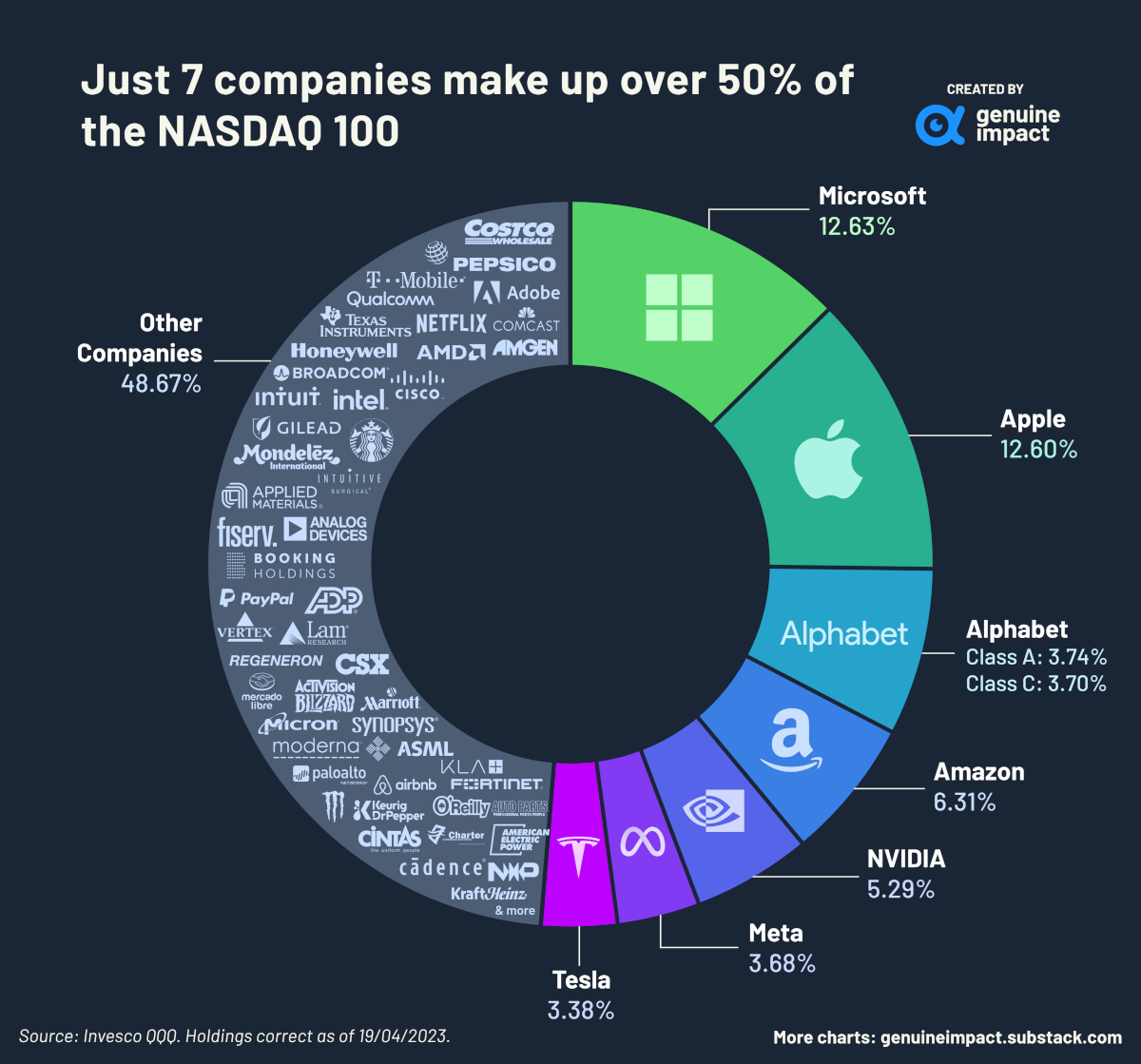
In contrast, the Nasdaq 100 Index is a much more concentrated and specialized index. It comprises the 100 largest non-financial companies listed on the Nasdaq Stock Market, also weighted by market capitalization. This index specifically excludes financial companies, focusing instead on industry leaders in sectors such as technology, retail, biotechnology, healthcare, and industrial.
The Nasdaq 100 is highly influential due to its inclusion of many of the world’s most innovative and valuable companies—think Apple, Microsoft, Amazon, Google (Alphabet), and Tesla. It is a favored benchmark for growth and technology-focused investment funds and ETFs (Exchange Traded Funds), and its performance is often viewed as a proxy for the health of the large-cap technology sector. While its component count is fixed at 100 (rebalanced annually, with quarterly reviews), its constituents represent a significant portion of Nasdaq’s total market capitalization.
Investment Implications: What the Number Means for You
Understanding the number of stocks on Nasdaq and its dynamic nature carries significant implications for investors, influencing strategy, risk assessment, and opportunity identification.
Diversification and Opportunity
The sheer number of companies listed on Nasdaq, particularly within the Nasdaq Composite, presents a vast universe of investment opportunities. This broad market offers diversified exposure across numerous industries and company sizes, from nascent startups to established multinational corporations. For investors seeking sector-specific exposure, Nasdaq provides unparalleled access to innovative fields like AI, biotechnology, cybersecurity, and renewable energy. This wide array allows investors to tailor their portfolios to specific growth themes or market segments, fostering potential for long-term capital appreciation.
Market Health and Investor Sentiment
The rate of new listings and delistings on Nasdaq can serve as a powerful indicator of overall market health and investor sentiment. A robust pipeline of IPOs, especially from high-growth sectors, often signals a confident market, abundant capital, and an appetite for risk among investors. Conversely, an increasing trend of delistings, particularly due to financial distress, or a slowdown in IPO activity, might suggest economic headwinds or a more cautious investment environment. These trends can offer insights into the broader economic landscape and guide strategic investment decisions.

Passive vs. Active Investing
For investors utilizing passive strategies, understanding the distinction between the Nasdaq Composite and Nasdaq 100 is critical. ETFs or index funds tracking the Nasdaq Composite offer broad exposure to thousands of companies, encompassing a wide range of market capitalizations and industries. This provides more comprehensive diversification. In contrast, funds tracking the Nasdaq 100 offer a more concentrated bet on the largest, most influential non-financial growth companies, typically with higher growth potential but also potentially higher volatility. Active investors, meanwhile, benefit from the vast selection, allowing them to research and pick individual stocks they believe are undervalued or poised for significant growth, leveraging the depth of the Nasdaq market for stock-picking opportunities. Ultimately, whether investing passively or actively, the dynamic nature and sheer volume of Nasdaq-listed stocks underscore the importance of continuous due diligence and a clear understanding of one’s investment objectives.
aViewFromTheCave is a participant in the Amazon Services LLC Associates Program, an affiliate advertising program designed to provide a means for sites to earn advertising fees by advertising and linking to Amazon.com. Amazon, the Amazon logo, AmazonSupply, and the AmazonSupply logo are trademarks of Amazon.com, Inc. or its affiliates. As an Amazon Associate we earn affiliate commissions from qualifying purchases.