
The digital commerce landscape has undergone a seismic shift over the last decade, transitioning from a niche technical endeavor to a foundational pillar of the global economy. At the heart of this transformation is Shopify, a software-as-a-service (SaaS) powerhouse that has democratized the ability to sell online. As of 2024, industry data suggests there are approximately 4.6 to 4.8 million live Shopify stores operating globally. This number is not merely a reflection of a popular tool; it represents a massive technological ecosystem that supports everything from solo entrepreneurs to multi-billion-dollar enterprise brands.

Understanding the sheer volume of Shopify stores requires looking beyond a simple tally. It involves analyzing the technological trends, the evolution of the software stack, and the global digital infrastructure that allows a single platform to host millions of unique business instances simultaneously.
The Current Landscape: Quantifying the Shopify Ecosystem
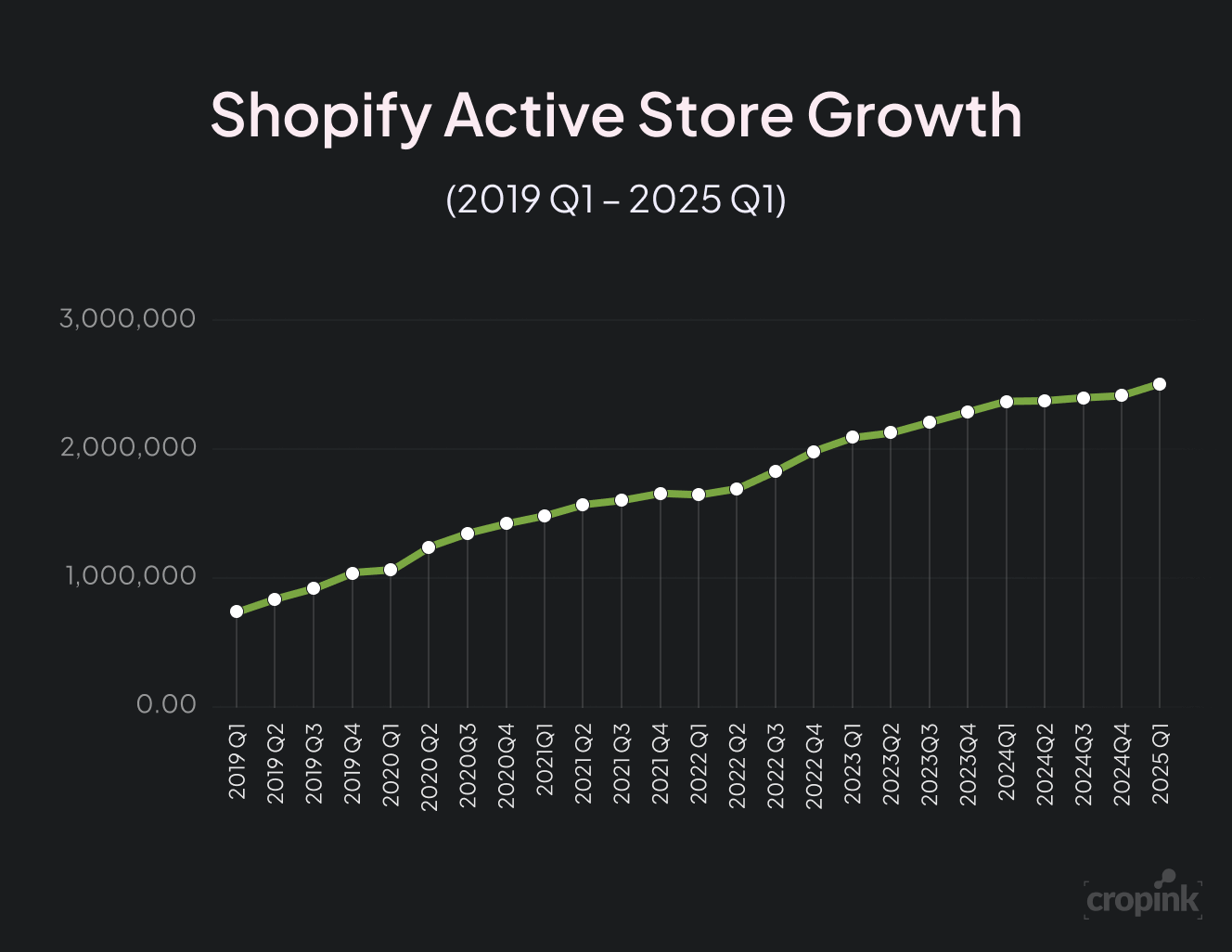
The growth trajectory of Shopify is often cited as a bellwether for the health of the broader e-commerce sector. In 2017, the platform hosted fewer than 600,000 merchants. By 2020, accelerated by the global shift toward digital-first retail, that number surged past the one-million mark. Today, with nearly five million active stores, Shopify accounts for a significant portion of the global e-commerce market share, particularly in North America.
Geographic Distribution and Market Concentration
While Shopify is a global platform, its technological footprint is heavily concentrated in specific regions. The United States remains the primary hub, hosting over 2.8 million stores, which accounts for roughly 60% of the platform’s total user base. This concentration is driven by the mature digital payment infrastructure in the US and the high adoption rate of Direct-to-Consumer (DTC) business models.
Following the United States, the United Kingdom, Brazil, Canada, and Australia represent the next largest markets. Brazil’s rapid ascent in the Shopify rankings highlights a growing trend: the expansion of localized SaaS solutions. Shopify has invested heavily in internationalization, offering multi-currency support and localized checkout experiences, which has allowed it to penetrate markets that were previously dominated by local, fragmented software providers.
The Rise of Shopify Plus
Within the millions of stores, a critical sub-sector is Shopify Plus—the enterprise-grade version of the platform. There are currently over 30,000 stores operating on Shopify Plus. These stores represent high-volume merchants, including global brands like Mattel, Netflix, and Heinz. The growth of the Plus segment signifies a shift in tech sentiment; large-scale corporations are increasingly moving away from expensive, high-maintenance “on-premise” or “custom-built” legacy systems in favor of flexible, scalable SaaS environments.
The Technology Behind the Growth: Why Millions Choose Shopify
The reason millions of stores exist on this specific platform is rooted in its technical architecture. Shopify isn’t just a website builder; it is a complex infrastructure layer that handles the “heavy lifting” of online commerce, including hosting, security, payment processing, and inventory management.
The Power of SaaS Architecture
Traditional e-commerce required businesses to manage their own servers, deal with security patches, and manually scale bandwidth during high-traffic events like Black Friday. Shopify’s multi-tenant SaaS architecture changed this. By hosting millions of stores on a centralized cloud infrastructure, Shopify ensures that even the smallest merchant has the same uptime and security standards as a Fortune 500 company. This “democratization of infrastructure” is the primary driver behind the platform’s high adoption rate.
The Liquid Templating Language and Customization
One of the technical pillars of Shopify’s success is “Liquid,” an open-source template language written in Ruby. Liquid acts as the bridge between the store’s database and the user’s browser. It allows developers to create highly customized, dynamic storefronts without touching the core platform code. This balance between ease of use for beginners and deep customizability for developers has fostered a massive community of experts, further accelerating the number of stores launched each year.
The API-First Approach and Headless Commerce
As the number of stores grows, so does the complexity of the tech stacks used by merchants. Modern Shopify stores are increasingly utilizing “headless commerce” architectures. In this setup, Shopify serves as the back-end engine (handling the cart and checkout), while the front-end is built using modern web frameworks like React or Next.js. This is made possible by Shopify’s robust Storefront API. By allowing developers to decouple the presentation layer from the commerce logic, Shopify has positioned itself as the preferred “engine” for high-tech, performance-focused digital brands.

The Shopify App Store: A Tech Ecosystem of Its Own
The 4.6 million Shopify stores do not operate in a vacuum. They are supported by a secondary economy: the Shopify App Store. With over 10,000 apps available, the ecosystem allows merchants to extend the functionality of their stores without needing to write custom code.
Solving the “Feature Creep” Problem
A significant challenge for any software platform is “feature creep”—trying to build every possible tool into the core product, which eventually makes the software bloated and slow. Shopify solved this by keeping its core “lean” and allowing third-party developers to build specialized tools. Whether a store needs AI-driven product recommendations, advanced SEO auditing, or complex loyalty programs, there is likely an app for it.
Integration and Automation
The current trend among the millions of Shopify stores is the move toward “Automated Tech Stacks.” Tools like Shopify Flow allow merchants to create “if-this-then-that” logic within their stores. For example, if an order over $200 is placed, the system can automatically tag the customer as “VIP” and notify the shipping team via Slack. This level of technical automation allows small teams to manage massive store volumes, contributing to the platform’s overall growth.
The Impact of AI and Automation on Store Proliferation
In the last 24 months, the integration of Artificial Intelligence has become the single biggest catalyst for the creation of new Shopify stores. AI has lowered the technical barrier to entry to its lowest point in history.
Generative AI and Content Creation
Shopify Magic, a suite of AI-integrated features, now allows merchants to generate product descriptions, marketing copy, and even email subject lines within the dashboard. This reduces the “time-to-launch,” meaning more stores can go from concept to live operation in hours rather than weeks. For the millions of existing stores, AI tools are being used to optimize images, automate customer service via sophisticated chatbots, and predict inventory needs based on historical data.
Data-Driven Decision Making
Beyond content, AI is transforming the “Money” side of these tech-driven stores. Machine learning algorithms analyze the billions of data points generated across the Shopify network to provide merchants with “Sidekick”—an AI commerce assistant. This tool can answer technical questions like, “Why did my sales drop in the UK last month?” or “How can I optimize my checkout flow for mobile users?” By providing enterprise-level data analysis to small business owners, Shopify ensures higher retention rates among its millions of users.
Future Projections: Can the Momentum Continue?
While 4.6 million stores is a staggering figure, the question remains: is the market reaching saturation? Current tech trends suggest otherwise. The “digitization of everything” is still in its middle stages, particularly in emerging markets and traditional B2B industries.
The Expansion of B2B Commerce
Historically, Shopify was a B2C (Business-to-Consumer) platform. However, its recent pivot toward B2B (Business-to-Business) features is opening a new frontier. As wholesalers and manufacturers move away from legacy manual ordering processes toward digital portals, we can expect a new wave of high-volume stores to enter the ecosystem. These stores require different technical specifications—custom pricing lists, net-payment terms, and bulk ordering logic—all of which Shopify is currently integrating into its core software.
Retail Hardware and Omnichannel Integration
The “number of Shopify stores” is also expanding into the physical world. Through Shopify POS (Point of Sale), the platform is bridging the gap between digital and physical retail. A “store” is no longer just a URL; it is a unified commerce entity that tracks inventory across a website, a physical boutique, and social media marketplaces like Instagram and TikTok. This “omnichannel” approach makes the platform more “sticky,” as it becomes the central nervous system for a merchant’s entire business operation.
Conclusion
The millions of Shopify stores worldwide represent more than just a success story for a Canadian tech company; they represent a fundamental shift in how software empowers global trade. Through a combination of robust SaaS architecture, a thriving app ecosystem, and the strategic integration of AI, Shopify has built a platform that scales from a single-person side hustle to a global enterprise. As the technology continues to evolve and the barriers to entry continue to fall, the number of Shopify stores is likely to continue its upward trajectory, further solidifying its position as the engine of modern commerce.
aViewFromTheCave is a participant in the Amazon Services LLC Associates Program, an affiliate advertising program designed to provide a means for sites to earn advertising fees by advertising and linking to Amazon.com. Amazon, the Amazon logo, AmazonSupply, and the AmazonSupply logo are trademarks of Amazon.com, Inc. or its affiliates. As an Amazon Associate we earn affiliate commissions from qualifying purchases.