
The question “how many shareholders does Apple have?” appears deceptively simple, yet its answer delves into the intricate mechanisms of modern financial markets, corporate governance, and the sheer scale of global investment. Apple Inc. (AAPL) is not just a technology behemoth; it’s a financial powerhouse, one of the most valuable public companies in the world, whose stock is a cornerstone of countless investment portfolios. For anyone interested in money, investing, or business finance, understanding the composition of Apple’s ownership provides crucial insights into its stability, governance, and market influence. While pinpointing an exact, fixed number of individual shareholders at any given moment is practically impossible due to the dynamic nature of stock trading and various forms of ownership, we can thoroughly explore the landscape of Apple’s ownership, revealing a complex web of direct individual investors, colossal institutional funds, and indirect beneficiaries stretching across the globe.
The Nuances of Counting Apple’s Shareholders
At first glance, one might expect a straightforward figure, a definitive count of unique individuals and entities holding a piece of Apple. However, the reality is far more layered. The structure of modern stock ownership, mediated by brokerages, custodians, and large institutional investors, makes a precise, real-time tally elusive. Understanding this complexity is key to appreciating the true breadth of Apple’s investor base.
Direct vs. Indirect Ownership
To truly grasp the scale, we must differentiate between direct and indirect ownership.
- Direct Shareholders: These are individuals or entities that hold Apple shares registered in their own name or in a brokerage account directly linked to them. This category includes individual retail investors who buy AAPL stock through platforms like Fidelity, Charles Schwab, or Robinhood, as well as wealthy private individuals and family offices. While these investors hold shares directly, even their holdings are often electronically recorded by a central depository, not by Apple itself in individual physical certificates.
- Indirect Shareholders: This is where the numbers explode exponentially. Indirect ownership primarily comes through institutional investors. These are massive financial organizations that pool money from countless individual investors and then invest it on their behalf. Examples include:
- Mutual Funds: Millions of people invest in mutual funds, which then purchase shares of companies like Apple. One mutual fund might hold millions of Apple shares, effectively representing thousands or even millions of underlying investors.
- Exchange-Traded Funds (ETFs): Similar to mutual funds, ETFs often track indices (like the S&P 500 or Nasdaq 100, where Apple is a major component) and are owned by a vast number of individual investors.
- Pension Funds: Retirement savings for public and private sector employees are often managed by large pension funds that invest heavily in blue-chip stocks like Apple.
- Hedge Funds: While often geared towards high-net-worth individuals and institutions, hedge funds also represent a collective investment vehicle.
- Sovereign Wealth Funds: State-owned investment funds, often from oil-rich nations, manage vast sums and are significant holders of major global stocks.
Each institutional investor, though counted as a single “shareholder” in some contexts, effectively acts as a proxy for a multitude of underlying individual investors whose retirement savings, college funds, or general investment goals are tied to Apple’s performance.
Publicly Available Data and Its Limitations
Companies like Apple are required to disclose certain ownership information to the U.S. Securities and Exchange Commission (SEC). This data provides valuable insights but doesn’t give a full, precise count of individual shareholders.
- SEC Filings (13F, 10-K, Proxy Statements): Institutional investment managers with over $100 million in assets under management must file Form 13F quarterly, disclosing their equity holdings. This provides a snapshot of major institutional ownership. Apple’s annual report (10-K) and proxy statements also provide information on beneficial ownership by insiders (executives, directors) and large shareholders. However, these filings primarily track institutional holdings and only report the record holders of shares.
- The “Record Holder” vs. “Beneficial Owner” Dilemma: The vast majority of publicly traded shares in the U.S. are held in “street name” by brokerage firms, which in turn hold them through a central depository, primarily Cede & Co. (a nominee of The Depository Trust Company, or DTC). Cede & Co. is the “record holder” for millions of shares across countless companies. The individuals or institutions for whom these shares are held are the “beneficial owners.” This structure means that Apple’s corporate records might show Cede & Co. as its largest shareholder, effectively obscuring the true number of underlying beneficial owners. Counting individual retail investors who hold shares through brokerage accounts is particularly challenging, as brokerages report aggregated holdings, not individual client counts, to the companies themselves.
The Role of Brokerages and Custodians
Brokerage firms act as intermediaries, holding shares on behalf of their clients. When you buy Apple stock through your brokerage account, the shares are typically held in “street name” by the brokerage, not directly registered in your name with Apple’s transfer agent. This streamlines trading and administration but further complicates an exact count of beneficial owners. Custodian banks play a similar role for institutional investors, holding their assets securely. This layered system ensures efficiency but makes a precise numerical answer to “how many shareholders” impossible to obtain from any single source.
The Landscape of Apple’s Major Shareholders
Given the complexities of counting, a more insightful approach is to examine the types and proportions of Apple’s ownership. This reveals a shareholder base dominated by powerful financial institutions, complemented by a vast yet diffuse network of individual investors.
Institutional Investor Dominance
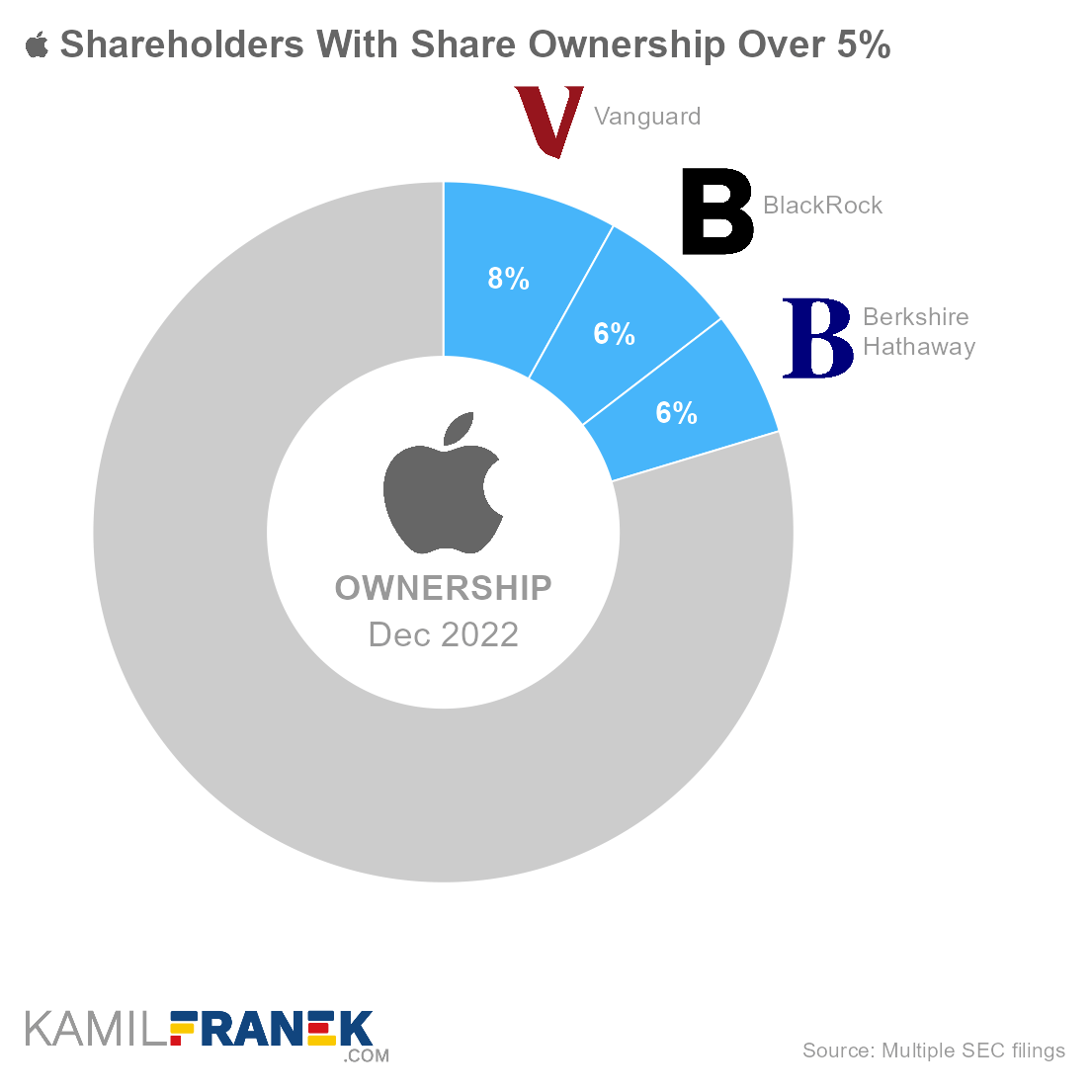
Institutional investors collectively own the lion’s share of Apple stock. Typically, these entities hold anywhere from 55% to 65% or even more of Apple’s outstanding shares. This dominance has several significant implications:
- Stability and Long-Term Focus: Many institutional investors, particularly index funds and pension funds, are long-term holders. They buy and hold shares to track market performance or meet future liabilities, contributing to the stock’s stability.
- Influence on Corporate Decisions: With such large stakes, institutional investors wield significant voting power on critical corporate governance issues, including the election of board members, executive compensation, mergers and acquisitions, and environmental, social, and governance (ESG) policies. They engage in dialogues with management and can collectively push for changes they believe will enhance shareholder value.
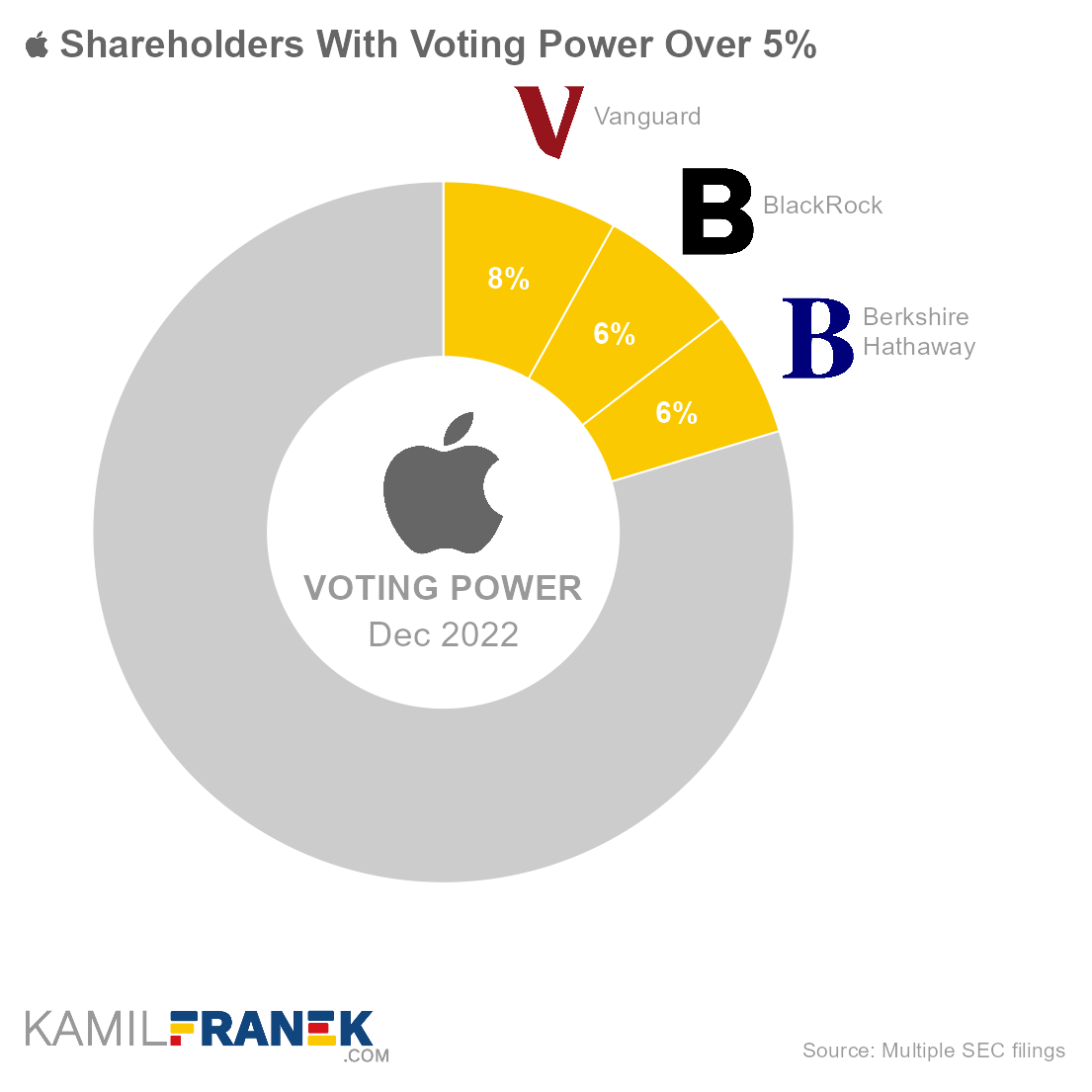
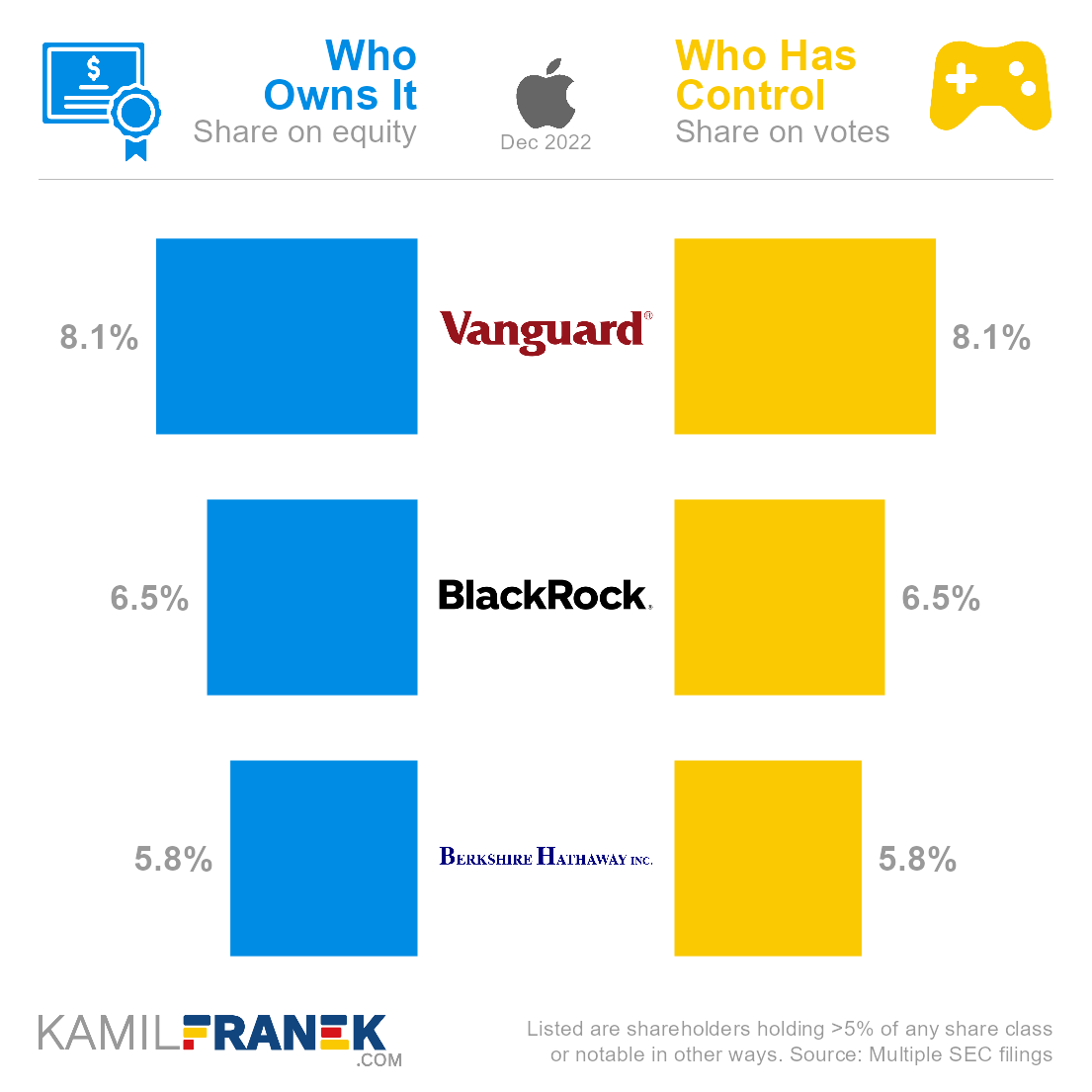
- Top Institutional Holders: The largest institutional holders of Apple shares consistently include major asset managers like Vanguard Group, BlackRock Inc., State Street Corp., and Geode Capital Management. These firms manage trillions of dollars in assets across various funds, making their collective stake in Apple immense. While technically each firm is a single entity, their holdings represent the aggregated investments of millions of individuals globally. Berkshire Hathaway, led by Warren Buffett, is also a prominent individual institutional holder, owning a substantial portion of Apple shares and representing a significant single investment decision.
Retail Investor Influence and Numbers
While institutions hold the majority of shares by volume, the number of individual retail investors who own Apple stock is undoubtedly in the millions. Apple’s status as a household name, its consistent financial performance, and its iconic brand appeal make it a highly desirable stock for the average investor.
- Accessibility: With the advent of commission-free trading and fractional share investing, owning a piece of Apple is more accessible than ever before, attracting a broad demographic of investors, from seasoned traders to first-time buyers.
- Collective Impact: Although individual retail investors typically hold smaller positions compared to institutions, their sheer numbers mean their collective buying and selling activity can still influence daily trading volumes and market sentiment.
- Brand Loyalty and Investment: Many individual investors are also Apple product users, creating a unique synergy where brand loyalty often translates into investment interest. This direct connection fosters a dedicated and often passionate retail shareholder base.
Insider Ownership and Employee Stock Programs
A smaller but strategically important segment of Apple’s ownership comes from insiders – executives, board members, and employees.
- Alignment of Interests: Insider ownership, often facilitated through stock options, restricted stock units (RSUs), and employee stock purchase plans (ESPPs), is designed to align the financial interests of Apple’s leadership and workforce with those of all shareholders. When the company performs well, their personal wealth grows, incentivizing them to make decisions that enhance long-term shareholder value.
- Transparency: Information regarding insider holdings is publicly disclosed through SEC filings, providing transparency into the stakes held by those closest to the company’s operations and strategic direction. While their percentage of total shares is relatively small compared to institutional holdings, their influence, given their roles, is substantial.
Why Shareholder Numbers Matter: Implications for Investors and Apple
Understanding the composition and magnitude of Apple’s shareholder base is not merely an academic exercise; it has tangible implications for corporate governance, market dynamics, and the company’s relationship with its investors.
Corporate Governance and Voting Power
The distribution of Apple’s ownership directly impacts its corporate governance.
- Institutional Voting Power: Large institutional investors leverage their significant voting power on matters ranging from director elections to executive compensation and major corporate initiatives. They often engage in direct dialogue with Apple’s management and board, and their votes can be decisive. Proxy advisory firms play a crucial role here, influencing how institutional investors vote on various proposals.
- Retail Investor Voice: While individual retail investors’ votes may seem small in isolation, their collective voice can still be heard, especially on highly contentious issues. Shareholder activism, even from smaller groups, can draw public attention and pressure the company.
- Accountability: A broad and diverse shareholder base, particularly one with strong institutional representation, provides a critical layer of accountability for Apple’s management and board, ensuring decisions are made with shareholder interests in mind.
Market Stability and Liquidity
The sheer number and diversity of Apple’s shareholders contribute significantly to its market stability and liquidity.
- High Liquidity: With millions of shares actively traded by a vast number of participants daily, Apple stock boasts exceptional liquidity. This means investors can easily buy and sell shares without significantly impacting the stock price, making it an attractive asset for traders and long-term investors alike.
- Price Discovery: A large and active investor base ensures efficient price discovery, as a wide range of opinions and information are incorporated into the stock’s market valuation.
- Reduced Volatility (Generally): While no stock is immune to market fluctuations, a broad shareholder base, especially one underpinned by long-term institutional holders, can provide a cushion against extreme volatility, as there isn’t a single point of failure or an overwhelming concentration of shares in a few hands that could cause drastic swings.
Investor Relations and Transparency
For a company like Apple, managing relations with such a vast and diverse shareholder base is a critical function.
- Communication: Apple maintains robust investor relations efforts, providing regular financial reports, earnings calls, and annual shareholder meetings to keep its investors informed. This transparency is crucial for maintaining trust and confidence.
- Meeting Diverse Needs: The investor relations team must cater to a wide spectrum of investors, from sophisticated institutional analysts to individual retail shareholders who might be newer to investing. Providing accessible information and addressing a range of concerns is paramount.
- Building Confidence: A transparent and proactive approach to investor relations helps Apple build and maintain investor confidence, which is vital for its long-term stock performance and ability to raise capital if needed.
Investing in Apple: What Potential Shareholders Should Consider
For those considering becoming one of Apple’s many shareholders, understanding the company’s financial standing and its appeal to various investor profiles is crucial.
Understanding Apple’s Financial Health
Before investing in any company, a thorough analysis of its financial health is paramount. For Apple, this includes examining:
- Revenue and Profit Growth: Consistent growth in sales of iPhones, Macs, services, and other products, coupled with strong profit margins, demonstrates the company’s underlying business strength.
- Cash Flow: Apple consistently generates massive amounts of free cash flow, indicating its ability to fund operations, invest in future growth, and return capital to shareholders.
- Balance Sheet: A strong balance sheet with substantial cash reserves and manageable debt levels provides financial resilience.
- Valuation Metrics: Investors should evaluate Apple’s stock using metrics like the price-to-earnings (P/E) ratio, enterprise value to EBITDA, and dividend yield, comparing them to industry peers and historical averages to determine if the stock is fairly valued.
Dividends and Share Buybacks
Apple’s capital return program is a significant attraction for many shareholders, particularly income and value investors.
- Dividends: Apple initiated a dividend in 2012 and has consistently grown it, providing shareholders with a regular income stream. For long-term investors, dividend growth can be a powerful component of total returns.
- Share Buybacks: The company also executes massive share buyback programs, repurchasing its own stock from the open market. This reduces the number of outstanding shares, which can boost earnings per share (EPS) and signal management’s confidence in the company’s value. Both dividends and buybacks demonstrate Apple’s commitment to returning value to its shareholders.
Diversification and Risk Management
While Apple is a fundamentally strong company, no single stock should constitute an investor’s entire portfolio.
- Diversification: Investors should always diversify their holdings across different companies, industries, and asset classes to mitigate risk. Holding a diverse portfolio means that if one investment underperforms, others may compensate.
- Risk Assessment: Even market leaders like Apple face risks, including intense competition, supply chain disruptions, regulatory challenges, and potential shifts in consumer preferences. Investors should understand these risks and assess their own risk tolerance before investing.
Conclusion
So, how many shareholders does Apple have? While a precise, static number is an elusive phantom in the dynamic world of financial markets, the answer is undoubtedly “millions.” Apple’s ownership structure is a microcosm of global capitalism itself: a vast, complex ecosystem comprising hundreds of major institutional investors representing countless underlying individuals, alongside millions of direct individual retail shareholders, all connected by a shared stake in one of the world’s most innovative and valuable companies. This broad and diverse ownership base underpins Apple’s market liquidity, reinforces its robust corporate governance, and ensures a wide array of voices contributing to its ongoing success. For anyone with a stake in money, investing, or business finance, understanding this intricate web of ownership is key to appreciating Apple’s enduring appeal as a cornerstone investment for generations of investors worldwide.
aViewFromTheCave is a participant in the Amazon Services LLC Associates Program, an affiliate advertising program designed to provide a means for sites to earn advertising fees by advertising and linking to Amazon.com. Amazon, the Amazon logo, AmazonSupply, and the AmazonSupply logo are trademarks of Amazon.com, Inc. or its affiliates. As an Amazon Associate we earn affiliate commissions from qualifying purchases.