
The hum of jet engines overhead is a familiar soundtrack to modern life, a constant reminder of our interconnected world. But have you ever paused to consider the sheer scale of this aerial ballet? How many aircraft ascend into the sky, traverse continents, and safely descend each day? The answer is staggering, a testament to intricate planning, human ingenuity, and, most importantly, cutting-edge technology. This isn’t merely about counting planes; it’s about understanding the colossal technological infrastructure that makes such a volume of daily air traffic not just possible, but remarkably safe and efficient.

Every 24 hours, tens of thousands of commercial, cargo, military, and general aviation flights crisscross our planet. While precise, real-time figures fluctuate moment by moment, industry estimates often place the daily average for commercial flights alone well over 100,000 globally, potentially reaching closer to 200,000 when factoring in all types of aviation. This incredible volume is managed by an invisible web of advanced technological systems, from ground-based radar and satellite navigation to sophisticated AI algorithms and secure digital communication networks. To truly grasp “how many planes fly each day” is to delve into the technological marvel that underpins global aviation.
The Sky’s Invisible Highways: Understanding Global Air Traffic
The seemingly boundless expanse above us is, in fact, a meticulously organized network of air routes, designated flight corridors, and controlled airspace. Managing this dynamic environment for thousands of simultaneous flights requires an understanding of scale, categorization, and the continuous flow of data that defines modern aviation.
The Scale of Modern Aviation
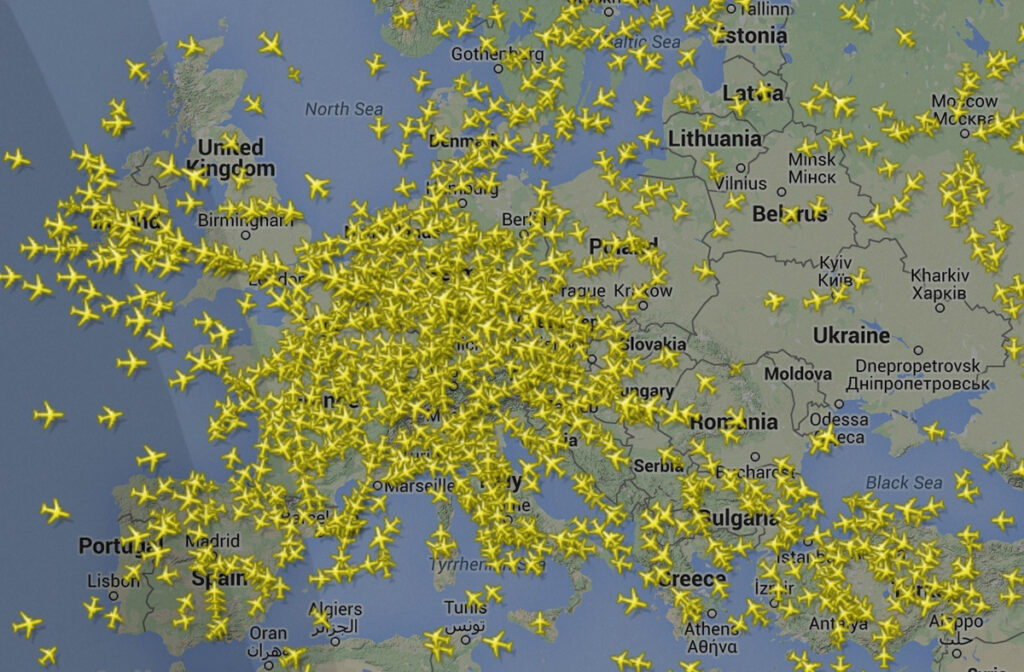
At any given moment, particularly during peak hours, there can be thousands of aircraft airborne simultaneously across the globe. Websites and apps that track flights in real-time offer a compelling visual of this constant motion, painting the sky with countless digital dots representing individual aircraft. This includes not only major international routes connecting mega-cities but also regional flights, short-haul commuter services, and essential cargo operations that keep global supply chains moving. The demand for air travel, both for passengers and freight, continues to grow, pushing the boundaries of what air traffic management systems can handle and driving continuous innovation in aviation technology. This constant pressure necessitates robust, scalable, and resilient technological solutions to prevent gridlock and ensure safety.
Defining “A Flight”: Commercial, Cargo, General Aviation
When we ask “how many planes fly each day,” it’s crucial to define what constitutes a “flight.” The headline numbers often focus on commercial passenger airliners, which represent the largest and most visible segment of air traffic. However, the total tally is far more diverse:
- Commercial Passenger Flights: These are the scheduled services operated by airlines, carrying millions of passengers daily on everything from short regional hops to ultra-long-haul intercontinental journeys. These flights operate under strict regulations and follow predefined air traffic control (ATC) protocols.
- Cargo Flights: The backbone of global logistics, cargo planes transport everything from e-commerce packages to critical medical supplies. Often flying through the night or during off-peak hours, these operations contribute significantly to daily air traffic, relying on similar, if not more specialized, navigation and tracking technologies.
- General Aviation (GA): This broad category includes private planes, corporate jets, flight training aircraft, air ambulances, agricultural aircraft, and recreational flying. GA flights are incredibly numerous and diverse, ranging from small single-engine planes to sophisticated business jets. While some GA operations occur in uncontrolled airspace, many still interact with ATC services, especially when operating near major airports, showcasing the need for integrated, adaptable air traffic management tools.
- Military and Government Flights: Though often excluded from public daily flight counts, military exercises, reconnaissance missions, and governmental transport aircraft also utilize the airspace, operating with specialized clearances and high-security communication technologies.
Each of these categories contributes to the daily count and places unique demands on the technological systems designed to manage air traffic. The ability to differentiate, track, and prioritize these diverse types of flights is a core function of modern aviation technology.
The Technological Backbone: Air Traffic Control Systems
The coordinated movement of thousands of aircraft relies on an incredibly sophisticated and robust network of technologies known as Air Traffic Control (ATC). ATC is more than just a person with a microphone; it’s a complex ecosystem of hardware, software, and communication tools that ensure the safe and orderly flow of air traffic.
Radar and Beyond: Evolution of Surveillance Technology
The bedrock of air traffic surveillance has historically been radar. Ground-based primary surveillance radar (PSR) sends out radio waves that bounce off aircraft, providing controllers with range and bearing. Secondary surveillance radar (SSR) is more advanced, requiring a transponder on the aircraft to actively respond with identification, altitude, and speed data. This interaction significantly improves the quality and quantity of information available to controllers.
However, the 21st century has seen a shift “beyond radar”:
- ADS-B (Automatic Dependent Surveillance-Broadcast): This revolutionary technology has become a cornerstone of modern air traffic management. Instead of waiting for a radar signal, aircraft equipped with ADS-B continuously broadcast their position (derived from GPS), altitude, speed, and other data to ground stations and other aircraft. This provides more accurate, real-time, and frequent updates than traditional radar, especially in remote areas or over oceans where radar coverage is limited.
- Satellite-Based Navigation (GPS/GNSS): Global Navigation Satellite Systems (GNSS), including GPS, GLONASS, Galileo, and BeiDou, provide highly accurate positioning data to aircraft. This allows for more precise flight paths, shorter routes, and more efficient use of airspace, enabling the “how many planes fly each day” number to grow without compromising safety.
- Multilateration (MLAT): This technology uses multiple ground stations to precisely pinpoint an aircraft’s position by measuring the time difference of arrival (TDOA) of signals from its transponder. MLAT is particularly effective for surveillance at airports and in complex terminal areas, complementing radar and ADS-B.
These technologies provide controllers with a comprehensive, real-time picture of the airspace, allowing them to issue precise instructions and maintain separation between aircraft.
ATC Communication and Data Networks
Effective communication is paramount in air traffic control. While voice radio remains a critical component, digital data links are increasingly vital for efficiency and reducing human error.
- VHF Radio: Very High Frequency (VHF) radio is the primary means of voice communication between pilots and air traffic controllers. It’s a robust and reliable system, but it has limitations in terms of spectrum congestion and the potential for misinterpretation.
- Data Link Communications (CPDLC/ACARS): Controller-Pilot Data Link Communications (CPDLC) allows controllers and pilots to exchange routine, non-urgent messages (e.g., flight plan changes, altimeter settings) via text-based digital messages rather than voice. This reduces radio congestion, improves clarity, and frees up voice channels for critical instructions. Aircraft Communications Addressing and Reporting System (ACARS) is another data link system used for operational messages between aircraft and ground facilities, such as engine performance data or arrival estimates.
- Secure Digital Networks: The vast amount of data generated by surveillance systems, flight plans, and weather information is transmitted and processed over secure, high-speed digital networks. These networks connect various ATC centers, airports, and meteorological services, ensuring that controllers have access to the most up-to-date information to make informed decisions. The integrity and security of these networks are paramount to preventing disruptions and cyber threats.
The Role of AI and Machine Learning in Optimizing Airspace
As the number of daily flights continues to climb, human controllers face an increasingly complex task. Artificial intelligence (AI) and machine learning (ML) are emerging as transformative technologies for optimizing airspace management.
- Predictive Analytics for Congestion: AI algorithms can analyze vast datasets of historical and real-time flight data, weather patterns, and airport capacity to predict potential congestion points hours or even days in advance. This allows ATC to proactively implement flow control measures, re-route flights, or adjust departure times, minimizing delays and fuel consumption.
- Automated Conflict Detection: AI systems can continuously monitor the positions and trajectories of all aircraft in a sector, quickly identifying potential conflicts (aircraft getting too close) that might be missed by human eyes or that develop too rapidly for manual detection. While humans retain ultimate decision-making authority, AI can serve as a powerful safety net and warning system.
- Optimized Routing and Sequencing: ML models can suggest optimal flight paths that consider real-time wind conditions, restricted airspace, and traffic density, leading to shorter flight times and reduced fuel burn. They can also optimize the sequencing of aircraft for landing and takeoff at busy airports, improving efficiency and throughput.
- Controller Decision Support Systems: AI tools are increasingly integrated into controller workstations, providing decision support by highlighting anomalies, suggesting clearances, and presenting complex information in an easily digestible format. This augments human capabilities, allowing controllers to manage more traffic safely and effectively.
These AI-driven advancements are crucial for scalability, enabling the aviation industry to handle the ever-increasing volume of daily flights without compromising safety standards.
Data at Our Fingertips: Flight Tracking and Predictive Analytics
The era of big data has profoundly impacted aviation, transforming everything from operational efficiency to passenger experience. The ability to collect, analyze, and disseminate vast quantities of flight-related information is a cornerstone of modern air travel.
From Professional Tools to Consumer Apps
The technology that enables air traffic controllers to manage flights also powers a multitude of tools accessible to the public. Websites and mobile applications like FlightAware, FlightRadar24, and Plane Finder leverage ADS-B data, radar feeds, and airline schedules to provide real-time information on virtually every commercial flight in the air.
- Real-time Tracking: Consumers can track specific flights, view flight paths, monitor delays, and see estimated arrival times. This transparency is invaluable for travelers, meeting parties, and anyone with an interest in aviation.
- Historical Data: Many platforms also offer historical flight data, allowing users to look up past flights, analyze traffic patterns over specific periods, or even track the movements of individual aircraft over their operational lifespan.
- Operational Insights: For aviation enthusiasts and professionals, these tools provide a window into the complex dance of air traffic, showcasing flight levels, speeds, aircraft types, and even specific squawk codes used by controllers. This democratization of flight data underscores the power of modern aviation technology to provide unparalleled situational awareness.
Big Data in Aviation: Safety, Efficiency, and Logistics
Beyond public tracking, the analysis of “big data” is critical for the aviation industry itself, driving continuous improvements across multiple domains.
- Safety Enhancements: By analyzing data from thousands of flights – including operational parameters, maintenance logs, pilot inputs, and environmental factors – aviation authorities and airlines can identify trends, potential safety risks, and areas for procedural improvement. Predictive maintenance, for example, uses data to forecast component failures before they occur, preventing incidents and reducing unscheduled downtime.
- Operational Efficiency: Airlines use data analytics to optimize fuel consumption by fine-tuning flight plans, managing payload, and predicting optimal cruising altitudes. Data also informs crew scheduling, aircraft rotation, and gate assignments, minimizing ground delays and improving on-time performance. Air traffic flow management systems leverage real-time data to adjust traffic volumes based on airport capacity and weather, preventing bottlenecks.
- Logistics and Supply Chain Management: For cargo airlines, big data is essential for optimizing routes, managing cargo loads, and ensuring timely delivery. It allows for dynamic adjustments to schedules based on real-time demand and environmental factors, keeping global supply chains resilient and responsive.
- Passenger Experience: Data analytics helps airlines understand passenger preferences, personalize services, and anticipate needs. From managing seat inventory to predicting demand for specific routes, data plays a crucial role in tailoring the customer journey and maximizing revenue.
The ability to collect, process, and derive insights from vast datasets is fundamentally changing how the aviation industry operates, pushing the boundaries of what is possible in terms of safety, efficiency, and scale.
The Future of Flight: Innovations Shaping Tomorrow’s Skies
The question “how many planes fly each day” isn’t static; it evolves with technological advancements that are continually reshaping the capabilities and limitations of air travel. The future promises even more sophisticated systems designed to accommodate increasing traffic, improve sustainability, and introduce revolutionary new modes of flight.
NextGen and SESAR: Modernizing Airspace
Major initiatives like NextGen (Next Generation Air Transportation System) in the United States and SESAR (Single European Sky ATM Research) in Europe are at the forefront of modernizing air traffic management. These programs are not just incremental updates; they represent a fundamental paradigm shift towards a more digital, satellite-based, and data-driven system.
- Performance-Based Navigation (PBN): PBN allows aircraft to fly more precise, optimized flight paths using satellite navigation rather than relying solely on ground-based radio beacons. This reduces flight times, saves fuel, and increases airspace capacity by enabling more direct routes and tighter spacing.
- System Wide Information Management (SWIM): SWIM is an information-sharing platform that provides a common operational picture to all stakeholders – ATC, airlines, airports, and weather services – by sharing real-time data across a standardized network. This enhances collaborative decision-making and situational awareness, leading to more efficient traffic flow.
- Digital Towers and Remote ATC: Technology is enabling the concept of “digital towers,” where controllers manage traffic at an airport from a remote location using high-definition cameras, sensors, and augmented reality displays. This can enhance safety, improve efficiency, and make air traffic services more cost-effective for smaller airports.
These modernization efforts are critical to safely accommodating the projected growth in air traffic over the coming decades, ensuring that the answer to “how many planes fly each day” can continue to climb without sacrificing safety or efficiency.
Autonomous Flight and Drone Integration
Perhaps the most significant technological leap on the horizon is the advent of autonomous flight. While fully autonomous commercial passenger flights are still some way off, significant progress is being made:
- Single-Pilot Operations: Technology is already enabling aircraft to operate safely with reduced crew complements, moving towards single-pilot operations in cargo or executive jet sectors as automation capabilities improve.
- Unmanned Aircraft Systems (UAS) / Drones: The proliferation of drones, from recreational quadcopters to large delivery and surveillance platforms, presents a new challenge and opportunity for air traffic management. Integrating these “unmanned” aircraft safely into the existing manned aviation airspace requires sophisticated UAS Traffic Management (UTM) systems that can track, de-conflict, and manage high volumes of low-altitude drone traffic. These systems leverage AI, geo-fencing, and real-time communication to ensure separation and prevent collisions.
- Urban Air Mobility (UAM): The concept of “flying taxis” and electric vertical takeoff and landing (eVTOL) aircraft for intra-city transport is gaining momentum. These vehicles will require entirely new corridors, vertiports, and highly automated air traffic management systems to operate safely and efficiently within dense urban environments.
The successful integration of autonomous and remotely piloted aircraft represents the next frontier in aviation technology, promising to fundamentally redefine the very nature of “a flight.”
Sustainable Aviation Technology
Beyond efficiency and capacity, technology is also pivotal in addressing the environmental impact of aviation. The industry is heavily investing in sustainable aviation technologies:
- Electric and Hybrid-Electric Propulsion: Developing aircraft powered by electricity or hybrid electric systems promises significantly reduced emissions and noise, especially for shorter regional flights. This requires breakthroughs in battery technology, power electronics, and motor design.
- Sustainable Aviation Fuels (SAF): SAF, derived from sources like waste oils, algae, or agricultural residues, can significantly reduce carbon emissions compared to traditional jet fuel. The technology for producing and utilizing SAF is advancing rapidly, though scaling up production remains a challenge.
- Aerodynamic Improvements and Lightweight Materials: Continuous innovation in aircraft design, including more aerodynamically efficient wings, lighter composite materials, and adaptive wing technologies, contributes to reduced drag and lower fuel consumption, making each flight more environmentally friendly.
- Optimized Flight Procedures: Technology enables more efficient ascent and descent profiles, continuous descent approaches, and taxiing procedures, all designed to minimize fuel burn and emissions during different phases of flight.
These technological advancements are not just about making more flights possible; they are about making future flights cleaner, quieter, and more responsible, ensuring that aviation remains a viable and essential mode of transport for generations to come.
In conclusion, the answer to “how many planes fly each day” is not a simple number, but a dynamic figure powered by an awe-inspiring array of technological systems. From the ground-based radar of yesteryear to the satellite-driven, AI-powered air traffic management systems of today and the autonomous, sustainable aircraft of tomorrow, technology is the engine that keeps our skies vibrant, safe, and interconnected. As aviation continues to evolve, so too will the ingenuity and innovation required to manage its ever-expanding scale.
aViewFromTheCave is a participant in the Amazon Services LLC Associates Program, an affiliate advertising program designed to provide a means for sites to earn advertising fees by advertising and linking to Amazon.com. Amazon, the Amazon logo, AmazonSupply, and the AmazonSupply logo are trademarks of Amazon.com, Inc. or its affiliates. As an Amazon Associate we earn affiliate commissions from qualifying purchases.