
Google, the technology behemoth, is more than just a search engine; it’s a vast ecosystem of products, services, and groundbreaking innovation. Understanding the sheer scale of its operations requires delving into the number of people who power this global enterprise. As the principal subsidiary of its parent company, Alphabet Inc. (NASDAQ: GOOGL), Google’s workforce statistics are not merely a headcount but a critical financial indicator, revealing insights into the company’s operational expenditure, growth strategies, and overall economic footprint. For investors, financial analysts, and anyone interested in the economics of large corporations, the workforce count offers a window into Alphabet’s financial health, productivity, and long-term strategic investments.

The number of people employed by Google—or, more accurately, by Alphabet—is a dynamic figure that reflects the company’s continuous evolution, expansion into new markets, and aggressive pursuit of technological frontiers. This article will explore the reported workforce numbers, dissect their financial implications, and examine how human capital management plays a pivotal role in Alphabet’s valuation and strategic direction, all through the lens of business finance.
Unpacking Alphabet’s Human Capital: Scale and Financial Significance
The size of Alphabet’s workforce is staggering, underscoring its status as one of the world’s largest employers in the technology sector. This number doesn’t just represent individuals; it signifies a massive investment in human capital, directly impacting the company’s income statement and balance sheet.
The Official Count: Google’s Evolving Workforce Numbers
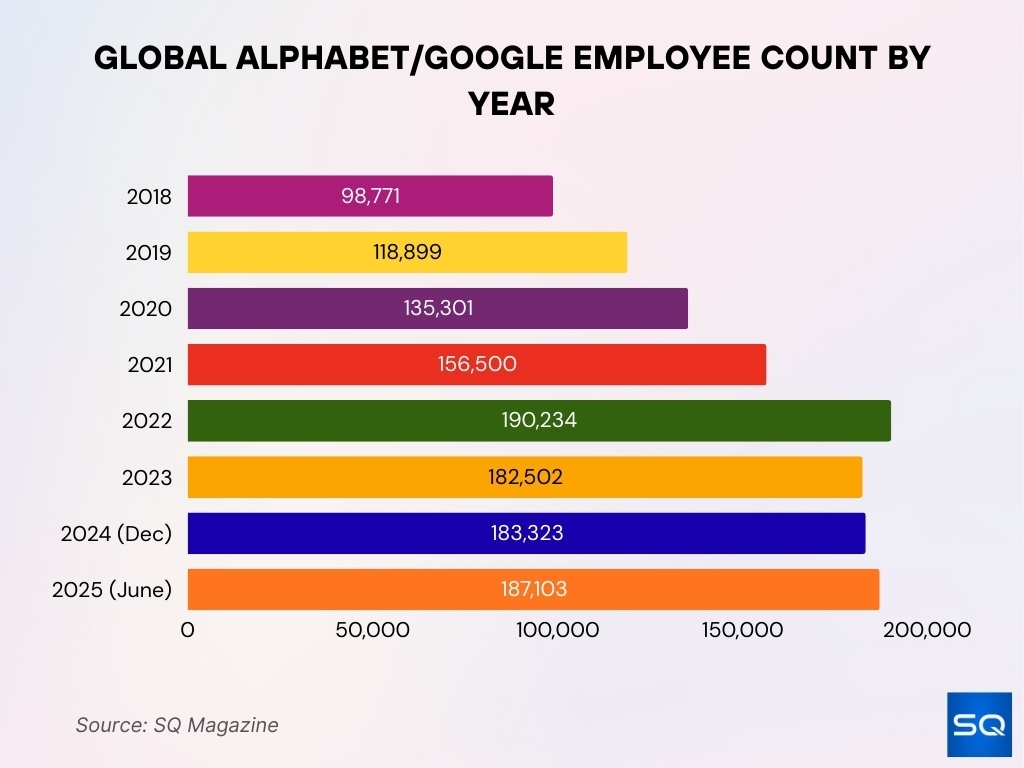
As a publicly traded company, Alphabet Inc. regularly reports its employee numbers as part of its quarterly and annual financial disclosures. These numbers typically include full-time equivalent (FTE) employees. Historically, Alphabet’s employee count has shown a consistent upward trend, reflecting its growth across various segments, including Search, Cloud, YouTube, and its diverse “Other Bets.” For instance, as of the latest available reports (typically Q4 2023 or Q1 2024, exact numbers vary by reporting period), Alphabet’s global workforce typically hovers around the 180,000 to 190,000 full-time employees mark. This figure often represents a net increase year-over-year, despite occasional periods of hiring slowdowns or targeted workforce reductions.
This growth isn’t arbitrary; it’s a deliberate financial strategy. Each new hire represents an investment in talent, aimed at expanding capabilities, driving innovation, or scaling existing operations to meet market demand. For investors, a steadily growing workforce can signal confidence in future revenue growth and market expansion, while a sharp contraction might prompt questions about cost efficiencies or a shift in strategic priorities. The sheer volume of salaries, benefits, and related payroll taxes for such a vast workforce constitutes one of Alphabet’s largest operational expenditures, directly impacting its gross profit margins and overall profitability.
Beyond the Numbers: Contingent Workers and Their Economic Role
The official employee count, while substantial, doesn’t always tell the full story of Alphabet’s operational human resources. Like many large corporations, Google heavily relies on a significant contingent workforce, including contractors, temporary staff, and vendors. These individuals perform a wide array of critical functions, from content moderation and data labeling to facilities management and specialized project work. While not counted in the official full-time employee statistics, their contributions are integral to Google’s daily operations and financial output.
From a financial perspective, the use of contingent workers offers both flexibility and cost advantages. It allows Alphabet to scale operations up or down more rapidly without the long-term commitments and overhead associated with full-time employment. Labor costs for contractors are often categorized differently in financial statements, potentially allowing for greater agility in expense management. However, there are also economic trade-offs, such as potential impacts on institutional knowledge, intellectual property ownership, and the quality of work, which savvy financial analysts consider when evaluating the company’s overall operational efficiency and long-term value. The economic impact of this extended workforce, though harder to quantify directly from public filings, is immense, supporting countless businesses and individuals globally.
A Global Footprint: Workforce Distribution and Market Penetration
Alphabet’s workforce is geographically diverse, spanning dozens of countries and hundreds of offices worldwide. This global distribution is not just about having a local presence; it’s a strategic financial decision to tap into diverse talent pools, serve local markets more effectively, and navigate complex international regulatory and economic landscapes. From engineering hubs in Bangalore and Zurich to sales offices in São Paulo and Tokyo, each regional workforce contributes to Alphabet’s global revenue generation and market penetration strategies.
The geographical breakdown of employees reflects Alphabet’s investment priorities. Significant concentrations in the US (especially California) indicate a focus on core R&D and strategic leadership, while growing teams in emerging markets signal aggressive expansion and localized product development aimed at capturing new user bases and revenue streams. Managing a global payroll, navigating various tax jurisdictions, and complying with diverse labor laws add layers of complexity to Alphabet’s financial operations, but also offer opportunities for tax optimization and leveraging lower-cost labor markets. The economic benefits ripple outwards, as Alphabet’s investments in local workforces stimulate regional economies through salaries, local procurement, and related spending.
The Workforce as a Core Financial Asset and Cost Center
In the realm of business finance, human capital is often considered a company’s most valuable asset, particularly for knowledge-based firms like Google. However, it is also one of the largest and most complex cost centers. Balancing the investment in people with the imperative for profitability is a constant challenge for Alphabet’s financial leadership.
Operational Expenditures: Salaries, Benefits, and Overhead
The most direct financial implication of Alphabet’s workforce is the colossal sum dedicated to operational expenditures, primarily employee compensation and benefits. This includes base salaries, performance-based bonuses, stock-based compensation (a significant component for tech giants), health insurance, retirement plans, and various perks (e.g., free food, fitness centers). These costs are reported under “Cost of Revenues” and “Operating Expenses” in Alphabet’s income statement. For a company employing nearly 200,000 people, this collective expenditure can easily run into tens of billions of dollars annually, representing a substantial portion of the company’s total expenses.
For investors, tracking these expenditures is crucial. Rapid increases in compensation expenses without a proportional increase in revenue can squeeze profit margins. Conversely, efficient management of these costs, perhaps through automation or strategic hiring, can enhance profitability. Alphabet’s robust benefits package, while costly, is also a strategic investment aimed at attracting and retaining top talent in a highly competitive industry, thereby securing its intellectual capital and innovative edge – a return on investment that’s hard to quantify directly but undeniably critical for long-term financial success.
Return on Human Capital: Productivity Metrics and Revenue Generation
While the workforce represents a massive cost, it is simultaneously the engine of revenue generation. Financial analysts often look at “revenue per employee” as a key productivity metric to assess how efficiently a company is utilizing its human capital. For Alphabet, with its highly automated and software-driven services, this figure is typically very high compared to industries reliant on physical production or lower-skilled labor. High revenue per employee indicates effective leveraging of technology and talent to generate significant economic value.
However, productivity isn’t uniform across all segments. Employees in core Google Search or Google Cloud might contribute to higher revenue per head due to the scalability of these services, while those in “Other Bets” (e.g., Waymo, Verily) might initially have lower revenue per employee due to their long-term, R&D-intensive nature. This differentiation highlights Alphabet’s strategic allocation of resources: some parts of the workforce are focused on maximizing current profitability, while others are tasked with building future multi-billion-dollar businesses, representing a long-term capital investment in innovation rather than immediate revenue.
Investor Perspective: Workforce Growth as a Signal for Valuation
For equity investors, the trajectory of Alphabet’s workforce is a significant signal influencing valuation. Sustained, strategic hiring can be interpreted as a sign of confidence in future growth prospects, indicating that the company is investing in new products, expanding into new markets, or scaling up successful ventures. Conversely, unexpected hiring freezes or significant layoffs can cause investor concern, signaling potential economic headwinds, cost-cutting measures, or a reassessment of growth strategies, which may lead to downward pressure on stock prices.
Furthermore, the quality of the workforce is paramount. Alphabet’s ability to attract and retain world-class engineers, data scientists, and business strategists directly impacts its competitive advantage and capacity for innovation. This “talent premium” is factored into how investors perceive the company’s long-term earnings potential. Therefore, financial reports that detail human capital initiatives, such as investment in employee training and development, are often scrutinized as indicators of future growth and sustainable profitability.
Strategic Allocation of Talent: Driving Innovation and Diversification
Alphabet’s structure, with Google as its dominant subsidiary and a portfolio of “Other Bets,” underscores a deliberate strategy for talent allocation. This organizational design is a financial mechanism for managing risk, fostering innovation, and maximizing the return on human capital across diverse ventures.
Core Google vs. Alphabet’s “Other Bets”: Investment in Future Growth
The division of Alphabet’s workforce between its highly profitable core Google operations and its speculative “Other Bets” (e.g., Waymo for self-driving cars, Verily for life sciences, DeepMind for AI research) is a critical aspect of its financial strategy. The vast majority of employees work within the Google segment, generating the bulk of the company’s revenue and profit. These teams are focused on optimizing existing products, developing incremental innovations, and scaling established business models.
However, a significant, albeit smaller, portion of Alphabet’s human capital is dedicated to the “Other Bets.” These ventures typically operate at a loss in their early stages, representing substantial long-term investments with uncertain but potentially massive payoffs. The employees in these segments are often pioneers, working on cutting-edge technologies that may take years to commercialize. From a financial perspective, investing in these teams is akin to venture capital funding within a corporate structure, leveraging Google’s financial strength to explore high-risk, high-reward opportunities that could become future pillars of Alphabet’s economic engine. This strategic allocation of talent helps diversify Alphabet’s revenue streams and ensures it remains at the forefront of technological disruption.
Mergers, Acquisitions, and Talent Integration: Financial Synergies
Alphabet has a history of strategic mergers and acquisitions (M&A), not just for technology or market share, but often for “acquihiring”—bringing in entire teams with specialized expertise. Each acquisition entails integrating new employees into the Alphabet culture and financial structure. From a financial standpoint, M&A involving talent integration seeks to achieve synergies, where the combined workforce is more productive or innovative than the sum of its parts.
The financial calculus involves assessing the cost of acquisition against the projected value of the acquired talent, technologies, and intellectual property. Successful integration means retaining key personnel, fostering collaboration, and leveraging new capabilities to drive revenue growth or cost efficiencies. Poor integration, conversely, can lead to talent drain, cultural clashes, and a failure to realize the anticipated financial benefits, ultimately resulting in a write-down of the acquisition’s value. Alphabet’s consistent investment in M&A involving significant talent pools highlights its financial commitment to external innovation and growth through human capital.
Research & Development: Investing in the Future Workforce
Alphabet’s substantial investment in Research & Development (R&D) is inextricably linked to its workforce. A large portion of its R&D budget goes directly towards funding the salaries, resources, and infrastructure for engineers, scientists, and researchers who are developing next-generation technologies. These R&D expenditures, reported annually, are not just operational costs; they are capital investments in future intellectual property and revenue streams.
The presence of a massive, highly skilled R&D workforce is a testament to Alphabet’s long-term financial vision. It signals a commitment to maintaining a competitive edge and pioneering new markets. For investors, robust R&D spending, when coupled with a strong track record of successful product launches and market leadership, reinforces confidence in Alphabet’s future profitability and its ability to sustain high growth rates in an ever-evolving technological landscape.
Future Trends in Alphabet’s Workforce and Long-Term Financial Planning
The global workforce landscape is constantly shifting, influenced by technological advancements, economic pressures, and evolving societal expectations. Alphabet, as a leading technology company, is at the forefront of these changes, and how it manages its workforce will profoundly impact its long-term financial health.
Automation and AI: Reshaping the Workforce Landscape
The very technologies Google develops—particularly artificial intelligence and machine learning—are poised to reshape its own workforce. While AI can automate repetitive tasks, leading to potential efficiency gains and cost reductions, it also creates new roles requiring specialized skills in AI development, ethical oversight, and human-AI collaboration. This means a continuous need for upskilling and reskilling the existing workforce, which represents a significant investment in training programs and educational initiatives.
From a financial planning perspective, the integration of AI could lead to a more productive workforce, allowing for higher output per employee and potentially optimizing headcount in certain areas. However, it also necessitates strategic investment in new talent pools and continuous adaptation of human resource strategies to remain competitive. The long-term financial implications include potentially lower operational costs in some areas but higher investment in advanced R&D and specialized talent.
The Hybrid Work Model: Cost Efficiencies and Talent Retention
The shift towards hybrid and remote work models, accelerated by recent global events, has significant financial implications for Alphabet. While managing a distributed workforce introduces complexities, it also offers opportunities for cost efficiencies in real estate (less office space required) and improved talent retention by offering greater flexibility. Access to a broader talent pool, unconstrained by geographical location, can also lead to more competitive hiring and potentially lower labor costs in certain regions.
Alphabet’s decisions regarding its future work model will impact its financial statements through reduced real estate expenses, changes in compensation structures (e.g., location-based pay adjustments), and investments in digital collaboration tools. Striking the right balance between in-office collaboration and remote flexibility will be crucial for maintaining employee productivity, engagement, and ultimately, its financial performance.

Geopolitical Factors and Supply Chain Resilience in Human Capital
In an increasingly interconnected yet volatile global economy, geopolitical factors play a growing role in human capital planning. Trade tensions, immigration policies, and regional conflicts can impact Alphabet’s ability to attract and retain international talent, establish new offices, and operate effectively across borders. Supply chain resilience, in this context, extends beyond physical goods to encompass the availability and continuity of skilled labor.
From a financial perspective, diversifying talent sources, establishing strong local leadership teams in key markets, and actively monitoring geopolitical risks become essential components of long-term financial planning. This includes evaluating the financial risks associated with over-reliance on a single talent market and developing strategies to ensure a continuous flow of human capital critical to Alphabet’s global operations and sustained financial growth.
In conclusion, the question of “how many people work for Google” transcends a simple number. It unlocks a comprehensive understanding of Alphabet’s financial strategy, its enormous operational costs, its investments in innovation and diversification, and its long-term outlook in a rapidly evolving global economy. For financial stakeholders, analyzing the size, growth, and strategic deployment of this massive workforce is paramount to assessing Alphabet’s current health and future potential.
aViewFromTheCave is a participant in the Amazon Services LLC Associates Program, an affiliate advertising program designed to provide a means for sites to earn advertising fees by advertising and linking to Amazon.com. Amazon, the Amazon logo, AmazonSupply, and the AmazonSupply logo are trademarks of Amazon.com, Inc. or its affiliates. As an Amazon Associate we earn affiliate commissions from qualifying purchases.