
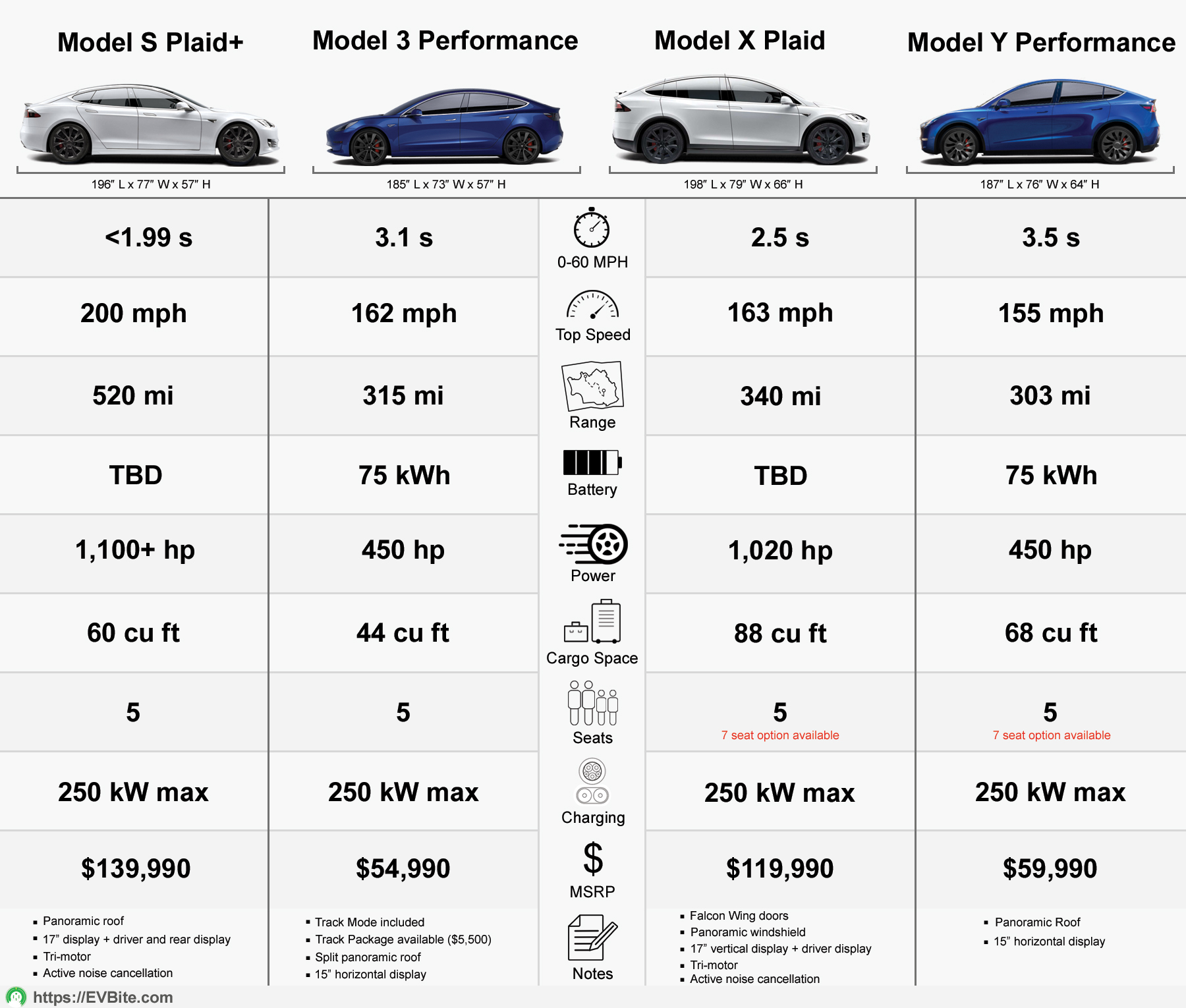
In the rapidly evolving landscape of sustainable transport, the question of how many models Tesla has is often met with a simple count of the vehicles currently visible on the road. However, for those looking through the lens of technological innovation, the answer is far more complex. Tesla does not merely produce cars; it engineers high-performance computing platforms on wheels. As of today, the official consumer lineup consists of five primary vehicles: the Model S, Model 3, Model X, Model Y, and the Cybertruck. Yet, to understand the true scope of Tesla’s technological footprint, one must look toward the specialized platforms like the Tesla Semi and the upcoming “Next-Gen” platform that promises to redefine mass-market manufacturing.

The evolution of these models represents a masterclass in iterative engineering. Unlike traditional automotive manufacturers that rely on rigid “model years,” Tesla treats its fleet as a continuous software-hardware synthesis. This approach allows the company to push the boundaries of battery chemistry, autonomous computing, and thermal management across a diverse range of form factors.
The Current Consumer Fleet: Engineering the “S3XY” Lineup
The core of Tesla’s market presence is defined by the “S3XY” acronym, a series of vehicles that transitioned the company from a niche luxury experimentalist to a global volume leader. Each of these models represents a specific milestone in the development of electric vehicle (EV) technology.
Model S and Model X: The Luxury Foundations
The Model S, launched in 2012, remains the flagship sedan and the proving ground for Tesla’s most advanced powertrain technologies. It was the first to demonstrate that an electric vehicle could outperform internal combustion engines in both acceleration and range. From a technical perspective, the Model S Plaid variant represents the pinnacle of tri-motor propulsion, utilizing carbon-sleeved rotors to maintain high RPMs without centrifugal deformation—a feat of materials science that enables sub-2-second 0-60 mph sprints.
The Model X, the SUV counterpart, introduced the world to the complexities of the “Falcon Wing” doors and a medical-grade HEPA filtration system. Beyond the aesthetics, the Model X pushed the boundaries of sensor integration. Because the doors are motorized and ultrasonic sensors cannot “see” through metal, Tesla had to develop specialized capacitive sensing and software logic to ensure the doors could operate safely in tight spaces without physical contact.
Model 3 and Model Y: High-Volume Technological Scaling
The Model 3 and Model Y are where Tesla’s engineering focus shifted from raw performance to manufacturing efficiency and “vertical integration.” The Model 3 was designed with a radical reduction in wiring—moving toward a more centralized electronic architecture. This reduction in complexity allowed for faster automated assembly and decreased vehicle weight.
The Model Y, currently the world’s best-selling vehicle, introduced the “Octovalve” and a sophisticated heat pump system. This was a significant technological leap over the Model 3’s initial design. By using a complex series of valves to move thermal energy between the battery, the drive units, and the cabin, Tesla significantly improved cold-weather efficiency. Furthermore, the Model Y pioneered the use of “Giga Castings”—massive single-piece rear and front underbody structures that replace over 140 individual parts, drastically reducing the robots required on the assembly line and increasing structural rigidity.
Beyond Passenger Cars: Specialized Platforms and Future Hardware
The breadth of Tesla’s engineering is not limited to the consumer driveway. To address the global carbon footprint of logistics and to experiment with radical new architectures, the company has expanded its “model” count to include specialized heavy-duty and experimental platforms.
The Tesla Semi: Revolutionizing Logistics with Megawatt Charging
The Tesla Semi is perhaps the company’s most ambitious engineering project to date. While passenger cars deal with kilowatt-hour (kWh) scales, the Semi operates on a megawatt-hour (MWh) scale. To support this, Tesla developed “Megawatt Charging” technology, which requires liquid-cooled charging cables to handle the immense heat generated during high-speed energy transfer. The Semi utilizes a tri-motor system derived from the Model S Plaid, allowing it to maintain highway speeds even on steep grades while fully loaded—a technological hurdle that has long plagued diesel-powered logistics.
The Cybertruck: A Masterclass in Materials Science and 48V Architecture
The Cybertruck is less a pickup truck and more a laboratory for “un-engineering” traditional automotive standards. Its primary innovation is the “Exoskeleton” made of Ultra-Hard 30X Cold-Rolled stainless steel. Because this material is too hard to be stamped by traditional presses, it must be air-bent, leading to the truck’s distinctive low-poly design.
More importantly for the tech industry, the Cybertruck is the first mass-produced vehicle to move to a 100% 48-volt secondary electrical architecture. For decades, the automotive industry has been stuck on a 12-volt standard. By quadrupling the voltage, Tesla can use thinner, lighter wiring throughout the vehicle, significantly reducing copper weight and increasing efficiency. This transition required Tesla to redesign every internal component—from window motors to lighting—marking a departure from the global automotive supply chain.
The Next-Generation Platform: The Quest for the $25,000 EV
While not yet officially named, Tesla’s “Next-Gen” platform is the focus of intense speculation. This model is expected to utilize the “Unboxed Process,” a revolutionary manufacturing method where sub-assemblies are completed in parallel and then joined at the very end. This process is designed to reduce the factory footprint by 40% and cut production costs by half. This platform is likely to utilize the 4680 battery cell in a structural pack configuration, where the batteries themselves provide the strength for the vehicle’s chassis.
Software-Defined Vehicles: The Secret Behind the Hardware Diversity
The true “number” of Tesla models is arguably higher than the physical count because each car exists in several states of technological evolution based on its internal computer hardware. Tesla pioneered the “software-defined vehicle” (SDV), where the hardware is a vessel for the code.
Over-the-Air (OTA) Updates: Keeping Models Relevant
One of Tesla’s greatest tech advantages is the ability to improve a vehicle’s performance, safety, and efficiency long after it has left the factory. Through OTA updates, Tesla has been able to increase motor power, optimize battery management systems for better range, and even shorten braking distances by refining the ABS software algorithms. This creates a paradigm where a five-year-old Model 3 can technically possess features and capabilities that did not exist when it was purchased.
The Role of Custom Silicon: FSD Chips and Dojo
Tesla’s commitment to internal technology development led them to abandon third-party silicon in favor of their own custom-designed AI chips. The Full Self-Driving (FSD) Computer (Hardware 3 and the newer Hardware 4) is designed specifically for neural network processing. By designing their own chips, Tesla eliminated the overhead of general-purpose processors, allowing for high-frame-rate image processing from eight cameras with minimal power consumption.
This hardware is supported by “Dojo,” Tesla’s custom supercomputer designed to train the neural networks that power the fleet. The synergy between the in-car hardware (the “edge”) and the Dojo supercomputer (the “core”) is what allows Tesla to treat its entire fleet as a single, learning organism.
The Future of Tesla Models: Robotics and Autonomous Transports
As we look toward the next decade, the definition of a “Tesla Model” is shifting away from traditional automotive categories and toward robotics. This transition highlights Tesla’s pivot from a car manufacturer to an AI and robotics powerhouse.
Robotaxi: The Shift from Ownership to Service
The much-anticipated “Robotaxi” platform is expected to be a vehicle designed entirely around autonomy. Freed from the constraints of pedals and steering wheels, this model will likely prioritize interior durability and space efficiency. Technically, this represents the ultimate test of Tesla’s “Vision Only” approach—relying entirely on cameras and neural nets to navigate complex urban environments without the use of expensive LiDAR sensors.
Optimus: Applying Automotive Tech to Humanoid Form Factors
Though it does not have four wheels, the Tesla Bot, or “Optimus,” is technically an extension of the Tesla model lineup. It uses the same FSD computer, the same battery management principles, and the same actuator technology developed for Tesla’s vehicles. Optimus represents the logical conclusion of Tesla’s tech stack: if you can teach a car to navigate a city, you can teach a humanoid to navigate a factory.

Conclusion: A Unified Technological Vision
To answer “how many models does Tesla have” requires an appreciation for the layers of technology embedded in their physical products. While there are currently five consumer vehicles in production, supplemented by heavy-duty and upcoming platforms, the real story lies in the underlying architecture. From the 4680 battery cells and Giga Castings to the 48V electrical systems and the custom AI silicon, Tesla’s models are less about body styles and more about the continuous refinement of an integrated tech ecosystem.
Each new model released is not just a new car; it is a new iteration of a hardware platform designed to solve the most complex engineering challenges of our time. Whether it is a sedan, a truck, or a humanoid robot, the “model” is simply the container for Tesla’s ever-evolving software and engineering soul.
aViewFromTheCave is a participant in the Amazon Services LLC Associates Program, an affiliate advertising program designed to provide a means for sites to earn advertising fees by advertising and linking to Amazon.com. Amazon, the Amazon logo, AmazonSupply, and the AmazonSupply logo are trademarks of Amazon.com, Inc. or its affiliates. As an Amazon Associate we earn affiliate commissions from qualifying purchases.