
Costco Wholesale Corporation operates a unique business model that has proven remarkably resilient and financially robust: the paid membership warehouse club. Unlike traditional retailers that rely solely on product markups, Costco leverages an annual membership fee as a critical, high-margin revenue stream. Understanding “how many members Costco has” is not merely a curiosity; it’s a deep dive into the core financial engine and operational strategy that underpins one of the world’s most successful retail giants. This vast member base isn’t just a number; it represents a significant source of predictable income, immense purchasing power, and a foundation for sustained growth and profitability that profoundly impacts the company’s financial health and market valuation.
The Scale of Costco’s Membership Empire
Costco’s membership figures are a testament to its compelling value proposition and global appeal. These numbers are a crucial metric for investors, analysts, and anyone looking to gauge the financial scale and reach of the enterprise.
Global Headcount: Current Figures and Growth Trajectories
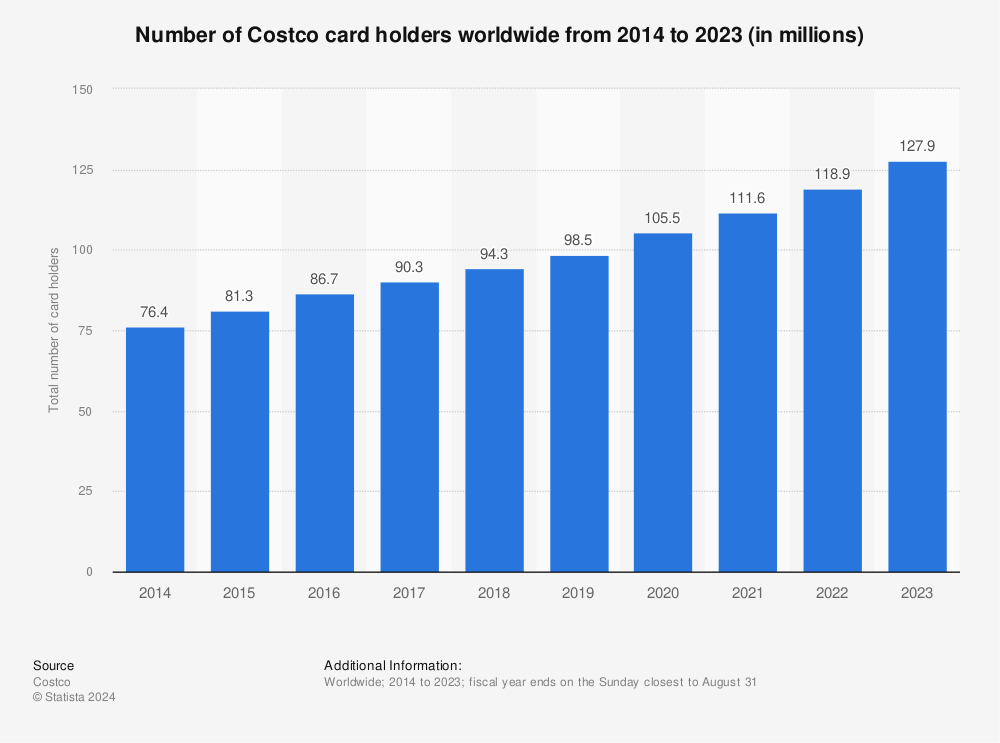
As of late 2023 and early 2024, Costco has consistently reported impressive growth in its global membership base. The company typically reports its membership statistics quarterly and annually, often highlighting the number of “cardholders” (individual members) and “households” (membership accounts). Recent reports indicate that Costco serves well over 130 million cardholders worldwide across more than 70 million household memberships. This immense figure underscores the widespread adoption of its warehouse club model across diverse international markets. The consistent year-over-year growth, often in the mid-single digits, demonstrates the enduring allure of the Costco proposition and its ability to attract new members while retaining existing ones at high rates. This steady expansion in membership translates directly into an escalating base of recurring revenue, a highly attractive feature for financial stability.
Membership Tiers: Gold Star, Executive, and Business
Costco offers various membership tiers, each designed to cater to different needs while strategically influencing member spending and loyalty. The two primary individual membership types are the Gold Star and Executive memberships, alongside a specific Business membership.
The Gold Star Membership is the basic tier, offering access to Costco warehouses worldwide and online shopping. It’s the entry point for most individual members.
The Executive Membership is the premium tier, priced higher than the Gold Star membership. Its key financial incentive is an annual 2% cash-back reward (up to a maximum) on most Costco purchases, along with additional benefits on services. From a financial perspective, the Executive membership is critical. While it costs more for the member, it drives higher engagement and spending. Executive members, despite making up a smaller percentage of the total membership base (historically around 40-45% of total paid memberships), typically account for a significantly larger portion of total sales volume, often exceeding two-thirds. This disproportionate spending makes the Executive tier a powerful financial driver, generating not only higher membership fee revenue per member but also significantly boosting merchandise sales.
The Business Membership is designed for business owners, allowing them to purchase products for resale. This tier also includes an option for an Executive upgrade, again offering the 2% reward. These members often make bulk purchases, contributing substantially to overall sales volume. The existence of these differentiated tiers allows Costco to segment its customer base effectively, offering tiered value propositions that encourage greater financial commitment and spending, thereby optimizing its revenue streams.
The Membership Fee: A Pillar of Profitability
The membership fee structure is not merely a supplemental income source for Costco; it is arguably the most critical component of its financial strategy, distinguishing it starkly from most traditional retailers. This recurring revenue stream provides an unparalleled foundation of stability and profitability.
High-Margin Revenue Stream: Stability and Predictability
Unlike the razor-thin margins typically associated with grocery and general merchandise retail, membership fees represent an almost pure profit stream for Costco. After deducting the operational costs associated with managing memberships (e.g., card production, customer service), the vast majority of fee revenue flows directly to the bottom line. This high-margin income acts as a financial buffer, allowing Costco to maintain notoriously low markups on its merchandise. The predictability of this revenue is invaluable. Members pay their annual fees upfront, providing the company with a consistent cash flow independent of daily sales fluctuations. This financial stability enables long-term strategic planning, investment in infrastructure, and the ability to weather economic downturns more effectively than competitors heavily reliant on variable product sales. The sheer volume of members ensures that this revenue stream is substantial, providing a robust and dependable foundation for the company’s overall profitability.
Subsidizing Low Prices: A Strategic Financial Equation
Costco’s membership model allows it to operate on a strategic financial equation: leverage high-margin membership fees to subsidize extremely low prices on merchandise. The company aims for minimal markups on its products, often in the low double digits, which is significantly lower than typical retail averages. This aggressive pricing strategy attracts and retains members who perceive exceptional value. The membership fee effectively pre-funds a portion of the company’s operating expenses, allowing the product margins to be kept minimal. This creates a virtuous cycle: low prices drive membership sign-ups and renewals, which in turn generate the revenue necessary to maintain those low prices. From a financial perspective, this model shifts a significant portion of the profit generation from the individual product transaction to the access fee, fostering customer loyalty and high sales volumes that might not be achievable under a traditional retail pricing structure. The financial discipline required to maintain this balance is key to Costco’s long-term success.

Member Engagement and Retention: Driving Long-Term Value
The financial value of a membership model like Costco’s extends far beyond the initial fee. High member engagement and robust retention rates are crucial indicators of the model’s health and its ability to generate sustainable, long-term financial value.
Understanding Member Value: Spending Habits and Loyalty
Costco’s members are not just numbers; they are highly engaged consumers whose spending habits are a cornerstone of the company’s financial success. Executive members, in particular, demonstrate significantly higher spending levels, which is the primary driver behind their 2% cash-back rewards. This incentive encourages them to consolidate more of their household or business spending at Costco, increasing their ‘share of wallet’ with the retailer. The perceived value—from exclusive products to competitive pricing on everyday essentials and services—cultivates deep loyalty. Loyal members are more likely to visit frequently, make larger purchases, and explore a wider range of product categories, all of which contribute to higher average transaction values and overall sales volume. This consistent, high-value purchasing behavior from a dedicated member base creates a predictable demand curve, easing inventory management and strengthening supplier relationships, ultimately benefiting Costco’s financial efficiency.
Retention Rates: A Key Indicator of Financial Health
Perhaps one of the most compelling financial metrics for Costco is its consistently high membership renewal rate. Globally, Costco’s renewal rates typically hover around 90%, and in the U.S. and Canada, they often exceed 92%. These exceptionally high figures are a powerful testament to the perceived value members derive from their membership. From a financial planning perspective, high retention rates mean a highly predictable and stable stream of recurring revenue. It costs far less to retain an existing member than to acquire a new one, making strong retention a significant driver of profitability. High renewal rates signify robust customer satisfaction and a successful value proposition, reassuring investors about the long-term viability and growth potential of the business model. A slight dip in retention rates, even a percentage point, can have a material impact on financial forecasts, underscoring the critical importance of these figures in financial analysis.
Broader Economic Impact: Beyond Direct Fees
While membership fees and direct sales are central, the sheer scale of Costco’s member base exerts a profound economic influence that extends far beyond these immediate revenue streams, impacting operational efficiency, market position, and overall financial leverage.
Sales Volume and Operational Efficiency
A vast and loyal membership base guarantees an immense, consistent sales volume. This predictable demand allows Costco to purchase goods in enormous quantities, securing highly favorable terms and discounts from suppliers. The ability to buy in bulk directly translates to lower unit costs, which aligns perfectly with Costco’s strategy of offering low prices to members. Furthermore, high sales volume contributes to rapid inventory turnover, minimizing carrying costs and reducing the risk of obsolescence. Efficient inventory management is a critical financial lever in retail, and Costco’s membership model optimizes this. The economies of scale achieved through its immense sales volume lead to lower operational costs per unit sold, enhancing overall gross margins even on its already thin product markups, thereby boosting the company’s aggregate profitability.
Supplier Leverage and Market Position
The collective purchasing power represented by over 70 million household memberships gives Costco extraordinary leverage with its suppliers. Suppliers are eager to have their products featured in Costco warehouses because it guarantees massive distribution and sales volume. This leverage allows Costco to negotiate not only the best prices but also favorable payment terms, exclusive product lines, and efficient delivery schedules. From a financial standpoint, this translates into lower cost of goods sold, improved cash flow management (due to favorable payment terms), and the ability to offer a unique product assortment that further enhances member value. This powerful market position not only fortifies Costco’s competitive advantage but also creates high barriers to entry for potential competitors, reinforcing its long-term financial stability and growth prospects within the retail sector.
Future Growth Avenues and Financial Outlook
Costco’s financial future is intrinsically linked to its ability to expand its membership base and enhance the value proposition for existing members. Strategic initiatives in international markets and digital channels are key to sustaining its growth trajectory.
International Expansion and Digital Strategies
The domestic U.S. and Canadian markets are mature, yet Costco continues to find growth. However, significant opportunities for membership growth lie in international expansion. New warehouse openings in untapped or underserved markets globally (e.g., Asia, Europe) directly translate into new membership sign-ups and subsequent revenue. Each new country or region represents a fresh market for its proven model. Simultaneously, enhancing its digital presence and e-commerce capabilities is crucial. While primarily a brick-and-mortar retailer, a robust online platform can attract younger demographics, provide greater convenience, and enable members to access a broader range of products and services, including those not typically found in warehouses. Investing in technology to improve the online shopping experience, streamline fulfillment, and integrate seamlessly with the in-warehouse experience will be vital for attracting and retaining digitally-savvy members, thereby diversifying revenue streams and future-proofing the membership model. These strategic investments aim to increase both member count and member spending, directly impacting future financial performance.

Implications for Shareholder Value
The steady growth in membership, coupled with high retention and increasing Executive membership penetration, directly contributes to Costco’s strong financial performance, which in turn drives shareholder value. The predictability of membership fee revenue, combined with consistently strong sales volumes and efficient operations, makes Costco an attractive investment. Investors look for companies with sustainable competitive advantages and reliable cash flows, both of which are exemplified by Costco’s membership model. Continued membership growth signals a healthy pipeline for future earnings and reinforces confidence in management’s strategy. Any strategic move, from membership fee increases (which occur periodically) to expanded service offerings, is carefully analyzed for its potential impact on member acquisition, retention, and ultimately, the per-share earnings and stock valuation. The vast and growing number of members is not just a metric; it’s a testament to a powerful business model that consistently delivers robust financial results and long-term value for its shareholders.
aViewFromTheCave is a participant in the Amazon Services LLC Associates Program, an affiliate advertising program designed to provide a means for sites to earn advertising fees by advertising and linking to Amazon.com. Amazon, the Amazon logo, AmazonSupply, and the AmazonSupply logo are trademarks of Amazon.com, Inc. or its affiliates. As an Amazon Associate we earn affiliate commissions from qualifying purchases.