
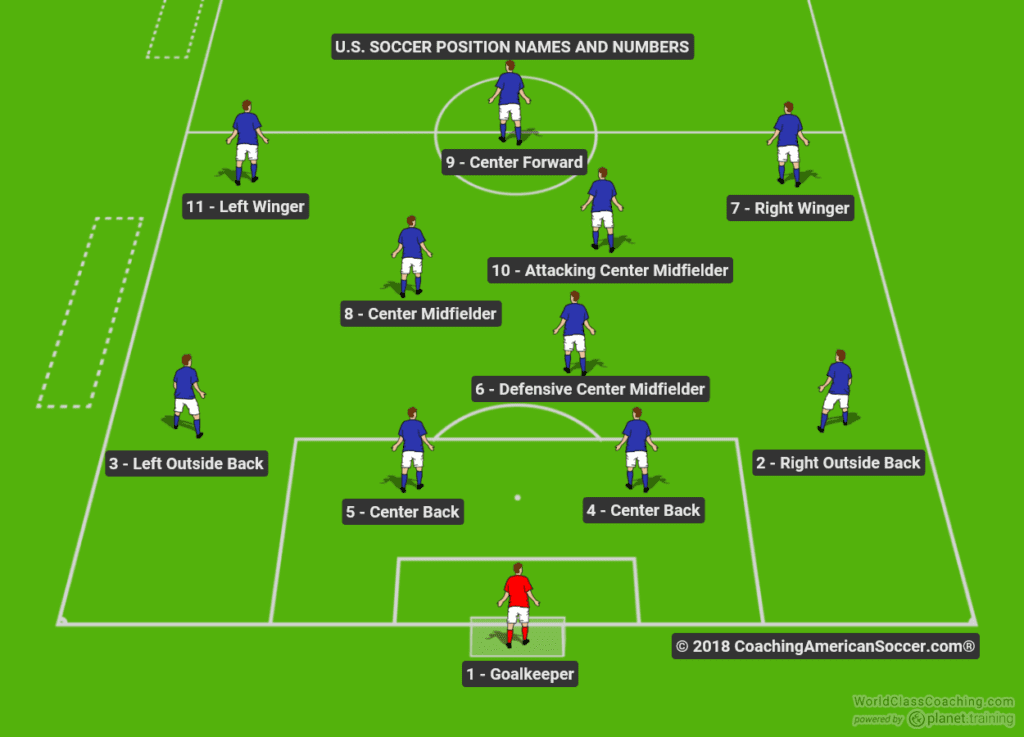
In the world of high-stakes professional sports, a soccer team is much more than a collection of athletes competing on a pitch; it is a complex financial entity where every roster spot represents a calculated investment. When asking “how many in a soccer team,” a casual fan might point to the eleven players on the field. However, from a business and financial perspective, the answer lies in the 25-man senior squad, the youth academy pipeline, and the balance sheet that supports them. Managing the size of a soccer team is a delicate exercise in capital allocation, risk mitigation, and operational efficiency.
For investors, club owners, and financial analysts, the number of players in a squad is the primary driver of the “wage bill”—the largest recurring expense for any professional club. Understanding the economics of squad size provides deep insights into how modern sports organizations maximize their return on investment (ROI) while navigating the stringent regulations of global finance.
Understanding the Base Unit: The Cost of the Professional Roster
In most elite professional leagues, such as the English Premier League or Spain’s La Liga, the standard roster size is capped at 25 players for senior competitions. This number is not arbitrary; it represents a functional balance between tactical necessity and fiscal responsibility. Each of these 25 slots carries a specific financial weight, encompassing salary, signing bonuses, insurance, and medical overhead.
The Standard 25-Man Squad: A Financial Threshold
The decision to fill all 25 slots is a strategic financial choice. A leaner squad of 21 or 22 players reduces the immediate payroll burden, allowing a club to concentrate its capital on a few “marquee assets”—high-value players who drive commercial revenue and jersey sales. However, a smaller squad increases the risk of “asset downtime” due to injuries. Conversely, a full 25-man squad provides depth but can lead to “deadwood,” where capital is tied up in players who do not contribute to on-field success or market value appreciation.
Financial managers view these 25 slots as individual investment vehicles. The goal is to ensure that the total market value of the squad grows year-over-year, or at the very least, that the performance of the players secures the club’s share of broadcasting rights and prize money.
Payroll Distribution and the 70% Rule
One of the most critical metrics in sports finance is the wage-to-revenue ratio. European football’s governing bodies often suggest a benchmark where a club’s total spending on player wages should not exceed 70% of its total revenue. When a team decides how many players to carry, they must work backward from this figure.
If a club generates $200 million in annual revenue, its total compensation pool for the squad is roughly $140 million. If the team carries 25 players, the average investment per player is $5.6 million. If they reduce the squad size to 20, that average jumps to $7 million, potentially allowing them to outbid competitors for higher-quality talent. This mathematical reality forces clubs to be ruthless in their squad auditing.
Capital Allocation: The ROI of Starting XI vs. Substitutes
While 25 players may be registered, only 11 can play at any given time. This creates a unique financial paradox: more than half of a club’s primary labor force is often idle during the main “production” hours. Optimizing the return on these non-starting assets is what separates profitable clubs from those operating at a loss.
Bench Depth as Insurance Policy
In financial terms, the players ranked 12 through 25 on the roster serve as an insurance policy. The cost of maintaining these players is the “premium” the club pays to protect against the loss of a starting player. If a star striker worth $80 million is injured, the presence of a capable backup ensures that the team continues to compete for lucrative tournament spots.
The financial impact of “dropping out” of a major competition, like the UEFA Champions League, can exceed $50 million in lost revenue. Therefore, investing $10 million in a high-quality backup is a sound risk-management strategy. The “number” of players in a team is thus directly proportional to the level of financial risk a club is willing to tolerate.
The Opportunity Cost of Underutilized Assets
A significant challenge in managing a soccer team’s size is the depreciation of player value. Unlike traditional real estate, players are “wasting assets” whose value typically declines as they age or if they lack playing time. When a player sits on the bench for a full season, their marketability drops, and the club faces a double loss: the cost of the salary paid and the decrease in the asset’s resale value.
Smart clubs utilize “loan out” strategies to manage their numbers. By sending “excess” players to other teams, they can offload the wage burden while keeping the asset active in the market, hoping for a value spike that leads to a profitable future sale.
Scaling the Business Model: Academy Growth vs. External Acquisition

When considering how many players are in a soccer organization, one must look beyond the first team to the youth academies. This is where the most significant “margin” can be found. Developing a player from age 10 to 21 is a long-term capital investment that can yield exponential returns.
The Low-Cost Capital of Youth Development
The cost of “producing” a player through an academy is significantly lower than the cost of “acquiring” one on the open market. A homegrown player essentially represents zero-cost capital on the balance sheet, as there is no amortized transfer fee associated with them.
From a financial regulation standpoint, such as Financial Fair Play (FFP), the sale of an academy player is recorded as 100% “pure profit.” This makes the academy a vital component of the team’s financial health. A club might have 25 senior players, but it may have another 50 in development, each representing a potential future cash infusion that can be used to balance the books.
Transfer Market Liquidity and Squad Size
The transfer market is the secondary market where soccer assets are traded. The size of a squad impacts a club’s liquidity. If a club has too many players on high wages, they become “illiquid”—difficult to sell because few other clubs can afford their salaries. This leads to a bloated roster that drains cash reserves.
Financial strategists aim for a “fluid” squad size where every player has a clear market exit strategy. By maintaining a mix of seasoned veterans (stability) and young prospects (high growth potential), a club ensures it can generate cash through sales whenever necessary.
Mitigating Risk through Diversification of the Squad
In the investment world, diversification is key to reducing volatility. In soccer, this applies to the composition of the team. A squad should not just be evaluated by “how many” players it has, but by the diversity of its “asset types.”
Hedging Against Injuries and Performance Slumps
A diversified squad includes players with different physical profiles, age brackets, and contract lengths. If a club’s roster is top-heavy with aging stars on five-year contracts, it faces a massive financial liability if those players’ performances decline simultaneously.
By balancing the team with “value” players—those whose contributions exceed their market cost—a club hedges against the inevitable volatility of professional sports. This is often referred to as “Moneyball” in soccer, where data-driven scouting identifies undervalued players who can fill roster spots at a fraction of the cost of established names.
Financial Fair Play and the Limits of Expansion
Global football finance is governed by rules designed to prevent clubs from spending more than they earn. These rules place a hard ceiling on how many high-priced players a team can employ. If a club exceeds these limits, they face fines, transfer bans, or exclusion from competitions, all of which have devastating financial consequences.
Consequently, the “number” of players in a team is often dictated by the club’s revenue streams. A club with massive commercial sponsorships and global merchandise sales can afford a 25-man squad of superstars. A mid-tier club must be more strategic, perhaps operating with a core of 15 senior professionals supplemented by low-cost academy talent.
Advanced Financial Tools in Modern Squad Management
As the sport becomes increasingly commodified, clubs are turning to sophisticated financial tools and AI-driven analytics to determine the optimal squad size and composition.
Data-Driven Budgeting and Valuation Models
Modern clubs use algorithmic models to calculate the “Expected Value” (EV) of every player in the squad. These models factor in age, injury history, performance metrics, and market trends to provide a real-time valuation of the roster. This allows financial directors to make objective decisions about whether to extend a contract or sell a player while their value is peaked.
The Future of Sports as an Asset Class
With the entry of private equity firms and sovereign wealth funds into soccer, the focus on squad efficiency has never been higher. These investors view a soccer team as an asset class that requires rigorous financial discipline. The question of “how many in a soccer team” is no longer just a tactical query for the coach; it is a fundamental question of portfolio management.
In conclusion, while the rules of the game state that 11 players take the field, the financial reality of a soccer team involves a much larger and more complex ecosystem. The 25-man roster is a high-stakes balance sheet where each name represents millions of dollars in potential profit or loss. By mastering the economics of squad size, professional clubs can ensure their long-term viability, staying competitive on the pitch while remaining profitable in the boardroom. Strategic roster management, focused on ROI, risk diversification, and youth development, remains the gold standard for success in the modern business of soccer.
aViewFromTheCave is a participant in the Amazon Services LLC Associates Program, an affiliate advertising program designed to provide a means for sites to earn advertising fees by advertising and linking to Amazon.com. Amazon, the Amazon logo, AmazonSupply, and the AmazonSupply logo are trademarks of Amazon.com, Inc. or its affiliates. As an Amazon Associate we earn affiliate commissions from qualifying purchases.