
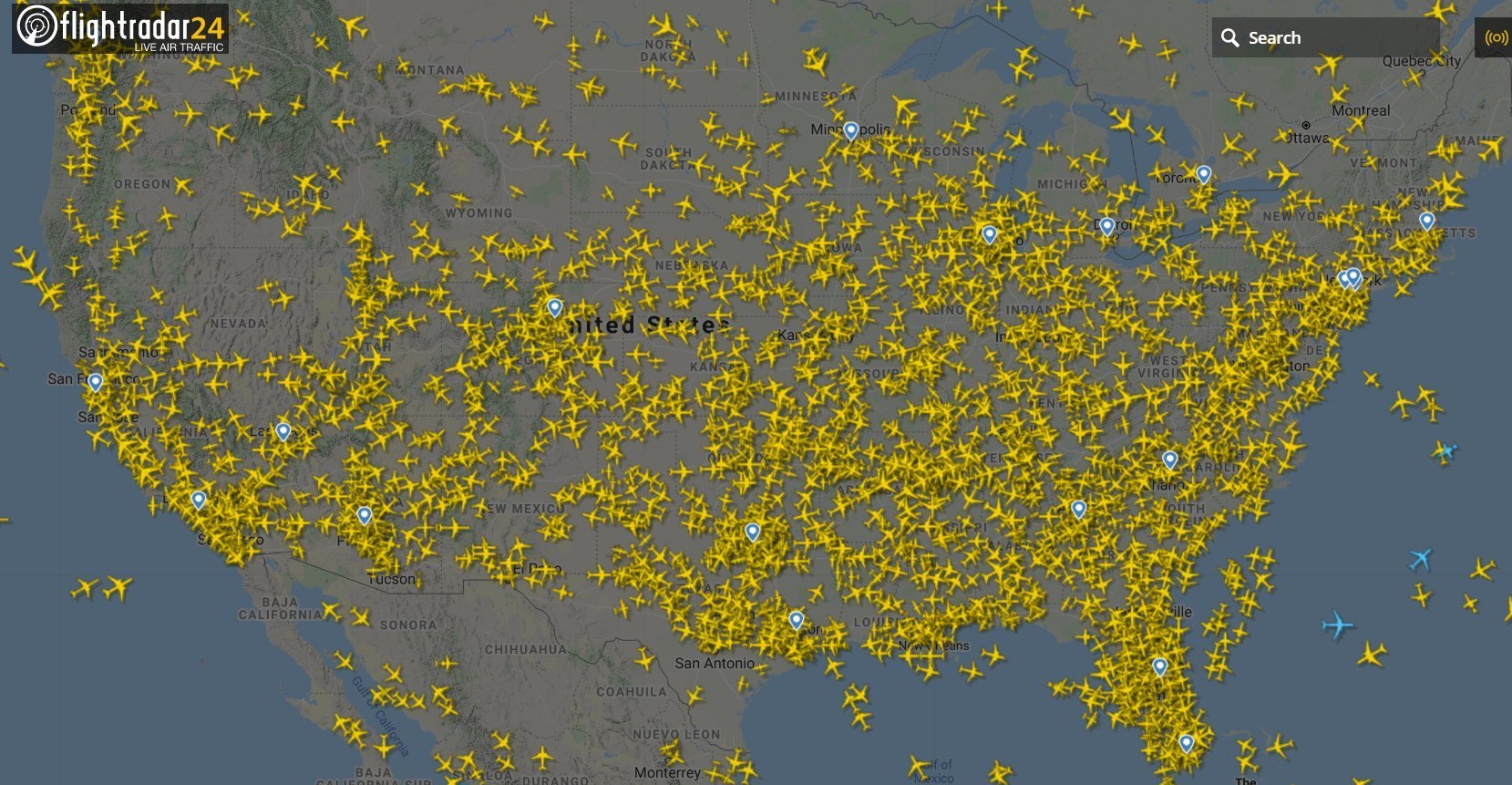
The United States airspace is the most complex and heavily trafficked in the world. On any given day, the Federal Aviation Administration (FAA) manages approximately 45,000 flights. While this number is often cited as a feat of modern engineering and logistics, it is, more importantly, a testament to a massive financial ecosystem. The sheer volume of daily flights serves as a pulse for the American economy, representing billions of dollars in capital movement, consumer spending, and industrial logistics. To understand how many flights occur per day in the U.S. is to understand the core mechanics of a multi-billion dollar industry that dictates market trends and influences global investment strategies.

The Financial Scale of the US Sky: By the Numbers
The staggering figure of 45,000 daily flights encompasses a wide variety of operations, including commercial airliners, private charters, cargo carriers, and military maneuvers. However, from a financial perspective, the approximately 28,000 commercial flights managed daily by scheduled carriers represent the most significant portion of revenue generation. This high-frequency operation is not merely a service but a high-stakes financial game where timing, occupancy, and route efficiency determine the solvency of multi-billion dollar corporations.
Daily Traffic and Revenue Projections
Each of these thousands of flights represents a microscopic unit of the broader economy. For major carriers like Delta, American, and United, the “load factor”—the percentage of available seats filled by paying passengers—is the primary metric of success. When the U.S. maintains its 45,000-flight average, it facilitates the movement of over 2.9 million passengers daily through the domestic system.
From a revenue standpoint, this translates into a domestic market that contributes significantly to the $1.9 trillion in total economic activity supported by U.S. civil aviation. This represents roughly 5% of the U.S. Gross Domestic Product (GDP). For investors, the daily flight count is a leading indicator of consumer confidence and corporate health. When flight numbers dip, it often signals a tightening of discretionary spending or a reduction in corporate travel budgets, both of which are precursors to broader economic shifts.
The Hub-and-Spoke Model: Maximizing Capital Efficiency
The reason the U.S. can sustain such a high number of daily flights is rooted in the financial efficiency of the hub-and-spoke model. By funneling thousands of flights through major nodes like Hartsfield-Jackson Atlanta International or Chicago O’Hare, airlines maximize their “Available Seat Miles” (ASM) and “Revenue Per Passenger Mile” (RPM).
This model allows airlines to keep their most expensive assets—their aircraft—in the air as much as possible. An aircraft only generates revenue when it is flying; every hour spent on the tarmac is a drain on capital. The 45,000 daily flights are a direct result of a financial strategy designed to minimize “turnaround time” and maximize asset utilization. By maintaining a high frequency of flights, airlines can capture a larger share of the market, create brand stickiness through loyalty programs, and ensure that their high fixed costs are spread across as many paying units as possible.
Cost Structures and the Economics of High-Frequency Flight
Operating tens of thousands of flights daily requires a capital-intensive infrastructure that is sensitive to even the slightest fluctuations in overhead. The financial health of the aviation sector is dictated by three primary pillars: fuel, labor, and maintenance. When analyzing the volume of U.S. flights, one must consider the astronomical costs associated with keeping that volume consistent.
Fuel, Labor, and Maintenance: The Triple Threat
Fuel is typically the most volatile expense for airlines, often accounting for 20% to 30% of total operating costs. With 45,000 flights taking to the skies daily, the U.S. aviation industry consumes billions of gallons of jet fuel annually. To mitigate the risk of price spikes, airlines engage in complex fuel hedging—a financial strategy involving derivatives and futures contracts to lock in prices. The ability to maintain a high daily flight count is often a reflection of how well an airline’s finance department has managed its hedging portfolio.
Labor represents the second major cost. The U.S. aviation industry supports over 11 million jobs. From pilots and flight attendants to ground crews and air traffic controllers, the human capital required to facilitate 45,000 daily departures is immense. Unlike other industries where automation can quickly reduce overhead, aviation remains heavily reliant on highly skilled, certified professionals, making labor costs relatively “sticky” and difficult to reduce during economic downturns.
Finally, maintenance, repair, and overhaul (MRO) costs are a direct function of flight frequency. Each takeoff and landing adds “cycles” to an aircraft’s life, necessitating rigorous and expensive inspections. The financial burden of maintaining a fleet that can handle the rigors of the U.S. domestic schedule is a constant pressure on an airline’s balance sheet, requiring significant “Capex” (capital expenditure) for fleet modernization.
Ancillary Revenue: The Profit Margin Savior
While ticket sales provide the bulk of the revenue, the razor-thin margins of the airline industry have forced a shift toward ancillary revenue. This includes baggage fees, seat upgrades, in-flight Wi-Fi, and co-branded credit card partnerships. In fact, many U.S. airlines generate a significant portion of their net profit not from the flight itself, but from their frequent flyer programs, which act more like financial services entities than transportation services.

For example, the valuation of some major airlines’ loyalty programs has, at times, exceeded the market capitalization of the airlines themselves. The 45,000 flights per day act as the “loss leader” or the primary driver that keeps customers engaged with these high-margin financial products. Without the high volume of daily flights, the value of the points and the associated credit card spending would plummet, highlighting the symbiotic relationship between flight frequency and financial innovation.
The Broader Economic Impact of Domestic Air Traffic
The significance of 45,000 daily flights extends far beyond the airlines’ balance sheets. This volume of traffic is a catalyst for various sectors, creating a multiplier effect throughout the American economy.
GDP Contribution and Employment Metrics
The aviation industry is a cornerstone of American employment. Beyond the direct airline employees, the high volume of daily flights supports a massive ecosystem of hospitality, tourism, and professional services. When a flight lands in a city like Las Vegas, Orlando, or New York, it injects immediate capital into local hotels, restaurants, and entertainment venues.
The FAA estimates that for every dollar spent in the air transportation industry, an additional $3.00 of economic activity is generated in related industries. This means the 45,000 daily flights are not just moving people; they are moving the needle on the national GDP. For local municipalities, the revenue generated from airport landing fees and passenger facility charges (PFCs) is a critical source of funding for regional infrastructure projects, further embedding the financial importance of daily flight volume into the fabric of local government budgets.
Logistics and Cargo: The Invisible Revenue Stream
While passenger travel dominates the headlines, a substantial portion of the daily flight count is dedicated to cargo. In a global economy defined by “just-in-time” manufacturing and e-commerce, the 45,000 daily flights are the arteries of commerce. Companies like FedEx and UPS operate massive fleets that utilize the same airspace to move high-value, time-sensitive goods.
The economics of air cargo are distinct from passenger travel. Cargo revenue often has higher margins and is less susceptible to the seasonal whims of holiday travelers. During the pandemic, for instance, when passenger traffic plummeted, the cargo sector remained a financial lifeline for the aviation industry. The ability of the U.S. to maintain a high density of flights ensures that capital remains fluid, as goods can move from a warehouse in California to a consumer in Maine in less than 24 hours.
Investing in the Future of US Flight: Risks and Rewards
For investors and financial analysts, the U.S. aviation sector represents a unique blend of high risk and high reward. The daily flight volume is a double-edged sword; it provides massive revenue potential but also exposes the industry to systemic risks.
Market Volatility and Seasonal Cycles
Aviation is notoriously cyclical. Profitability is tied to the price of oil, geopolitical stability, and even weather patterns. A single major storm system can ground thousands of flights, leading to millions of dollars in lost revenue and increased operational costs as airlines scramble to re-accommodate passengers.
Furthermore, the industry is highly sensitive to interest rates. Because airlines often lease their aircraft or take on significant debt to purchase new fleets, a rising interest rate environment can significantly increase “cost of carry” and dampen earnings. Investors must weigh these macro-economic factors against the consistent demand for air travel in a country as geographically vast as the United States.
Technological Infrastructure as a Financial Asset
The future of maintaining 45,000+ flights per day lies in technological investment. The transition to the Next Generation Air Transportation System (NextGen) is a multibillion-dollar federal initiative aimed at modernizing the U.S. airspace. From a financial perspective, NextGen is about increasing “throughput”—the ability to handle even more flights in the same amount of space with greater fuel efficiency.
Investments in AI-driven scheduling, autonomous ground handling, and Sustainable Aviation Fuel (SAF) are the next frontier for the industry. While the initial capital requirements for these technologies are steep, the long-term ROI is found in reduced operational costs and a smaller carbon footprint, the latter of which is becoming increasingly important as “ESG” (Environmental, Social, and Governance) criteria become a standard for institutional investors.
Ultimately, the question of “how many flights per day in the U.S.” is more than a statistic. It is a reflection of the country’s economic vitality. Each takeoff and landing is a transaction, a job supported, and a piece of the $1.9 trillion puzzle that keeps the American economy airborne. For the business-minded observer, those 45,000 daily flights represent the relentless movement of capital across the world’s most lucrative aviation market.
aViewFromTheCave is a participant in the Amazon Services LLC Associates Program, an affiliate advertising program designed to provide a means for sites to earn advertising fees by advertising and linking to Amazon.com. Amazon, the Amazon logo, AmazonSupply, and the AmazonSupply logo are trademarks of Amazon.com, Inc. or its affiliates. As an Amazon Associate we earn affiliate commissions from qualifying purchases.