
For investors and market analysts, a company’s headcount is far more than a simple human resources statistic. It is a vital indicator of operational efficiency, scalability, and fiscal health. In the case of Palantir Technologies (PLTR), a company that sits at the intersection of big data analytics and artificial intelligence, the employee count tells a compelling story of disciplined growth in an era of “tech bloat” and subsequent mass layoffs.
As of the end of the most recent fiscal year, Palantir reported approximately 3,735 full-time employees. While this number is modest compared to Silicon Valley giants like Google or Meta, it represents a strategic lean-to-revenue ratio that has become a cornerstone of the company’s recent path to GAAP profitability. For those looking at Palantir through a financial lens, understanding how these employees are deployed—and how much revenue each one generates—is essential to evaluating the long-term value of the stock.

The Strategic Trajectory of Palantir’s Workforce Growth
Unlike many of its peers in the software-as-a-service (SaaS) and data sectors, Palantir has avoided the “hire-at-all-costs” mentality that characterized the post-2020 bull market. While many tech firms over-leveraged their balance sheets by doubling their staff during the pandemic, Palantir’s growth has been measured and intentional.
Historical Headcount Trends
When Palantir went public via a direct listing in late 2020, it had roughly 2,400 employees. In the three years following its IPO, the company grew its workforce by approximately 50%. This controlled expansion is a signal to investors that management is focused on maintaining a high bar for talent rather than simply filling seats. In the fiscal world, high-speed hiring often leads to cultural dilution and a spike in “General and Administrative” (G&A) expenses. By keeping the team relatively small, Palantir has managed to keep its operating expenses manageable even as its total contract value (TCV) has skyrocketed.
Avoiding the Great Tech Layoffs
In 2023, the technology sector saw over 260,000 workers laid off globally. Companies like Salesforce and Amazon shed thousands of roles to correct for over-hiring. Palantir, however, remained largely insulated from this trend. Because the company did not over-hire during the period of “easy money” and zero-interest-rate policy (ZIRP), it did not have to undergo the painful and expensive restructuring processes that plagued its competitors. For an investor, this stability suggests a management team with a long-term vision and a better-than-average grasp of their own unit economics.
Revenue per Employee: The Ultimate Efficiency Metric
One of the most important metrics for evaluating a software company’s profitability potential is the revenue generated per employee. This metric reveals whether a company is a “people-heavy” consulting firm disguised as a tech company or a true high-margin software business.
Palantir vs. the Industry Standard
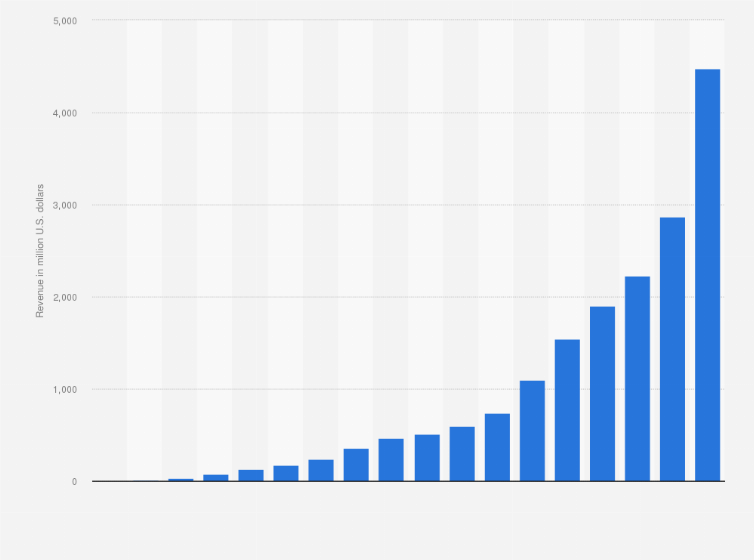
With approximately $2.23 billion in annual revenue and roughly 3,735 employees, Palantir generates approximately $597,000 in revenue per employee. This is a formidable figure in the tech landscape. To put this in perspective, many high-growth startups struggle to exceed $300,000 per head. Palantir’s ability to generate nearly $600,000 per employee suggests that their products—Gotham, Foundry, and the Artificial Intelligence Platform (AIP)—are doing the “heavy lifting,” rather than requiring an army of forward-deployed engineers to manage every implementation.
The Shift from Forward-Deployed Engineers to Scalable AI
In Palantir’s early years, the bear case against the company was that it was a glorified consultancy. Critics argued that Palantir needed to send “Forward-Deployed Engineers” (FDEs) to client sites for months at a time to custom-build solutions. This model is difficult to scale because revenue growth is tethered to headcount growth.
However, recent financial filings indicate a shift. The “Money” story here is that Palantir has successfully productized its offerings. The launch of AIP Bootcamps has allowed the company to move from a months-long sales and implementation cycle to a days-long process. This shift allows the current workforce to handle a significantly larger volume of clients without a linear increase in personnel costs, which is a massive win for operating margins.
The Financial Impact of Stock-Based Compensation (SBC)
You cannot discuss Palantir’s workforce without addressing Stock-Based Compensation (SBC). For years, SBC was the primary point of contention for Palantir bears. Because Palantir competes with the likes of Google and OpenAI for the world’s top 1% of engineering talent, it must offer highly competitive compensation packages.
Attracting Talent Without Depleting Cash
Palantir’s strategy has been to use equity as a primary incentive for its employees. This allows the company to preserve its cash reserves—which currently stand at over $3.5 billion—while still attracting elite talent. From a business finance perspective, this is a double-edged sword. On one hand, it keeps the balance sheet “cash-rich.” On the other hand, it leads to share dilution for existing investors.
The Path to GAAP Profitability
The narrative around Palantir’s headcount and compensation shifted dramatically when the company achieved its first full year of GAAP profitability in 2023. This milestone proved that the company could manage its employee-related expenses, including SBC, while still staying in the black. For investors, the takeaway is that Palantir’s workforce is no longer a “drain” on earnings; instead, the company has reached an inflection point where its revenue growth is outpacing its compensation expenses.
Scaling Through AI: The AIP Bootcamp Model
The most significant recent development in Palantir’s business model—and one that directly affects the headcount-to-revenue equation—is the implementation of AIP Bootcamps. This is a masterclass in modern business strategy and financial efficiency.
Reducing the Cost of Customer Acquisition (CAC)
Traditionally, software companies hire massive sales and marketing teams to drive growth. As of recent filings, Palantir’s sales and marketing spend as a percentage of revenue remains lower than many of its high-growth peers. Instead of hiring thousands of sales representatives, Palantir uses a small, highly technical workforce to run “bootcamps” where potential clients interact with the software directly.
This “show, don’t tell” approach serves two financial purposes:
-
Lower Headcount Requirements: A single team of engineers can run multiple bootcamps, reaching dozens of companies in the time it used to take to pitch one.
-
Accelerated Conversion: By letting the product sell itself, Palantir reduces the sales cycle, which in turn improves the internal rate of return (IRR) on every dollar spent on employee wages.
Operational Leverage and the Future
As Palantir continues to integrate into the S&P 500, the focus will remain on operational leverage. Investors are looking for the company to grow its top-line revenue by 20% or more while keeping headcount growth in the single digits. If Palantir can continue to scale its commercial and government sectors without a proportional increase in staff, the company’s profit margins will likely expand into the territory of the most elite software companies in history.
Conclusion: A Lean Machine for the AI Era
How many employees Palantir has is a question that leads to a deeper understanding of the company’s financial philosophy. With fewer than 4,000 employees, Palantir is a relatively lean organization that punches far above its weight class. By focusing on high-quality talent, productizing complex data solutions, and leveraging AI to speed up the sales cycle, Palantir has decoupled its revenue potential from its headcount growth.
For the investor, Palantir’s workforce represents a disciplined asset. The company has shown it can survive economic downturns without mass layoffs, attract top-tier talent through strategic equity incentives, and generate substantial revenue per head. As the world moves further into the AI era, Palantir’s ability to remain lean while scaling its impact will be the primary driver of its valuation and its long-term financial success. The numbers suggest that Palantir isn’t just building software; it is building a highly efficient financial engine designed for the long haul.
aViewFromTheCave is a participant in the Amazon Services LLC Associates Program, an affiliate advertising program designed to provide a means for sites to earn advertising fees by advertising and linking to Amazon.com. Amazon, the Amazon logo, AmazonSupply, and the AmazonSupply logo are trademarks of Amazon.com, Inc. or its affiliates. As an Amazon Associate we earn affiliate commissions from qualifying purchases.