
In the high-stakes world of semiconductor dominance and artificial intelligence, the true value of a corporation is often measured not just by its hardware output, but by the efficiency and scale of its human capital. NVIDIA, a company that has transitioned from a niche graphics card manufacturer to the central nervous system of the global AI revolution, presents a fascinating case study for investors and financial analysts. When asking “how many employees does NVIDIA have,” one isn’t just looking for a static number; they are seeking to understand the lean, high-output machine that supports a multi-trillion-dollar market capitalization.

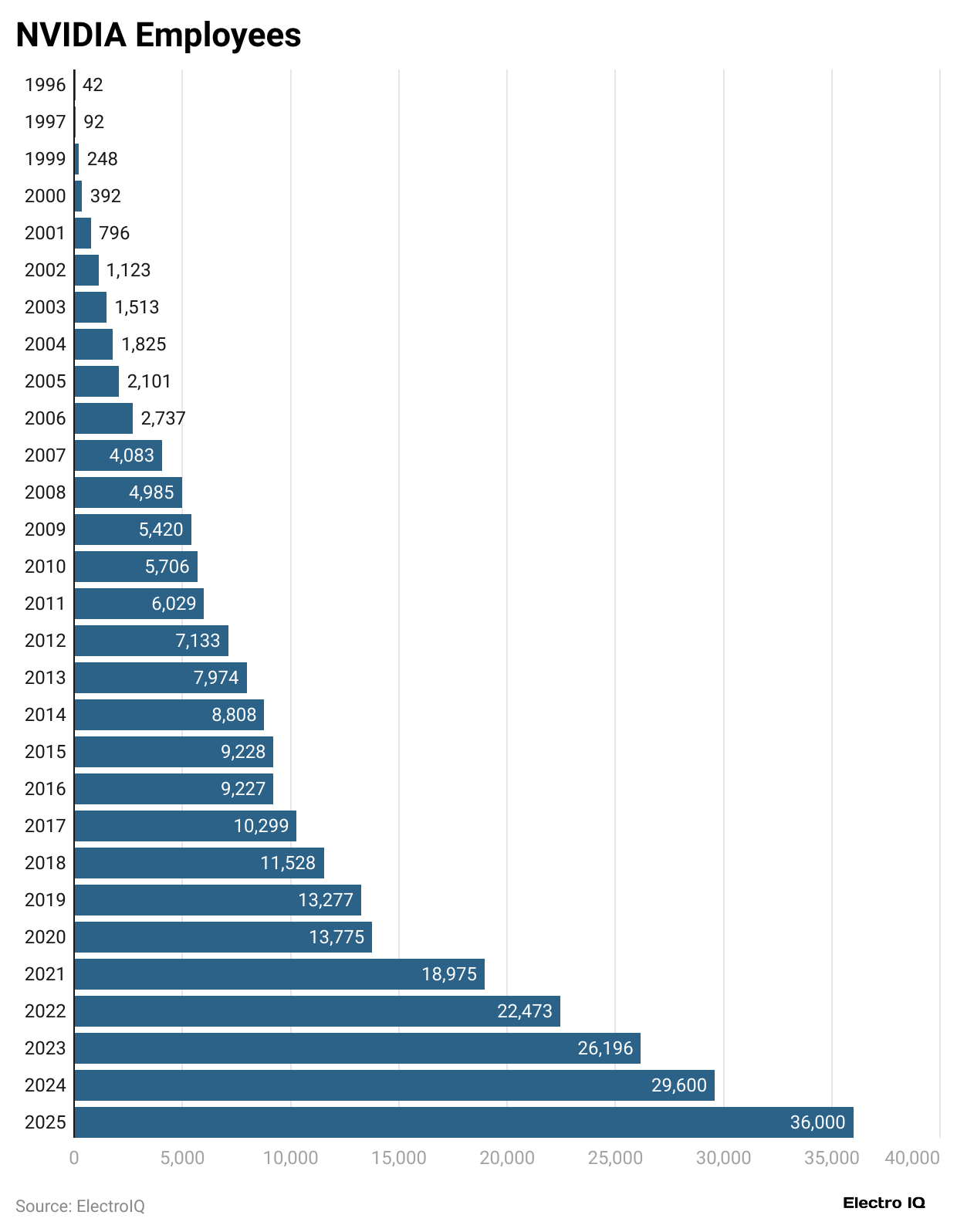
As of the conclusion of their most recent fiscal year, NVIDIA reported a global workforce of approximately 29,600 employees. While this number is substantial, it is remarkably small when compared to other “Magnificent Seven” peers like Microsoft, Alphabet, or Amazon. This disparity highlights a unique financial narrative of high-leverage growth, where a relatively compact team of specialized engineers and business strategists generates unprecedented revenue per head.
The Numbers Behind the Giant: Current Employee Growth Trends
To understand NVIDIA’s current financial trajectory, one must examine the rate at which it is expanding its payroll. Headcount is a lagging indicator of a company’s confidence in its long-term revenue streams. In the case of NVIDIA, the growth in personnel has been strategic rather than explosive, avoiding the “hiring bloat” that plagued many Silicon Valley firms during the post-pandemic era.
Historical Headcount Evolution
In 2020, NVIDIA’s workforce hovered around 13,000 employees. By early 2024, that number had more than doubled to nearly 30,000. This 120% increase in four years coincides directly with the company’s pivot from a gaming-centric business model to a data-center-dominant one. For investors, this growth represents a calculated reinvestment of profits into the specialized talent required to maintain a competitive moat in the CUDA software ecosystem and H100 GPU development. Unlike firms that scaled for general administrative support, NVIDIA’s hiring has remained heavily weighted toward research and development (R&D).
Geographic Distribution of the Global Workforce
NVIDIA is a global entity, yet its concentration of talent remains a vital piece of its financial strategy. While headquartered in Santa Clara, California, the company maintains a significant presence in high-tech hubs across India, Israel, and Europe. From a business finance perspective, this global distribution allows NVIDIA to tap into diverse talent pools while optimizing labor costs across different tax jurisdictions. Specifically, the acquisition of Mellanox significantly boosted NVIDIA’s presence in Israel, turning it into a primary hub for networking technology—a division that now contributes billions to the bottom line.
Revenue per Employee: A Metric of Extreme Financial Efficiency
For an investor, the total number of employees is less important than the “Revenue per Employee” (RPE) metric. This is where NVIDIA separates itself from almost every other company in history. When a company with under 30,000 employees achieves a market valuation exceeding $2 trillion, the financial efficiency of each individual worker becomes a staggering statistic.
Benchmarking Against Big Tech Competitors
When comparing NVIDIA to its industry peers, the efficiency of its workforce is underscored. For example, Amazon employs over 1.5 million people, and even Alphabet (Google) maintains a workforce of over 180,000. While these companies have different business models, NVIDIA’s ability to generate massive net income with a fraction of the staff suggests a high-margin, low-overhead operation. During peak quarters in the AI boom, NVIDIA has seen its revenue per employee soar to several million dollars—a figure that indicates an incredibly high barrier to entry for competitors and a lean operational structure that maximizes shareholder value.
The Correlation Between Specialized Talent and Profit Margins
The “Money” story of NVIDIA is fundamentally a story of margins. Because NVIDIA focuses on the design and intellectual property (IP) side of semiconductors—outsourcing the actual manufacturing to foundries like TSMC—it avoids the massive labor costs associated with operating fabrication plants (fabs). This “fabless” model allows their 29,600 employees to focus exclusively on high-value tasks: software architecture, chip design, and AI research. This concentration of high-skill labor is the engine behind gross margins that have recently touched the 70-75% range, a rarity in the hardware world.
The Cost of Innovation: R&D Spend and Talent Acquisition
In the technology sector, the workforce is the primary driver of capital expenditure. For NVIDIA, the financial commitment to its employees is not just seen in salaries, but in the massive Research and Development (R&D) budget that fuels its roadmap. Managing this cost is a delicate balancing act for the Chief Financial Officer, ensuring the company remains at the cutting edge without overextending its fiscal commitments.
Strategic Recruitment in the Age of Generative AI
As the demand for AI expertise has surged, the cost of acquiring and retaining top-tier engineering talent has skyrocketed. NVIDIA operates in a “war for talent” where lead engineers can command total compensation packages in the high six or even seven figures. From a business finance perspective, this is a necessary investment in the company’s “moat.” By securing the best minds in parallel computing and machine learning, NVIDIA prevents competitors from catching up, effectively protecting its future cash flows. The cost of these 29,600 employees is essentially the cost of the company’s insurance policy against obsolescence.
Sustaining Long-Term Value Through Stock-Based Compensation
A significant portion of NVIDIA’s employee cost structure is tied to Stock-Based Compensation (SBC). For a company whose stock has seen such meteoric rises, SBC acts as a powerful retention tool. However, for the investor, it is a factor that must be weighed against share dilution. NVIDIA has managed this effectively by using its high cash flow to execute share buybacks, offsetting the dilution caused by employee equity grants. This creates a virtuous financial cycle: the stock price rises, attracting better talent, who then build better products, which drives the stock price higher.
Investor Perspectives: What NVIDIA’s Headcount Tells the Market
When institutional investors look at NVIDIA’s headcount, they aren’t just looking for payroll expenses; they are looking for signs of scalability and risk. In a volatile market, the size and composition of a workforce can tell you everything you need to know about a company’s “burn rate” and its ability to weather a downturn.
Scalability Without Bloat
One of the greatest risks to a high-growth company is “organizational rot”—where adding more employees leads to diminishing returns and slower decision-making. Despite doubling its size, NVIDIA has maintained a remarkably flat organizational structure. CEO Jensen Huang famously has dozens of direct reports, a strategy intended to keep information flowing quickly. For the financial analyst, this suggests that NVIDIA is capable of scaling its revenue much faster than its expenses. If NVIDIA can continue to dominate the AI market without needing to triple its headcount again, the earnings per share (EPS) growth could continue to outpace market expectations.
Risk Assessment: Talent Retention and Market Leadership
The primary financial risk regarding NVIDIA’s workforce is “key person risk” and talent poaching. With competitors like AMD, Intel, and even big-tech “hyperscalers” (like Google and Amazon) designing their own AI chips, the 29,600 employees at NVIDIA are the most sought-after professionals in the world. If a significant percentage of this workforce were to be lured away by competitors, the company’s product roadmap could stall, leading to a massive loss in market value. Therefore, the financial health of NVIDIA is intrinsically linked to its ability to remain the “employer of choice” in the silicon industry.

Conclusion: The Financial Power of 29,600
In conclusion, NVIDIA’s employee count of approximately 29,600 is a testament to the power of high-leverage business models. In the world of finance, it is rare to find a company that can influence the global economy so profoundly with such a relatively small group of people. This workforce represents the pinnacle of human capital efficiency, driving margins and valuations that have redefined the tech sector.
For the investor or the business professional, the takeaway is clear: NVIDIA is not just a company that makes chips; it is a company that manages specialized talent with surgical precision. By maintaining a lean, high-output workforce, NVIDIA ensures that its revenue growth remains decoupled from traditional labor-intensive costs. As the company continues to navigate the AI era, its ability to maintain this headcount efficiency will be the primary metric that determines its long-term financial dominance. Whether the number grows to 40,000 or stays steady, the focus will always be on the value generated per mind—a metric where NVIDIA currently has no equal.
aViewFromTheCave is a participant in the Amazon Services LLC Associates Program, an affiliate advertising program designed to provide a means for sites to earn advertising fees by advertising and linking to Amazon.com. Amazon, the Amazon logo, AmazonSupply, and the AmazonSupply logo are trademarks of Amazon.com, Inc. or its affiliates. As an Amazon Associate we earn affiliate commissions from qualifying purchases.