
Amazon, a behemoth in e-commerce, cloud computing, digital streaming, and artificial intelligence, is as famous for its expansive reach as it is for its sheer scale. Central to this monumental operation is its vast global workforce. The question of “how many employees are at Amazon” is not merely a curious statistic; it’s a critical indicator reflecting the company’s financial health, operational strategy, market dominance, and its profound economic footprint worldwide. For investors, economists, and even the general public, understanding the dynamics of Amazon’s employment figures provides invaluable insights into its business model and future trajectory.

This article delves into the financial and economic dimensions of Amazon’s workforce, exploring the staggering numbers, the costs involved, the impact on profitability, and what these figures signal to the market. While specific, real-time numbers fluctuate, the discussion will focus on trends, implications, and the broader financial narrative woven by millions of Amazon employees across the globe.
The Staggering Scale of Amazon’s Workforce: A Financial Overview
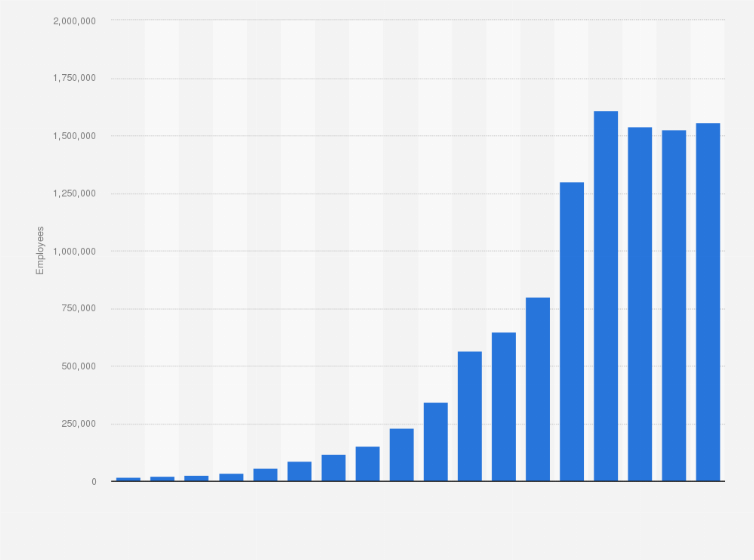
Amazon’s employee count has seen unprecedented growth over the past two decades, particularly amplified by the digital acceleration witnessed during the COVID-19 pandemic. From humble beginnings, it has evolved into one of the largest private employers globally, a testament to its relentless expansion across various sectors.
Current Employee Metrics and Recent Fluctuations
Historically, Amazon’s employee base has shown a consistent upward trajectory. At its peak in late 2021, Amazon reported a global workforce exceeding 1.6 million full-time and part-time employees. This figure represented a rapid escalation, driven by intense demand for online shopping and cloud services. However, recent economic shifts and a strategic pivot towards cost efficiency have introduced significant fluctuations.
For instance, throughout 2022 and into 2023, Amazon undertook several rounds of layoffs, particularly impacting its corporate and technology divisions. These workforce reductions, totaling tens of thousands of employees, signaled a strategic shift aimed at streamlining operations, reducing overheads, and improving profitability amid a more challenging macroeconomic environment. While the overall numbers remain immense, these adjustments reflect a proactive financial management approach to right-size the organization after a period of aggressive hiring. Therefore, any current figure reflects a dynamic reality, usually falling somewhat below the 2021 peak but still firmly in the range of 1.5 million people globally, a number that solidifies its position as a top-tier global employer. These fluctuations are closely watched by financial analysts as indicators of the company’s health and strategic direction.
Categorizing the Workforce: Operational and Corporate Divisions
To truly appreciate the financial implications, it’s essential to disaggregate Amazon’s workforce. The vast majority of its employees fall into operational roles, primarily in its fulfillment centers, sortation centers, delivery stations, and transportation networks. These are the frontline workers responsible for the intricate logistics of Amazon’s e-commerce empire. Their wages, benefits, and training constitute a significant portion of Amazon’s operational expenses.
Conversely, a smaller yet critically important segment comprises corporate, tech, and administrative staff. These employees power Amazon Web Services (AWS), develop new technologies (AI, robotics, Alexa), manage marketing, finance, and strategic planning. While fewer in number, these roles often command higher salaries and benefits, representing a substantial investment in intellectual capital and innovation. Understanding this split is crucial for financial analysts. Operational staff directly drives revenue through logistics and fulfillment, while corporate and tech staff drive innovation and long-term growth, both having distinct impacts on the company’s financial statements. The recent layoffs predominantly affected the latter category, indicating a strategic effort to optimize spending in certain growth-focused areas.
The Financial Weight of Human Capital: Costs and Returns
For a company of Amazon’s size, its human capital represents both an enormous asset and an equally enormous financial obligation. Managing a workforce in the millions entails staggering costs, but also the potential for immense returns.
Payroll and Benefits: A Dominant Operational Expense
Payroll, wages, salaries, and associated benefits represent one of Amazon’s largest — if not the largest — operational expenses. With millions of employees, the aggregate cost of compensation, including health insurance, retirement plans, stock options, and other perks, runs into billions of dollars annually. Every increase in minimum wage, every new hire, and every annual raise contributes significantly to this bottom line.
This colossal expenditure directly impacts Amazon’s profit margins. Companies constantly balance labor costs with automation and efficiency gains. Amazon’s continuous investment in robotics and AI in its warehouses, for example, is partly driven by a desire to optimize labor costs and improve operational efficiency, thereby directly influencing its financial performance. Financial reports meticulously detail these costs, and any material change can sway investor sentiment and influence stock performance.
Productivity and Revenue Per Employee: Gauging Efficiency
While the cost is high, so too is the potential for revenue generation. Financial analysts often scrutinize metrics like “revenue per employee” to gauge a company’s efficiency and productivity. For Amazon, with its diverse business segments, this metric can be complex but offers valuable insights. A high revenue per employee indicates effective leveraging of human capital, potentially pointing to strong operational processes, technological integration, or high-value business segments like AWS.
Conversely, a declining or stagnant revenue per employee could signal inefficiencies, overstaffing, or challenges in monetizing its workforce effectively. Amazon’s strategic decisions, such as expanding into new regions or launching new services, are fundamentally underpinned by calculations of how additional employees will contribute to the top line and what the return on that human capital investment will be. This balance between cost and productivity is a perpetual financial management challenge for the company.

Strategic Layoffs and Restructuring: Driving Profitability
The layoffs observed in 2022 and 2023 were not arbitrary; they were deliberate financial decisions. Amid economic headwinds, rising inflation, and a recalibration of pandemic-driven growth, Amazon’s leadership recognized the need to improve operational efficiency and protect profitability. These strategic workforce reductions primarily targeted areas identified as having redundant roles or where growth projections were moderated.
The financial rationale behind such restructuring is clear: reduce operating expenses, lower payroll obligations, and sharpen the company’s focus on its most profitable and high-growth segments. While difficult, these decisions are intended to streamline operations, increase per-employee productivity in the remaining workforce, and ultimately enhance shareholder value by signaling a commitment to fiscal discipline and sustainable profitability in a changing market landscape.
Investor Perspectives and Market Signals
For investors, Amazon’s employee count is far more than just a number; it’s a critical data point that informs their investment thesis. It signals growth, operational scale, potential challenges, and strategic direction.
Workforce Size as an Investment Indicator
A growing workforce can signal a company’s expansion, increasing market share, and confidence in future revenue streams. During periods of robust growth, a surge in hiring can be viewed positively by investors as a sign of aggressive scaling to meet demand. For Amazon, its consistent hiring sprees have historically underscored its ambition and ability to penetrate new markets or strengthen existing ones.
However, an excessively large workforce can also raise concerns about ballooning costs, diminishing returns, and potential inefficiencies. Recent layoffs, while painful, were largely interpreted by the market as a positive sign that Amazon was taking steps to manage its cost structure more effectively, leading to a more favorable outlook on future profitability. Investors watch these trends closely, weighing the implications for earnings per share and long-term financial stability. Employee numbers are often disclosed in quarterly earnings reports, providing a tangible metric for assessing the company’s operational footprint and financial commitment to its human resources.
Long-Term Financial Planning and Labor Force Management
Amazon’s approach to labor force management is deeply integrated into its long-term financial planning. This includes anticipating future demand, investing in automation, forecasting labor market trends, and strategizing compensation packages. The company’s massive logistics network, for example, requires sophisticated modeling to ensure optimal staffing levels to meet fluctuating customer demand while minimizing labor costs.
Decisions around global expansion, diversification into new industries, and technological investments are all made with a keen eye on the financial implications for its workforce. This holistic approach to managing human capital as a strategic financial asset ensures that Amazon can continue to scale efficiently, innovate aggressively, and maintain its competitive edge in a dynamic global marketplace. The company’s ability to effectively manage its vast employee base is a testament to its sophisticated financial and operational planning.
Beyond the Balance Sheet: Economic and Societal Impact
While the financial implications for Amazon itself are immense, the sheer size of its workforce extends its impact far beyond its balance sheet, profoundly affecting local economies and the broader labor market.
Job Creation and Local Economic Contributions
As one of the world’s largest employers, Amazon plays a pivotal role in job creation across numerous countries and localities. Each new fulfillment center or corporate office brings thousands of jobs, ranging from entry-level positions to highly specialized tech roles. This influx of employment stimulates local economies through increased consumer spending, demand for housing, and support for ancillary businesses.
The wages and benefits paid to millions of Amazon employees circulate within communities, contributing to tax revenues and fostering economic activity. This economic multiplier effect is a significant, albeit often unquantified, aspect of Amazon’s financial footprint. Its presence can transform local labor markets, influence average wage rates, and create new opportunities for skill development among its workforce.
Future of Work: Automation, AI, and Labor Cost Optimization
Looking ahead, the evolution of Amazon’s workforce will undoubtedly be shaped by technological advancements, particularly in automation and artificial intelligence. While these technologies promise increased efficiency and reduced labor costs in certain areas, they also raise questions about the future demand for human labor in specific roles. Amazon is a pioneer in integrating robotics into its warehouses, and its investments in AI continue to grow across all divisions.
From a financial perspective, striking the right balance between human capital and technological solutions is critical for long-term profitability and sustainability. Automation can reduce reliance on human labor for repetitive tasks, thereby lowering payroll expenses and potentially increasing output per unit of labor. However, AI also creates new, higher-skilled jobs requiring different human expertise. Amazon’s strategic financial planning must continually adapt to these dynamics, optimizing its labor force to leverage the strengths of both human ingenuity and technological prowess, ensuring continued financial success and economic leadership. The question of “how many employees are at Amazon” will, therefore, continue to be a living, breathing metric, reflecting the cutting edge of global business finance and the evolving nature of work itself.
aViewFromTheCave is a participant in the Amazon Services LLC Associates Program, an affiliate advertising program designed to provide a means for sites to earn advertising fees by advertising and linking to Amazon.com. Amazon, the Amazon logo, AmazonSupply, and the AmazonSupply logo are trademarks of Amazon.com, Inc. or its affiliates. As an Amazon Associate we earn affiliate commissions from qualifying purchases.