
Amazon, a name synonymous with e-commerce, cloud computing, and digital innovation, has woven itself into the fabric of daily life for billions across the globe. The sheer scale of its operations is staggering, leading many to ponder the fundamental question: “How many customers does Amazon have?” While seemingly straightforward, the answer is complex, reflecting the multifaceted nature of Amazon’s brand and its diverse business segments. Understanding this immense customer base is not merely an exercise in statistics; it is a deep dive into the strategic brilliance, market penetration, and evolving identity of one of the world’s most powerful brands. From individual shoppers to multinational corporations, Amazon’s brand touchpoints are ubiquitous, shaping how we consume, work, and interact with technology. This article will dissect Amazon’s customer landscape through the lens of brand strategy, examining how its vast user base underpins its corporate identity, marketing efforts, and enduring market dominance.
The Scale of Amazon’s Global Brand Dominance
Amazon’s brand strategy is not just about selling products; it’s about building an ecosystem designed for unparalleled customer acquisition and retention. The company’s relentless focus on the customer, often cited as a core principle, has allowed it to cultivate a brand presence that transcends mere transactional interactions, evolving into an indispensable utility for many.
Defining “Customer”: Shoppers, Prime Subscribers, AWS Clients
To truly grasp Amazon’s customer count, we must first appreciate the brand’s expansive reach across different services. There isn’t a single, monolithic “Amazon customer.” Instead, the company operates with distinct, yet interconnected, brand identities catering to various segments.
- Retail Shoppers: This is the most visible segment, encompassing anyone who has ever made a purchase on Amazon’s vast e-commerce platforms worldwide. This includes one-time buyers, occasional shoppers, and frequent purchasers who benefit from Amazon’s convenience and vast product selection. The brand promise here is primarily about choice, value, and speed.
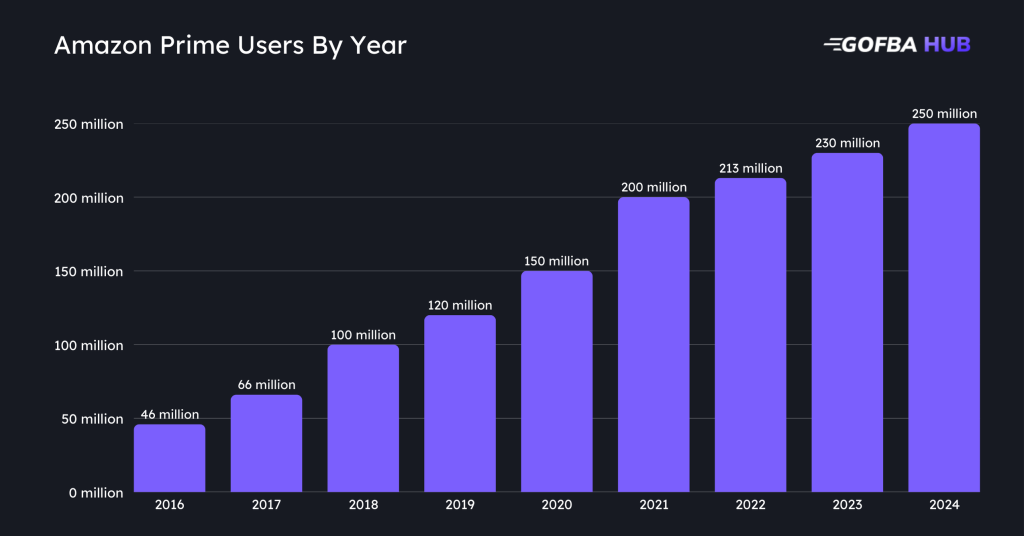
- Prime Subscribers: A critical subset of retail shoppers, Prime members represent Amazon’s core loyalists. These individuals pay an annual or monthly fee for a bundle of benefits, most notably expedited shipping, but also access to Prime Video, Amazon Music, exclusive deals, and more. As of early 2023, Amazon reported over 200 million Prime members globally. The Prime brand is a masterclass in customer lock-in, transforming transactional users into deeply engaged, high-value subscribers who are far more likely to begin and end their shopping journeys on Amazon. This subscription model significantly amplifies the customer lifetime value and reinforces brand stickiness.
- AWS Clients: Amazon Web Services (AWS) represents Amazon’s formidable business-to-business (B2B) brand. AWS provides cloud computing infrastructure to millions of businesses, from startups to government agencies and Fortune 500 companies. While not “shoppers” in the traditional sense, these organizations are crucial customers for the Amazon brand, relying on its reliability, scalability, and innovation. The AWS brand narrative focuses on security, performance, and transformative power, creating a distinct, yet equally powerful, customer relationship.
- Other Service Users: Beyond these primary categories, Amazon’s brand footprint extends to users of Kindle, Audible, Alexa-enabled devices, Twitch, Whole Foods Market, and various other subsidiaries. Each of these represents a unique customer touchpoint, contributing to the overarching Amazon brand’s omnipresence.
The complexity of defining a “customer” makes a definitive single number elusive. However, the sheer volume of users across these categories speaks volumes about Amazon’s unparalleled market penetration and its ability to craft compelling brand propositions for diverse audiences.
Amazon Prime: The Cornerstone of Customer Loyalty and Engagement
Amazon Prime is arguably the most successful customer loyalty program in history, and a potent expression of Amazon’s brand strategy. The brand message of Prime is clear: unparalleled convenience and exclusive value. For a single subscription fee, members unlock a suite of services designed to make Amazon the default choice for a wide array of needs. This isn’t just about fast shipping; it’s about creating a powerful incentive for customers to integrate Amazon into their daily lives.
The psychology behind Prime’s success is fascinating from a branding perspective. The “free” two-day shipping, once paid for, encourages more frequent purchases. The streaming services and music library further embed the brand into leisure time. This creates an ecosystem effect where the value of Prime increases with usage across its various offerings, reinforcing the Amazon brand as a central hub for commerce, entertainment, and digital convenience. Prime members are not just customers; they are brand advocates and deeply integrated participants in the Amazon ecosystem, driving higher engagement and significantly greater spend compared to non-Prime shoppers. Their continued subscription is a testament to the brand’s ability to consistently deliver perceived value.
Beyond Retail: AWS and the B2B Brand Footprint
While the consumer-facing retail and Prime segments often dominate headlines, AWS is a titan in its own right, quietly powering a significant portion of the internet. From a brand perspective, AWS operates with a distinct identity, focusing on enterprise-grade reliability, innovation, and scalability. Its customers are IT decision-makers, developers, and business leaders seeking robust infrastructure solutions. The AWS brand promise revolves around empowering businesses to innovate faster, reduce costs, and scale globally without the burden of managing physical servers.
The success of AWS demonstrates Amazon’s ability to extend its brand power beyond the consumer realm into complex B2B markets. While the aesthetic and messaging differ significantly from the retail brand, the underlying principles of customer obsession, efficiency, and continuous innovation remain consistent. The trust earned through AWS’s performance indirectly strengthens the overall Amazon brand, showcasing its technological prowess and operational excellence to a different, yet equally influential, customer base.
Understanding Amazon’s Market Penetration and Brand Strategy
Amazon’s brand narrative is one of relentless expansion and diversification, constantly seeking new avenues for customer acquisition and engagement. Its staggering customer numbers are a direct result of a carefully orchestrated brand strategy designed for pervasive market penetration.
Geographic Reach and International Brand Expansion
Amazon’s journey from an online bookseller to a global conglomerate is marked by strategic international expansion. Its brand now resonates in dozens of countries, each presenting unique cultural nuances and market dynamics. The brand strategy for global reach involves a delicate balance of standardization and localization. While the core brand elements (logo, customer-centricity, convenience) remain consistent, Amazon adapts its offerings, marketing campaigns, and even its marketplace features to appeal to local tastes and regulations.
For instance, the product assortment, payment methods, and prime benefits might vary significantly between Amazon.com, Amazon.de (Germany), Amazon.in (India), and Amazon.co.jp (Japan). This localized approach ensures that the Amazon brand feels relevant and accessible to diverse international customer segments, overcoming cultural barriers and establishing trust in new markets. This expansive global footprint is crucial for maintaining and growing its already colossal customer base, tapping into new demographics and economic regions.
Multi-Category Domination: From Books to Groceries to Streaming
A cornerstone of Amazon’s brand strategy is its ability to successfully extend its identity across an astonishing array of product and service categories. What started with books now encompasses electronics, apparel, groceries (via Whole Foods Market and Amazon Fresh), digital content (Prime Video, Amazon Music, Audible), smart home devices (Alexa, Ring), and even healthcare.
The “Amazon” brand promise, refined over decades, acts as a unifying force across these diverse ventures. Customers trust Amazon for convenience, selection, and reliability, regardless of the specific product or service. This cross-category appeal minimizes friction for customers exploring new offerings from Amazon, as the existing brand trust acts as a powerful endorsement. For example, a Prime Video subscriber is already familiar with and trusts the Amazon brand, making them more receptive to trying Amazon Fresh or purchasing an Echo device. This multi-category dominance is a critical driver of customer acquisition and fosters a sense of dependency on the Amazon brand for a multitude of needs.
The Ecosystem Play: Reinforcing Brand Loyalty Through Integration
Amazon’s genius lies in building an interconnected ecosystem where each service reinforces the others, creating a powerful network effect that enhances brand loyalty. Devices like Echo speakers and Kindle e-readers are not just products; they are gateways into the Amazon ecosystem. Alexa, the voice AI, seamlessly connects users to shopping, music, and smart home control, all under the Amazon brand umbrella.
This integration strategy ensures that customers who engage with one part of the Amazon brand are more likely to interact with others. For example, owning an Echo device encourages Prime membership for music streaming and easier voice shopping. Reading books on a Kindle might lead to Audible subscriptions. This creates a virtuous cycle where increased engagement with one Amazon branded service deepens reliance on the overall brand, making it incredibly difficult for customers to leave. The brand becomes an integral, almost invisible, part of their digital and physical lives, reinforcing the customer base’s stickiness and long-term value.
The Impact of Customer Numbers on Brand Value and Perception
The sheer volume of Amazon’s customer base is not just a statistical achievement; it is a fundamental driver of its brand value, influencing perception, innovation, and competitive advantage. A massive customer base provides invaluable data, fuels network effects, and places immense pressure on brand reputation management.
Data-Driven Brand Personalization and Retention
With hundreds of millions of customers globally, Amazon possesses an unparalleled trove of data. This data is a goldmine for brand personalization. Every click, purchase, view, and search contributes to a comprehensive customer profile, allowing Amazon to deliver highly targeted recommendations, advertisements, and personalized experiences. This isn’t just about suggesting products; it’s about making the Amazon brand feel relevant and intuitive to each individual.
The ability to personalize the customer journey — from website layout to email marketing — significantly enhances brand loyalty and retention. When a brand consistently anticipates a customer’s needs and preferences, it fosters a sense of being understood and valued. This data-driven personalization is a key competitive advantage for Amazon, creating a superior customer experience that reinforces its brand as intelligent, efficient, and customer-centric, making it challenging for competitors to replicate.
Brand Trust and Reputation Management in a Vast Customer Base
Managing the brand reputation for a customer base of Amazon’s scale is an enormous challenge. With millions of interactions happening every second, the potential for service disruptions, negative reviews, or public relations crises is constant. Amazon’s brand trust is built on its consistent delivery of convenience, reliability, and customer service. However, any perceived lapse can quickly erode this trust.
The company invests heavily in customer service, sophisticated logistics, and robust review systems to maintain brand integrity. Furthermore, public perception regarding issues like labor practices, data privacy, and environmental impact directly affects how its vast customer base views the Amazon brand. Proactive engagement with these issues, transparent communication, and demonstrable commitment to improvement are critical for safeguarding its hard-won brand reputation among its diverse global customers. A brand as prominent as Amazon is under constant scrutiny, and its massive customer base acts as both its greatest asset and its most demanding critic.
The Power of Network Effects and Brand Advocacy
Amazon’s colossal customer base generates powerful network effects. For its marketplace, a larger customer base attracts more third-party sellers, leading to a wider product selection, which in turn attracts even more customers. This virtuous cycle enhances the Amazon brand’s value proposition as the “everything store.” Similarly, for Prime Video or Music, a larger subscriber base justifies investment in more content, attracting more subscribers.
Moreover, a massive customer base translates into significant brand advocacy. Millions of product reviews, social media mentions, and word-of-mouth recommendations serve as potent, organic marketing for the Amazon brand. When customers share positive experiences, they become unpaid brand ambassadors, influencing their networks and contributing to further customer acquisition. This collective voice of the customer, amplified by scale, is an invaluable asset for Amazon, solidifying its brand as a trusted, popular, and indispensable platform.
Future Growth and Evolving Customer Engagement for the Amazon Brand
Amazon’s journey of customer acquisition and brand evolution is far from over. The company continues to identify new avenues for growth and must constantly adapt its brand strategy to meet changing customer expectations and global challenges.
Emerging Markets and Untapped Customer Segments
While Amazon has a dominant presence in many developed markets, vast opportunities remain in emerging economies. Regions with rapidly growing internet penetration and developing e-commerce infrastructure represent significant potential for expanding Amazon’s customer base. The brand strategy in these markets often involves adapting to lower average incomes, different logistics challenges, and a preference for localized payment methods. Amazon’s success in countries like India demonstrates its capacity to tailor its brand and operations to specific regional needs, indicating that future customer growth will likely come from continued, nuanced international expansion. Identifying and catering to previously untapped customer segments – whether by income level, technological access, or specific cultural preferences – will be key to sustaining its growth trajectory.

Adapting to Changing Customer Expectations and Brand Values
Today’s customers are increasingly discerning, not just about price and convenience, but also about a brand’s values. Issues such as sustainability, ethical sourcing, data privacy, and corporate social responsibility are becoming critical factors in customer choice. For a brand as prominent and ubiquitous as Amazon, addressing these concerns is paramount for maintaining its customer base and attracting new generations of consumers.
Amazon’s brand strategy must evolve to transparently communicate its efforts in these areas, from renewable energy initiatives in its data centers to fair labor practices throughout its supply chain. Proactively demonstrating alignment with evolving societal values will be crucial for reinforcing brand trust and loyalty among a customer base that increasingly demands more than just products and services. Innovation in customer experience will also extend beyond transactional efficiency to encompass a more holistic sense of well-being and responsible consumption, positioning the Amazon brand as a leader not just in commerce, but in corporate citizenship.
In conclusion, “how many customers does Amazon have?” is a question whose answer is as dynamic and complex as the company itself. While precise, real-time numbers are proprietary and ever-shifting across its diverse segments, it is clear that Amazon serves hundreds of millions, likely approaching or exceeding a billion unique individuals and businesses globally. This colossal customer base is not merely a quantitative metric; it is the lifeblood of the Amazon brand, underpinning its immense market value, influencing its strategic decisions, and dictating its future trajectory. Through shrewd brand strategy, relentless customer obsession, and continuous innovation, Amazon has cultivated an unparalleled ecosystem that ensures its brand remains central to the lives of countless customers worldwide, cementing its position as a global leader in the interconnected digital age.
aViewFromTheCave is a participant in the Amazon Services LLC Associates Program, an affiliate advertising program designed to provide a means for sites to earn advertising fees by advertising and linking to Amazon.com. Amazon, the Amazon logo, AmazonSupply, and the AmazonSupply logo are trademarks of Amazon.com, Inc. or its affiliates. As an Amazon Associate we earn affiliate commissions from qualifying purchases.