
Costco Wholesale Corporation, often simply known as Costco, is an undisputed giant in the retail landscape. Its distinctive warehouse model, requiring an annual membership for access to bulk goods and competitive pricing, has cultivated a fiercely loyal customer base worldwide. But beyond the bustling aisles and tempting samples, the question “how many Costco’s are there?” is far more than a simple numerical inquiry; it’s a window into the company’s global financial strategy, market penetration, and long-term investment appeal. For investors, business analysts, and even curious consumers, understanding the scale of Costco’s physical footprint provides crucial insights into its operational health, growth trajectory, and intrinsic value.
The Global Footprint of a Retail Giant: A Dynamic Landscape
Costco’s extensive physical presence is a cornerstone of its business model. Unlike many retailers that have scaled back brick-and-mortar operations in favor of e-commerce, Costco continues to invest heavily in its warehouse network, recognizing the unique experiential and logistical advantages its large-format stores offer. The exact number of Costco warehouses is dynamic, constantly evolving as new locations open and, very occasionally, old ones close.
The Latest Figures and Their Significance
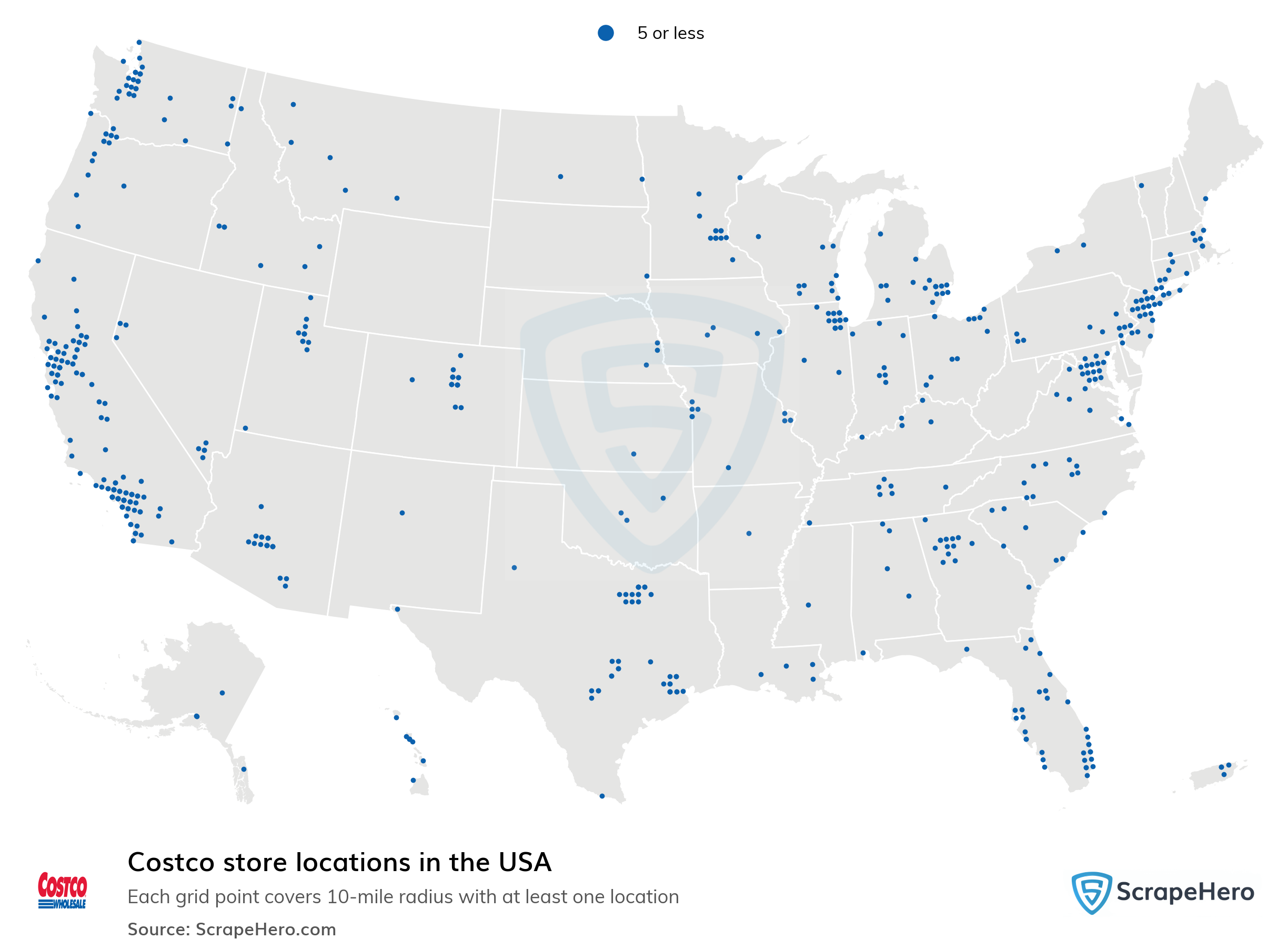
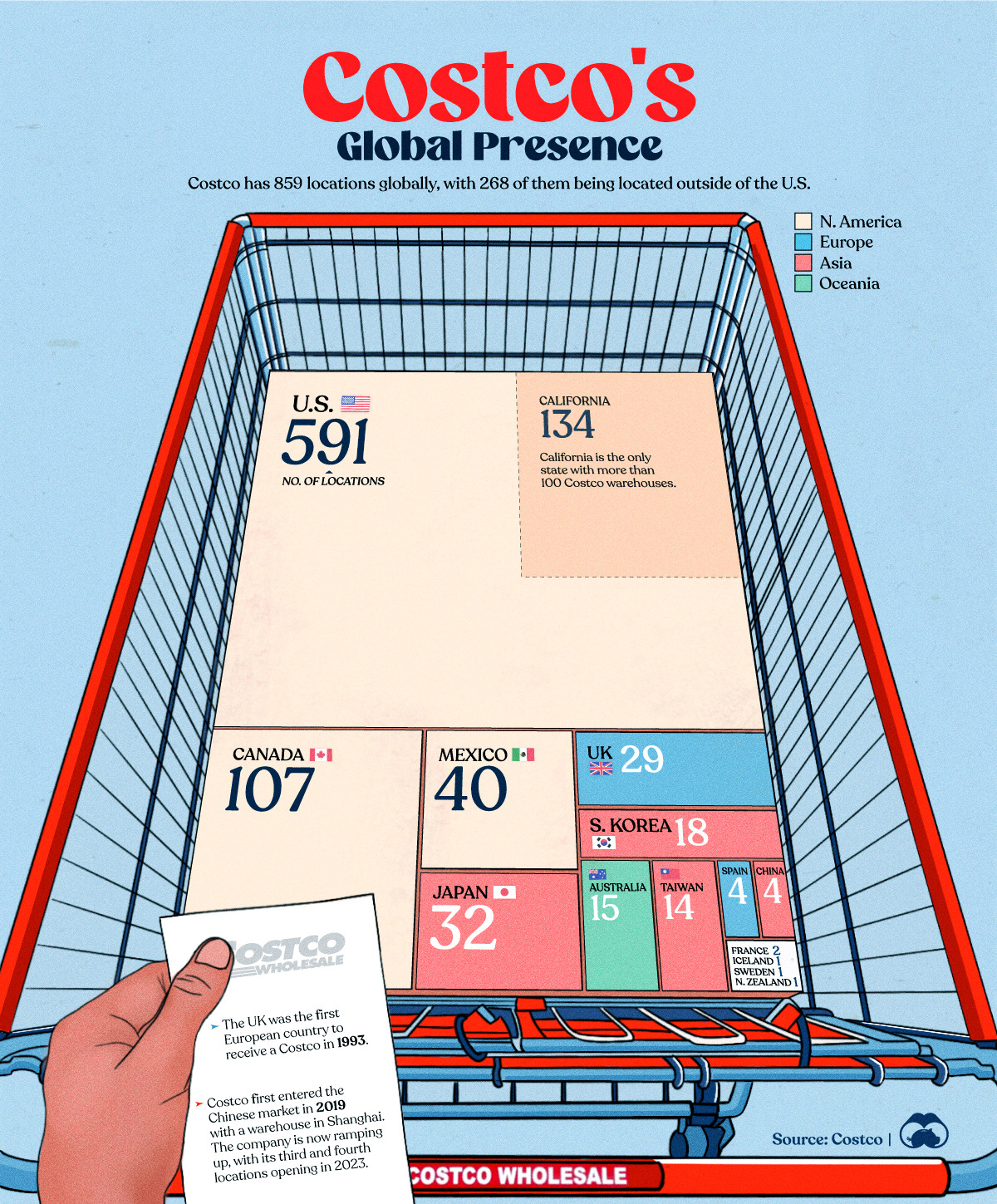
As of the latest reports (typically updated quarterly as part of financial disclosures), Costco operates well over 850 warehouses globally. This figure is a testament to its aggressive, yet strategically measured, expansion. The vast majority of these warehouses are concentrated in the United States and Puerto Rico, serving as the company’s mature and most profitable market. However, a significant and growing portion of its store count is spread across numerous international markets, including Canada, Mexico, the United Kingdom, Japan, South Korea, Australia, Taiwan, China, Spain, France, Iceland, New Zealand, and Sweden.
This widespread distribution isn’t merely about ticking boxes on a global map; it signifies a deliberate strategy to diversify revenue streams, tap into emerging economies, and capitalize on the international appeal of its value proposition. Each new warehouse represents a substantial capital expenditure but also a potential new hub for sales, membership fees, and supply chain efficiency, directly impacting the company’s financial statements.
Market Penetration and Expansion Strategy
Costco’s approach to market penetration differs significantly from traditional retailers. Rather than saturating areas with numerous smaller stores, Costco opts for fewer, larger warehouses strategically placed to serve broad geographic regions. This requires extensive market research into population density, income levels, traffic patterns, and competitor presence. From a business finance perspective, each new location is a complex project involving significant upfront investment in land, construction, inventory, and staffing. The decision to open a new warehouse is predicated on rigorous financial projections, including anticipated membership sign-ups, sales volume, and the timeframe for achieving profitability and a return on investment.
The continued expansion, particularly in international markets like China where Costco has seen exceptional initial success, underscores a belief that the physical warehouse model still holds immense power in an increasingly digital world. This expansion is often funded by strong cash flow generated from existing operations and membership fees, highlighting a self-sustaining growth model that is attractive to investors looking for stable, long-term growth.
Why Store Count Matters to Investors
For those evaluating Costco as an investment, the number of warehouses is a key performance indicator (KPI) that transcends simple curiosity. It’s a critical metric for assessing the company’s growth potential, operational leverage, and overall financial health.
Revenue Growth and Market Share
Each new Costco warehouse represents an additional point of sale, directly contributing to the company’s top-line revenue growth. As the number of stores increases, assuming comparable sales per store remain strong, total sales naturally rise. Investors track this expansion closely, understanding that a growing store count indicates management’s confidence in future demand and its ability to capture greater market share. Furthermore, a larger footprint allows Costco to leverage its immense buying power, negotiating better deals with suppliers due to increased volume, which can lead to higher gross margins—a critical financial metric.
The scale of operations also impacts market share. In many regions, Costco competes with other warehouse clubs, traditional supermarkets, and online retailers. A strategic increase in store count in underserved or growing markets can quickly consolidate Costco’s position, drawing customers away from competitors and solidifying its leadership in the bulk retail segment.
Operational Efficiency and Supply Chain
While more stores can mean more revenue, they also introduce complexities. However, for a company as sophisticated as Costco, a dense network of warehouses can also enhance operational efficiency. A well-distributed network reduces shipping costs and times from distribution centers, leading to better inventory management and less spoilage, particularly for perishable goods. This translates directly into cost savings and improved profitability.
Investors scrutinize these aspects, looking for evidence that Costco can maintain or improve its robust supply chain as it expands. The ability to efficiently stock hundreds of large stores, each with thousands of SKUs, is a testament to sophisticated logistics and inventory systems—factors that underpin consistent financial performance.
Geographic Diversification and Risk Management
Costco’s international expansion, evident in its growing global store count, serves as a vital strategy for geographic diversification. Relying too heavily on a single market exposes a company to localized economic downturns, regulatory changes, or unforeseen events. By spreading its operations across multiple countries, Costco mitigates these risks. If one market experiences a slowdown, others may continue to perform strongly, buffering the overall financial impact.
This diversification is appealing to investors seeking stability. It suggests a more resilient business model, less susceptible to regional volatility and more capable of delivering consistent returns over the long term. Each international warehouse represents not just a new revenue stream, but a piece of a broader strategy to build a financially robust and globally competitive enterprise.
Costco’s Unique Business Model and Its Expansion Strategy
Understanding the “how many” of Costco’s stores is incomplete without delving into the “why” and “how” of its unique business model that underpins its expansion decisions. Costco isn’t just selling products; it’s selling access to a curated shopping experience, and its growth strategy is meticulously aligned with this core philosophy.
The Membership Model’s Role in Scalability
Central to Costco’s financial success and ability to expand is its membership model. Unlike most retailers, a significant portion of Costco’s profit comes from annual membership fees, not just product markups. These fees provide a predictable, high-margin revenue stream that largely covers operating expenses, allowing the company to sell products at thinner margins and offer highly competitive prices. This creates a virtuous cycle: low prices attract more members, membership fees fund expansion and keep prices low, which attracts even more members.
For investors, the membership model offers financial stability and scalability. As Costco opens new warehouses, it gains opportunities to sign up new members, further bolstering its recurring revenue. This predictable income stream provides a strong foundation for financing future growth, including the significant capital expenditures required for new store development, without solely relying on product sales fluctuations.
Strategic Site Selection and Demographics
Costco’s decisions on where to open new warehouses are driven by rigorous analysis of demographics, income levels, and purchasing power. Each new site must meet specific criteria to ensure profitability. The company targets areas with high population density, ample space for its large-format warehouses and extensive parking, and convenient access to major transportation routes. This strategic placement ensures that each new location can attract a sufficient number of affluent members within its trade area to quickly become profitable.
From a business finance perspective, this meticulous site selection minimizes risk and maximizes the potential return on investment for each new store. It’s a calculated decision, weighing the upfront costs against projected membership growth, sales volume, and the operational efficiencies gained from a well-located store. The success of its existing network provides valuable data and insights, informing future expansion in both mature and emerging markets.
Capital Expenditure and Return on Investment
Every new Costco warehouse represents a substantial capital expenditure. This includes the cost of land acquisition, construction, fixtures, equipment, and initial inventory. For a publicly traded company, these expenditures are closely watched by investors. They want to see that the company is deploying capital effectively and that these investments are generating strong returns.
Costco has a proven track record of generating excellent returns on its new store investments, often achieving profitability within a relatively short timeframe. This is due to several factors: the strong pull of its brand, the immediate influx of membership fees, and the operational efficiencies of its established supply chain. This consistent ability to generate positive returns from new locations gives investors confidence in the company’s continued expansion plans and its long-term financial viability.
Beyond the Numbers: Future Growth and Financial Outlook
While the current store count is impressive, the financial narrative of Costco is also about its future growth potential. Investors are keenly interested in where Costco plans to expand next, how it will adapt to changing retail landscapes, and what these strategies mean for sustained profitability and shareholder value.
Saturated Markets vs. Untapped Potential
In mature markets like the United States and Canada, where Costco already has a significant presence, future expansion may involve more targeted infill locations or replacing older, smaller stores with newer, larger ones. The focus shifts from rapid greenfield expansion to optimizing existing market share and enhancing profitability per square foot.
The greater growth potential often lies in international markets, particularly those with emerging middle classes and a growing appetite for Western-style bulk retail. Countries in Asia, for instance, represent vast untapped opportunities for Costco, where its membership model and value proposition can resonate strongly with new consumer segments. Each new international market entered comes with its own set of financial considerations, including currency fluctuations, regulatory hurdles, and cultural adaptations, but also offers the promise of significant long-term growth.
E-commerce Integration and Physical Store Synergy
In the digital age, simply counting physical stores doesn’t tell the whole story. Costco has also invested in its e-commerce capabilities, recognizing the importance of an omnichannel approach. However, for Costco, its online presence is designed to complement, rather than replace, its physical warehouses. Many online orders are fulfilled from warehouses, and services like “Buy Online, Pick Up In-Warehouse” leverage the existing store footprint.
From a financial perspective, this synergy aims to maximize sales efficiency. E-commerce can extend Costco’s reach to members who may not live close to a physical store, or for products that are inconvenient to transport. This integration helps drive overall revenue growth and enhances member loyalty, further solidifying the financial strength of the business.

The Long-Term Financial Health
Ultimately, the answer to “how many Costco’s are there” is a crucial metric for understanding the company’s long-term financial health. A consistently growing store count, managed efficiently and profitably, indicates a healthy, expanding business with strong leadership and a compelling value proposition. For investors, it signals continued revenue growth, potential for increased dividends, and capital appreciation. The ongoing investment in its physical infrastructure, balanced with strategic international expansion and digital integration, positions Costco as a formidable player in the global retail market, promising sustained financial performance for years to come.
aViewFromTheCave is a participant in the Amazon Services LLC Associates Program, an affiliate advertising program designed to provide a means for sites to earn advertising fees by advertising and linking to Amazon.com. Amazon, the Amazon logo, AmazonSupply, and the AmazonSupply logo are trademarks of Amazon.com, Inc. or its affiliates. As an Amazon Associate we earn affiliate commissions from qualifying purchases.