
Costco Wholesale Corporation stands as a titan in the global retail landscape, renowned for its bulk sales, membership model, and distinctive warehouse experience. While consumers often focus on the savings and variety offered, a deeper financial analysis reveals that the number of Costco locations in the USA is far more than a simple statistic; it’s a critical indicator of the company’s strategic financial health, market penetration, and future growth trajectory. As of early 2024, Costco operates approximately 600-610 warehouses across the United States and Puerto Rico, a formidable footprint that underscores its robust business model and significant economic impact. This extensive physical presence is not accidental but the outcome of a meticulously planned financial strategy designed to maximize profitability, market share, and investor value.
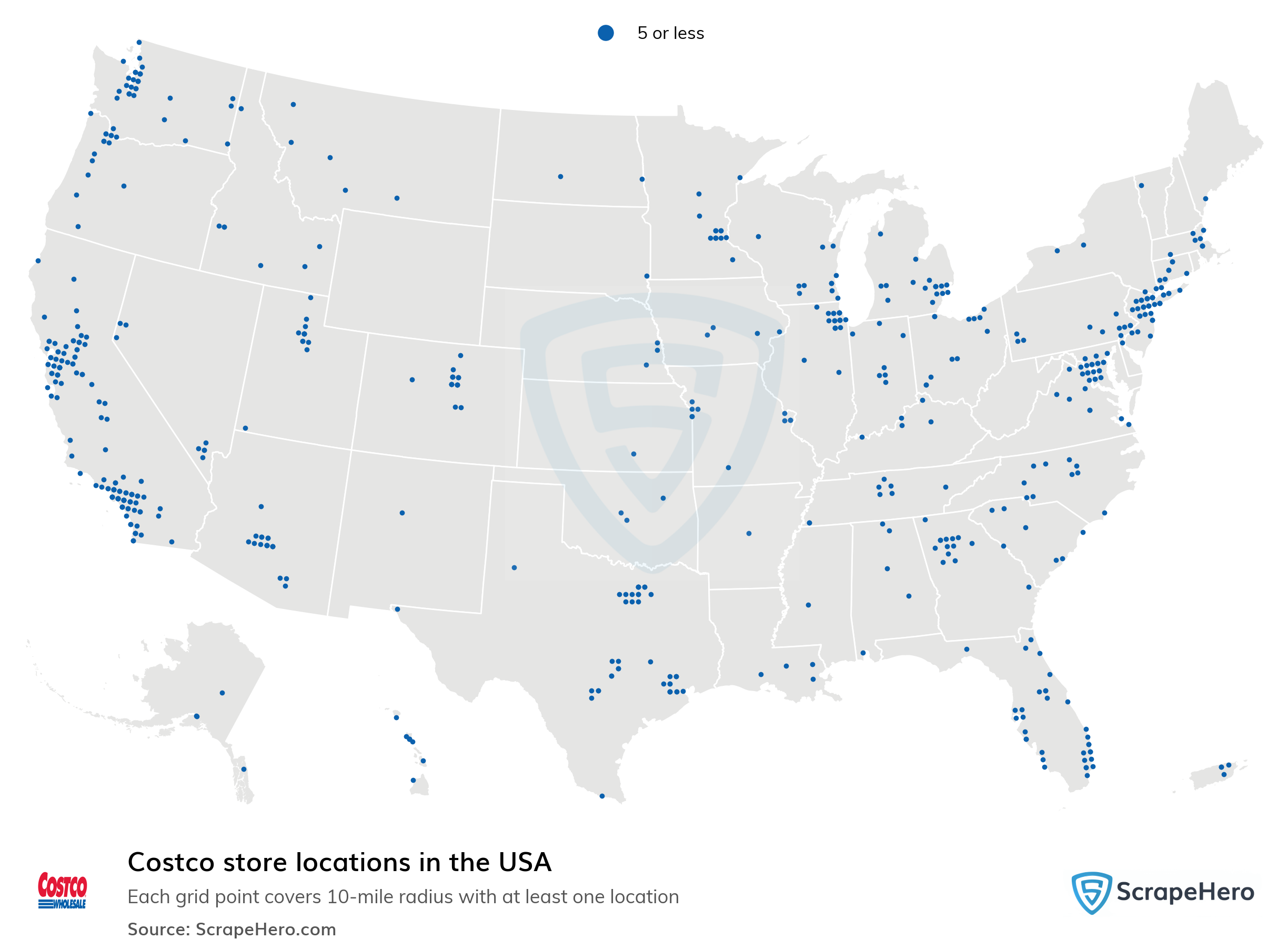
Understanding the magnitude of Costco’s US operations requires delving into the financial underpinnings of its expansion, the economic ripples each location creates, and how this network solidifies its position as a powerhouse in the competitive retail sector. This article will explore the monetary implications of Costco’s extensive network, offering insights for investors, economists, and business enthusiasts alike.
The Financial Strategy Behind Costco’s Store Expansion
The decision to open a new Costco warehouse is a complex financial undertaking, involving meticulous planning and significant capital allocation. It’s a strategic move calculated to yield substantial long-term returns, rather than a mere arbitrary addition to its growing roster. The impressive number of locations in the USA reflects a successful, repeatable financial expansion model.
Market Saturation and Growth Opportunities
Costco’s expansion strategy is fundamentally driven by a rigorous analysis of market potential and demographic trends. Before breaking ground, a comprehensive financial feasibility study assesses various factors:
- Population Density and Demographics: New locations are typically chosen in areas with a high density of target consumers—affluent suburban families, small business owners, and individuals seeking value. The ability to attract a sufficient number of members paying an annual fee is paramount to a location’s financial viability.
- Income Levels and Spending Habits: Higher disposable incomes correlate with increased purchasing power for bulk goods, directly impacting a new store’s projected revenue and profitability. Costco’s financial models heavily weigh the average household income within a defined radius.
- Competitive Landscape: Analyzing the presence and strength of competitors (e.g., Walmart’s Sam’s Club, BJ’s Wholesale Club, or even traditional supermarkets) helps determine pricing strategies, market share potential, and the likelihood of capturing a significant portion of the local retail spend. The financial objective is to carve out a unique niche or leverage Costco’s superior value proposition.
- Real Estate Costs and Accessibility: The financial burden of land acquisition or long-term leases, coupled with ensuring easy access for both customers and logistics, is a crucial component of the initial investment. Optimal locations balance visibility and accessibility with reasonable real estate expenses to maintain healthy operating margins.
Each new warehouse is viewed as a significant investment that must generate a predetermined return on capital, ensuring that the company’s financial resources are deployed efficiently and effectively.
Capital Investment and ROI of New Warehouses
Opening a new Costco warehouse is a capital-intensive endeavor, often requiring hundreds of millions of dollars. These costs encompass several key financial components:
- Land Acquisition and Construction: Purchasing prime real estate and constructing a massive warehouse, fuel station, and ample parking facilities represents the largest upfront financial outlay. These costs vary significantly by region but are substantial regardless.
- Inventory and Fixtures: Stocking a new warehouse with a diverse range of products, from fresh produce to electronics, requires an enormous initial investment in inventory. Additionally, installing shelving, refrigeration units, point-of-sale systems, and other operational fixtures adds to the capital expenditure.
- Staffing and Training: Hiring and training hundreds of employees, from management to floor staff, entails significant payroll and onboarding costs before the store even opens its doors.
- Infrastructure Development: Often, new locations necessitate improvements to local roads, utilities, and other infrastructure, which can be partially borne by Costco or through local government incentives, further impacting the financial equation.
Despite these colossal initial costs, Costco typically achieves impressive returns on its investments. New warehouses are generally profitable within a relatively short period, often within a few years, driven by strong membership sign-ups and high sales volumes. The company’s low operating costs, efficient inventory management, and high-volume sales model contribute to a rapid recouping of the initial capital outlay, making new store openings a financially attractive growth vector.
Supply Chain Efficiency and Logistics Optimization
The financial viability of a vast network of stores is inextricably linked to the efficiency of its supply chain. Costco’s strategy for new locations explicitly considers logistics to minimize costs and maximize product availability:
- Distribution Network Integration: New warehouses are strategically placed to integrate seamlessly into Costco’s existing distribution center network. This minimizes transportation costs, reduces delivery times, and optimizes inventory flow across multiple locations, directly impacting the company’s bottom line.
- Bulk Purchasing and Vendor Relationships: The sheer volume of purchases across its numerous US locations grants Costco immense leverage with suppliers. This allows for preferential pricing, which translates into better margins for Costco and lower prices for members, reinforcing the value proposition.
- Inventory Management Systems: Sophisticated inventory management systems ensure that goods move efficiently from distribution centers to stores and then quickly off shelves. Reducing holding costs and minimizing waste (shrinkage) are critical financial objectives achieved through this logistical prowess.
Every new location must not only generate its own revenue but also contribute to the overall efficiency and cost-effectiveness of the entire supply chain, reinforcing the financial health of the corporation.
The Economic Impact of a Costco Warehouse
Beyond its corporate financial statements, each Costco warehouse in the USA acts as a significant economic engine, injecting capital, creating jobs, and generating tax revenues for its local community. This ripple effect makes Costco’s expansion a boon for regional economies.
Local Job Creation and Wage Impact
One of the most immediate and tangible financial benefits of a new Costco location is job creation. Each warehouse typically employs several hundred individuals, from full-time managers and specialized staff to part-time sales associates and seasonal workers.
- Direct Employment: The jobs created span various roles, providing stable employment opportunities for a diverse workforce within the community.
- Competitive Wages and Benefits: Costco is known for paying its employees above the retail industry average, along with providing comprehensive benefits packages. This commitment to its workforce translates into higher disposable incomes for its employees, stimulating local spending and contributing to the overall economic well-being of the region.
- Indirect Employment: The presence of a large retailer like Costco also spurs indirect job creation in supporting industries, such as local logistics providers, maintenance services, and security firms, further multiplying the economic impact.
These employment opportunities represent a substantial financial infusion into local households, strengthening the economic fabric of the communities where Costco operates.
Local Tax Revenue and Infrastructure Development
Costco warehouses are not just large commercial spaces; they are significant contributors to the local tax base, providing crucial funds for public services.
- Property Taxes: The substantial value of Costco’s land and facilities generates considerable property tax revenue for local municipalities and school districts. These funds are vital for financing education, public safety, and other essential community services.
- Sales Taxes: Every transaction within a Costco warehouse contributes sales tax revenue to state and local governments. Given the high sales volume, this can amount to millions of dollars annually from a single location, supporting state budgets and funding local initiatives.
- Infrastructure Investment: The development of a new Costco often comes with agreements for infrastructure improvements, such as road upgrades, traffic signal installations, or utility enhancements. While these might be partially funded by Costco, they ultimately benefit the public and enhance the area’s overall economic potential.
The cumulative effect of tax revenues and infrastructure improvements creates a positive feedback loop, enhancing the attractiveness of the area for further business investment and residential growth.
Supplier Partnerships and Regional Economic Growth
Costco’s presence also fosters financial growth through its extensive network of supplier partnerships, many of which are regional or local.
- Local Sourcing: Costco often prioritizes sourcing certain products (e.g., fresh produce, baked goods) from local and regional suppliers, injecting money directly into the local agricultural and manufacturing sectors.
- Small Business Support: Small and medium-sized businesses that become Costco suppliers gain access to a massive distribution network, leading to increased production, job creation within their own companies, and greater financial stability.
- Economic Multiplier Effect: The money spent by Costco (on payroll, local sourcing, taxes) recirculates within the local economy multiple times, generating an economic multiplier effect that boosts regional GDP and promotes overall prosperity.

This intricate web of financial relationships extends far beyond the four walls of the warehouse, making each Costco location a catalyst for broader economic development.
Membership Model: A Foundation for Financial Stability and Expansion
At the heart of Costco’s unique financial success and its ability to continually expand its US footprint is its innovative membership model. This strategy fundamentally differentiates it from traditional retailers and underpins its robust financial performance.
Revenue Generation Beyond Sales Margins
Unlike conventional retailers that rely heavily on product markups for profit, Costco generates a significant portion of its profit from membership fees.
- Profit Driver: Membership fees, which range from basic Gold Star to Executive memberships, provide a consistent and predictable stream of high-margin revenue. This revenue stream is nearly pure profit, as the cost to acquire and service a member is relatively low compared to the fee collected.
- Enabling Low Prices: The reliability of membership fee income allows Costco to operate with extremely thin margins on its merchandise—often as low as 10-14%, far below the industry average. This ability to offer highly competitive pricing is a direct result of its membership revenue, which makes its bulk offerings an irresistible value proposition for millions of American households and businesses.
- Funding Expansion: The stable and substantial income from membership fees provides a consistent capital pool that Costco can strategically deploy for new warehouse construction, technological upgrades, and other expansion initiatives without heavily relying on debt or volatile product sales.
This dual revenue stream ensures financial resilience and fuels the capital-intensive process of opening new locations across the USA.
Customer Loyalty and Predictable Cash Flow
The membership model cultivates an exceptionally loyal customer base, translating into predictable cash flow—a dream for any business finance department.
- High Renewal Rates: Costco boasts exceptionally high membership renewal rates, consistently above 90% in the US and Canada. This high retention rate signifies strong customer satisfaction and loyalty, ensuring a recurring revenue base year after year.
- Reduced Marketing Costs: A loyal member base requires less expenditure on advertising and marketing, as word-of-mouth and the inherent value proposition drive new sign-ups. The savings on marketing expenses directly boost profitability.
- Stable Cash Flow: The annual collection of membership fees provides a predictable and significant injection of cash into the company’s coffers, well in advance of product purchases. This stable cash flow is crucial for financial planning, managing operational expenses, and funding expansion projects.
The financial security derived from a committed membership base reduces financial risk and provides the confidence necessary for aggressive yet calculated expansion.
Data-Driven Expansion Decisions
Costco leverages its vast membership data to inform strategic expansion decisions, ensuring that new locations are financially optimized.
- Geographic Mapping: Membership data allows Costco to identify “member clusters” in areas not adequately served by existing warehouses. This intelligence helps pinpoint ideal locations for new stores, ensuring immediate demand and high traffic volume upon opening.
- Purchase Behavior Analysis: Understanding what members buy and how frequently helps tailor initial inventory for new stores, reducing the risk of stocking unpopular items and improving initial sales performance.
- Demographic Insights: Data provides deeper insights into the demographics of its most profitable members, guiding real estate decisions to areas where these segments are growing.
By analyzing this data, Costco minimizes the financial risk associated with new store openings, increasing the likelihood of success and accelerating the return on investment.
Investor’s Perspective: Valuing Costco’s Retail Footprint
For investors, the number of Costco locations in the USA is a key metric, reflecting the company’s intrinsic value, market dominance, and future earning potential. It’s a tangible asset that contributes significantly to its investment thesis.
Geographic Diversification and Risk Mitigation
A large and geographically diverse retail footprint, such as Costco’s in the USA, is a significant advantage from an investor’s perspective, primarily for risk mitigation.
- Reduced Regional Economic Vulnerability: With stores spread across all major US states and territories, Costco is less susceptible to localized economic downturns, natural disasters, or shifts in regional consumer preferences. A slump in one area can often be offset by strong performance in another.
- Market Penetration: The extensive network indicates a high degree of market penetration, suggesting that Costco has captured a substantial share of the retail market across diverse demographics. This broad reach translates into stable and diversified revenue streams.
- Supply Chain Resilience: A wide distribution network with multiple regional hubs provides redundancy and flexibility in the supply chain, reducing risks associated with disruptions at any single point.
This diversification provides a layer of financial stability that is highly attractive to long-term investors.
Future Growth Potential and International Expansion Strategy
While focusing on its US presence, the number of locations here also signals the company’s overall capacity for growth and its international ambitions.
- Mature Market Dynamics: The US market, while still growing, is relatively mature for Costco. Future growth in the US may come from infill locations, smaller format stores, or continued organic growth in existing markets. Investors analyze the “white space” available for further expansion within the US.
- Blueprint for Global Success: The highly successful and profitable US expansion model serves as a robust blueprint for Costco’s international growth. The lessons learned in site selection, logistics, and membership acquisition in the US are directly transferable to new markets worldwide, signaling consistent future financial opportunities.
- Market Share Consolidation: Continued strategic expansion in the US allows Costco to consolidate its market share, making it even harder for competitors to challenge its dominance.
The US store count is a foundational element that supports its global expansion narrative and overall growth story for investors.
Competitive Advantage and Moat Building
Costco’s extensive physical network, combined with its unique business model, creates a formidable economic moat—a sustainable competitive advantage that protects its long-term profitability and market position.
- Scale and Purchasing Power: The sheer scale of its operations across hundreds of US locations enables unparalleled purchasing power, allowing Costco to negotiate the best prices from suppliers. This cost advantage is difficult for smaller or newer competitors to replicate.
- Membership Stickiness: The membership model creates a high switching cost for consumers. Once members have paid their annual fee, they are incentivized to shop at Costco to maximize the value of their membership, ensuring repeat business and predictable revenue.
- Operational Efficiency: Years of refining its logistics, inventory management, and store operations across its vast network have led to a highly efficient and cost-effective operational structure. This operational excellence translates directly into better financial performance and stronger margins compared to less experienced competitors.
This combination of scale, loyalty, and operational efficiency, anchored by its extensive US footprint, creates a powerful barrier to entry, safeguarding Costco’s market leadership and ensuring its continued financial strength.

Conclusion
The question “how many Costco locations in USA” transcends a simple numerical answer. It unlocks a comprehensive understanding of Costco’s financial acumen, strategic brilliance, and profound economic impact. The approximately 600-610 warehouses dotted across the American landscape represent billions in capital investment, hundreds of thousands of jobs, significant tax contributions, and a finely tuned operational machine. From a financial perspective, each location is a carefully calculated asset, contributing to the company’s robust profitability, fueling its sustainable growth, and reinforcing its formidable competitive advantage. For investors, it signifies a stable, expanding enterprise with a proven business model. For communities, it represents economic vitality and opportunity. Ultimately, the story of Costco’s US locations is a compelling narrative of financial strategy, market dominance, and enduring economic value.
aViewFromTheCave is a participant in the Amazon Services LLC Associates Program, an affiliate advertising program designed to provide a means for sites to earn advertising fees by advertising and linking to Amazon.com. Amazon, the Amazon logo, AmazonSupply, and the AmazonSupply logo are trademarks of Amazon.com, Inc. or its affiliates. As an Amazon Associate we earn affiliate commissions from qualifying purchases.