
The Nasdaq Stock Market is more than just a ticker scrolling across a television screen; it is a global electronic marketplace for buying and selling securities and the home to some of the world’s most innovative firms. For investors, financial analysts, and business enthusiasts, understanding the scale of the Nasdaq is fundamental to grasping the health of the modern economy. A common question that arises when analyzing market breadth is: “How many companies are in the Nasdaq?”
As of 2024, the Nasdaq features approximately 3,400 to 3,700 listed companies. This number is dynamic, shifting monthly due to new Initial Public Offerings (IPOs), corporate mergers, acquisitions, and delistings. Unlike the Dow Jones Industrial Average, which tracks only 30 blue-chip companies, or the S&P 500, which tracks 500 of the largest U.S. companies, the Nasdaq offers a much broader perspective on the equity market, particularly within the growth and technology sectors.
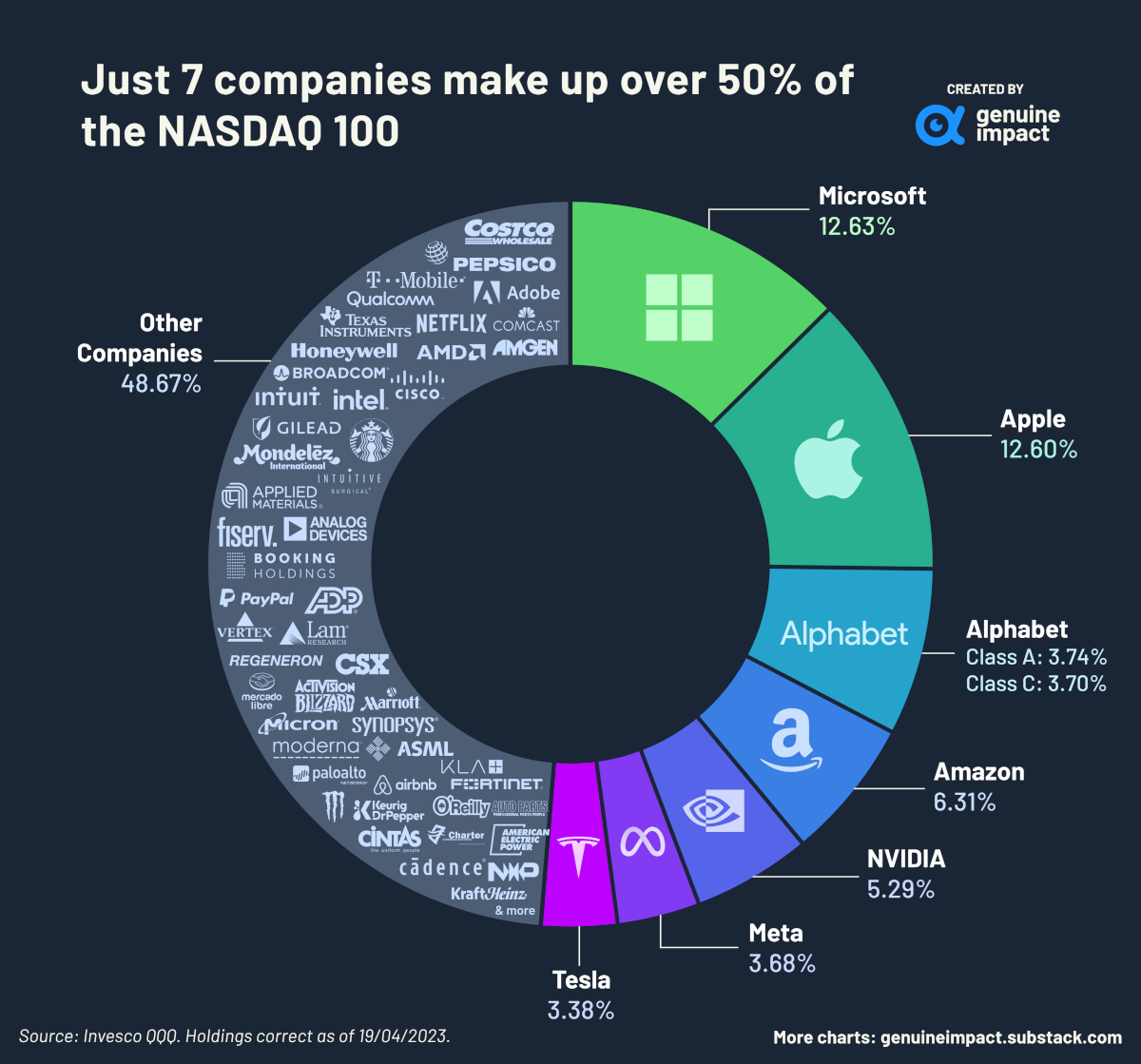
The Composition of the Nasdaq: Navigating the Numbers
To understand how many companies reside within the Nasdaq, one must first distinguish between the Nasdaq Stock Exchange itself and the various indices that track it. The exchange is the platform where the companies are listed, while the indices are the benchmarks used by investors to measure performance.
The Nasdaq Composite vs. the Nasdaq-100
When people ask how many companies are in the Nasdaq, they are often referring to the Nasdaq Composite Index. This index includes almost all companies listed on the Nasdaq stock exchange—more than 3,000 entities. It is a market-capitalization-weighted index, meaning the larger companies have a more significant impact on the index’s price movements.
In contrast, the Nasdaq-100 is a more exclusive subset. It consists of the 100 largest non-financial companies listed on the exchange. While the Composite gives a broad view of market health, the Nasdaq-100 is the primary benchmark for “mega-cap” growth stocks. For an investor, knowing the difference is vital: the Composite offers diversification across thousands of small and mid-cap firms, while the Nasdaq-100 focuses on the heavy hitters like Apple, Microsoft, and Amazon.
Historical Fluctuations in Company Counts
The number of companies on the Nasdaq is never static. During the “Dot-com” boom of the late 1990s, the number of listings swelled as hundreds of internet startups rushed to go public. Following the crash in the early 2000s, the number contracted significantly as companies went bankrupt or were acquired.
In recent years, the count has stabilized, though it remains sensitive to the “IPO window.” In a low-interest-rate environment, the number of companies tends to grow as venture-backed firms seek public capital. Conversely, in periods of economic tightening, the number may stagnate or decrease as fewer companies debut and struggling firms face delisting for failing to meet minimum price requirements.
Listing Tiers and Financial Requirements
Not all companies on the Nasdaq are created equal. The exchange is divided into three distinct tiers, each with its own set of financial, liquidity, and corporate governance requirements. The number of companies in each tier reflects the maturity and financial stability of the listed entities.
The Global Select Market
This is the highest tier and represents the “gold standard” of the Nasdaq. Companies in the Global Select Market must meet the most stringent financial and liquidity requirements in the world. Approximately 1,400 to 1,600 companies qualify for this tier. These are the household names with massive market caps and high trading volumes. For a money manager, this tier represents the most “investable” segment of the exchange due to its high liquidity and transparency.
The Global Market
The Nasdaq Global Market is the mid-tier, consisting of roughly 700 to 900 companies. These firms have a significant global reach and solid financial backing but may not yet meet the extreme market capitalization requirements of the “Select” tier. This segment is often a breeding ground for future blue-chip stocks, offering investors a balance between established stability and growth potential.
The Capital Market
Formerly known as the “SmallCap Market,” the Nasdaq Capital Market is designed for smaller companies that are still in their growth phases. There are usually around 1,000 to 1,200 companies in this tier. While the listing requirements are less demanding than the other two tiers, these companies are still subject to strict regulatory oversight. For the aggressive investor, the Capital Market is where the “hidden gems” are found, though it comes with higher volatility and risk.
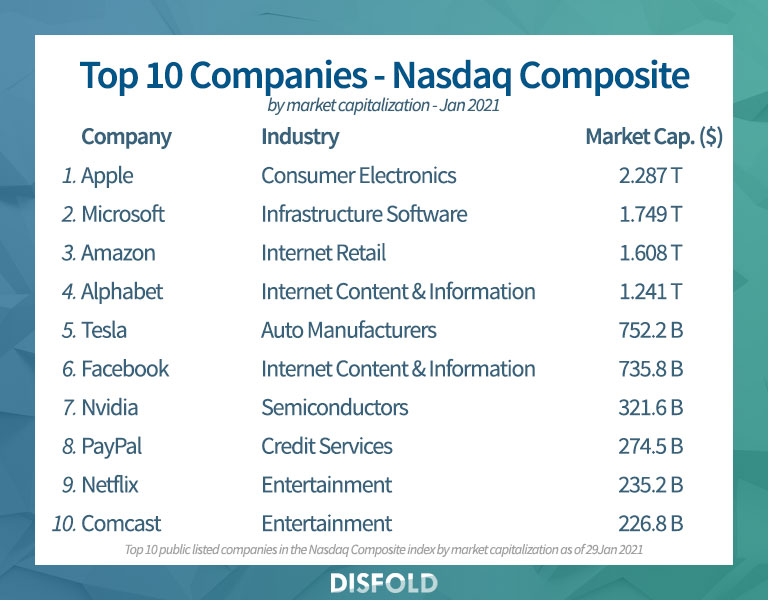
Sector Allocation and the “Tech-Heavy” Reputation
The reason the Nasdaq is so closely watched by the financial community is its unique sector concentration. While the New York Stock Exchange (NYSE) is known for industrial, energy, and financial giants, the Nasdaq is the preferred home for innovation-driven industries.
Dominance of Information Technology
It is no secret that the Nasdaq is the heartbeat of the tech world. Information technology companies make up roughly 50% of the Nasdaq-100 and a significant portion of the Composite. This high concentration means that when software, semiconductor, or AI sectors rally, the Nasdaq performs exceptionally well. However, it also means that the exchange is more susceptible to “growth stock” volatility when interest rates rise, as tech valuations are often based on future earnings projections.
The Rise of Healthcare and Consumer Services
Beyond technology, the Nasdaq hosts a massive number of biotech and healthcare companies. In fact, more than 700 healthcare firms are listed on the exchange, many of which are in the “Capital Market” tier working on experimental drugs or medical devices. Additionally, consumer services—including e-commerce giants and modern retail—play a massive role in the exchange’s total valuation. This diversity ensures that while tech is the leader, the Nasdaq remains a comprehensive cross-section of the 21st-century economy.
Why the Number of Companies Matters for Your Portfolio
For the individual investor, the sheer number of companies on the Nasdaq provides both opportunity and complexity. Understanding the breadth of the market is a key component of sophisticated portfolio management.
Diversification vs. Concentration
An investor who buys an ETF tracking the Nasdaq Composite (such as ONEQ) is gaining exposure to over 3,000 companies. This provides a “safety in numbers” approach; if one small biotech company fails, the impact on the total portfolio is negligible.
On the other hand, the Nasdaq-100 (tracked by the famous QQQ ETF) is much more concentrated. Because it is market-cap weighted, the top 10 companies can sometimes account for over 50% of the index’s movement. Investors must decide if they want the broad economic exposure of thousands of companies or the concentrated growth potential of the top 100.
Market Capitalization and Index Weighting
The “how many” question is often secondary to the “how much” question. While there are over 3,000 companies, the “Magnificent Seven” (Alphabet, Amazon, Apple, Meta, Microsoft, Nvidia, and Tesla) hold a disproportionate amount of the financial weight. Understanding this helps investors realize that the Nasdaq can move higher even if a majority of its 3,000+ companies are having a bad day, provided the trillion-dollar giants are performing well.
The Future of the Nasdaq: IPOs, Delistings, and Market Evolution
The number of companies on the Nasdaq serves as a barometer for the broader entrepreneurial ecosystem. As we look toward the future, several factors will dictate whether the number of listings grows or shrinks.
The Impact of Modern IPO Trends
The “Money” side of the Nasdaq is heavily influenced by the health of the venture capital market. When private equity and VC firms seek “exits,” they list their portfolio companies on the Nasdaq. In recent years, we have seen a shift toward “quality over quantity,” where fewer companies go public, but those that do are often more mature and have higher valuations. Additionally, the rise of SPACs (Special Purpose Acquisition Companies) a few years ago caused a temporary surge in the number of Nasdaq-listed entities, many of which have since merged or been delisted.

Economic Cycles and Listing Stability
The Nasdaq’s “delisting” process is a natural pruning mechanism. If a company’s stock price falls below $1.00 for an extended period, or if it fails to meet financial reporting standards, the exchange removes it. This ensures that the 3,000+ companies on the exchange maintain a certain level of financial integrity. During economic downturns, delistings often increase, while bull markets encourage new entries.
In conclusion, the Nasdaq is a massive, living entity currently housing roughly 3,500 companies. For the savvy investor, the number itself is just the beginning. The real value lies in understanding the tiers, the sector concentrations, and the weight of the giants that move the needle. Whether you are looking for the stability of the Global Select Market or the high-reward potential of the Capital Market, the Nasdaq remains the premier destination for the capital that fuels the future.
aViewFromTheCave is a participant in the Amazon Services LLC Associates Program, an affiliate advertising program designed to provide a means for sites to earn advertising fees by advertising and linking to Amazon.com. Amazon, the Amazon logo, AmazonSupply, and the AmazonSupply logo are trademarks of Amazon.com, Inc. or its affiliates. As an Amazon Associate we earn affiliate commissions from qualifying purchases.