
For investors, market analysts, and anyone tracking the pulse of the automotive industry, the question of “how many cars did Tesla sell in 2023?” is far more than a simple numerical query. It’s a critical barometer of the company’s financial performance, operational efficiency, market dominance in the electric vehicle (EV) sector, and its trajectory in an increasingly competitive global landscape. Tesla’s delivery figures are not just sales statistics; they are direct indicators of revenue potential, profitability outlook, and the efficacy of its aggressive pricing strategies in a year marked by economic volatility and intense competition.
In 2023, Tesla navigated a complex market environment, characterized by fluctuating raw material costs, shifting consumer sentiment, and a full-throttle race among traditional automakers and new entrants to capture a slice of the burgeoning EV market. Against this backdrop, Tesla’s ability to scale production, manage its supply chain, and stimulate demand through strategic pricing became paramount. Understanding the total vehicle sales provides a lens through which to evaluate these efforts and project the company’s financial future. This article will delve into Tesla’s 2023 sales performance, examining the figures themselves and, more importantly, their profound financial implications for the company and its stakeholders.
Tesla’s 2023 Delivery Milestones: A Financial Triumph Amidst Market Shifts
The close of 2023 brought eagerly anticipated revelations regarding Tesla’s performance, solidifying its position as the world’s leading EV manufacturer by volume. The numbers released were not just figures; they represented a significant financial achievement, demonstrating Tesla’s ability to drive substantial growth even in a challenging economic climate.
The Headline Numbers: Deliveries vs. Production
In 2023, Tesla delivered an impressive 1,808,581 vehicles globally. This figure marks a substantial increase year-over-year and firmly surpassed the company’s initial guidance of approximately 1.8 million deliveries. To put this in perspective, production for the year reached 1,845,985 vehicles. The slight disparity between production and deliveries is typical for an automotive manufacturer, reflecting vehicles in transit or awaiting final handover. These numbers underscore Tesla’s remarkable operational ramp-up and its ability to meet escalating demand, cementing its financial foundation. The consistent growth in deliveries directly translates to robust revenue streams, which are critical for funding future innovations and expansions. For investors, consistently beating or meeting delivery targets is a strong signal of management’s execution capability and the underlying demand for Tesla’s products.
Regional Performance and Market Penetration
While global figures paint a broad picture, a deeper financial analysis requires understanding performance across key geographical markets. Tesla’s primary markets – North America (predominantly the US), China, and Europe – each present unique opportunities and challenges.
-
North America continued to be a stronghold, benefiting from incentives and a strong brand presence.
-
China was a dynamic battleground, with intense competition from local EV manufacturers, yet Tesla managed to maintain a significant market share, driven by strong local production from Gigafactory Shanghai. The ability to sell millions of vehicles in the world’s largest automotive market is a testament to its strategic pricing and brand appeal, crucial for long-term financial health.
-
Europe saw continued expansion, with Gigafactory Berlin-Brandenburg playing an increasingly vital role in supplying the continent, reducing logistical costs and improving delivery times.
The success in penetrating these diverse markets indicates not just effective sales strategies but also a sophisticated supply chain and production network, all of which contribute positively to the company’s financial statements by optimizing costs and maximizing revenue per vehicle.
Navigating a Dynamic Market: Pricing, Competition, and Macroeconomic Headwinds
Tesla’s 2023 sales performance cannot be fully appreciated without acknowledging the strategic maneuvers and external forces that shaped it. The company demonstrated significant agility in adapting to a rapidly evolving market, with direct financial consequences.
The Impact of Price Adjustments on Sales Volume
Perhaps the most defining financial strategy employed by Tesla in 2023 was its aggressive series of price cuts across its vehicle lineup. Beginning early in the year and continuing periodically, these reductions, particularly on its high-volume Model 3 and Model Y, were designed to stimulate demand, increase market share, and ensure eligibility for government incentives in various regions (like the refreshed IRA tax credit in the US). From a financial standpoint, this was a calculated risk. While lower prices could erode profit margins per vehicle, the strategy aimed to compensate through significantly higher sales volumes, which could lead to greater overall revenue and market dominance. Investors keenly watched how this trade-off between margin compression and volume expansion would play out on the company’s income statements and balance sheets. The strong delivery numbers suggest the strategy largely succeeded in boosting sales, albeit at the cost of some margin erosion, which was a key focus for financial analysts.
Competitive Landscape and EV Adoption Trends
The competitive landscape for EVs intensified dramatically in 2023. Traditional automotive giants like Ford, General Motors, Volkswagen, and Hyundai, alongside ambitious startups such as Rivian and Lucid, and strong Chinese players like BYD and Nio, all launched compelling new EV models. This increased competition meant that Tesla could no longer rely solely on its first-mover advantage or premium pricing. The necessity of the price cuts was partly a response to this crowded field. Despite this, Tesla continued to lead in overall EV adoption, driven by its Supercharger network, brand recognition, and a proven track record of technological innovation. Its sales figures reflect its continued ability to attract new EV buyers and retain existing ones, a critical factor for maintaining its financial lead in a growing market.
Economic Factors and Consumer Demand
Macroeconomic factors played a significant role in influencing consumer demand throughout 2023. High interest rates in major economies made vehicle financing more expensive, potentially deterring some buyers. Persistent inflation eroded purchasing power, leading some consumers to delay large discretionary purchases like new cars. Geopolitical tensions and energy market volatility also created uncertainty. Despite these headwinds, Tesla’s robust sales performance suggests that its value proposition, enhanced by the price adjustments and ongoing technological advancements, resonated strongly with consumers. The financial resilience shown by Tesla’s sales volume in such an environment underscores the strength of its brand and product offering.

Financial Implications for Investors and Stakeholders
Tesla’s 2023 delivery numbers carry profound financial implications that extend beyond mere unit sales, influencing everything from revenue and profitability to stock performance and future investment decisions.
Revenue Growth vs. Margin Compression
The record-breaking deliveries in 2023 undoubtedly led to significant revenue growth for Tesla. Each vehicle sold contributes to the top line, driving overall company revenue upward. However, the aggressive price cuts implemented throughout the year had a direct impact on profitability metrics, specifically gross margins. While increasing sales volume is crucial for market share, a decrease in the profit generated per vehicle can put pressure on net income. Investors closely scrutinized Tesla’s quarterly earnings reports to understand the delicate balance between expanding market share through lower prices and maintaining healthy profit margins. The strong delivery numbers indicated that Tesla chose to prioritize volume, betting that long-term scale and efficiency improvements would eventually restore margins, a common financial strategy for growth-oriented companies.
Free Cash Flow and Capital Expenditures
High sales volumes directly translate to strong cash flow generation, which is a vital financial health indicator. Tesla’s robust deliveries in 2023 generated substantial free cash flow, providing the company with the financial flexibility to fund its ambitious capital expenditure plans. This includes investments in expanding Gigafactories (like those in Texas and Germany), accelerating research and development for new technologies (such as AI and battery advancements), and developing new vehicle models. A strong cash position allows Tesla to self-finance its growth initiatives without excessive reliance on debt or equity dilution, which is highly favorable from an investor’s perspective. It signals financial self-sufficiency and a sustainable growth model.
Stock Performance and Investor Sentiment
Tesla’s delivery numbers are among the most eagerly anticipated data points for the stock market. Strong delivery figures often act as a catalyst for positive stock performance, reflecting investor confidence in the company’s growth trajectory and execution. Conversely, misses can lead to significant stock price volatility. In 2023, Tesla’s stock experienced considerable fluctuation, but the consistent strong delivery reports, particularly the full-year beat, contributed to a significant rally, demonstrating how these operational metrics directly translate into shareholder value. Analysts often use delivery forecasts as a cornerstone for their financial models, adjusting revenue and earnings estimates based on actual performance, thereby influencing buy/sell recommendations and overall investor sentiment.
Operational Efficiency and Future Growth Drivers
Looking beyond the 2023 numbers, it’s essential to consider the underlying operational efficiencies that made these sales possible and the future drivers that will sustain Tesla’s financial growth.
Production Capacity and Gigafactory Expansion
Tesla’s ability to sell nearly 1.81 million cars in 2023 is inextricably linked to its phenomenal production capabilities. The continuous ramp-up of Gigafactories in Shanghai, Berlin, and Texas played a crucial role in supporting these sales volumes. These facilities are not just assembly plants; they are integrated manufacturing ecosystems designed for efficiency and scale. The expansion of these factories and the optimization of their production lines are key financial drivers, as increased capacity directly enables higher delivery potential. The investment in these mega-factories represents significant capital expenditure, but their ability to churn out vehicles at an ever-increasing rate is fundamental to Tesla’s revenue growth and its long-term financial strategy.
Product Mix and Model S/X vs. Model 3/Y
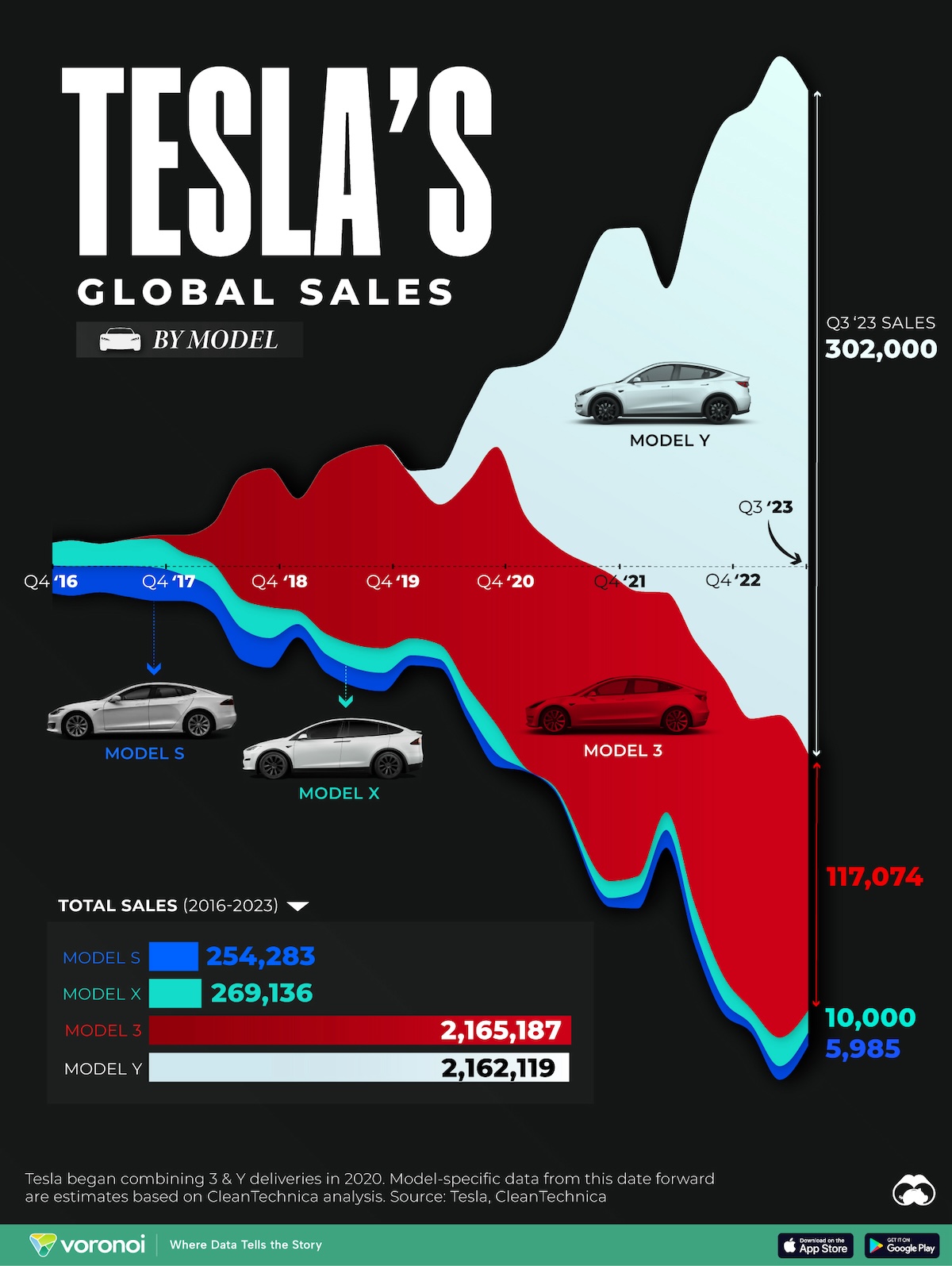
The vast majority of Tesla’s 2023 sales came from its high-volume, more affordable Model 3 sedan and Model Y SUV. These vehicles have become the workhorses of Tesla’s lineup, driving mass-market adoption and contributing the bulk of its revenue. While the Model S and Model X, Tesla’s premium offerings, still contribute to the product mix, their sales numbers are significantly lower. This product mix strategy is financially shrewd; focusing on high-volume models allows for economies of scale in manufacturing, procurement, and distribution, which can help offset some of the margin compression from price cuts and ultimately contribute to a healthier bottom line.
Innovation and New Model Pipeline as Growth Levers
Even with record sales, future growth relies on innovation. The long-anticipated Cybertruck began its initial deliveries at the end of 2023, representing a new potential revenue stream and market segment for Tesla. Beyond the Cybertruck, anticipation for Tesla’s rumored next-generation compact vehicle, expected to be even more affordable, serves as a powerful future growth lever. New models diversify the product portfolio, attract new customer segments, and can reignite interest and demand. From a financial perspective, a strong product pipeline ensures sustained relevance, mitigates the risk of stagnation, and provides avenues for continued revenue expansion in the years to come, securing Tesla’s long-term financial viability.

Conclusion
Tesla’s 2023 sales performance, culminating in a remarkable 1,808,581 vehicle deliveries, represents a significant financial achievement. It underscores the company’s unparalleled ability to scale production, navigate complex market dynamics, and leverage strategic pricing to stimulate demand. For investors, these numbers are a powerful testament to Tesla’s operational prowess and market leadership in the rapidly evolving electric vehicle industry.
While the aggressive price cuts impacted gross margins, the strategy successfully boosted volume, generating substantial revenue and strengthening Tesla’s financial foundation through robust cash flow. This financial flexibility is critical for funding future capital expenditures, R&D, and expansion into new markets and product segments. As Tesla looks ahead, its ability to maintain operational efficiency, introduce compelling new products like the Cybertruck, and potentially a more affordable next-generation vehicle, will be paramount. The financial world will continue to closely monitor Tesla’s delivery numbers as they remain a key indicator of its enduring growth, profitability, and its continued dominance in the global automotive landscape.
aViewFromTheCave is a participant in the Amazon Services LLC Associates Program, an affiliate advertising program designed to provide a means for sites to earn advertising fees by advertising and linking to Amazon.com. Amazon, the Amazon logo, AmazonSupply, and the AmazonSupply logo are trademarks of Amazon.com, Inc. or its affiliates. As an Amazon Associate we earn affiliate commissions from qualifying purchases.