
In the traditional financial world, central banks have the authority to print money at will. This process, known as quantitative easing or expansionary monetary policy, often leads to the devaluation of a currency over time. Bitcoin was designed as a direct antithesis to this system. At the heart of Bitcoin’s value proposition is a fixed, immutable supply cap that introduces the concept of digital scarcity to the global economy.
To understand the financial implications of Bitcoin, an investor must first grasp the mechanics of its supply. As of mid-2024, approximately 19.7 million Bitcoins have been mined and are in existence. However, the story of Bitcoin’s supply is not just about a single number; it is about a sophisticated monetary policy governed by code rather than committee.
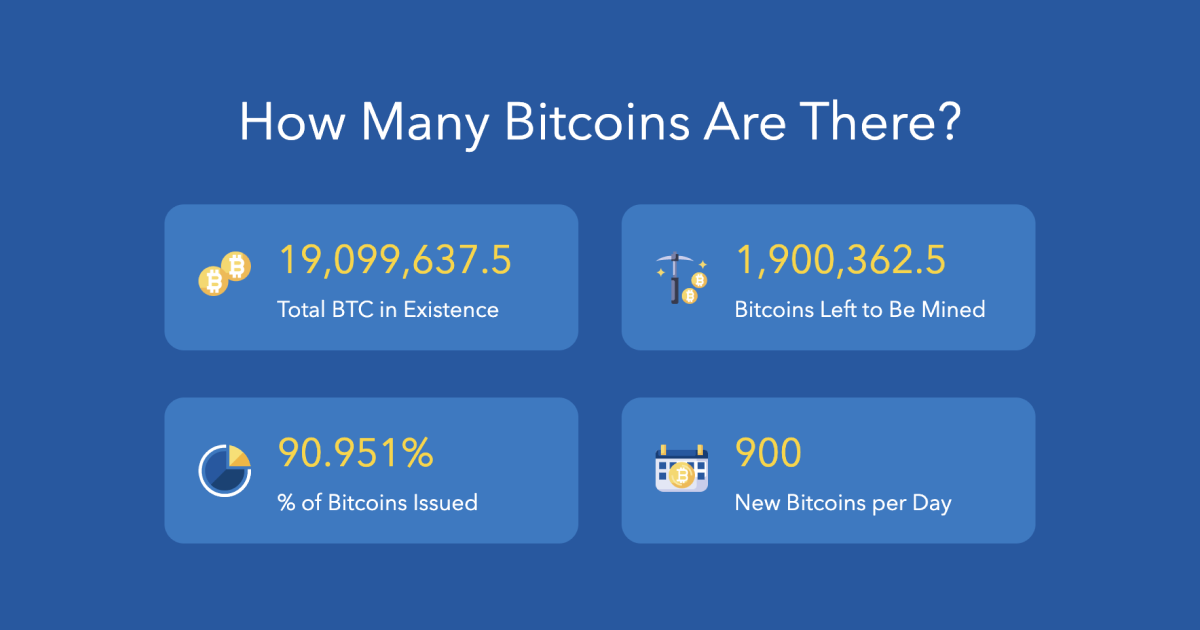
The Hard Cap: Why Only 21 Million Bitcoins Will Ever Exist
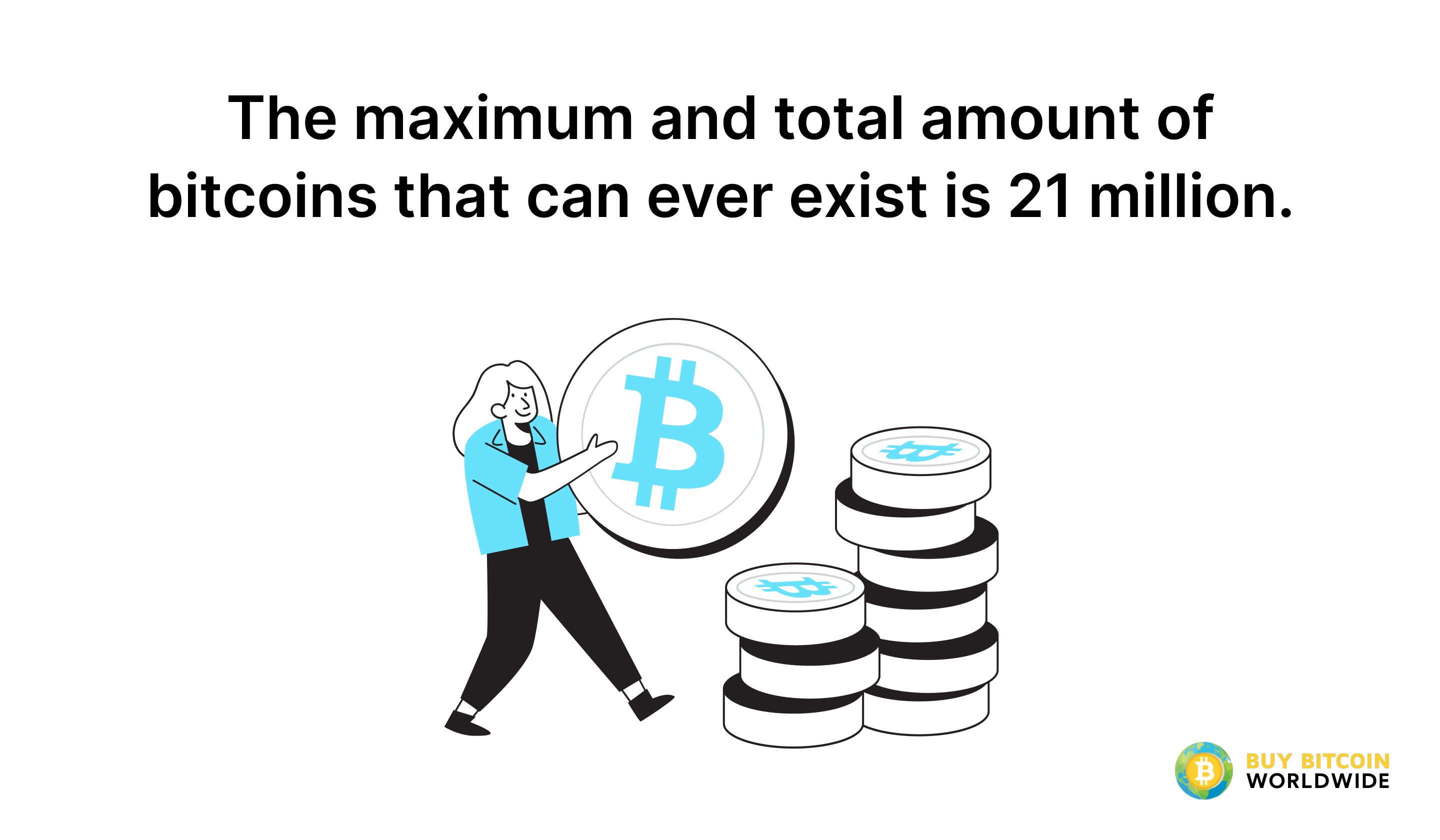
The most fundamental rule of Bitcoin’s economic model is the limit of 21 million coins. This “hard cap” is written into the software’s source code and is enforced by every node on the network. Unlike the US Dollar or the Euro, which have uncapped supplies, Bitcoin is the first successful example of a purely finite digital asset.
The Protocol Level: Mathematics Over Discretion
The 21 million limit is not an arbitrary number but a result of a mathematical progression. Bitcoin is issued through “block rewards” given to miners who secure the network. Every 210,000 blocks (roughly every four years), the amount of new Bitcoin created is cut in half. Mathematically, this geometric series converges at 21 million. For investors, this provides a level of transparency and predictability that is non-existent in traditional fiat markets. You can calculate exactly how many Bitcoins will exist on a specific date a decade from now, a feat impossible with the British Pound or the Japanese Yen.
Comparing Bitcoin to Fiat Currency and Gold
In the niche of personal finance, Bitcoin is often compared to “digital gold.” Gold has been a store of value for millennia because it is difficult to find and expensive to extract. However, gold’s supply is not truly fixed; if the price of gold rises significantly, mining companies invest more in exploration, increasing the supply. Bitcoin takes this a step further. No matter how much energy miners expend or how high the price goes, the issuance rate remains constant. This absolute scarcity makes it a unique asset class for those looking to hedge against the inflationary tendencies of modern banking.
The Mechanics of Circulation: Mining and Block Rewards
Understanding how many Bitcoins exist today requires an understanding of how they enter circulation. New Bitcoins are not “issued” by a central authority; they are “discovered” through a process called mining. This process serves two purposes: it secures the network and distributes the currency in a decentralized manner.
How New Coins Enter the Market
Every ten minutes, a new “block” is added to the Bitcoin blockchain. The miner who successfully validates that block is rewarded with newly minted Bitcoins. In the early days (2009–2012), this reward was 50 BTC. Today, after several “halving” events, the reward is much smaller. This controlled release ensures that the market is not flooded with coins all at once, allowing for a gradual price discovery process and a long-term distribution phase that is expected to last until the year 2140.
The Role of Miners in Financial Security
From an investment perspective, the energy spent by miners is what gives the “existing” Bitcoins their security. The cost of production—comprised of hardware and electricity—acts as a psychological and economic floor for the asset’s value. As the number of Bitcoins approaching the 21 million limit increases, the competition to mine the remaining coins intensifies, further securing the network and making the existing supply more valuable due to the sheer cost of securing the infrastructure.
The Halving Cycle: Managing Supply and Demand
The “Halving” is perhaps the most significant event in the Bitcoin economic calendar. It is a programmed reduction in the rate at which new Bitcoins are created. This mechanism is the primary driver behind Bitcoin’s historical price cycles and is a critical factor for any long-term financial strategy.
What is the Bitcoin Halving?
As mentioned, every 210,000 blocks, the block reward is halved. We have seen halvings in 2012, 2016, 2020, and 2024. This reduces the daily “sell pressure” from miners. Miners often sell their rewarded coins to cover operational costs; when the reward is halved, the amount of new BTC hitting the exchanges every day drops by 50%. This is a programmed supply shock that has historically preceded massive bull runs in the crypto market.
Historical Market Impact and Investor Sentiment
For those focused on online income and investing, the halving cycles provide a roadmap. By reducing the inflation rate of Bitcoin—which is currently lower than that of most developed nations’ currencies—the halving reinforces the “scarcity” narrative. Investors watch these events closely because, in a market where demand is constant or growing, a sudden decrease in new supply almost inevitably leads to upward price pressure. It transforms Bitcoin from a speculative tech experiment into a strategic financial tool for wealth preservation.
The “Lost” Bitcoins: Circulating Supply vs. Accessible Supply
While the protocol says nearly 19.7 million Bitcoins exist, the practical reality for the market is quite different. A significant portion of the Bitcoins that have been mined are likely gone forever, effectively reducing the liquid supply even further.
The Mystery of Satoshi Nakamoto’s One Million BTC
The creator of Bitcoin, known as Satoshi Nakamoto, is estimated to have mined approximately 1.1 million BTC in the network’s first year. These coins have not moved in over a decade. From a financial analysis standpoint, many experts treat these coins as “burned” or permanently out of circulation. If these coins are never moved, the actual circulating supply of Bitcoin is immediately reduced by about 5%, making the remaining coins even more scarce.
Dormant Wallets and the Impact of Lost Private Keys
In the early years of Bitcoin, the asset had very little monetary value, and many early adopters were careless with their digital keys. Estimates from blockchain analysis firms like Chainalysis suggest that between 3 and 4 million Bitcoins may be lost due to forgotten passwords, discarded hard drives, or the death of owners without a succession plan. For an investor, this means that while 21 million is the theoretical limit, the “functional” supply that will ever be available for trade is likely closer to 14 or 15 million. This hidden scarcity is a powerful catalyst for long-term price appreciation.
Bitcoin as a Financial Asset: Scarcity and Portfolio Management
The question of “how many Bitcoins exist” is ultimately a question of value. In the world of personal finance and business strategy, Bitcoin represents a new category of “hard money.” Its fixed supply makes it a compelling candidate for a diversified investment portfolio.
The “Store of Value” Thesis
As global debt levels rise and fiat currencies lose purchasing power, investors look for assets that cannot be manipulated by government policy. Bitcoin’s fixed supply makes it the ultimate “exit ramp” from inflationary systems. Because the supply is capped and known, Bitcoin functions as a neutral reserve asset. Unlike corporate stocks, which can be diluted by new share offerings, or real estate, where more supply can be built, Bitcoin’s supply is perfectly inelastic.
Institutional Adoption and Future Price Implications
We are currently seeing a shift from retail speculation to institutional wealth management. With the approval of Bitcoin Spot ETFs, trillions of dollars in managed capital now have a bridge to the Bitcoin market. As these large institutions—pension funds, insurance companies, and sovereign wealth funds—begin to allocate even 1% of their portfolios to Bitcoin, they are competing for a dwindling supply of available coins.
When you consider that nearly 19.7 million Bitcoins already exist, but millions are lost and millions more are held by “long-term holders” who refuse to sell, the amount of Bitcoin actually available on exchanges is remarkably small. This “liquidity crunch” is the central theme of Bitcoin’s financial future. As more people realize how few Bitcoins actually exist and are available for purchase, the competition for each satoshi (the smallest unit of a Bitcoin) is expected to drive the asset’s valuation to new heights.
In conclusion, the question of how many Bitcoins exist reveals the fundamental genius of the system. By combining a transparent issuance schedule with an absolute cap of 21 million, Bitcoin has created a financial ecosystem where scarcity is guaranteed by mathematics. For the modern investor, understanding this scarcity is the key to understanding why Bitcoin has become one of the best-performing assets of the last decade.
aViewFromTheCave is a participant in the Amazon Services LLC Associates Program, an affiliate advertising program designed to provide a means for sites to earn advertising fees by advertising and linking to Amazon.com. Amazon, the Amazon logo, AmazonSupply, and the AmazonSupply logo are trademarks of Amazon.com, Inc. or its affiliates. As an Amazon Associate we earn affiliate commissions from qualifying purchases.