
In the dynamic world of digital finance, few concepts hold as much weight and intrigue as the total supply of Bitcoin. Unlike traditional fiat currencies, which can be printed or created at the discretion of central banks, Bitcoin operates under a strict, predetermined supply cap. This fundamental design choice by its pseudonymous creator, Satoshi Nakamoto, is not merely a technical detail; it is the cornerstone of Bitcoin’s economic model, influencing its value proposition, its role as a potential hedge against inflation, and its long-term investment appeal. For anyone seeking to understand the true nature of this groundbreaking cryptocurrency, grasping the finite nature of its supply is paramount. It’s a concept that directly underpins Bitcoin’s scarcity, driving its comparison to precious metals like gold and fueling debates about its future as a global reserve asset or a foundational element of the emerging digital economy.
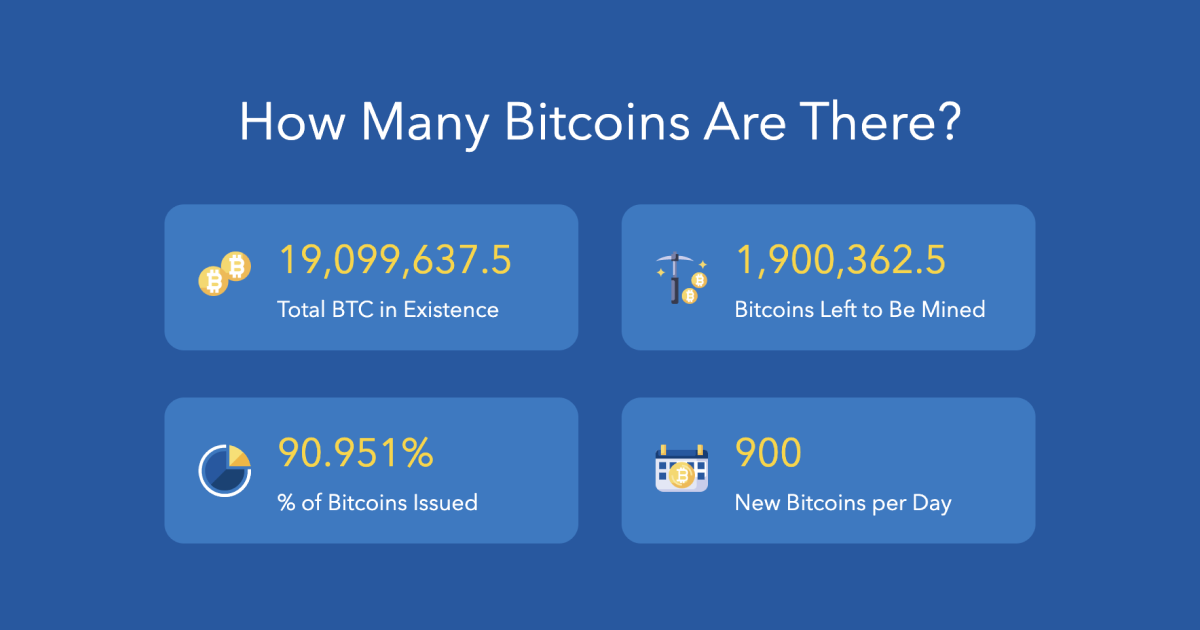
This article delves deep into the question of Bitcoin’s total supply, exploring the mechanisms that govern its issuance, the implications of its fixed limit, and what this scarcity means for investors and the broader financial landscape. We will uncover the intentional design behind the 21 million cap, examine the periodic halving events that shape its distribution, and consider the practical realities of lost coins that further constrain its effective availability. By the end, a clearer picture of Bitcoin’s unique monetary policy will emerge, highlighting why its finite nature is perhaps its most compelling and disruptive feature in a world accustomed to ever-expanding money supplies.
The Foundational Principle: Bitcoin’s Finite Supply Limit
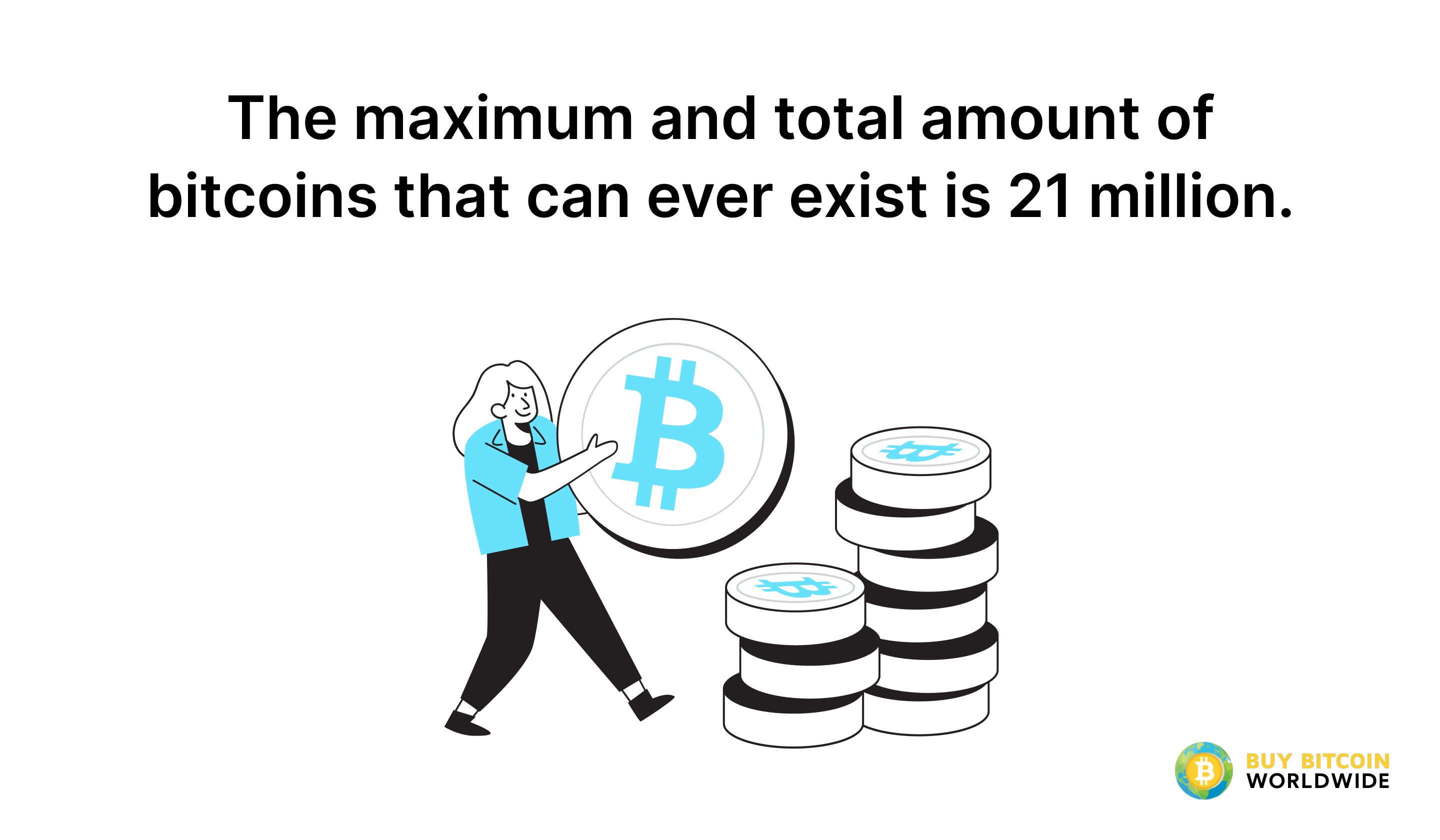
At the heart of Bitcoin’s economic architecture lies a remarkably simple yet profoundly impactful rule: there will never be more than 21 million Bitcoins in existence. This hard cap is not an arbitrary number; it is a meticulously programmed parameter embedded within the Bitcoin protocol itself. This fixed supply stands in stark contrast to the inflationary tendencies of most fiat currencies, whose supply can be expanded indefinitely by central monetary authorities. It is this fundamental difference that shapes much of the discussion around Bitcoin’s long-term value and its potential as a store of value.
Satoshi Nakamoto’s Vision: Engineered Scarcity
When Satoshi Nakamoto released the Bitcoin whitepaper in 2008 and launched the network in 2009, they designed a system that was fundamentally different from traditional finance. A key tenet of this design was the concept of predictable, transparent, and ultimately finite supply. Nakamoto envisioned a digital cash system that would be resistant to inflation and manipulation by any single entity. By programming a maximum cap, they eliminated the possibility of future arbitrary increases in supply, which could devalue existing holdings. This engineering of scarcity was a direct response to the perceived flaws of fractional reserve banking and government-controlled money printing, offering a novel solution to the age-old problem of maintaining monetary integrity. The 21 million limit is not just a number; it’s a philosophical statement on monetary policy, prioritizing predictability and scarcity over flexibility and centralized control. This deliberate scarcity forms the bedrock of Bitcoin’s economic model, positioning it as a distinct alternative within the global financial ecosystem.
The 21 Million Cap: A Digital Economic Policy
The 21 million Bitcoin limit functions as a form of digital economic policy, enforced not by legislation or human intervention, but by cryptographic rules and the decentralized consensus of the network. Every Bitcoin node, upon syncing with the network, verifies this rule, ensuring that no more than the prescribed amount is ever created. This hard cap creates an environment of absolute predictability regarding the total available supply, a characteristic almost unheard of in traditional financial instruments. Investors and economic observers can be certain that, regardless of future demand or market conditions, the total number of Bitcoins will never exceed 21 million. This certainty fosters a perception of value based on scarcity, akin to precious metals, but with an added layer of digital enforceability. The cap itself is thus more than a simple quantity; it’s a testament to a new paradigm of monetary governance, driven by code rather than by committees. This certainty plays a pivotal role in Bitcoin’s long-term investment thesis, distinguishing it from assets whose supply can be altered.
Contrasting with Fiat Currencies: A Paradigm Shift
The most profound implication of Bitcoin’s 21 million cap becomes apparent when juxtaposed with fiat currencies like the US dollar, Euro, or Yen. Central banks continually manage and often expand the supply of fiat money, a process known as quantitative easing or money printing. While sometimes necessary to stimulate economic growth or combat deflation, unchecked expansion can lead to inflation, eroding the purchasing power of savings over time. Bitcoin offers a radical alternative: a currency whose supply schedule is deflationary by design, or at least inherently non-inflationary in the long run. There is no central bank to influence its supply, nor is there a mechanism for “printing” more Bitcoin. This fundamental difference is what attracts many investors, particularly those concerned about inflation and the long-term stability of government-backed currencies. Bitcoin, in this context, represents a paradigm shift, proposing a form of money that is resistant to the arbitrary supply adjustments that characterize traditional financial systems, offering a predictable and fixed supply as a counter-narrative to endless monetary expansion.
The Mechanics of Bitcoin Issuance: Mining and Block Rewards
While the 21 million cap defines the maximum theoretical supply, the practical process of bringing new Bitcoins into circulation is governed by a sophisticated mechanism involving mining and block rewards. Bitcoin is not simply “created” out of thin air; it is earned by participants who dedicate computational power to secure the network and validate transactions. This process is integral to Bitcoin’s functionality and its economic model, as it ensures both the distribution of new coins and the ongoing security of the entire system.
The Role of Bitcoin Miners in Supply Generation
Bitcoin miners are the backbone of the network, performing complex cryptographic calculations to verify and add new blocks of transactions to the blockchain. As a reward for their efforts in maintaining network integrity and processing transactions, a miner who successfully adds a block is granted a certain amount of newly minted Bitcoins, known as the “block reward.” This reward is the primary mechanism through which new Bitcoins enter circulation. Miners invest significant capital in specialized hardware and electricity, incentivized by the potential to earn these block rewards. This system not only secures the network by making it computationally expensive to attack but also distributes new coins in a decentralized manner, rather than through a central authority. The block reward, therefore, serves a dual purpose: it compensates miners for their vital work and constitutes the only pathway for the creation of new Bitcoins until the 21 million limit is reached.
The Halving Events: Programmed Scarcity Reinforcement
A critical element of Bitcoin’s supply schedule is the “halving” (or “halvening”) event. Approximately every four years, or specifically, after every 210,000 blocks are mined, the block reward awarded to miners is cut in half. This pre-programmed event is crucial for managing the supply and ensuring the gradual, predictable release of new Bitcoins.
- Initial Block Reward (2009-2012): 50 Bitcoins per block
- First Halving (2012): Reduced to 25 Bitcoins per block
- Second Halving (2016): Reduced to 12.5 Bitcoins per block
- Third Halving (2020): Reduced to 6.25 Bitcoins per block
- Fourth Halving (2024): Reduced to 3.125 Bitcoins per block (anticipated)
These halvings steadily decrease the rate at which new Bitcoins are introduced into the market, reinforcing its scarcity. Each halving event historically triggers increased interest and often precedes significant price appreciation, as the reduction in new supply accentuates the inherent scarcity. This mechanism ensures that Bitcoin’s issuance rate declines exponentially, making it an increasingly scarce asset over time. It’s a brilliant piece of economic engineering that manages supply independent of human intervention, ensuring its predictable path towards the 21 million cap.
Projecting the End: When the Last Bitcoin Will Be Mined
Given the halving schedule, the flow of new Bitcoins will continue to diminish until the block reward becomes infinitesimally small. While the 21 million cap will theoretically be reached, the last full Bitcoin will not be mined until around the year 2140. After this point, the block reward will effectively be zero. At that time, miners will no longer be compensated with newly minted Bitcoins but will instead rely solely on transaction fees paid by users to secure their revenue. This long-term projection underscores the extended vision of Bitcoin’s creators and highlights the gradual, sustained approach to its supply distribution. The final decades leading up to 2140 will see extremely small fractions of Bitcoin being mined with each block, further emphasizing the asset’s ultimate scarcity and the transition to a transaction-fee-only mining economy. This distant future provides a powerful narrative for Bitcoin’s long-term scarcity and its position as a generational asset.
Unpacking the Current and Effective Supply
Understanding the total theoretical supply of 21 million Bitcoins is one thing, but grasping the nuances of the circulating supply and the effective supply adds crucial layers of complexity for investors. Not all Bitcoins that have been mined are actively traded, nor are all accessible. Various factors influence how many Bitcoins are truly available in the market at any given time, impacting supply-demand dynamics and overall market liquidity.
Circulating Supply vs. Total Supply: A Key Distinction
When discussing Bitcoin’s supply, it’s vital to distinguish between the “total supply” and the “circulating supply.”
- Total Supply: Refers to the absolute maximum number of Bitcoins that will ever exist, which is fixed at 21 million.
- Circulating Supply: Represents the number of Bitcoins that have already been mined and are currently available in the market, in general public hands, and are not locked up or proven to be irrevocably lost. This number steadily increases with each new block mined until the maximum cap is reached. For instance, as of early 2024, the circulating supply is over 19.6 million, steadily approaching the 21 million cap.
The circulating supply is the more relevant metric for immediate market analysis, as it reflects the actual coins available for buying and selling. The gap between the circulating supply and the total supply represents the Bitcoins yet to be mined, which gradually enter the market through block rewards. Monitoring the circulating supply gives investors a clearer picture of market liquidity and the available asset pool at any given moment.
Lost Bitcoins: The Shrinking Reality of Available Supply
Perhaps one of the most intriguing and economically significant aspects of Bitcoin’s supply is the phenomenon of “lost Bitcoins.” Due to forgotten private keys, damaged hard drives, sending coins to non-existent addresses, or simply poor record-keeping, a significant portion of the Bitcoins ever mined is believed to be irretrievably lost. Estimates vary widely, but many analysts suggest that anywhere from 2 million to 6 million Bitcoins may be permanently out of circulation. These lost coins effectively reduce the actual available supply, making Bitcoin even scarcer than its theoretical 21 million cap suggests. For instance, if 4 million Bitcoins are indeed lost, the effective maximum supply available to be traded and owned is closer to 17 million. This effectively intensifies the scarcity narrative, as the pool of genuinely accessible Bitcoins is smaller than the hard-coded maximum.
Implications of Illiquid and Unrecoverable Bitcoins
The existence of lost and also “illiquid” Bitcoins (those held by long-term investors or institutions with no immediate intention to sell) has profound implications for the market.
- Increased Scarcity: Lost coins reduce the effective supply, making the asset inherently scarcer and potentially more valuable over time, assuming demand remains constant or increases.
- Price Impact: A smaller accessible supply, combined with growing demand, can lead to upward pressure on Bitcoin’s price.
- Market Dynamics: Illiquid coins held off-market reduce trading volume and can make the market more susceptible to price swings from smaller buying or selling pressure from liquid assets.
- Long-Term Holder Behavior: The incentive to “hodl” (hold on for dear life) Bitcoin is intensified by the knowledge that its supply is shrinking, both through mining and through irreversible losses, encouraging long-term investment strategies rather than short-term trading.
These factors create a complex interplay where the true scarcity of Bitcoin is not just defined by its code but also by human error and strategic holding behavior, making its effective supply a dynamic and often elusive metric.
The Economic Ramifications of Bitcoin’s Scarcity
Bitcoin’s fixed supply and predictable issuance schedule are not just technical curiosities; they are economic forces with far-reaching implications. This engineered scarcity fundamentally shapes Bitcoin’s role in the global financial system, influencing its perception as an asset class, its price discovery mechanisms, and its potential as a long-term investment. Understanding these economic ramifications is key to appreciating Bitcoin’s disruptive potential and its place in an investor’s portfolio.
Bitcoin as Digital Gold: An Inflation Hedge?
One of the most compelling arguments for Bitcoin is its comparison to “digital gold.” For centuries, gold has been valued for its scarcity, durability, and divisibility, serving as a reliable store of value and a hedge against inflation. Bitcoin shares many of these characteristics: it is scarce (21 million cap), durable (due to its decentralized network), and highly divisible (into 100 million satoshis). In an era marked by unprecedented levels of government spending and quantitative easing, many investors are seeking assets that can protect their wealth from currency debasement. Bitcoin’s fixed supply offers a powerful counter-narrative to inflationary pressures, positioning it as a potential “safe haven” asset that cannot be devalued by simply printing more. While its volatility is still high compared to gold, its supply mechanics present a strong case for its long-term potential as an inflation hedge and a store of value in an increasingly digital world. This narrative reinforces its appeal to those looking to diversify away from traditional financial instruments susceptible to governmental monetary policy.
Price Discovery and Supply-Demand Dynamics
The fundamental economic principles of supply and demand are acutely relevant to Bitcoin. With a dwindling rate of new supply and a hard cap, any sustained increase in demand can lead to significant price appreciation. The halving events, in particular, serve as potent demonstrations of this dynamic; each reduction in the new supply flow has historically coincided with periods of significant price rallies. As Bitcoin becomes scarcer, its price becomes more sensitive to shifts in demand, whether from retail investors, institutional adoption, or macroeconomic factors. This makes Bitcoin’s price discovery process uniquely driven by its fixed supply schedule, creating cycles of market excitement and re-evaluation. For investors, understanding the tight relationship between Bitcoin’s fixed supply and demand fluctuations is crucial for long-term strategic planning and recognizing its unique market behavior compared to assets with elastic supply. The predictable nature of its supply makes it a compelling case study for classical economic theories in a digital context.
The Allure of Divisibility: Satoshis and Micro-Transactions
Despite the 21 million cap seemingly making Bitcoin scarce and potentially expensive on a per-coin basis, its extreme divisibility ensures that it can facilitate transactions of any size. Each Bitcoin is divisible down to eight decimal places, meaning the smallest unit is 0.00000001 BTC, known as a “satoshi” (named after Bitcoin’s creator). There are 100 million satoshis in one Bitcoin. This high degree of divisibility is critical for Bitcoin’s functionality as a medium of exchange and a unit of account. Even if a single Bitcoin were to reach extremely high values, individuals could still transact using fractions of a Bitcoin, effectively “spending” or “investing” in satoshis. This ensures that its scarcity doesn’t preclude its utility for micro-transactions or everyday payments, making it accessible even to those with limited capital. The concept of satoshis broadens Bitcoin’s applicability, allowing it to function both as a macro asset (digital gold) and a micro-payment system, ensuring its long-term relevance across various financial use cases.
Navigating the Future: Bitcoin’s Scarcity in a Digital Economy
As Bitcoin matures and integrates further into the global financial fabric, its inherent scarcity will continue to be a defining characteristic, shaping its trajectory and challenging conventional economic wisdom. The fixed supply isn’t merely a past design choice; it’s a perpetual influence on its future value, utility, and role in an increasingly digital and interconnected world. Understanding this long-term perspective is essential for anyone considering Bitcoin as a serious investment or a foundational technology for future economic systems.
Challenges and Opportunities for a Finite Asset
The finite nature of Bitcoin presents both unique challenges and unparalleled opportunities. On the challenge front, extreme scarcity could potentially lead to increased price volatility if demand surges without an equally elastic supply. Furthermore, the reliance on transaction fees for miner revenue post-2140 might raise concerns about network security if transaction volumes aren’t high enough to compensate miners adequately. However, these challenges are often viewed as opportunities. The very scarcity that might cause volatility is also what drives its premium and long-term appreciation potential. The push for transaction fee reliance could incentivize innovation in scaling solutions and off-chain transactions, making Bitcoin more efficient. The opportunity lies in Bitcoin becoming a truly global, neutral reserve asset – a base layer for a new digital economy that is resistant to inflationary pressures and censorship. Its finite nature positions it as a unique asset in a world awash with ever-increasing digital data and easily replicable digital goods, providing a solid anchor in a fluid digital realm.
Long-Term Value Proposition and Investor Outlook
For investors, Bitcoin’s long-term value proposition is inextricably linked to its fixed supply. It represents a hedge against monetary inflation, a store of value in uncertain times, and a potential “winner-take-all” asset in the digital currency space. The predictable, transparent, and immutable supply schedule provides a level of certainty that is absent from virtually all other asset classes. As global economic landscapes continue to evolve, and as the digital transformation accelerates, an asset with mathematically guaranteed scarcity becomes increasingly attractive. The investor outlook is often geared towards a multi-decade horizon, envisioning Bitcoin as a foundational element of a future financial system, much like gold served as a cornerstone for previous monetary regimes. While short-term market fluctuations are inherent to any emerging asset, the enduring strength of Bitcoin’s economic model—rooted in its finite 21 million supply—provides a compelling narrative for its sustained relevance and potential appreciation in the coming decades. It ensures that Bitcoin remains a subject of intense interest and a cornerstone of the emerging digital finance landscape.
aViewFromTheCave is a participant in the Amazon Services LLC Associates Program, an affiliate advertising program designed to provide a means for sites to earn advertising fees by advertising and linking to Amazon.com. Amazon, the Amazon logo, AmazonSupply, and the AmazonSupply logo are trademarks of Amazon.com, Inc. or its affiliates. As an Amazon Associate we earn affiliate commissions from qualifying purchases.