
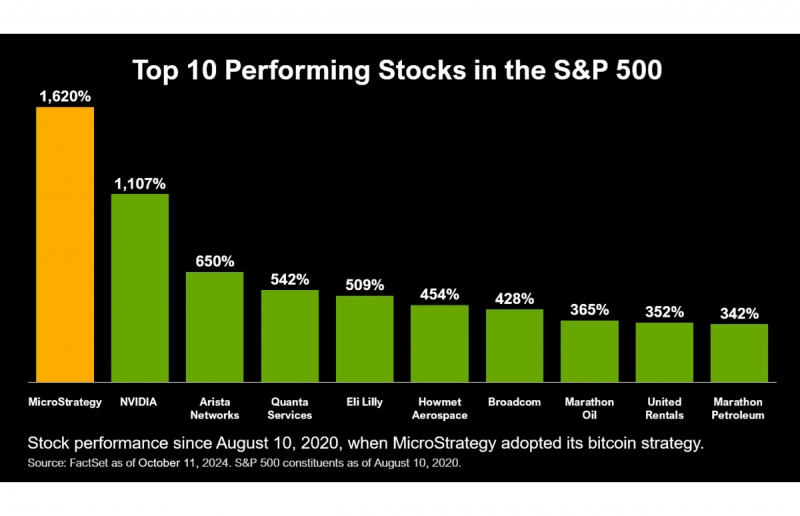
In the history of corporate finance, few moves have been as audacious or as polarizing as MicroStrategy’s decision to pivot its entire treasury reserve strategy toward Bitcoin. What began in August 2020 as a $250 million hedge against inflation has evolved into a multi-billion-dollar institutional bet that has redefined the company’s identity. Today, MicroStrategy is no longer viewed merely as a business intelligence software provider; it is recognized globally as the world’s first “Bitcoin Treasury Company.”
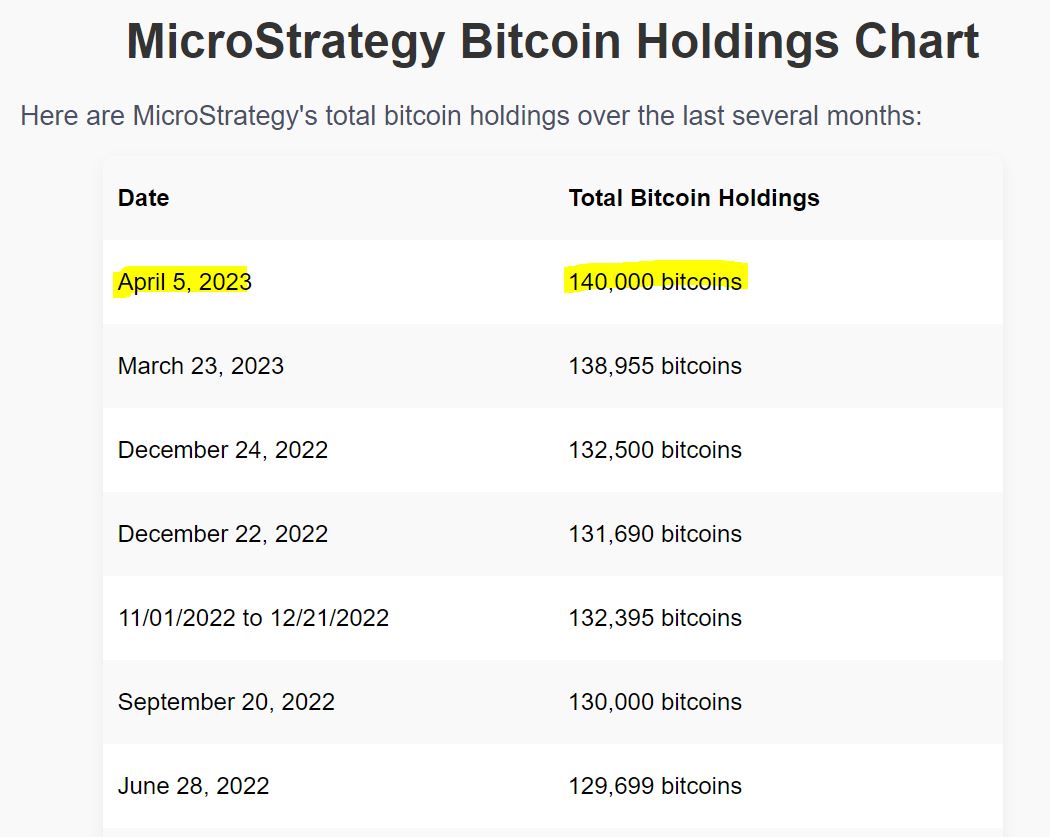
As of late 2024, MicroStrategy holds a staggering 252,220 Bitcoin. This represents more than 1% of the total 21 million Bitcoin that will ever exist. To understand the magnitude of this financial position, one must look beyond the raw numbers and examine the sophisticated financial engineering, the risk management strategies, and the investment thesis that drives this unprecedented accumulation.
The Evolution of MicroStrategy’s Treasury Reserve Policy
MicroStrategy’s journey into the digital asset space was born out of a perceived crisis in traditional monetary policy. Following the global pandemic, the company’s founder and then-CEO Michael Saylor argued that the rapid expansion of the M2 money supply was debasing the U.S. dollar, effectively creating a “melting ice cube” effect for corporate cash reserves.
Shifting from Cash to Digital Gold
Before 2020, MicroStrategy maintained a conventional balance sheet with hundreds of millions of dollars in cash and short-term investments. However, the leadership team concluded that traditional fiat currencies and low-yield bonds were no longer viable stores of value. By designating Bitcoin as its primary treasury reserve asset, MicroStrategy sought a “pristine” collateral that was immune to central bank inflation. This shift was not a speculative trade; it was a fundamental reallocation of capital intended to preserve the purchasing power of the company’s equity over a multi-decade horizon.
The Mechanics of Institutional Accumulation
The accumulation of 252,220 BTC did not happen overnight. It was achieved through a disciplined series of purchases, often referred to as “institutional dollar-cost averaging.” MicroStrategy has consistently bought Bitcoin regardless of market sentiment, purchasing during the euphoric highs of bull markets and the “crypto winters” of 2022. By maintaining a high-frequency acquisition strategy, the company has managed to achieve a weighted average purchase price that remains highly competitive relative to current market valuations, providing a significant “margin of safety” for shareholders.
Financial Engineering: How the Bitcoin Stack is Funded
One of the most frequent questions from investors is how a software company with steady but modest cash flows can afford to acquire billions of dollars worth of Bitcoin. The answer lies in sophisticated financial engineering and the strategic use of capital markets. MicroStrategy has pioneered the use of low-interest debt to fund the acquisition of a high-growth digital asset.
Leveraging Convertible Senior Notes
The cornerstone of MicroStrategy’s funding strategy is the issuance of convertible senior notes. These are debt instruments that can be converted into shares of MicroStrategy stock under certain conditions. By tapping into the bond market, MicroStrategy has been able to raise billions of dollars at incredibly low interest rates—sometimes as low as 0% or 0.625%.
From a “Money” perspective, this is a masterclass in arbitrage. The company borrows “cheap” fiat currency (which is depreciating in value) and uses it to purchase a finite digital asset (which has historically appreciated in value). If the price of Bitcoin rises, the value of the company’s holdings far outstrips the debt obligations.
At-the-Market (ATM) Equity Offerings
In addition to debt, MicroStrategy utilizes “At-the-Market” equity offerings. This allows the company to sell new shares of its common stock directly into the open market at prevailing prices. The proceeds from these sales are then immediately funneled into Bitcoin. While this dilutes existing shareholders in terms of share count, the goal is to be “accretive” on a Bitcoin-per-share basis. If the amount of Bitcoin added to the treasury exceeds the percentage of dilution, the net value for the shareholder increases in terms of digital asset exposure.

Understanding the “Bitcoin Yield” Metric
To provide clarity to Wall Street analysts and investors, MicroStrategy introduced a unique Key Performance Indicator (KPI) known as “Bitcoin Yield.” This metric is essential for anyone trying to evaluate the company as a financial instrument rather than a traditional software firm.
Defining BTC Yield for Shareholders
Bitcoin Yield measures the percentage change over a period in the ratio between the company’s total Bitcoin holdings and its assumed fully diluted shares outstanding. In simpler terms, it tracks whether the company is becoming “richer” in Bitcoin for every share an investor owns. For example, in 2024, MicroStrategy targeted a Bitcoin Yield of 4% to 8% per annum. By achieving this yield, the company demonstrates that its strategy of issuing debt or equity to buy Bitcoin is actually increasing the underlying value per share, rather than just inflating the balance sheet.
Comparison with Spot Bitcoin ETFs
With the approval of Spot Bitcoin ETFs in the United States, many wondered if MicroStrategy would lose its appeal. However, the financial structure of MicroStrategy offers something an ETF cannot: active management and leverage. While an ETF charges a management fee (expense ratio) that slowly erodes the amount of Bitcoin represented by each share, MicroStrategy’s strategy aims to increase the Bitcoin per share over time. Furthermore, because MicroStrategy can use debt to buy more Bitcoin, it provides a “leveraged” exposure to the asset that a standard spot ETF lacks.
Risk Management and Market Volatility
Owning over 250,000 Bitcoin comes with significant volatility. The “Money” niche requires a sober analysis of the risks involved in such a concentrated financial position. MicroStrategy’s balance sheet is subject to impairment charges under current accounting rules, which can lead to reported net losses even if the company’s operations are healthy.
Navigating Impairment and Accounting Standards
Under traditional GAAP (Generally Accepted Accounting Principles), digital assets are treated as intangible assets. This means that if the price of Bitcoin drops even briefly during a quarter, the company must “write down” the value of its holdings, which appears as a loss on the income statement. However, if the price goes up, they cannot “write up” the value until the asset is sold. While this creates “paper losses,” MicroStrategy’s management focuses on “Non-GAAP” metrics and the long-term market value of their holdings, which currently sit billions of dollars in the green.
Liquidity and Debt Maturity
A critical component of MicroStrategy’s financial health is its debt maturity profile. The company has strategically laddered its debt, meaning the billions of dollars it owes in convertible notes do not all come due at once. Most of their obligations are not due until the late 2020s or early 2030s. This provides the company with a long runway to weather market cycles. Additionally, because much of the debt is convertible into equity, the company is not necessarily required to pay back the principal in cash, provided the stock price performs well.
The Future Outlook: Toward 1% and Beyond
MicroStrategy’s current holding of 252,220 BTC is likely not the ceiling. The company has signaled its intent to continue utilizing its “Bitcoin Treasury Company” model to accumulate as much of the asset as possible. As Bitcoin gains further institutional acceptance—evidenced by the entry of giants like BlackRock and Fidelity—MicroStrategy’s early-mover advantage becomes more pronounced.
The financial legacy of this strategy will be determined by Bitcoin’s performance over the next decade. If Bitcoin continues its trajectory as a global reserve asset, MicroStrategy may be remembered as one of the most successful financial transformations in corporate history. By converting a legacy software business into a massive engine for Bitcoin accumulation, Michael Saylor has created a new blueprint for corporate finance—one where the balance sheet is not just a place to store cash, but a tool to capture the growth of the digital economy.
In conclusion, MicroStrategy’s ownership of over a quarter-million Bitcoin is more than just a statistic; it is a calculated financial maneuver designed to outpace inflation and maximize shareholder value through the most scarce liquid asset on the planet. For the modern investor, MSTR represents a unique vehicle: a technology company, a leveraged Bitcoin play, and a pioneer in the future of institutional money management.
aViewFromTheCave is a participant in the Amazon Services LLC Associates Program, an affiliate advertising program designed to provide a means for sites to earn advertising fees by advertising and linking to Amazon.com. Amazon, the Amazon logo, AmazonSupply, and the AmazonSupply logo are trademarks of Amazon.com, Inc. or its affiliates. As an Amazon Associate we earn affiliate commissions from qualifying purchases.