
The question of “how many banks in USA?” might seem straightforward, but its answer is anything but static. It unlocks a deeper understanding of the American financial system’s complexity, resilience, and constant evolution. Beyond a mere number, the count of financial institutions reflects economic trends, regulatory frameworks, technological advancements, and the diverse needs of consumers and businesses across the nation. From global behemoths to community-focused credit unions, the United States boasts a multifaceted banking sector that serves as the lifeblood of its economy. Understanding this landscape is crucial for anyone engaging with personal finance, investing, or comprehending the broader economic currents that shape our lives. This article will delve into the current figures, explore the diverse types of institutions that contribute to these numbers, examine the regulatory environment that governs them, and peer into the trends that are continuously reshaping the future of banking in America.
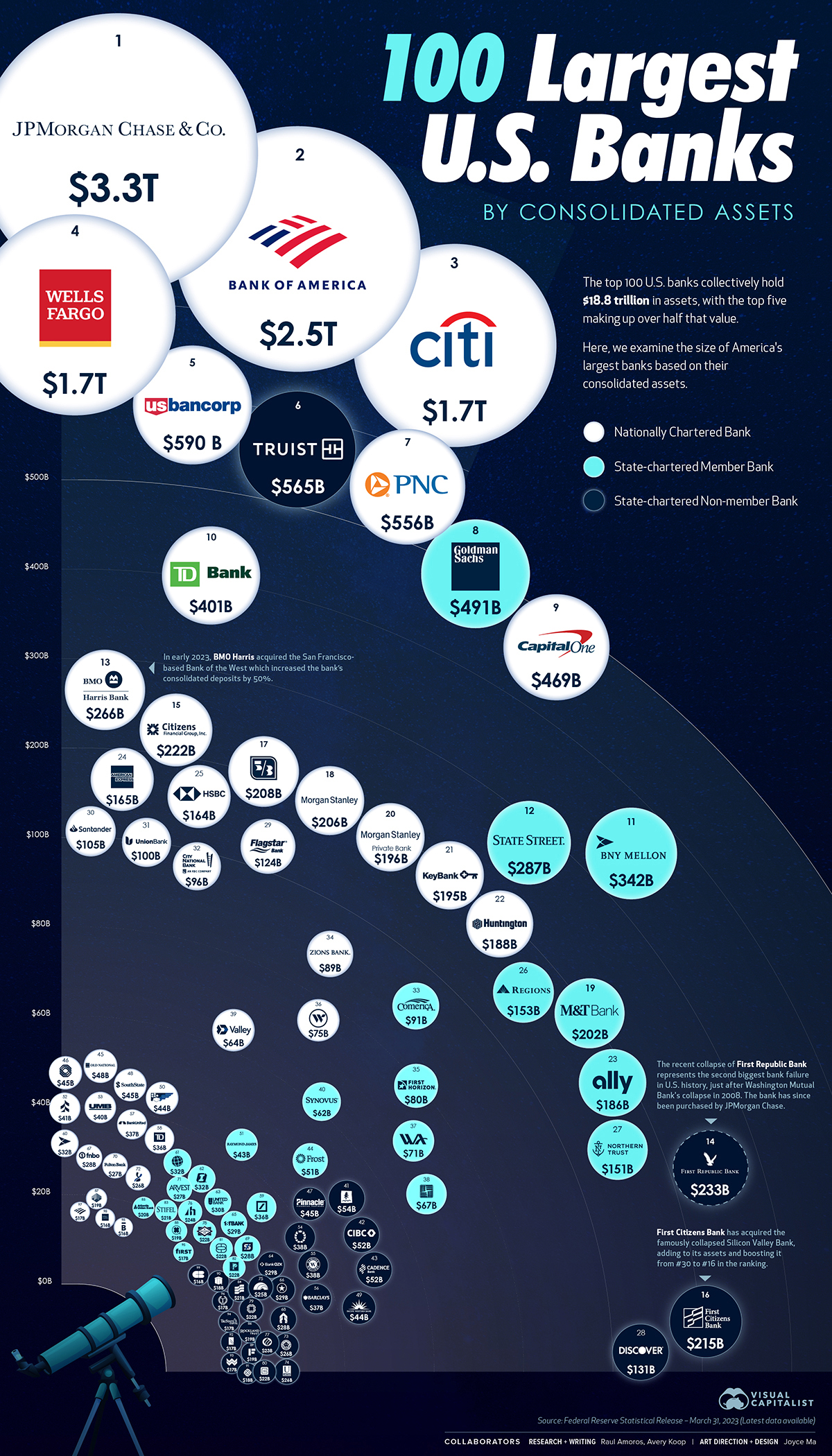
The Evolving Numbers: A Snapshot of the US Banking Sector
Pinpointing an exact, unchanging number of banks in the USA is a challenge, as the landscape is dynamic, characterized by ongoing mergers, acquisitions, and occasional new charters. However, authoritative sources provide a clear picture of the current state and historical trends.
The Current Count: Deconstructing the FDIC Data
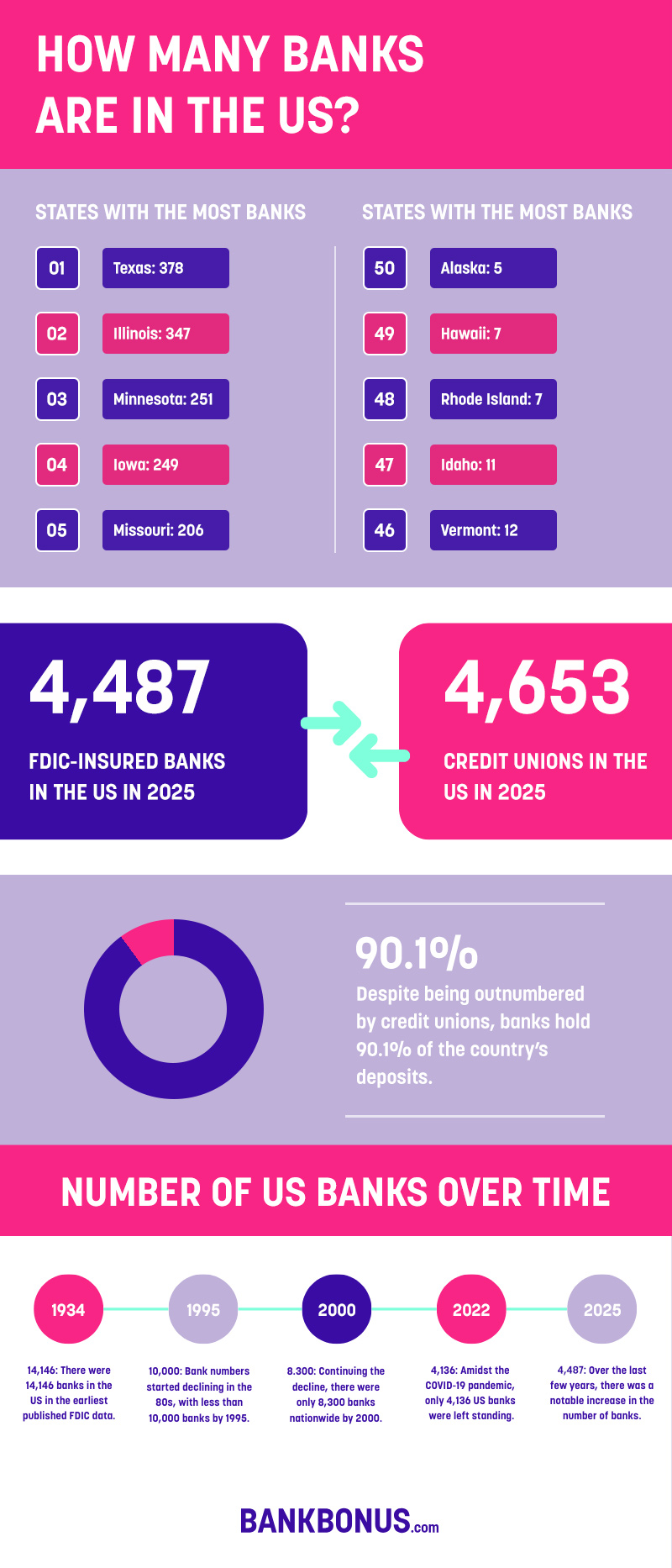
The Federal Deposit Insurance Corporation (FDIC) is the primary governmental agency responsible for insuring deposits in U.S. banks and thrifts. Consequently, the FDIC’s data represents the most accurate and frequently updated count of insured financial institutions. As of recent reporting periods, the number of FDIC-insured commercial banks and savings institutions typically hovers between 4,000 and 5,000. It’s important to note that this figure primarily includes traditional commercial banks and savings institutions but excludes federally chartered credit unions, which are regulated by a separate entity (the NCUA).
This number represents a significant contraction from historical peaks. In the mid-1980s, for instance, the U.S. was home to over 14,000 FDIC-insured institutions. This decline underscores a pervasive trend of consolidation within the banking industry, driven by various economic and regulatory factors. While the raw number has decreased, the remaining institutions often serve larger geographic areas and command greater assets, reflecting a shift towards a more concentrated banking sector.
Why the Numbers Fluctuate: Mergers, Acquisitions, and New Charters
The fluctuation in the number of banks is a direct consequence of market dynamics. Mergers and acquisitions (M&A) are a primary driver of consolidation. Larger banks often acquire smaller institutions to expand their market share, enter new regions, or acquire specific technologies or customer bases. Smaller banks might seek to merge to gain economies of scale, compete more effectively, or navigate challenging regulatory environments. These activities lead to a reduction in the overall count as two or more entities become one.
Conversely, while less frequent than M&A, new bank formations—known as “de novo” banks—also contribute to the numbers. The process of chartering a new bank is rigorous and costly, involving extensive regulatory scrutiny. However, in periods of economic growth or when specific market needs are unmet, entrepreneurs and investors do occasionally launch new institutions, adding to the overall count, albeit at a slower pace than consolidation subtracts. This constant churn means that any precise number is a snapshot in time, rather than a permanent fixture.
Beyond the Count: Diverse Types of US Financial Institutions
The term “bank” often conjures a singular image, but the U.S. financial landscape is rich with diverse institutions, each with unique structures, missions, and regulatory oversight. Understanding these distinctions is key to appreciating the breadth of services available and the roles they play in the economy.
Commercial Banks: The Traditional Backbone
Commercial banks are what most people envision when they think of “banks.” They form the core of the financial system, offering a broad range of services to individuals, businesses, and governments. Their primary functions include:
- Deposit-taking: Accepting checking, savings, and money market accounts.
- Lending: Providing consumer loans (mortgages, auto loans, personal loans), business loans (small business, commercial real estate, corporate financing), and lines of credit.
- Payment processing: Facilitating transactions through debit cards, credit cards, wire transfers, and electronic payments.
- Other services: Wealth management, foreign exchange, treasury services, and more.
Commercial banks can be chartered at either the federal level (supervised by the Office of the Comptroller of the Currency – OCC) or the state level (supervised by state banking departments and often by the Federal Reserve). They operate for profit, with their primary goal being to generate returns for shareholders. This category encompasses everything from global financial giants like JPMorgan Chase and Bank of America to regional banks and small community banks that serve specific local markets.
Credit Unions: Member-Owned Alternatives
Credit unions offer a distinct alternative to commercial banks. Unlike banks, credit unions are non-profit, member-owned financial cooperatives. This fundamental difference shapes their operations and philosophy:
- Member Ownership: Account holders are also owners, giving them a say in the credit union’s governance (typically through elected boards of directors).
- Non-Profit Status: Instead of distributing profits to shareholders, credit unions return earnings to members in the form of lower loan rates, higher savings rates, and fewer or lower fees.
- Field of Membership: Historically, credit unions served specific groups based on common bonds (e.g., employment, community, association). While these “fields of membership” have broadened, they still distinguish credit unions from banks, which serve the general public.
- Regulation: Federally chartered credit unions are insured by the National Credit Union Administration (NCUA) and state-chartered credit unions by state agencies, often with federal insurance from the NCUA.
Credit unions emphasize community service and financial education for their members, often fostering a more personalized banking experience. While generally smaller than large commercial banks, many credit unions have grown significantly, offering a comprehensive suite of financial products competitive with traditional banks.
Other Key Players: Investment Banks, Thrifts, and Digital Banks
Beyond commercial banks and credit unions, several other types of institutions play crucial roles in the U.S. financial ecosystem:
- Investment Banks: These institutions primarily focus on corporate finance, including mergers and acquisitions advisory, underwriting new stock and bond issues, and facilitating trading activities. They do not typically take deposits from the general public or offer traditional consumer lending. Examples include Goldman Sachs and Morgan Stanley.
- Savings Institutions (Thrifts): Historically, savings banks and savings & loan associations (S&Ls), often called “thrifts,” focused on taking deposits and primarily issuing residential mortgages. While many have converted to commercial banks or merged, some independent savings institutions still exist, often retaining a strong focus on real estate lending and retail deposits.
- Digital Banks (Neobanks/Challenger Banks): A rapidly growing segment, these are often fintech companies that operate entirely online, without physical branches. They leverage technology to offer innovative, user-friendly banking experiences, often with lower fees and specialized services. While some are fully licensed banks, many partner with existing traditional banks to provide FDIC-insured accounts, blurring the lines between tech and traditional finance. Examples include Chime and Ally Bank. These institutions, when fully chartered, contribute to the FDIC’s count.
The Economic Impact and Regulatory Framework
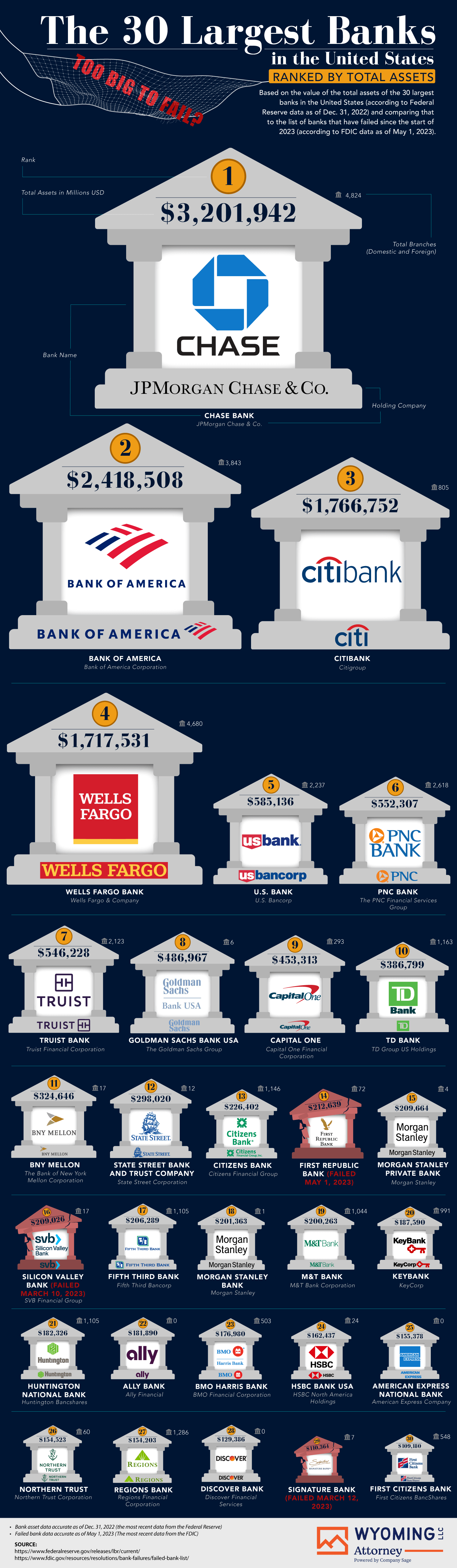
The vast network of U.S. financial institutions is not just a collection of numbers; it’s a vital engine for economic activity, underpinned by a complex regulatory system designed to ensure stability and protect consumers.
Driving Economic Growth: Capital Allocation and Lending
Banks are fundamental to the functioning and growth of the American economy. They act as intermediaries, channeling funds from savers to borrowers, a process critical for capital allocation.
- Facilitating Commerce: Banks provide the payment systems necessary for daily transactions, from consumer purchases to large corporate settlements, ensuring the smooth flow of goods and services.
- Fueling Business Expansion: Lending to businesses, from startups to multinational corporations, enables investment in new technologies, expansion of operations, and job creation. Small business loans, in particular, are vital for local economies.
- Supporting Homeownership: Mortgages provided by banks and thrifts make homeownership accessible for millions of Americans, contributing to wealth building and community stability.
- Monetary Policy Transmission: Banks play a crucial role in the Federal Reserve’s monetary policy, transmitting interest rate changes throughout the economy, influencing borrowing costs and investment decisions.
Without a robust and accessible banking sector, economic activity would slow dramatically, illustrating their indispensable role.
The Role of Regulators: Ensuring Stability and Consumer Protection
Given their pivotal role, banks are among the most heavily regulated industries. A multi-layered regulatory framework aims to maintain financial stability, prevent systemic risks, and protect consumers. Key regulatory bodies include:
- Federal Reserve System (The Fed): The central bank of the U.S., it conducts monetary policy, supervises and regulates banking institutions (especially bank holding companies and state-chartered member banks), and maintains the stability of the financial system.
- Federal Deposit Insurance Corporation (FDIC): Insures deposits up to $250,000 per depositor, per insured bank, in the event of a bank failure. It also examines and supervises state-chartered banks that are not members of the Federal Reserve System.
- Office of the Comptroller of the Currency (OCC): Charters, regulates, and supervises all national banks and federal savings associations, ensuring they operate in a safe and sound manner.
- National Credit Union Administration (NCUA): Charters and supervises federal credit unions and insures deposits in federal and most state-chartered credit unions through the National Credit Union Share Insurance Fund (NCUSIF).
- Consumer Financial Protection Bureau (CFPB): Protects consumers in the financial marketplace by enforcing federal consumer financial laws against banks and other financial companies.
This intricate web of regulation, while sometimes complex, is designed to prevent financial crises, ensure fair practices, and build public trust in the banking system.
Trends Shaping the Future of US Banking
The American banking sector is in a constant state of flux, driven by technological innovation, evolving customer expectations, and macroeconomic forces. Several key trends are defining its future trajectory.
Digital Transformation and Fintech Disruption
Perhaps the most significant trend is the accelerating digital transformation. Customers increasingly expect seamless, mobile-first experiences for everything from opening accounts to making payments and applying for loans.
- Rise of Mobile Banking: Virtually all traditional banks now offer comprehensive mobile banking apps, allowing customers to manage their finances on the go.
- Online-Only Banks: The success of digital-first banks has proven the viability of branchless banking, pressuring traditional institutions to reduce physical footprint and enhance digital offerings.
- Fintech Innovation: Financial technology (fintech) companies are introducing disruptive solutions for payments, lending, personal finance management, and even investment, often challenging traditional banks’ business models. This includes everything from peer-to-peer lending platforms to AI-driven financial advisors and blockchain-based payment systems.
- Data Analytics and AI: Banks are leveraging big data and artificial intelligence to enhance security, personalize customer experiences, detect fraud, and optimize operational efficiencies.
This digital shift is compelling traditional banks to invest heavily in technology, innovate rapidly, or risk losing market share to more agile competitors.
Consolidation and Specialization
While the number of banks has declined through consolidation, this trend is likely to continue, driven by the desire for economies of scale, increased regulatory burdens, and the need to invest in expensive technology. Larger banks can often spread fixed costs over a broader revenue base.
However, paradoxically, there’s also a growing trend towards specialization. Rather than trying to be everything to everyone, some institutions are finding success by focusing on niche markets or specific services. This could mean serving particular industries (e.g., healthcare banking), demographic groups (e.g., student banking), or offering highly specialized products (e.g., green loans, digital asset services). This allows smaller institutions to compete effectively by providing tailored expertise and superior service within their chosen niche.
Adapting to Economic Headwinds and Geopolitical Shifts
The banking sector must continuously adapt to broader economic and geopolitical forces. Interest rate environments, inflation, recessions, and global uncertainties all impact banks’ profitability, lending capacity, and risk management strategies.
- Interest Rate Volatility: Banks’ profitability is heavily influenced by interest rate differentials (the spread between what they pay for deposits and what they earn on loans). Periods of rapid rate changes require agile balance sheet management.
- Economic Cycles: During economic downturns, loan defaults can rise, impacting asset quality and requiring banks to build reserves. During expansions, lending opportunities increase.
- Geopolitical Risks: Global events, trade tensions, and cybersecurity threats from state-sponsored actors can introduce significant risks, impacting international operations and requiring robust security protocols.
- Environmental, Social, and Governance (ESG) Factors: There’s increasing pressure for banks to consider ESG factors in their lending and investment decisions, influencing capital allocation towards sustainable projects and responsible corporate behavior.
The ability of banks to navigate these external factors with resilience and foresight will be critical for their long-term success and for maintaining a stable financial system.
Conclusion
The question “how many banks in USA?” serves as a gateway to understanding a complex, dynamic, and vital sector of the American economy. While the raw number of traditional commercial banks and savings institutions has consolidated to roughly 4,000-5,000, this figure tells only part of the story. The landscape is enriched by the presence of member-owned credit unions, specialized investment banks, and an emerging wave of digital-first challenger banks. Each type of institution plays a distinct yet interconnected role in allocating capital, facilitating commerce, and driving economic growth.
Underpinning this entire system is a robust, multi-layered regulatory framework, designed to ensure stability, protect consumers, and maintain trust. Looking ahead, the U.S. banking sector is poised for continued transformation, propelled by the relentless pace of digital innovation, ongoing strategic consolidation, and the imperative to adapt to evolving economic and geopolitical realities. Far from being a static entity, the American financial landscape is a vibrant ecosystem that is constantly reshaping itself to meet the ever-changing needs of a modern economy.
aViewFromTheCave is a participant in the Amazon Services LLC Associates Program, an affiliate advertising program designed to provide a means for sites to earn advertising fees by advertising and linking to Amazon.com. Amazon, the Amazon logo, AmazonSupply, and the AmazonSupply logo are trademarks of Amazon.com, Inc. or its affiliates. As an Amazon Associate we earn affiliate commissions from qualifying purchases.