
For decades, the American financial landscape has been defined by its sheer volume and diversity. Unlike many other developed nations that rely on a handful of massive, centralized institutions, the United States has historically supported thousands of independent banks, ranging from global powerhouses to small-town community pillars. However, the answer to the question “how many banks are there in the United States?” is a moving target. As of the most recent data from the Federal Deposit Insurance Corporation (FDIC), there are approximately 4,500 to 4,600 FDIC-insured commercial banks and savings institutions.
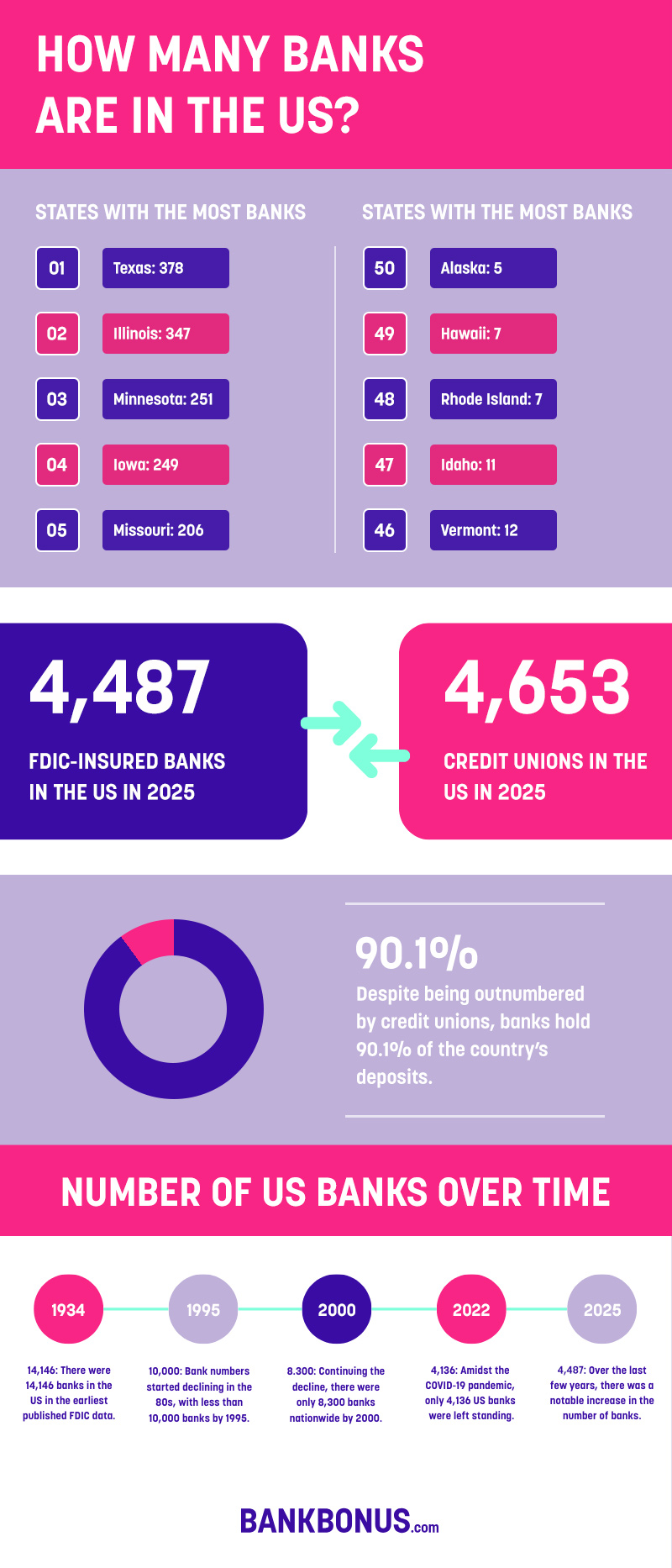
This number represents a significant departure from the banking environment of the late 20th century. To understand where the industry stands today, one must look beyond the raw data and explore the economic, regulatory, and technological forces that are reshuffling the deck of American finance.
The Current State of American Banking: By the Numbers
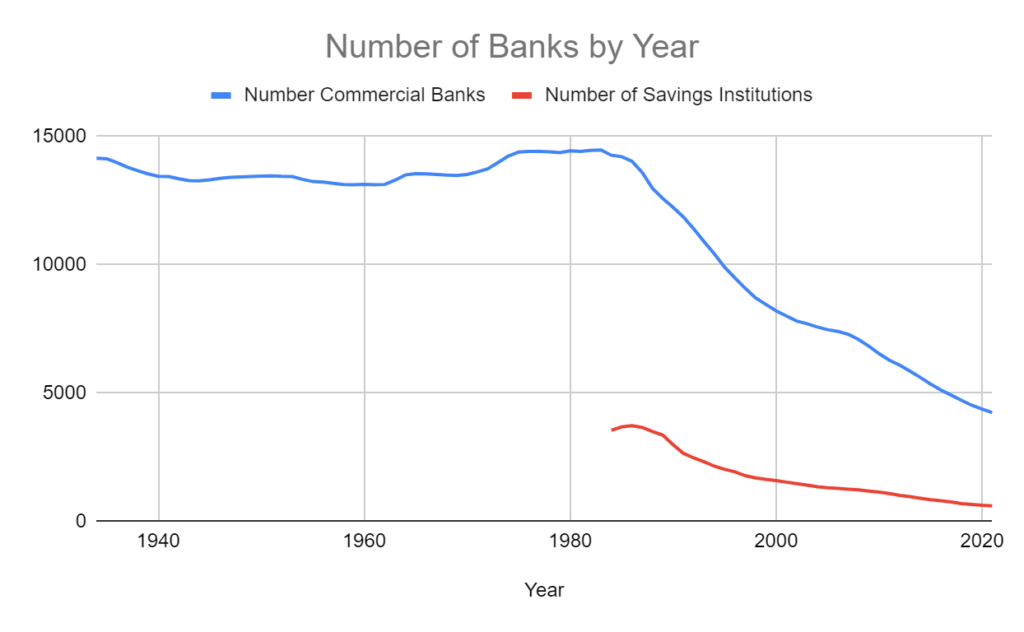
To appreciate the current figure of roughly 4,500 banks, it is essential to look at the historical trajectory. In the early 1980s, the United States boasted over 14,000 commercial banks. This proliferation was largely due to strict anti-branching laws that prevented banks from operating across state lines or even opening multiple branches within a single county. As these regulations were rolled back—most notably through the Riegle-Neal Interstate Banking and Branching Efficiency Act of 1994—the era of massive consolidation began.
The Breakdown of Institutions
While the term “bank” is often used as a catch-all, the FDIC categorizes these institutions into several distinct types:
-
Commercial Banks: These make up the vast majority of the count. They offer a wide range of services, including checking accounts, business loans, and mortgages.
-
Savings and Loan Associations (Thrifts): These institutions traditionally focus more on residential mortgages and consumer savings accounts.
-
Community Banks: Defined by their size (usually under $10 billion in assets), these banks represent the majority of individual entities in the U.S., serving local economies and small businesses.
The Role of Credit Unions
While not technically “banks” because they are member-owned cooperatives, credit unions are a vital part of the U.S. financial ecosystem. There are approximately 4,700 federally insured credit unions in the United States. When consumers ask how many banks exist, they are often looking for the total number of places where they can safely deposit money. Including credit unions nearly doubles the count of available financial institutions, providing a layer of competition that keeps the traditional banking sector on its toes.
The Consolidation Wave: Why the Number of Banks is Declining
The steady decline in the number of U.S. banks is not necessarily a sign of a failing industry, but rather one that is maturing and optimizing. Several factors contribute to the ongoing merger and acquisition (M&A) activity that removes dozens of names from the FDIC registry every year.
Regulatory Burdens and Compliance Costs
Following the 2008 financial crisis, the Dodd-Frank Wall Street Reform and Consumer Protection Act introduced a suite of new regulations. While intended to prevent another systemic collapse, the compliance costs associated with these rules hit smaller institutions disproportionately hard. For a community bank with $500 million in assets, hiring a full team of compliance officers and implementing complex reporting software can erode profit margins. Consequently, many smaller banks choose to merge with larger regional players to achieve the scale necessary to handle regulatory overhead.
The Quest for Scale and Efficiency
In the modern economy, size offers a competitive advantage. Larger banks can leverage “economies of scale,” meaning they can spread their fixed costs over a larger customer base. This allows them to offer lower fees, more competitive interest rates on loans, and more sophisticated financial products. In a low-interest-rate environment, which characterized much of the last decade, banks felt intense pressure to grow their balance sheets to maintain profitability, leading to a surge in strategic acquisitions.
Generational Shifts in Leadership
Many community banks in the United States are family-owned or managed by long-tenured executives reaching retirement age. If a clear succession plan is not in place, or if the next generation is uninterested in managing a local financial institution, selling the bank to a larger competitor becomes an attractive exit strategy. This “demographic consolidation” has been a quiet but persistent driver of the shrinking bank count in rural and suburban America.
The Rise of Digital Banking and FinTech
While the physical count of traditional banks is decreasing, the “virtual” options for consumers are exploding. The rise of FinTech (Financial Technology) has introduced a new breed of players that challenge the traditional definition of a bank.
Neobanks and Digital-Only Platforms
Companies like Chime, SoFi, and Varo have transformed how millions of Americans interact with their money. While some of these are fully licensed banks, many are “neobanks” that partner with existing FDIC-insured institutions to provide underlying banking services. This creates a paradox: while the number of bank charters is falling, the number of brands offering banking services is arguably at an all-time high.
The Technology Gap
Technology is perhaps the greatest catalyst for consolidation. Today’s consumers expect high-functioning mobile apps, Zelle integration, instant mobile check deposits, and 24/7 customer service. Developing and maintaining this level of digital infrastructure requires massive capital investment. Smaller banks that cannot afford to keep pace with the technological offerings of giants like JPMorgan Chase or Bank of America often find themselves losing younger depositors, eventually forcing them to consider a merger with a more tech-forward institution.
Systemic Importance: The Concentration of Assets
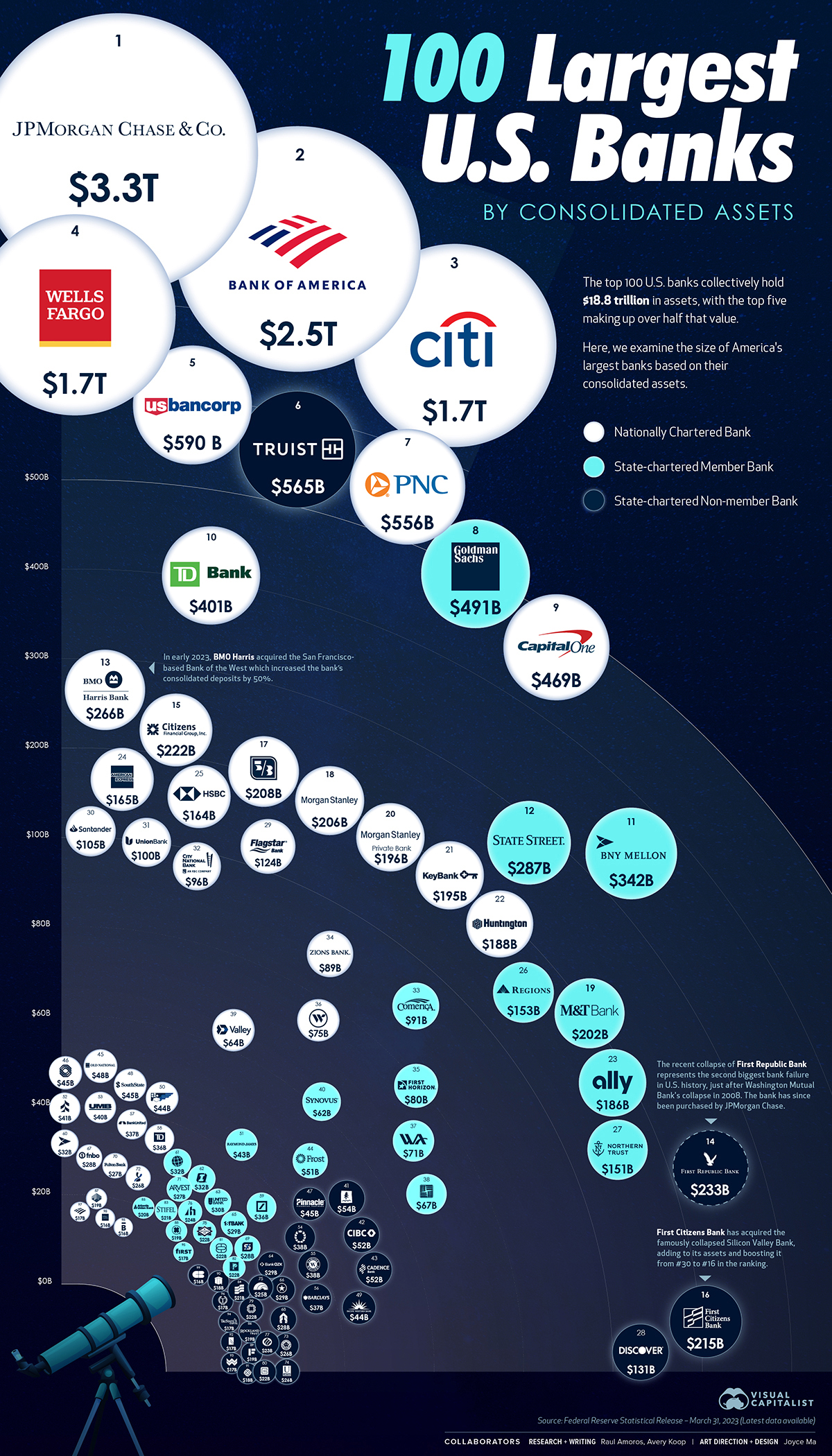
A critical aspect of the “how many banks” question is not just the quantity of institutions, but the distribution of wealth among them. The U.S. banking system is characterized by a “heavy top.”
The “Big Four” and Beyond
The four largest banks in the U.S.—JPMorgan Chase, Bank of America, Citigroup, and Wells Fargo—control a staggering percentage of the nation’s total banking assets. In fact, the top 15 to 20 banks hold more assets than the remaining 4,400+ banks combined. This concentration has sparked ongoing debates in Washington regarding “Too Big to Fail” institutions and the systemic risks associated with such centralized financial power.
The Vital Role of the “Long Tail”
Despite the dominance of the giants, the thousands of smaller banks (the “long tail” of the industry) perform a function that the big banks often cannot. Community banks are responsible for a disproportionately large share of small business lending and agricultural loans. Because these banks use “relationship banking”—where lending decisions are based on local knowledge and personal history rather than just algorithmic credit scores—they remain essential for local economic development. The disappearance of these institutions in specific geographic “banking deserts” can have a profound negative impact on local entrepreneurship.
What This Means for the Consumer: Choosing the Right Institution
For the average individual looking at the landscape of 4,500 banks, the sheer variety can be overwhelming. However, the shrinking number of banks hasn’t necessarily translated to fewer choices for the consumer; rather, it has clarified the types of value propositions available.
Safety and Security
Regardless of whether there are 14,000 banks or 4,000, the primary concern for any depositor is safety. The FDIC provides a guarantee of up to $250,000 per depositor, per insured bank, for each account ownership category. This insurance is the bedrock of the American financial system, ensuring that even if a bank fails—as seen during the regional banking turbulence of early 2023—depositors’ funds remain protected.
Interest Rates and Financial Tools
The consolidation of the banking industry has created a highly competitive market for deposits. Online-only banks, which have lower overhead costs than brick-and-mortar institutions, often offer significantly higher Annual Percentage Yields (APYs) on savings accounts. Consumers today are increasingly “unbundling” their finances—keeping a checking account at a large national bank for convenience and ATM access, while moving their long-term savings to a high-yield online bank or a local credit union.
The Future of the Bank Count
Will the number of banks continue to fall? Most industry analysts believe the answer is yes. Experts predict that the number of FDIC-insured institutions could drop below 3,000 within the next decade. However, this contraction is likely to be met with an increase in non-bank financial services, further blurring the lines between traditional banking, investing, and technology.
In conclusion, while there are currently about 4,500 banks in the United States, the number is less important than the health and accessibility of the system. The American banking sector is undergoing a profound transformation, shifting from a fragmented network of local lenders to a high-tech, consolidated powerhouse. For the savvy consumer or business owner, this evolution offers more tools, better digital access, and more robust security than ever before, provided they understand how to navigate this increasingly complex financial map.
aViewFromTheCave is a participant in the Amazon Services LLC Associates Program, an affiliate advertising program designed to provide a means for sites to earn advertising fees by advertising and linking to Amazon.com. Amazon, the Amazon logo, AmazonSupply, and the AmazonSupply logo are trademarks of Amazon.com, Inc. or its affiliates. As an Amazon Associate we earn affiliate commissions from qualifying purchases.