
The American banking sector is a complex, multi-tiered ecosystem that serves as the backbone of the global economy. For entrepreneurs, investors, and everyday consumers, understanding the scale and structure of this system is vital for making informed financial decisions. When asking “how many banks are in the USA,” the answer is a moving target, reflecting a century of consolidation, regulatory shifts, and technological disruption. As of the most recent data from the Federal Deposit Insurance Corporation (FDIC), there are approximately 4,600 FDIC-insured commercial banks and savings institutions operating in the United States.
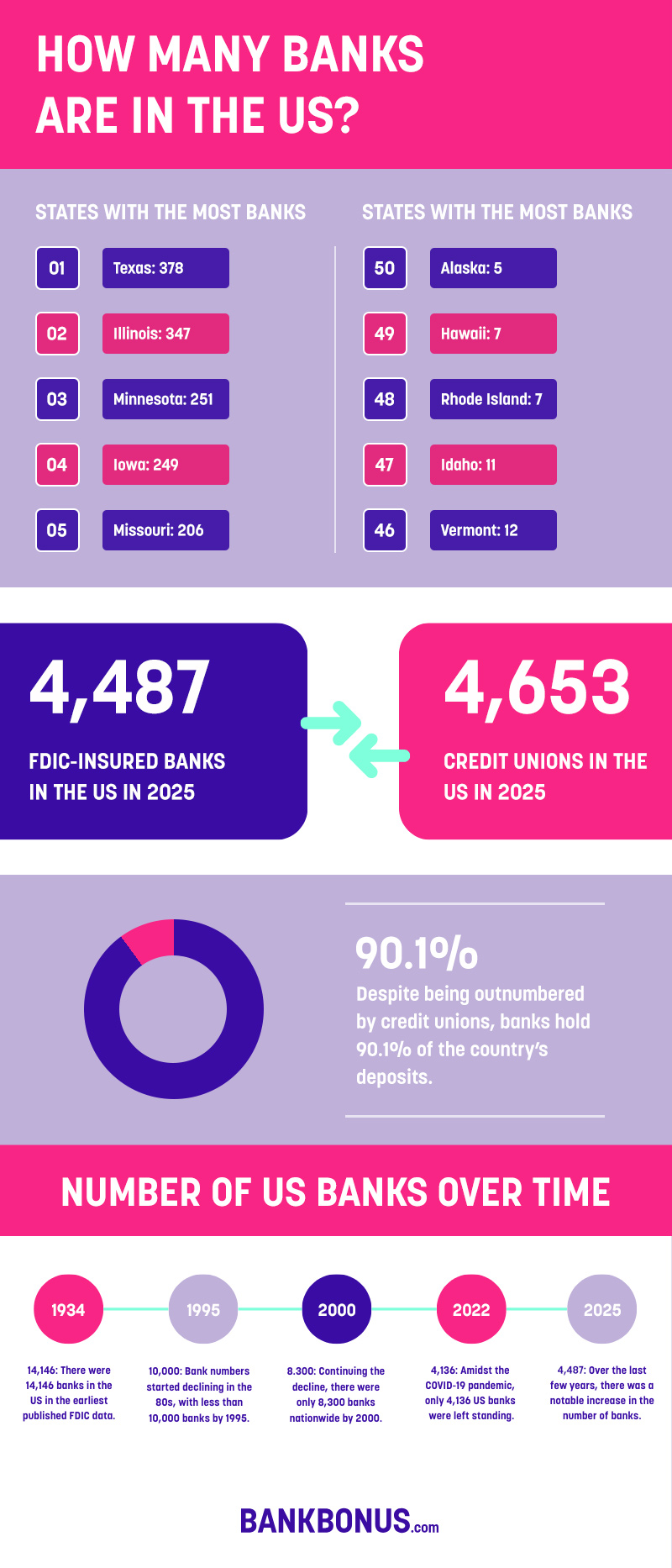
While this number may seem high compared to other developed nations, it represents a significant decline from the historical peaks of the 20th century. To understand why the number of banks is what it is today, one must look closer at the categories of these institutions, the trends driving consolidation, and the emergence of digital challengers.
The Current Statistics: Breaking Down the Numbers
The U.S. banking industry is characterized by its diversity. Unlike many European or Asian countries where a handful of massive institutions dominate the entire market, the U.S. maintains a dual banking system of state and federal charters, resulting in thousands of players ranging from trillion-dollar giants to tiny rural offices.
Commercial Banks vs. Savings Institutions
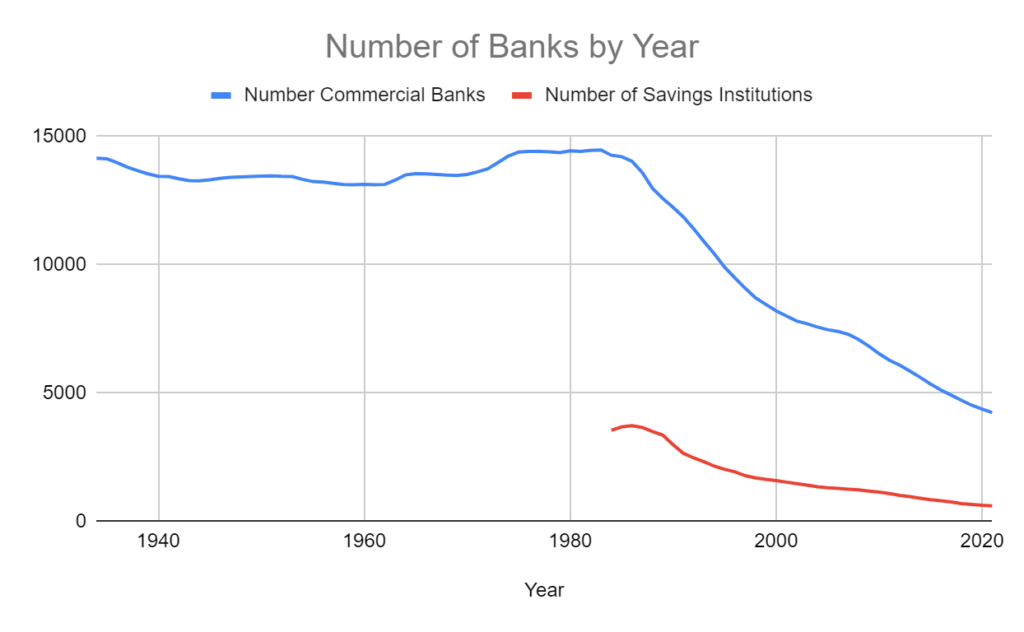
The FDIC categorizes insured institutions into two primary groups: commercial banks and savings institutions (often called thrifts). Commercial banks make up the vast majority of the count, focusing on business loans and traditional consumer products. Savings institutions, historically focused on residential mortgages and personal savings, have seen their numbers dwindle more rapidly as the lines between different types of financial services have blurred.
The Concentration of Assets
While there are nearly 4,600 banks, the distribution of wealth is heavily skewed toward the top. The “Big Four”—JPMorgan Chase, Bank of America, Citigroup, and Wells Fargo—hold a disproportionate share of the nation’s total banking assets. This concentration means that while the number of banks is high, the “Global Systemically Important Banks” (G-SIBs) dictate much of the market’s liquidity and interest rate trends.
The Role of Credit Unions
It is important to note that the 4,600 figure typically refers to FDIC-insured banks. If we include credit unions, the number of financial institutions jumps significantly. There are roughly 4,700 federally insured credit unions in the U.S. While they function similarly to banks by offering checking accounts, loans, and mortgages, they are member-owned cooperatives. For a consumer looking at the “total number of places to keep money,” the combined pool of banks and credit unions exceeds 9,000 entities.
A Century of Consolidation: Why the Number is Shrinking
In the early 1980s, the United States boasted over 14,000 commercial banks. Since then, the number has plummeted by nearly 70%. This trend is not a sign of a failing industry, but rather a reflection of significant shifts in the regulatory and economic environment.
The Impact of the Riegle-Neal Act
For much of the 20th century, U.S. banks were largely restricted from operating across state lines. This led to a fragmented market with thousands of localized “unit banks.” The Riegle-Neal Interstate Banking and Branching Efficiency Act of 1994 changed everything, allowing banks to merge across state borders. This triggered a massive wave of mergers and acquisitions (M&A) as regional banks sought to build national footprints.
The Cost of Compliance and Regulation
Post-2008 regulation, specifically the Dodd-Frank Wall Street Reform and Consumer Protection Act, introduced stringent reporting and capital requirements. While intended to prevent another financial crisis, these regulations imposed high fixed costs on smaller institutions. For many community banks with limited staff, the burden of compliance became a primary driver to sell to larger competitors. This “regulatory squeeze” has been a major factor in the disappearance of small-town banks.
The 2008 Financial Crisis and Beyond
The Great Recession saw hundreds of bank failures, but the subsequent decade saw an even more profound trend: a lack of “de novo” (new) bank charters. For several years following the crisis, the number of new banks entering the market was near zero. When the rate of bank closures and mergers exceeds the rate of new bank creations, the total count inevitably slides downward.
Categorizing the U.S. Banking Hierarchy
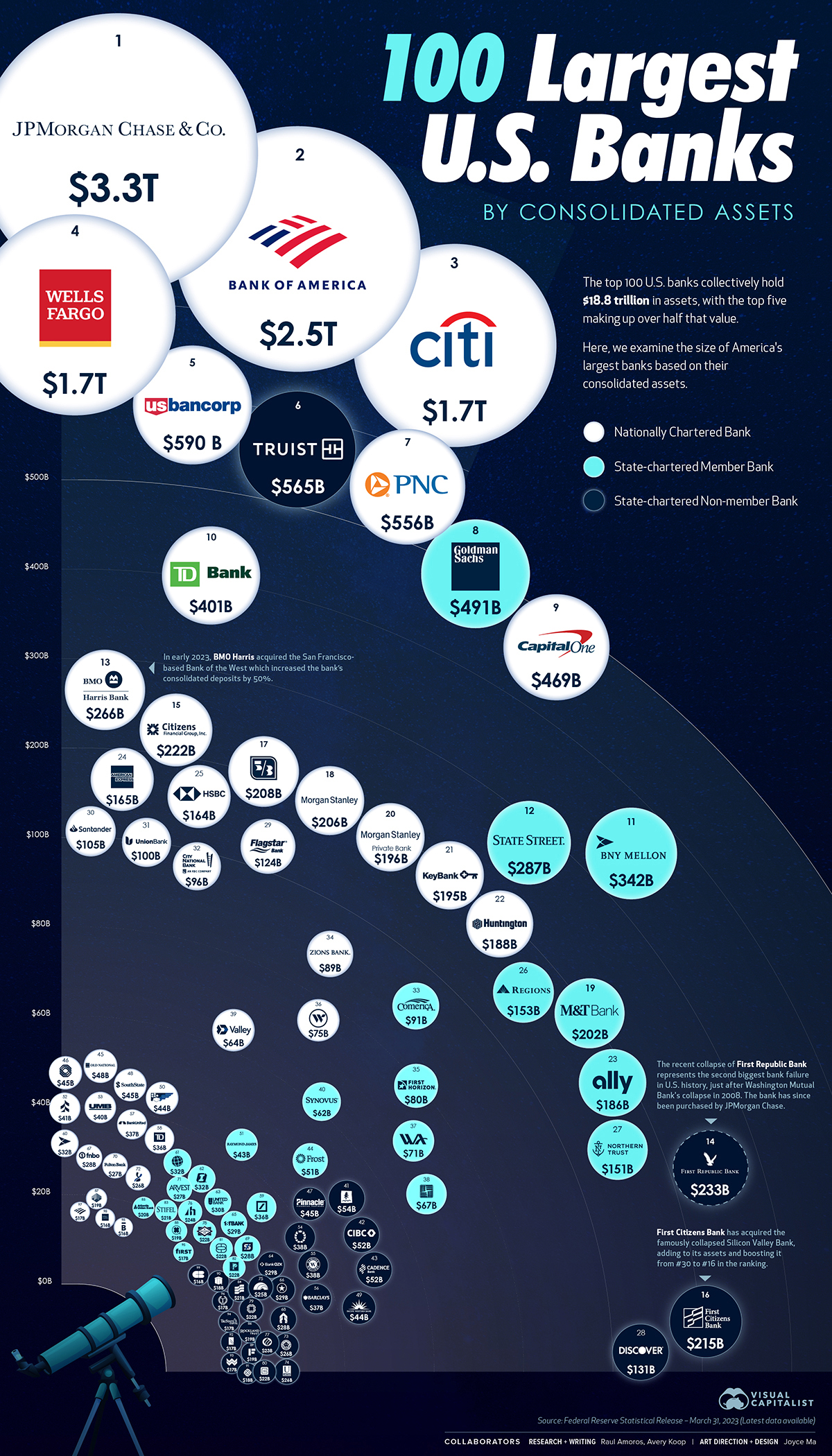
To navigate the U.S. financial system, it is helpful to categorize banks not just by their number, but by their size and reach. The FDIC and Federal Reserve generally group these institutions into three distinct tiers.
Community Banks
Community banks are the lifeblood of small-business lending and local economies. These institutions typically have less than $10 billion in assets and focus on “relationship banking.” They are often more willing to work with local entrepreneurs who might not meet the rigid automated underwriting criteria of a national giant. Despite the consolidation trend, community banks still account for a significant percentage of small business loans in the U.S.
Regional and Super-Regional Banks
Regional banks operate across several states and hold assets ranging from $10 billion to several hundred billion dollars. These institutions, such as PNC, Truist, or U.S. Bank, provide a middle ground for consumers who want the technological convenience of a large bank but the more localized focus of a regional player. They often serve as the primary challengers to the dominant national institutions.
Money Center Banks and G-SIBs
These are the titans of the industry. They operate internationally and are involved in complex investment banking, global trade finance, and massive consumer portfolios. Because their failure could jeopardize the global economy, they are subject to the highest levels of oversight. In the U.S., names like JPMorgan Chase and Goldman Sachs fall into this category.
The Rise of Fintech and Neobanks: The Uncounted Competitors
When discussing the number of banks in the USA, a new question arises: Does a “neobank” count? Platforms like Chime, Revolut, and Current have millions of users, but they often do not hold their own bank charters.
The Partner Bank Model
Most fintech companies operate by partnering with an existing FDIC-insured bank (such as Stride Bank or Bancorp Bank). In this model, the fintech provides the user interface and the “app” experience, while the chartered partner handles the back-end regulatory requirements and holds the deposits. Therefore, while there are hundreds of new digital “banking” options, they often don’t add to the official count of 4,600 chartered institutions.
Chartered Digital Banks
A few digital-first players, such as SoFi and Varo, have successfully navigated the grueling process of obtaining their own national bank charters. These represent the “de novo” banks of the modern era. They are technically counted in the FDIC statistics, but they represent a fundamental shift in how a bank operates—eschewing physical branches entirely in favor of cloud-based infrastructure.
Why the Number of Banks Matters to You
The shrinking number of banks in the U.S. is more than just a statistical curiosity; it has direct implications for personal finance, business growth, and the stability of the economy.
Competition and Interest Rates
In a market with fewer players, there is a risk of reduced competition. For consumers, this can manifest as lower interest rates on savings accounts (APY) and higher fees. Conversely, the rise of digital-only banks has introduced a new form of competition that forces traditional banks to improve their technology and lower their costs to retain customers.
Access to Credit
The decline of community banks can create “banking deserts” in rural or low-income urban areas. Because smaller banks are often more invested in their specific geographic locations, their disappearance can make it harder for local residents to secure mortgages or small business loans. This is why many financial experts advocate for policies that support the survival of smaller, localized institutions.
Financial Stability and Choice
A diverse banking system is generally considered more resilient. If the U.S. had only five or six massive banks, a failure in one would be catastrophic. By maintaining a mix of 4,600 institutions of varying sizes, the system distributes risk. For the savvy investor or business owner, having a choice of banks means being able to diversify deposits and find specialized lending products that fit specific needs.
In conclusion, while the number of banks in the USA has declined from its historical highs, the industry remains incredibly robust and diverse. With approximately 4,600 insured institutions, the U.S. still offers more banking variety than almost any other nation. As the industry continues to evolve through mergers and the rise of fintech, the focus is shifting from the sheer quantity of banks to the quality and accessibility of the financial services they provide. Whether you are looking for the stability of a G-SIB or the personal touch of a community bank, the American banking landscape remains a dynamic environment of opportunity.
aViewFromTheCave is a participant in the Amazon Services LLC Associates Program, an affiliate advertising program designed to provide a means for sites to earn advertising fees by advertising and linking to Amazon.com. Amazon, the Amazon logo, AmazonSupply, and the AmazonSupply logo are trademarks of Amazon.com, Inc. or its affiliates. As an Amazon Associate we earn affiliate commissions from qualifying purchases.