
In the landscape of personal finance and wealth management, credit card rewards programs have evolved from simple marketing gimmicks into a sophisticated alternative asset class. Among these, American Express (Amex) Membership Rewards stand as the gold standard for flexibility and potential ROI. However, for the high-net-worth individual or the savvy financial planner, the question “how many Amex points for a flight” does not have a single numerical answer. Instead, it is a question of valuation, arbitrage, and strategic redemption.
Understanding the mechanics of the Membership Rewards ecosystem is essential for anyone looking to optimize their financial tools. Whether you are looking to offset business expenses or leverage points for premium international travel, the “cost” of a flight in points is a variable figure that depends entirely on your mastery of the system.
Understanding the Variable Math of Amex Membership Rewards
To answer how many points a flight costs, one must first understand the two primary ways these points are spent: the “Fixed Value” method and the “Transfer Partner” method. These two paths represent the difference between treating points like cash and treating them like a negotiable currency.
The Fixed Value Metric: Amex Travel Portal
When you use the American Express Travel portal to “Pay with Points,” the math is straightforward but often suboptimal. For most cardholders, points are worth exactly 1 cent each. Under this model, a $500 domestic flight will consistently cost 50,000 Amex points.
While this provides simplicity and removes the frustration of “blackout dates,” it sets a low ceiling on the value of your points. For holders of the Business Platinum Card®, there is a 35% points rebate on certain flights, which effectively increases the value to approximately 1.54 cents per point. From a financial management perspective, this is the “floor” of your valuation—the minimum you should ever accept for your points.
The Power of the “Cent-Per-Point” (CPP) Calculation
In the world of finance, we measure the success of an investment by its return. In the world of points, we use the Cent-Per-Point (CPP) metric. To calculate this, you take the cash price of the flight (minus any taxes you still have to pay) and divide it by the number of points required.
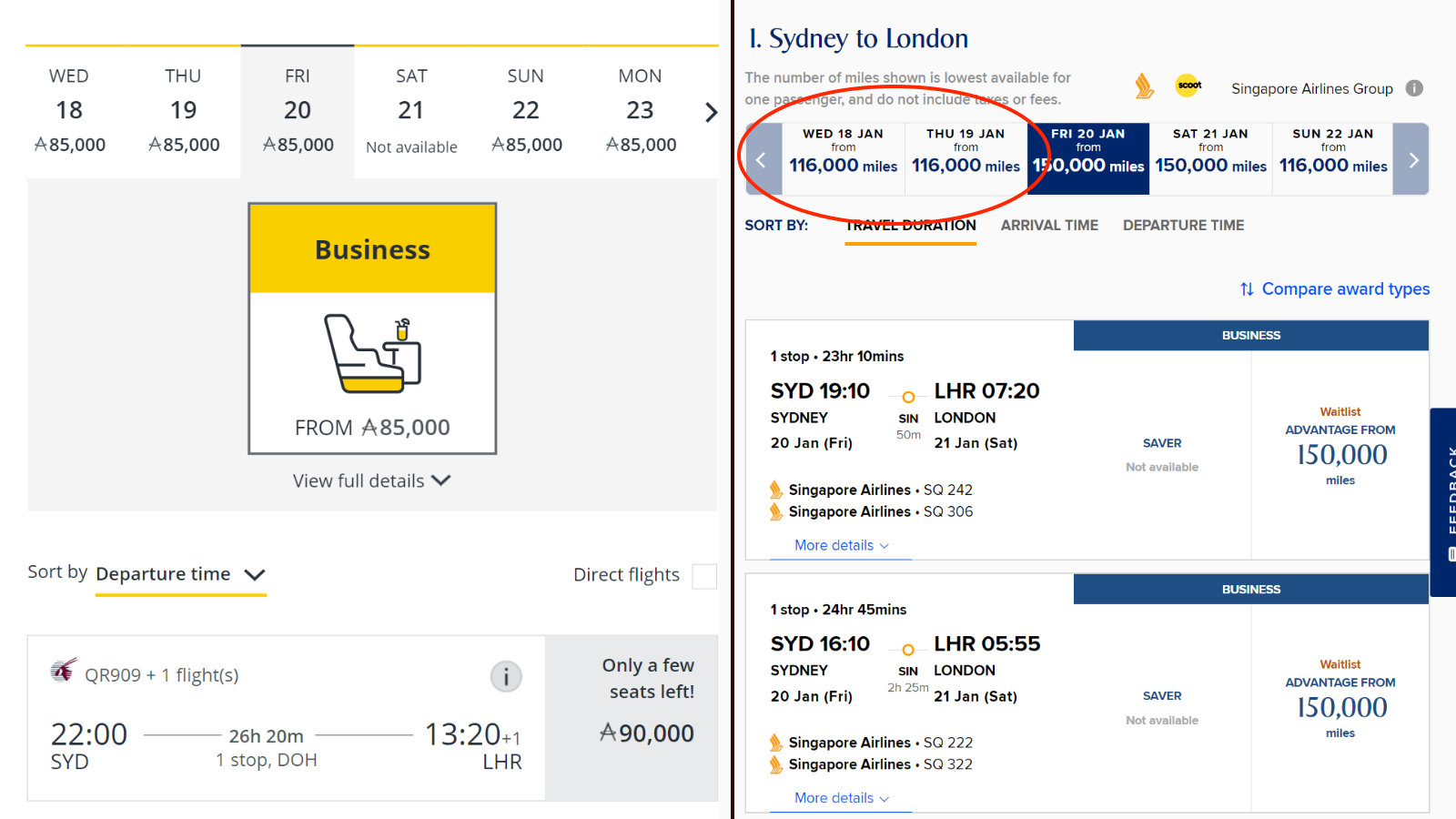
If a Business Class seat to London costs $4,000 but can be booked for 60,000 points plus $200 in taxes, your CPP is 6.3 cents. Compare this to the 1 cent per point offered in the travel portal, and it becomes clear that strategic redemptions can sextuple the value of your rewards portfolio.
Redemption Benchmarks: How Many Points Do You Actually Need?
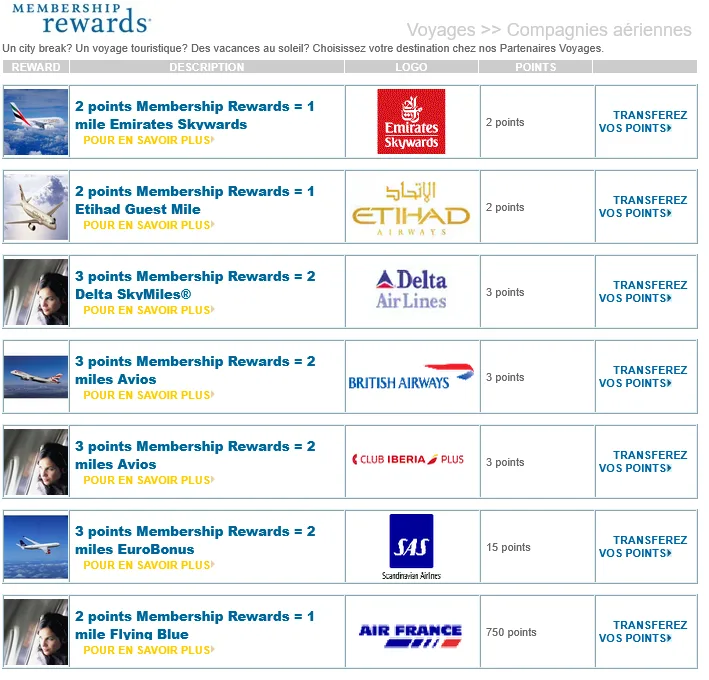
Because Amex partners with 20+ airlines, the point requirements vary based on which airline “loyalty currency” you convert your Amex points into. However, we can establish several reliable benchmarks for planning purposes.
Domestic Economy Flights (7,500 to 15,000 Points)
For short-haul domestic flights within the United States, you should expect to spend between 7,500 and 15,000 points for a one-way ticket. By transferring Amex points to partners like British Airways (to book American Airlines flights) or Delta SkyMiles, you can often find high-value “sweet spots.”
For example, using the “Distance-Based” award chart of a partner like British Airways can allow you to fly from Miami to Nassau for as little as 7,500 points, even when the cash price is high during peak season. This represents a classic case of supply-and-demand arbitrage.
International Long-Haul Business Class (50,000 to 88,000 Points)
The true peak of Membership Rewards value is found in international premium cabins. While a round-trip Business Class ticket to Europe might retail for $3,000 to $7,000, it can often be secured for 100,000 to 140,000 points round-trip (50k–70k one-way).
One of the most famous “sweet spots” in the Amex ecosystem involves transferring points to Virgin Atlantic to book All Nippon Airways (ANA) First Class or Business Class. You could potentially fly from the West Coast to Tokyo in a world-class First Class suite for roughly 55,000 to 72,500 points—a redemption that frequently nets a value of over 10 cents per point.
The Impact of Dynamic Pricing
It is important to note that many airlines, such as Delta and United, have moved toward “dynamic pricing.” This means the point cost fluctuates in direct correlation with the cash price. In these systems, the answer to “how many points” becomes a moving target. To maintain financial efficiency, savvy users often avoid transferring points to dynamic programs unless there is a specific “flash sale,” preferring instead to use partners with “fixed” award charts.

Maximizing Your Return: Strategies to Lower Point Costs
Once you understand the baseline requirements, the next step in financial optimization is learning how to drive those costs down through strategic maneuvers.
Leveraging Transfer Bonuses
Throughout the year, American Express offers promotional transfer bonuses to specific airline partners. These bonuses typically range from 15% to 40%. For example, if there is a 30% bonus to Virgin Atlantic, a flight that normally costs 50,000 points would only require you to transfer ~39,000 Amex points.
From a personal finance perspective, these bonuses act as a “dividend” on your points balance. Waiting for these windows to transfer points can significantly increase your “purchasing power” without requiring any additional spending.
Utilizing Airline Alliances (The “Backdoor” Method)
One of the most misunderstood aspects of the Amex ecosystem is the ability to book flights on one airline using the points of another. This is possible through the three major global alliances: Star Alliance, SkyTeam, and Oneworld.
If you want to fly United Airlines, you don’t necessarily need United miles (which Amex doesn’t transfer to directly). Instead, you can transfer Amex points to Air Canada’s Aeroplan or Avianca LifeMiles—both of which are Star Alliance partners with United. Often, these partners will charge fewer points for the exact same United flight than United would charge its own members. This “backdoor” approach is the hallmark of a sophisticated financial strategy in the rewards space.
Managing Surcharges and “Leakage”
A common pitfall in point redemption is the “fuel surcharge.” Some airline partners (like British Airways or Lufthansa) may allow you to book a flight for a low number of points but will charge $600–$1,000 in “taxes and fees.”
In financial terms, this is a form of leakage that erodes the value of your points. To maximize your ROI, you should prioritize partners like Air Canada Aeroplan or Avianca LifeMiles, which do not pass on these heavy surcharges, ensuring your “free” flight remains truly low-cost.
The Financial Impact: Points as an Asset Class
In a professional financial context, credit card points should be viewed as a tax-free rebate on spending. Because the IRS generally views credit card rewards as a discount on purchases rather than income, they represent a unique opportunity for tax-efficient wealth utilization.
Opportunity Cost of Cash vs. Points
When deciding whether to use points or cash for a flight, one must consider the opportunity cost. If you have a high-yield savings account or an investment portfolio returning 8–10% annually, spending cash on a flight has a future-value cost.
However, points are a “depreciating asset.” Airlines frequently devalue their award charts, meaning 100,000 points today will likely buy less travel five years from now. Therefore, the most sound financial advice regarding points is “Earn and Burn.” Accumulate points through disciplined business and personal spending, but deploy them regularly to capture their current value before inflation (devaluation) hits the airline industry.
Business Spending and Point Velocity
For business owners, the “velocity” at which you can earn Amex points is a major factor in the cost-benefit analysis of premium credit cards. If your business spends $50,000 a month on advertising or shipping, using an Amex Business Gold or Platinum card can generate hundreds of thousands of points annually.
At this scale, the question of “how many points for a flight” becomes less about saving points and more about how to most efficiently clear the “points balance” to offset what would otherwise be a significant corporate travel expense. This turns a liability (travel costs) into a subsidized perk of doing business.
Conclusion: Developing a Redemption Philosophy
Determining how many Amex points you need for a flight is the first step in transitioning from a passive consumer to an active manager of your financial rewards. By understanding that a domestic flight generally requires 10,000–15,000 points and an international business class seat requires 60,000–80,000, you can set clear goals for your spending.
However, the true value lies in the strategy. By targeting transfer bonuses, exploiting alliance partnerships, and avoiding high-surcharge carriers, you can ensure that every point earned is working as hard as possible. Treat your Membership Rewards balance with the same scrutiny you would apply to a brokerage account: monitor its value, understand the market fluctuations, and execute “trades” (redemptions) only when the valuation meets your strategic benchmarks. In doing so, you transform a simple credit card perk into a powerful tool for financial optimization and lifestyle enhancement.
aViewFromTheCave is a participant in the Amazon Services LLC Associates Program, an affiliate advertising program designed to provide a means for sites to earn advertising fees by advertising and linking to Amazon.com. Amazon, the Amazon logo, AmazonSupply, and the AmazonSupply logo are trademarks of Amazon.com, Inc. or its affiliates. As an Amazon Associate we earn affiliate commissions from qualifying purchases.