
The question “how many Amazon Prime members” goes far beyond a simple headcount; it delves into the very core of Amazon’s financial prowess, market valuation, and long-term strategic viability. For investors, business analysts, and those interested in the economics of digital empires, understanding the scale and financial implications of Amazon Prime’s subscriber base is paramount. Prime is not merely a loyalty program; it is a meticulously engineered financial engine, designed to cultivate predictable revenue, enhance customer lifetime value, and reinforce Amazon’s seemingly unassailable market position.

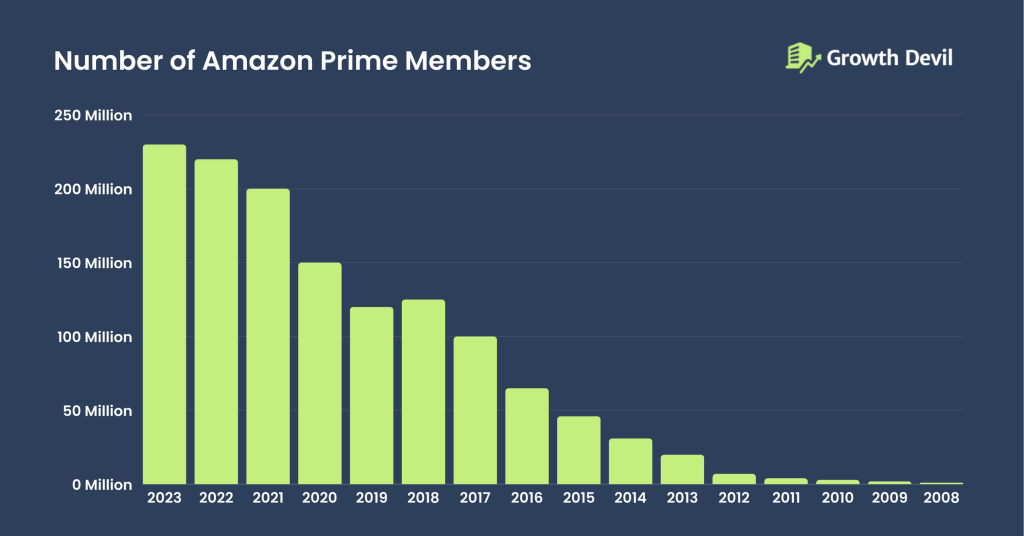
Amazon, with its characteristic opacity regarding precise, up-to-the-minute figures, last officially disclosed a global Prime membership count of over 200 million in April 2021. While more recent specific numbers are not publicly released, market analysts and financial institutions consistently estimate that this figure has continued to grow, potentially nearing 250 million or more globally as of recent estimates. This colossal subscriber base represents a significant, recurring revenue stream and a powerful competitive moat, making it one of the most vital financial assets in the company’s vast portfolio. This article will dissect the financial implications of this immense membership, exploring its role in Amazon’s business finance, investor confidence, and future economic trajectory.
The Scale of Amazon Prime: A Dominant Financial Force
The sheer number of Amazon Prime members underscores an unprecedented achievement in subscription-based services. This dominance is not accidental but the result of a deliberate, long-term strategy that leverages convenience, value, and an ever-expanding ecosystem to capture and retain customer loyalty, translating directly into robust financial returns.
Current Membership Estimates and Growth Trajectory
While Amazon’s last official statement pegged global Prime membership at over 200 million in early 2021, independent analyses and financial reports suggest a consistent upward trend. For instance, in the U.S. alone, consumer intelligence firms frequently estimate Prime penetration in eligible households to be over 70-80%, with a significant portion of the adult population holding a membership. Globally, growth is fueled by expansion into new markets and continued adoption in established regions. Each new member represents not just a subscription fee but an entry point into a broader financial relationship with Amazon, one that typically involves increased spending across multiple categories. The steady growth of this subscriber base, even in mature markets, testifies to Prime’s enduring value proposition and its effectiveness as a financial growth driver. This sustained expansion provides Amazon with an increasingly stable and predictable revenue foundation, insulating it against market fluctuations that might impact purely transactional businesses.
The Dual Revenue Engine: Subscriptions and Enhanced Spending
The financial benefit of Amazon Prime members operates on a dual-pronged approach. Firstly, there’s the direct, recurring revenue from subscription fees. Whether paid monthly or annually, these fees contribute billions to Amazon’s top line each year, forming a predictable and robust income stream. This recurring revenue stream is highly valued by investors as it demonstrates stability and offers a clear projection of future earnings. Secondly, and arguably more significantly, Prime members exhibit substantially higher engagement and spending patterns compared to non-members. Studies consistently show that Prime members spend several times more annually on Amazon’s platform. This enhanced spending encompasses not just physical goods, benefiting Amazon’s core retail business, but also digital content, cloud services (AWS credits in some cases), and a myriad of other Amazon offerings. This “Prime Multiplier Effect” means that the true financial value of each member far exceeds their annual subscription fee, making them incredibly valuable assets to Amazon’s financial health.
Prime’s Indispensable Role in Amazon’s Business Finance
For a company of Amazon’s scale, managing vast and complex financial operations is a constant challenge. Prime membership plays a crucial role in simplifying this complexity and providing a stable financial bedrock for strategic investments and aggressive market expansion.
Recurring Revenue and Predictable Cash Flow
The subscription model of Amazon Prime generates a significant portion of Amazon’s predictable cash flow. Unlike transaction-based revenue, which can be volatile, subscription fees provide a steady, reliable stream of income that Amazon can forecast with greater accuracy. This financial predictability allows Amazon to make long-term investments in infrastructure, technology, and new ventures without being entirely beholden to quarter-to-quarter retail sales fluctuations. This financial stability is a key factor in Amazon’s ability to experiment with new services, absorb initial losses in emerging markets, and maintain its aggressive growth strategy. It mitigates risk and underpins Amazon’s capacity for innovation and expansion, which are capital-intensive endeavors.
The Prime Multiplier Effect: Boosting Core Retail and Ancillary Services
The financial impact of Prime members extends far beyond their subscription fees; it acts as a powerful catalyst for Amazon’s entire ecosystem. Prime members, incentivized by free and fast shipping, exclusive deals, and access to bundled services like Prime Video, Prime Music, and Prime Gaming, are significantly more likely to initiate purchases and complete transactions on Amazon. This boosts sales in Amazon’s core e-commerce segments, contributing heavily to gross merchandise volume. Furthermore, the ecosystem encourages adoption of other Amazon services. For example, Prime Video can lead to Fire TV device sales, and discounted grocery delivery can boost Amazon Fresh usage. From a financial perspective, Prime serves as a central hub, driving traffic and revenue across Amazon’s diverse business units, optimizing cross-selling opportunities and maximizing the overall financial return from each customer interaction. This interconnectedness makes the Prime ecosystem incredibly sticky and financially robust.
Investor Perspective: Prime as a Key Valuation Driver
From an investor’s standpoint, Amazon Prime is not just a service; it’s a strategic asset that profoundly influences Amazon’s market valuation and long-term attractiveness. The perception of Prime’s strength directly correlates with investor confidence in Amazon’s future financial performance.
Customer Lifetime Value (CLV) and Shareholder Confidence
One of the most critical metrics in modern business finance is Customer Lifetime Value (CLV). Amazon Prime members, with their higher spending, extended tenure, and reduced churn rates compared to non-members, represent an exceptionally high CLV. Investors recognize that each Prime member is not just a fleeting transaction but a long-term revenue generator, contributing significantly over many years. This high CLV is a strong indicator of Amazon’s future earnings potential and acts as a major driver for its stock valuation. It provides a tangible basis for projecting sustained growth and profitability, reassuring shareholders that Amazon possesses a durable competitive advantage and a financially loyal customer base. The ability to continually attract and retain such valuable customers underpins the company’s financial narrative for sustained growth.
Market Dominance and Competitive Moat
The enormous scale of Prime membership creates a formidable competitive moat, making it exceptionally difficult for rivals to challenge Amazon’s market dominance. Competitors attempting to replicate Prime’s value proposition would face immense logistical and financial hurdles. The cost of offering widespread free and fast shipping, coupled with an extensive catalog of digital content and other perks, is prohibitive for most companies. This creates a significant barrier to entry and allows Amazon to maintain pricing power and market share. For investors, Prime’s competitive moat is a crucial indicator of sustainable profitability and market leadership. It signals that Amazon possesses an enduring structural advantage that protects its financial position from competitive pressures, ensuring long-term revenue stability and growth prospects.
Global Expansion and Future Financial Horizons
Amazon’s financial strategy for Prime extends beyond its established markets, identifying vast opportunities for expansion and continued financial growth in emerging economies and through the evolution of its service offerings.
International Growth: Untapped Markets and Localized Strategies
While Prime boasts high penetration in countries like the U.S., its reach in many international markets is still developing. This presents Amazon with significant untapped financial growth potential. By adapting its Prime offerings to local preferences, economic conditions, and logistical capabilities—such as tailoring free shipping minimums, partnering with local content providers for Prime Video, or integrating local payment methods—Amazon seeks to replicate its domestic success abroad. Each new international member adds to the global recurring revenue stream and extends the “Prime Multiplier Effect” to new geographies. This strategic international expansion is a cornerstone of Amazon’s long-term financial growth plan, aiming to diversify its revenue base and capture a larger share of the global e-commerce market.
Evolving Prime Benefits and Sustained Financial Relevance
Amazon continually invests in enhancing Prime benefits, from expanded same-day delivery options to exclusive product launches and new digital content. These ongoing investments are not merely about customer satisfaction; they are a calculated financial strategy to maintain Prime’s value proposition, justify subscription price increases, and prevent churn. By consistently adding value, Amazon reinforces the financial incentive for members to renew their subscriptions, ensuring the continuity of its recurring revenue. This dynamic evolution helps Prime remain financially relevant in a competitive landscape, securing its position as a sticky, high-CLV service that consistently delivers financial returns and reinforces Amazon’s enduring financial strength.
Economic Impact and Broader Market Influence
The financial ripples of Prime membership extend beyond Amazon’s balance sheet, influencing supply chains, logistics, and data monetization strategies across the broader economy.
Supply Chain Efficiencies and Cost Savings
The immense scale of Prime membership directly influences Amazon’s supply chain strategy, enabling unparalleled efficiencies and cost savings. With hundreds of millions of predictable high-volume customers, Amazon can invest massively in its logistics network, including advanced fulfillment centers, drone delivery research, and a proprietary shipping fleet. These investments, while substantial, are amortized over an enormous volume of Prime-driven transactions, leading to per-unit cost efficiencies that few, if any, competitors can match. From a financial perspective, these efficiencies translate into higher margins, faster delivery times (a key Prime benefit), and greater control over the entire fulfillment process, further cementing Amazon’s financial advantage in e-commerce.

Data-Driven Insights and Monetization Opportunities
Every interaction a Prime member has within Amazon’s ecosystem generates valuable data. This data—on purchasing habits, viewing preferences, browsing history, and more—is an invaluable financial asset. Amazon leverages this information to personalize recommendations, optimize inventory management, and fine-tune its marketing strategies, leading to higher conversion rates and increased spending. Furthermore, insights derived from this aggregated data can inform strategic decisions across the company, from new product development to market entry strategies. While direct monetization of individual customer data is carefully managed, the insights gleaned from the collective behavior of millions of Prime members enhance Amazon’s operational efficiency and financial performance across the board, proving that even intangible assets like data can have significant monetary value.
In conclusion, the question of “how many Amazon Prime members” opens a window into one of the most successful and financially impactful subscription models ever conceived. Far from being a simple vanity metric, the sheer scale of Prime’s global subscriber base is a foundational pillar of Amazon’s business finance, driving recurring revenue, boosting core retail sales, enhancing investor confidence, and solidifying its formidable market position. As Amazon continues to expand globally and innovate its offerings, the financial power of its Prime members will undoubtedly remain a central theme in its ongoing economic narrative.
aViewFromTheCave is a participant in the Amazon Services LLC Associates Program, an affiliate advertising program designed to provide a means for sites to earn advertising fees by advertising and linking to Amazon.com. Amazon, the Amazon logo, AmazonSupply, and the AmazonSupply logo are trademarks of Amazon.com, Inc. or its affiliates. As an Amazon Associate we earn affiliate commissions from qualifying purchases.