
In the landscape of modern commerce, few metrics are as scrutinized by investors, economists, and market analysts as the total count of Amazon Prime members. What began in 2005 as a relatively simple experiment in consumer loyalty—offering unlimited two-day shipping for a flat annual fee—has evolved into the most formidable subscription engine in history. To understand how many Amazon Prime customers exist today is to understand the scale of the global digital economy and the shifting financial habits of the modern consumer.
As of the latest industry estimates and corporate disclosures, Amazon Prime boasts over 200 million paid members worldwide. This milestone, first officially acknowledged by Jeff Bezos in his 2021 letter to shareholders, has only continued to grow as the company expands its logistical footprint and digital services. For the business-minded observer, these numbers represent more than just a customer list; they represent a recurring revenue stream and a defensive moat that reshapes how capital flows through the retail sector.

The Global Footprint: Breaking Down the Numbers
The sheer volume of Prime members is a testament to Amazon’s aggressive expansion strategy. While the company is famously guarded about releasing specific quarterly updates on membership counts, third-party research and financial modeling provide a clear picture of the program’s current trajectory and geographic distribution.
Total Global Membership Estimates
Current projections suggest that Amazon Prime membership has surpassed the 230 million mark globally. This growth is driven by a two-pronged approach: maintaining a high floor of retention in established markets while aggressively subsidizing entry into emerging ones. For investors, the “200 million plus” figure is a psychological and financial benchmark that places Amazon in a rare tier of service providers, rivaled only by platforms like Netflix or Spotify, yet with a significantly higher physical overhead and revenue-per-user potential.
The US Market: Dominance and Saturation
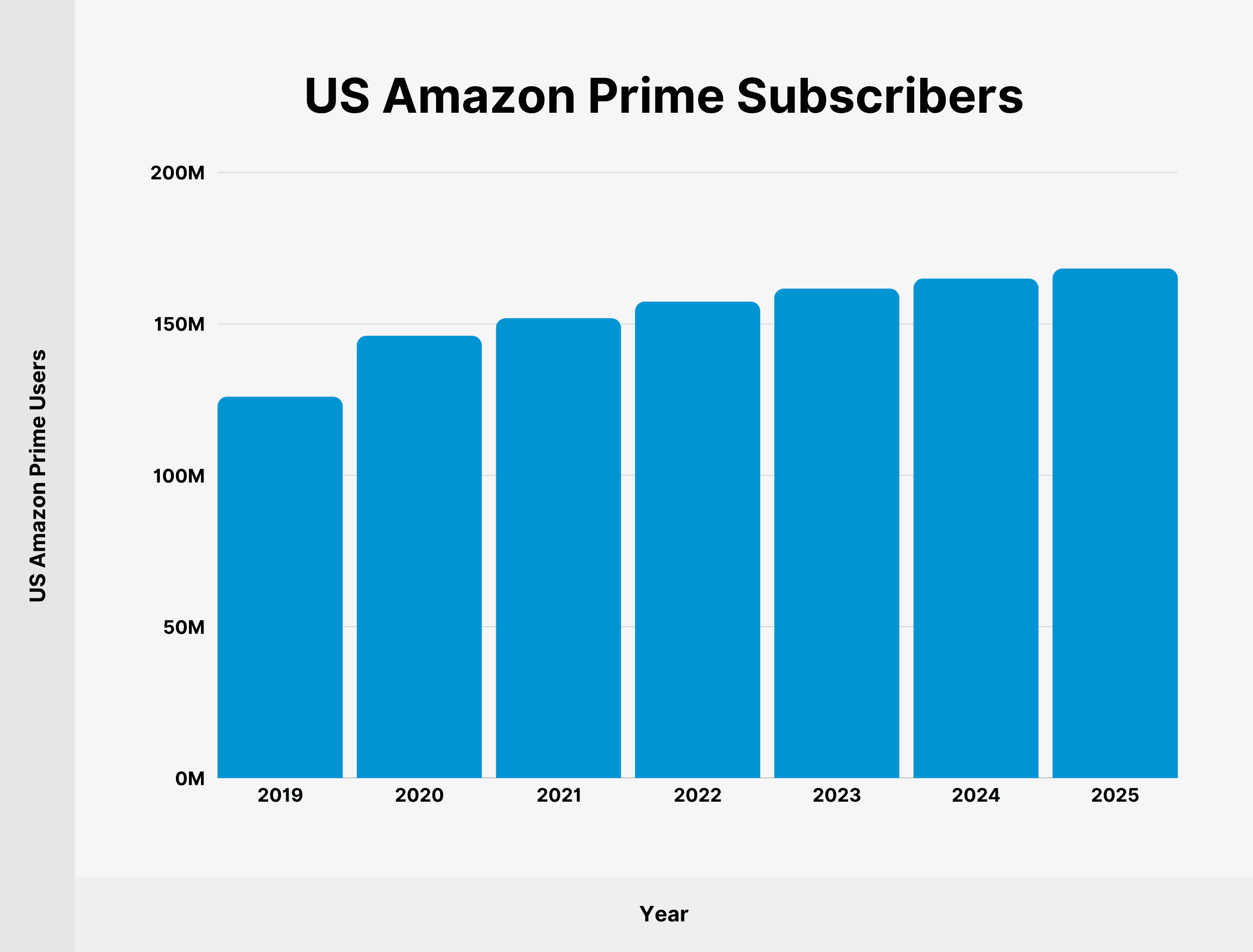
The United States remains the crown jewel of the Prime ecosystem. Estimates from Consumer Intelligence Research Partners (CIRP) indicate that there are approximately 175 to 180 million Prime members in the U.S. alone. This suggests a staggering level of market penetration, with some analysts estimating that over 70% of U.S. households have at least one Prime membership.
From a business finance perspective, this raises the question of saturation. When a service reaches the majority of its target demographic, the strategy must shift from customer acquisition to “ARPU” (Average Revenue Per User) optimization. This explains Amazon’s recent moves to increase annual membership fees and introduce ad-supported tiers within Prime Video; when you cannot find more customers, you must find more value within the existing base.
International Growth: The New Frontier
With the U.S. market reaching a plateau, Amazon’s financial future depends on its international performance. Countries like India, Germany, the UK, and Japan are becoming central to the Prime narrative. In India, specifically, Amazon has localized its pricing models and content libraries to capture a burgeoning middle class. The financial challenge here is different: while the U.S. market focuses on high-margin services, international growth is a long-term investment in infrastructure and market share, often requiring years of “burning” capital before reaching the profitability levels seen in North America.
The Financial Engine: Why Prime Numbers Matter for Investors
For the financial community, the “how many” question is secondary to the “how much” question. The Prime program is not merely a shipping service; it is a sophisticated financial instrument that ensures predictable cash flow and incentivizes disproportionate consumer spending.
Subscription Revenue Streams
Amazon’s “Subscription Services” revenue line, which primarily consists of Prime fees, generates tens of billions of dollars annually. In 2023, this segment brought in over $40 billion. This is high-quality, recurring revenue that provides a cushion against the volatility of the broader retail market. Unlike one-off purchases, subscription fees are paid upfront, providing Amazon with an immense “float” of capital that can be reinvested into data centers, fulfillment automation, and content acquisition.
Ecosystem Stickiness and Customer Lifetime Value (CLV)
The true genius of the Prime membership count lies in its impact on Customer Lifetime Value. Financial data consistently shows that Prime members spend significantly more than non-members. Estimates suggest that the average Prime member spends roughly $1,400 per year on the platform, compared to about $600 for non-members.

This “stickiness” is a result of the sunk cost fallacy leveraged as a business strategy. Once a consumer pays $139 (in the U.S.) for an annual membership, they feel a psychological impulse to “get their money’s worth.” This leads them to check Amazon first for every need, from groceries to electronics, effectively removing them from the competitive landscape of other retailers. For investors, this creates a “moat” that is incredibly difficult for competitors like Walmart or Target to breach.
Impact on the Bottom Line: Shipping vs. Profit
There is a complex financial tension within the Prime model. While the membership fees are high-margin, the promise of “free” shipping is an enormous cost center. Amazon spends billions annually on fulfillment and shipping—costs that often exceed the total revenue brought in by Prime fees. However, the business finance logic dictates that these losses are acceptable because they drive the volume necessary to scale the company’s real profit centers: Amazon Advertising and Amazon Web Services (AWS). Prime is the “loss leader” that keeps the audience captive for the higher-margin services.
The Economics of Membership: Consumer Behavior and Spending Habits
To understand why the number of Prime customers continues to rise despite price hikes, one must look at the underlying economic benefits perceived by the consumer. In a high-inflation environment, the value proposition of Prime shifts from “convenience” to “efficiency.”
The Psychology of “Free” Shipping and Value Perception
In the mind of the consumer, the elimination of shipping costs is a powerful financial incentive. Behavioral economics suggests that consumers are more likely to complete a purchase when shipping is “free,” even if the base price of the item is slightly higher. This allows Amazon to maintain a high volume of transactions. Furthermore, as Amazon integrates services like RxPass for pharmacy discounts and Grubhub+ for food delivery, the perceived value of the $139 fee grows, making the membership feel like a financial tool for household savings rather than a luxury expense.
Prime Day as a Financial Catalyst
The annual “Prime Day” event is a masterclass in driving membership counts and accelerating short-term revenue. By offering exclusive deals to members, Amazon creates a massive “acquisition event” where non-members sign up for trials and existing members increase their velocity of spend. In 2023, Prime Day was the largest sales event in the company’s history, with members purchasing more than 375 million items. This creates a surge in liquidity and provides Amazon with a mountain of consumer data that fuels its predictive logistics and advertising algorithms.
Diversification of the Prime Portfolio
The expansion of Prime into areas like healthcare (One Medical) and grocery (Whole Foods and Amazon Fresh) is a strategic move to capture a larger share of the “wallet.” By moving into high-frequency spending categories like food and medicine, Amazon ensures that its Prime members are interacting with the brand multiple times a week. From a business finance perspective, this diversification reduces the company’s reliance on discretionary consumer electronics and apparel, creating a more resilient revenue model.
Future Projections and Market Challenges
While the current number of Amazon Prime customers is at an all-time high, the path forward is not without financial obstacles. The company faces a landscape defined by increased regulatory scrutiny, rising logistical costs, and a more fragmented streaming market.
Retention Rates in a Competitive Landscape
Amazon Prime’s retention rate is legendary, often cited at over 90% for second-year members. However, as the cost of living rises, consumers are beginning to audit their monthly subscriptions more closely. The rise of “Walmart+” and the consolidation of streaming services (such as the Disney/Hulu/Max bundles) represent the first real challenge to Prime’s dominance. Amazon must continually add high-cost benefits—like Thursday Night Football or high-budget original series—to justify the membership cost, which puts pressure on operating margins.
Expanding Beyond Retail: The Healthcare and Financial Services Play
The next 50 million Prime members may not come from retail alone. Amazon is increasingly looking at Prime as a gateway to essential services. If Amazon can successfully bundle primary healthcare or even basic financial services into the Prime membership, it will tap into massive new sectors of the economy. The financial upside of managing a consumer’s health and wealth is far greater than managing their book and gadget purchases.
The Sustainability of Growth
As Amazon approaches 250 million members, the focus will inevitably shift from “how many” to “how deep.” The goal will be to integrate Prime so thoroughly into the infrastructure of daily life—through smart homes (Alexa), automotive integration, and physical retail—that the membership becomes as essential as a utility bill. For the observer of business and finance, the number of Amazon Prime customers serves as the ultimate barometer for the company’s ability to monopolize consumer attention and capital in the 21st century.
In conclusion, the 200 million-plus Prime members are the engine of a financial machine that thrives on data, scale, and consumer habit. While growth may slow in domestic markets, the evolution of the service into a multi-faceted lifestyle ecosystem ensures that Prime will remain a dominant force in the global economy for the foreseeable future. For any serious analysis of modern business finance, these numbers are not just a headcount; they are the foundation of a trillion-dollar empire.
aViewFromTheCave is a participant in the Amazon Services LLC Associates Program, an affiliate advertising program designed to provide a means for sites to earn advertising fees by advertising and linking to Amazon.com. Amazon, the Amazon logo, AmazonSupply, and the AmazonSupply logo are trademarks of Amazon.com, Inc. or its affiliates. As an Amazon Associate we earn affiliate commissions from qualifying purchases.