
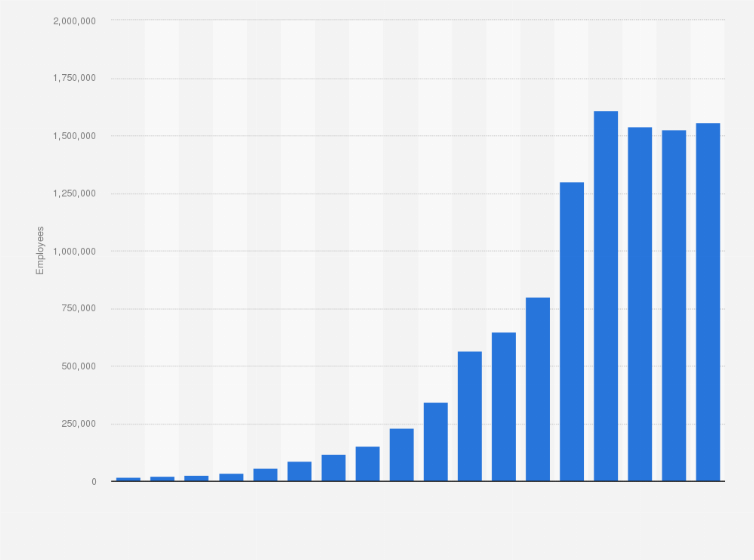
When investors, economists, and market analysts look at the health of a global superpower, they rarely look at a single metric. However, for a company like Amazon, the sheer number of employees—currently hovering around 1.5 million direct workers—is perhaps the most significant indicator of its fiscal strategy and operational dominance. In the realm of business finance, labor is often viewed as a liability or a cost to be managed. For Amazon, labor is a strategic asset that fuels its “flywheel” effect.
To understand how many employees Amazon has is to understand the logistics of a trillion-dollar entity. This isn’t just a headcount; it is a complex financial map of global trade, e-commerce fulfillment, and the future of the modern labor market.

Quantifying a Global Giant: The Core Workforce and Operational Expenditure
As of the latest fiscal reports, Amazon stands as one of the world’s largest private employers. This massive workforce is the engine behind its record-breaking revenue streams. From a financial perspective, managing over 1.5 million people requires a sophisticated approach to Operational Expenditure (OPEX).
Direct Employees vs. Seasonal Staffing
Amazon’s core workforce consists of full-time and part-time employees working in fulfillment centers, sorting centers, and corporate offices. However, from a business finance perspective, the “true” number of people working for Amazon fluctuates significantly based on the retail cycle. During the fourth quarter—encompassing Black Friday, Cyber Monday, and the holiday season—Amazon typically hires hundreds of thousands of seasonal workers. These temporary increases in headcount are a calculated financial move, allowing the company to meet demand surges without the long-term liability of permanent benefits and salary obligations.
The Cost of Global Expansion
The geographical distribution of Amazon’s employees is a testament to its capital investment strategy. While the majority of the workforce is concentrated in the United States, significant growth in India, Europe, and South America reflects Amazon’s pursuit of emerging markets. Each new fulfillment center represents hundreds of millions in Capital Expenditure (CAPEX), followed by a massive surge in local hiring. This expansion strategy is designed to minimize the “last mile” delivery costs, which are the most expensive part of the supply chain. By putting more employees closer to the customer, Amazon spends more on payroll but saves significantly on logistics and shipping fees.
Beyond the Payroll: The Ecosystem of Independent Earners and Side Hustles
When discussing the total number of people who derive their income from Amazon, the 1.5 million figure only tells half the story. To truly grasp the financial reach of the brand, one must look at the “hidden” workforce of independent contractors and entrepreneurs.
Amazon Flex and the Gig Economy Model
The Amazon Flex program is a prime example of the gig economy’s role in modern business finance. These drivers are not classified as employees; they are independent contractors who use their own vehicles to deliver packages. For Amazon, this is a financial masterstroke. It allows the company to scale its delivery fleet up or down instantly without the overhead of vehicle maintenance, insurance, or payroll taxes. For the drivers, it represents a flexible side hustle that has become a staple of the modern online income landscape. Thousands of individuals rely on the “Flex” model to supplement their primary income, contributing to the broader Amazon economy.
Third-Party Sellers as Economic Multipliers
Furthermore, there are millions of third-party sellers on the Amazon Marketplace. While these individuals are business owners rather than employees, they are inextricably linked to Amazon’s financial ecosystem. These sellers account for approximately 60% of the physical units sold on the platform. By providing the infrastructure—warehousing (FBA), payment processing, and customer service—Amazon essentially “hires” millions of entrepreneurs to source and sell products, taking a percentage of every sale. This creates a high-margin revenue stream that requires far less direct labor from Amazon itself.
Labor as a Financial Metric: Balancing Growth with Profitability

In the world of investing, the “Revenue per Employee” metric is a key indicator of efficiency. While tech giants like Meta or Alphabet often boast incredibly high revenue per head due to their software-centric models, Amazon’s model is labor-intensive. This creates a unique challenge: how to maintain profitability while supporting a massive human infrastructure.
Revenue per Employee vs. Traditional Retail
When compared to traditional brick-and-mortar retailers like Walmart or Target, Amazon’s financial performance per employee is often superior. This is because Amazon’s “employees” are heavily supported by data-driven logistics software. Every movement in a fulfillment center is optimized by algorithms, ensuring that the human labor is as productive as possible. From a business finance standpoint, this high productivity justifies the rising wages and benefits packages that Amazon has had to implement to remain competitive in a tight labor market.
The Financial Impact of High Turnover Rates
It is no secret that the logistics industry faces high turnover, and Amazon is no exception. From a financial perspective, turnover is expensive. The costs of recruiting, onboarding, and training new staff can run into the thousands of dollars per person. Amazon’s strategy has often been criticized for its “burn-through” rate of the available labor pool. However, the company views this through a lens of continuous optimization. By investing heavily in “Career Choice” programs—which pay for employees to get degrees in high-demand fields—Amazon manages its brand reputation and creates a pipeline of skilled labor, even if those workers eventually leave the company.
Investing in the Future: Automation and the Changing Cost of Labor
As we look toward the next decade, the question of “how many employees” will increasingly be answered by the integration of technology. Amazon is currently in a transitional phase where it is balancing human capital with robotic investment.
Robotics in Fulfillment Centers
Amazon Robotics is not just a tech play; it is a financial strategy designed to de-risk the company from labor shortages and wage inflation. There are currently over 750,000 robots deployed across Amazon’s network. These machines do not replace humans entirely but rather “collaborate” with them, handling the most repetitive and physically taxing tasks. For investors, this shift is critical. While robots require high upfront CAPEX, their long-term maintenance is significantly cheaper than human wages, benefits, and the administrative costs associated with a massive workforce.
Reskilling Initiatives and Long-term Value
To mitigate the social and brand risks of automation, Amazon has committed billions to reskilling its workforce. This is a strategic move to move employees from low-skill manual labor into higher-value roles in tech, maintenance, and operations. From a business finance perspective, an employee who can maintain a robot is far more valuable to the company’s bottom line than an employee who simply moves boxes. This transition is essential for Amazon to maintain its competitive edge in the “Money” category—ensuring that their labor costs remain a sustainable percentage of their total revenue.
The Investor’s Perspective: Why Workforce Numbers Matter for the Bottom Line
For those looking at Amazon as an investment or a case study in business finance, the headcount is a leading indicator of future performance. A rising headcount usually signals a period of aggressive expansion and anticipated demand. Conversely, the layoffs seen in 2023 and early 2024 in the corporate and Alexa divisions signaled a shift toward “leaner” operations and a focus on profitability over raw growth.
Navigating Economic Headwinds
During periods of high inflation and rising interest rates, a large workforce can become a liability. Amazon’s recent focus on “right-sizing” its corporate staff highlights the company’s agility. By cutting costs in non-core areas while continuing to hire in the AWS (Amazon Web Services) and logistics sectors, the company is reallocating its capital to the areas with the highest Return on Investment (ROI). This fiscal discipline is what keeps the brand strong in the eyes of Wall Street.
Amazon’s Strategic Advantage in a Tight Labor Market
Finally, the sheer scale of Amazon’s hiring gives it a “monopsony” power in certain labor markets. By setting a minimum starting wage that often exceeds local averages, Amazon can attract the most reliable workers, effectively “starving” its smaller competitors of labor. This is a ruthless but effective financial strategy. When you have the capital to pay more, you can secure the human resources necessary to maintain your market dominance, ensuring that your “Everything Store” continues to operate 24/7, 365 days a year.
In conclusion, the answer to “how many employees Amazon has” is more than just a number—it is a reflection of a global economic strategy. It represents a massive investment in human potential, a sophisticated exercise in logistics finance, and a blueprint for how a brand can scale to heights previously thought impossible. Whether through direct employment, the gig economy, or the integration of robotics, Amazon remains the definitive case study in the economics of labor.
aViewFromTheCave is a participant in the Amazon Services LLC Associates Program, an affiliate advertising program designed to provide a means for sites to earn advertising fees by advertising and linking to Amazon.com. Amazon, the Amazon logo, AmazonSupply, and the AmazonSupply logo are trademarks of Amazon.com, Inc. or its affiliates. As an Amazon Associate we earn affiliate commissions from qualifying purchases.