
At first glance, the question “how many 3/4 are in 1” might seem like a simplistic arithmetic puzzle, perhaps a leftover from elementary school math class. The immediate answer, of course, is one and one-third (1 / (3/4) = 4/3). However, to dismiss it as merely a trivial calculation would be to overlook a profound lesson, a fundamental principle that underpins nearly every aspect of sound financial management. In the world of personal finance, investing, and business strategy, understanding how parts relate to a whole – how “three-quarters” relates to “one” – is not just academic; it is the bedrock of intelligent decision-making, strategic allocation, and ultimately, wealth creation.
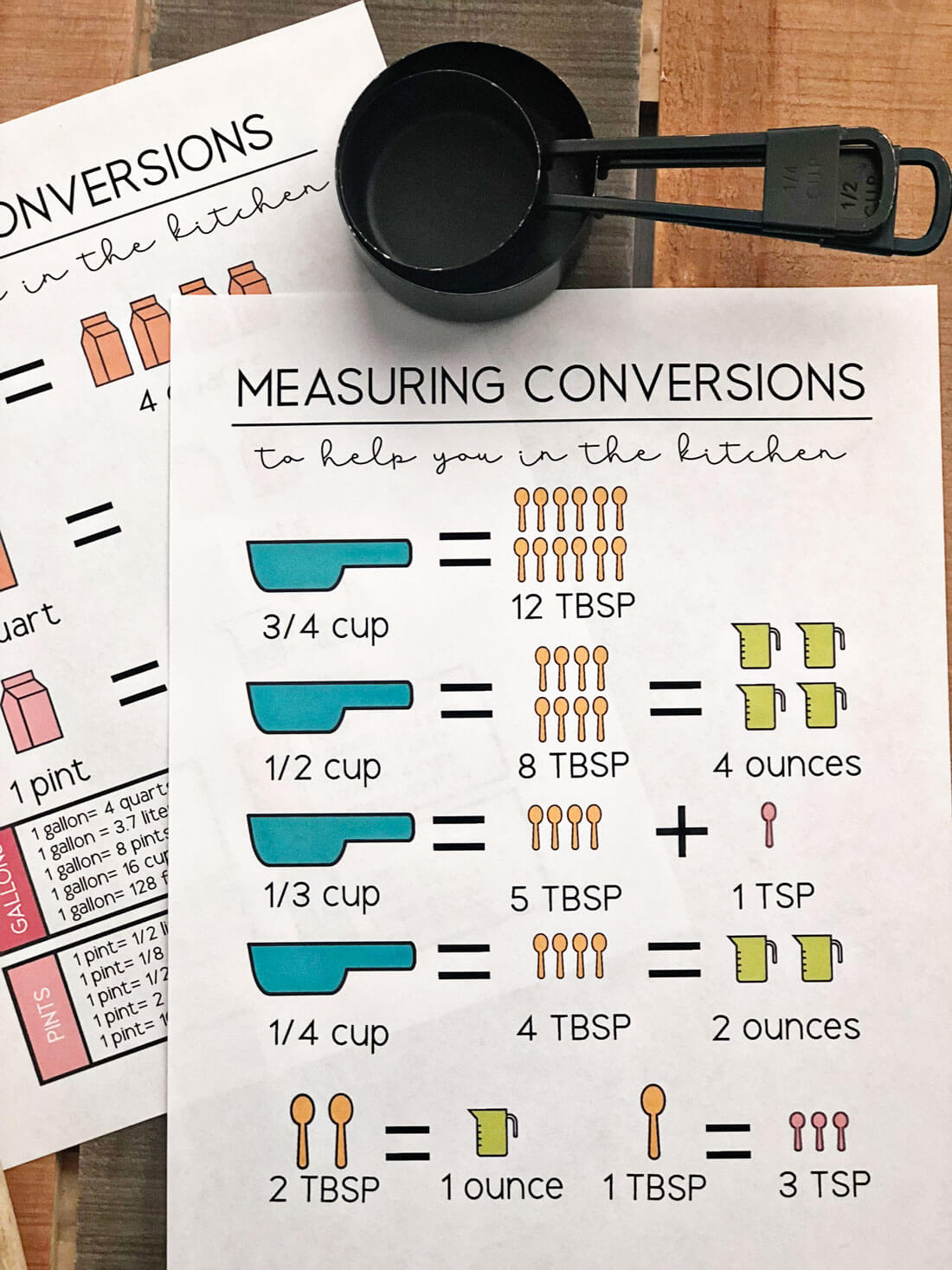
This seemingly simple question serves as a powerful metaphor for proportional thinking, a critical skill for anyone navigating the complexities of their financial landscape. Whether you’re budgeting your monthly income, diversifying an investment portfolio, evaluating business opportunities, or planning for retirement, your ability to break down a financial “whole” into its constituent “parts” and understand their relative significance is paramount. This article delves into the indispensable role of proportional thinking in finance, translating a basic mathematical concept into actionable financial wisdom that empowers you to optimize your resources and achieve your monetary goals.
The Foundation of Financial Literacy: Understanding Proportions
Financial literacy is often equated with knowing how to read a balance sheet or calculate interest, but its deeper essence lies in understanding relationships – how one financial element impacts another, how percentages work, and critically, how various components contribute to or subtract from a larger whole. The question “how many three-quarters are in one” encapsulates this perfectly, forcing us to consider fractions, division, and the inherent relationships between different quantities. This isn’t just about crunching numbers; it’s about developing an intuitive grasp of scale and distribution.
From Basic Arithmetic to Budget Allocation
Consider your monthly income as “one” – your total available resource. Every dollar you spend, save, or invest represents a fraction of that whole. If you allocate 30% of your income to housing, 15% to food, 10% to transportation, and so on, you are, in essence, determining “how many three-quarters” (or any other fraction) are going into each category relative to your total “one.” Understanding these proportions is the first step toward effective budgeting. Without this clarity, it’s easy to overspend in one area, inadvertently leaving insufficient “quarters” for other essential needs or future goals.
For instance, if your budget dictates that your fixed expenses (housing, utilities, debt payments) consume three-quarters of your take-home pay, you immediately understand the limited flexibility you have with the remaining quarter. This foundational understanding allows for conscious choices rather than reactive spending. It’s the difference between blindly spending and strategically allocating, a difference that can define your financial trajectory.
The Power of Fractional Thinking in Personal Finance
Fractional thinking extends beyond simple budgeting. It’s crucial when evaluating debt-to-income ratios, understanding loan payments as a proportion of your principal, or calculating the true cost of an item financed over time. For example, if you borrow $10,000 and the interest over the loan term amounts to an additional $2,500, you immediately grasp that the interest represents one-quarter of the original principal. This perspective highlights the cost of borrowing and encourages healthier financial habits. Similarly, when considering savings, setting a goal to save one-tenth of every paycheck, or committing “one-quarter” of an unexpected bonus, demonstrates a practical application of fractional thinking to build wealth incrementally.
Deconstructing Your Financial “Whole”: Budgeting and Resource Allocation
Every financial journey begins with understanding what you have and where it’s going. Your “one” can manifest in various forms: your monthly income, your total net worth, your available capital for investment, or even the sum of your working hours. The challenge then becomes how to effectively slice and dice this “one” into productive, purpose-driven “three-quarters” or other fractional allocations. This process is far more strategic than merely tracking expenses; it’s about intentional design.
Identifying Your “One”: Income, Assets, or Goals
Before you can allocate, you must define your “one.” For most, this begins with their income. What is your total take-home pay each month? This becomes the initial “one” that needs to be divided. As your financial life evolves, “one” might shift to your total investable assets, your business revenue, or even the total time available in your week if you’re considering side hustles. The clarity in defining your “one” provides the baseline for all subsequent proportional decisions. Without a clear “one,” your “three-quarters” will lack context and purpose.
For a business, “one” could be the total annual revenue, and understanding how much of that “one” goes to operating costs, marketing, R&D, and profit (the various “three-quarters” or smaller fractions) is crucial for sustainability and growth. This isn’t just a numerical exercise; it’s a strategic mapping of resources to objectives.
Slicing the Pie: Strategic Allocation of “Three-Quarters”
Once your “one” is defined, the art of allocation begins. This involves consciously deciding what proportion of your “one” should be dedicated to different categories. Popular budgeting rules, such as the 50/30/20 rule (50% for needs, 30% for wants, 20% for savings/debt repayment), are prime examples of proportional thinking in action. Here, your “one” is divided into specific “halves,” “three-tenths,” and “two-tenths” to guide your spending and saving habits.
Beyond these broad categories, detailed proportional thinking allows for fine-tuning. For instance, within your “needs” category, how much of that 50% fraction is dedicated to housing, utilities, and groceries? If housing consumes two-thirds of your “needs” portion, it highlights a potentially disproportionate allocation that might require adjustment. This meticulous approach to slicing the financial pie ensures that every “quarter” is accounted for, aligned with your values, and propelling you towards your financial objectives. It moves you from passive spending to active financial architect.
Investing with Precision: Applying Proportionality to Portfolios
In the realm of investing, proportional thinking transcends simple budgeting; it becomes a critical tool for managing risk, optimizing returns, and constructing a resilient portfolio. An investment portfolio, in its entirety, is your “one,” and each asset class, sector, or individual stock within it represents a “three-quarter” or some other fraction that contributes to its overall performance and risk profile.
Diversification as a Fractional Art
Diversification, a cornerstone of intelligent investing, is fundamentally an exercise in proportional allocation. It asks: how much of your “one” (total investment capital) should be allocated to stocks, bonds, real estate, or other asset classes? How much to domestic versus international markets? Growth versus value stocks? The goal is to avoid putting “all your eggs in one basket” by spreading your capital across various assets, ensuring that no single “three-quarter” or “one-quarter” dominates to the extent that its poor performance could derail your entire “one.”

A common portfolio allocation might be 60% stocks and 40% bonds. Here, stocks represent three-fifths of your “one,” and bonds represent two-fifths. This proportional distribution is designed to balance potential growth with stability, a direct application of understanding how different parts contribute to the whole while mitigating specific risks.
Risk Management and Position Sizing
Proportional thinking is also crucial for individual investment decisions, particularly in risk management and position sizing. When deciding how much to invest in a particular stock or fund, an investor might consider what fraction of their total portfolio that single investment represents. Seasoned investors often advise against letting any single position exceed a certain percentage (e.g., 5% or 10%) of the total portfolio. This limits the downside risk of any one asset performing poorly. If a stock represents one-quarter of your portfolio and its value drops by half, your overall portfolio takes a significant hit. If it only represents one-twentieth, the impact is far more manageable.
Moreover, stop-loss orders are a form of proportional risk management, limiting potential losses to a predefined fraction of an investment’s value. Understanding these proportions allows investors to calculate their maximum potential loss before entering a trade, fostering disciplined and sustainable investing habits. It’s about knowing how much of your “one” you’re willing to risk on a single “three-quarter” opportunity.
Maximizing Returns and Minimizing Waste: The Efficiency Angle
Beyond mere allocation, proportional thinking is a powerful tool for enhancing financial efficiency. It helps identify areas of waste, pinpoint opportunities for optimization, and visualize how small, consistent actions can lead to substantial long-term gains. This “efficiency angle” is where the initial mathematical question truly transforms into strategic financial management.
Opportunity Cost and Resource Prioritization
Every financial decision involves an opportunity cost – what you give up when you choose one option over another. If three-quarters of your discretionary income goes towards entertainment, what financial goals are you sacrificing? Perhaps that “three-quarter” could have been allocated to a high-interest savings account, a professional development course, or an additional debt payment, each offering a different future benefit. Proportional thinking helps you weigh these trade-offs by comparing the relative impact of allocating your “one” in different ways.
This applies equally to time, a non-renewable “one.” If three-quarters of your non-working hours are spent on passive leisure, what fraction remains for skill development, networking, or side hustles that could generate additional income or career growth? Consciously prioritizing how you allocate your resources, be it money or time, based on their proportional impact on your goals, is a hallmark of financial acumen.
Compound Interest: The Accumulation of “Three-Quarters” Over Time
Perhaps the most compelling demonstration of proportional thinking’s long-term power lies in compound interest. Each contribution you make to a savings or investment account, no matter how small a “three-quarter” it may seem, begins to earn interest not only on the principal but also on the accumulated interest from previous periods. Over time, these small fractions exponentially contribute to a much larger “one.”
Imagine regularly saving just one-tenth of your income. That small fraction, consistently invested, becomes a powerful force. The consistent adding of these “tenths” (or “three-quarters” in our metaphor) to your principal, then earning interest on that growing sum, exemplifies how sustained proportional allocation, even of small parts, can build significant wealth over decades. It’s the ultimate lesson in how to grow your “one” far beyond its initial size through consistent, fractional contributions.
Financial Tools and Technology: Aiding Proportional Decisions
In today’s digital age, mastering proportional thinking is significantly aided by a wealth of financial tools and technology. While the underlying principles remain constant, these innovations simplify the calculations, automate tracking, and provide insights that make applying proportional strategies more accessible and efficient than ever before. They essentially help us visualize and manage our “one” and its many “three-quarters.”
Budgeting Apps and Investment Calculators
Modern budgeting apps, from Mint to YNAB (You Need A Budget), are built on the premise of proportional allocation. They allow users to categorize spending, set targets as percentages of income, and visualize how much of their “one” is being consumed by various “three-quarters” (categories like housing, groceries, entertainment). They offer real-time feedback, making it easier to adjust allocations and stay within planned proportions.
Similarly, investment calculators, portfolio trackers, and robo-advisors help investors allocate their capital proportionally across different asset classes based on risk tolerance and financial goals. They can automatically rebalance portfolios to maintain desired proportions, ensuring that the “three-quarters” allocated to various assets don’t drift too far from the intended strategy due to market fluctuations. These tools are indispensable for both novice and seasoned investors seeking to manage their “one” strategically.
Data-Driven Insights for Optimal Allocation
Beyond simple tracking, advanced financial software and AI-powered platforms are beginning to offer data-driven insights into optimal proportional allocation. By analyzing spending patterns, market trends, and personal financial goals, these tools can recommend adjustments to budget percentages or portfolio weightings, suggesting how to better divide your “one” for maximum efficiency and return. This kind of sophisticated analysis empowers individuals and businesses to make more informed, data-backed proportional decisions, moving beyond intuition to a more scientific approach to financial management.

Conclusion
The seemingly simple question, “how many 3/4 are in 1,” unlocks a profound understanding of proportional thinking – a critical competency for anyone aspiring to financial success. From the fundamental act of budgeting your income to the sophisticated strategies of investment diversification and wealth creation, the ability to grasp how parts relate to a whole is non-negotiable.
Embracing proportional thinking means moving beyond mere numbers to a deeper comprehension of financial relationships. It empowers you to consciously allocate your resources, mitigate risks, identify opportunities, and leverage the power of consistent action. In a world of finite resources, mastering the art of dividing your financial “one” into intelligent “three-quarters” and other fractions is not just a mathematical exercise; it is the strategic cornerstone of building, preserving, and growing your wealth for a secure and prosperous future. Begin today by asking yourself: how effectively am I dividing my financial “one”?
aViewFromTheCave is a participant in the Amazon Services LLC Associates Program, an affiliate advertising program designed to provide a means for sites to earn advertising fees by advertising and linking to Amazon.com. Amazon, the Amazon logo, AmazonSupply, and the AmazonSupply logo are trademarks of Amazon.com, Inc. or its affiliates. As an Amazon Associate we earn affiliate commissions from qualifying purchases.