
For many, a car is not just a convenience but a necessity, a vital tool for work, family, and personal freedom. Financing a vehicle, however, often entails taking on a significant financial commitment: a car loan. Understanding how long it will take to pay off this loan, and the factors that influence that timeline, is paramount to maintaining sound personal finances. It’s not merely about making monthly payments; it’s about strategic planning, managing interest, and aligning your vehicle ownership with your broader financial goals. This article delves into the intricacies of car loan payoff periods, offering insights and strategies to help you navigate this common financial journey effectively.
Understanding Car Loan Terminology
Before we explore the duration of car loans, it’s essential to grasp the fundamental terms that govern them. These concepts directly impact your monthly payments, the total amount you pay, and ultimately, how quickly you can become debt-free.
Loan Term (or Duration)
The loan term, often expressed in months (e.g., 36, 48, 60, 72, 84 months), is the predetermined period over which you agree to repay the loan. This is perhaps the most direct determinant of your payoff timeline. A shorter term means fewer payments, but each payment will be larger. Conversely, a longer term results in smaller monthly payments but extends the overall repayment period and typically leads to more interest paid over the life of the loan. While 60-month terms were once standard, 72- and even 84-month terms have become increasingly common as vehicle prices rise, allowing buyers to manage higher price tags with seemingly more affordable monthly installments.
Principal
The principal is the original amount of money you borrow to purchase the car. This is the core debt you are working to reduce with each payment. Every dollar you pay towards the principal reduces the amount upon which interest is calculated, accelerating your journey towards ownership.
Interest Rate (APR)
The Annual Percentage Rate (APR) is the cost of borrowing money, expressed as a yearly percentage. It includes not only the interest charged by the lender but also any additional fees. A higher APR means you’ll pay more for the privilege of borrowing, significantly increasing the total cost of the loan and the time it takes to build equity in your vehicle, especially if you stick strictly to the minimum payments. Your credit score, the current economic climate, and the lender’s policies all influence the APR you receive.
Monthly Payment
This is the fixed amount you agree to pay your lender each month for the duration of the loan term. It is calculated based on the principal, the interest rate, and the loan term. While a lower monthly payment might seem attractive, it often comes at the cost of a longer loan term and more interest paid overall.
Total Cost of the Loan
This is the sum of the principal amount borrowed plus all the interest you pay over the life of the loan. Understanding this figure is crucial, as it reveals the true expense of your vehicle once financing is factored in. Many consumers focus solely on the monthly payment, overlooking the substantial difference a slight change in interest rate or term can make to the total cost.
Factors Influencing Your Car Loan Payoff Period
Several interconnected factors play a pivotal role in determining how long you’ll be making car payments. Recognizing these influences empowers you to make more informed decisions when acquiring and managing a car loan.
Initial Loan Term Selection
As discussed, the loan term you choose upfront is the primary driver of your scheduled payoff period. Lenders offer flexibility to accommodate different budgets, but this flexibility comes with trade-offs. A longer term (e.g., 72 or 84 months) makes monthly payments more manageable, but you’ll accumulate more interest over time and spend more years in debt. A shorter term (e.g., 36 or 48 months) means higher monthly payments, but you’ll save significantly on interest and own your car outright much sooner.
Interest Rate
The interest rate directly affects how much of each monthly payment goes towards the principal versus the interest. A lower interest rate means more of your payment attacks the principal, accelerating your equity build-up and reducing the overall time to payoff if you keep the same payment amount. Conversely, a high interest rate means more of your payment covers interest, slowing down the principal reduction. Your credit score is the most significant factor in securing a favorable interest rate.
Down Payment Amount
A substantial down payment reduces the principal amount you need to borrow. This has a cascading effect: less principal means less interest will accrue over the life of the loan, and you can potentially choose a shorter loan term with a comfortable monthly payment. Even if you maintain the same loan term, a larger down payment immediately reduces your overall interest paid and improves your loan-to-value ratio, reducing the risk of being “upside down” on your loan.
Credit Score
Your credit score is a reflection of your creditworthiness and dictates the interest rates available to you. Borrowers with excellent credit typically qualify for the lowest rates, which translates to less interest paid and a faster, more cost-effective path to owning their car. Those with lower credit scores often face higher interest rates, increasing their total cost and effectively extending the “real” time to payoff if they could have otherwise put that extra interest money towards the principal.
Prepayment Penalties
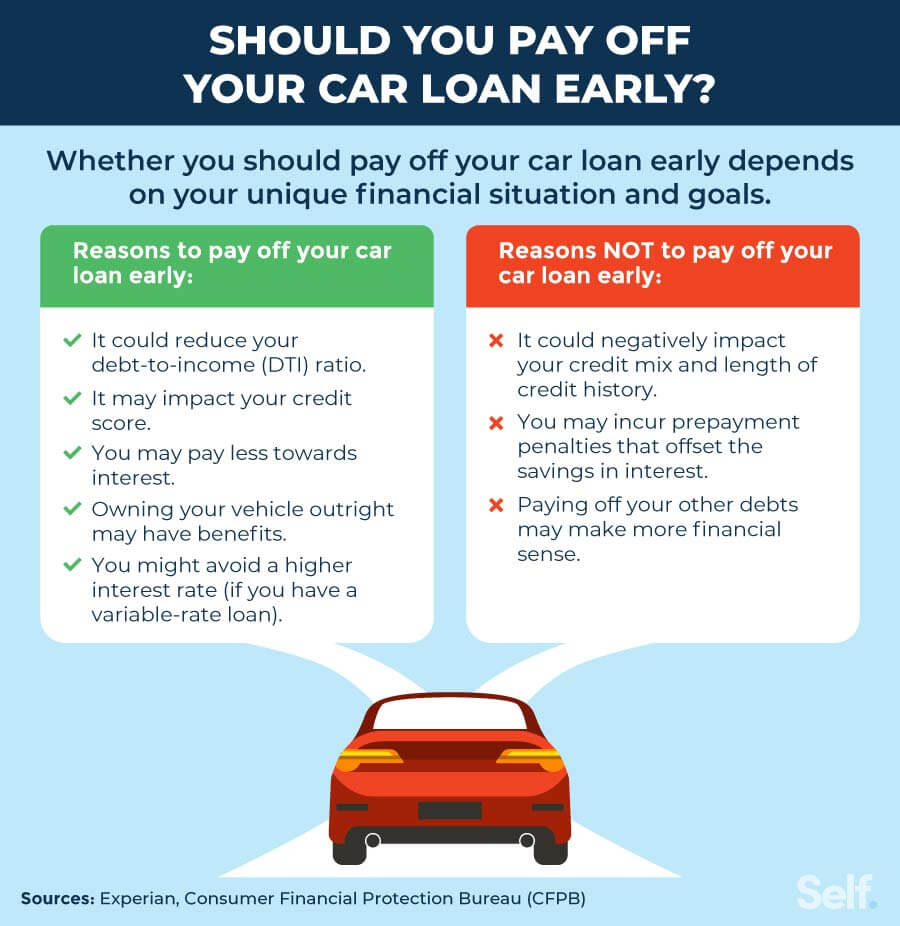
While less common with car loans than with some other types of financing, it’s crucial to confirm whether your loan agreement includes any prepayment penalties. A prepayment penalty means you might incur a fee if you pay off your loan earlier than scheduled. Most standard car loans do not have these, allowing you to make extra payments or pay off the loan in full without additional charges, which is vital for any strategy aimed at accelerating payoff.
Strategies to Accelerate Your Car Loan Payoff
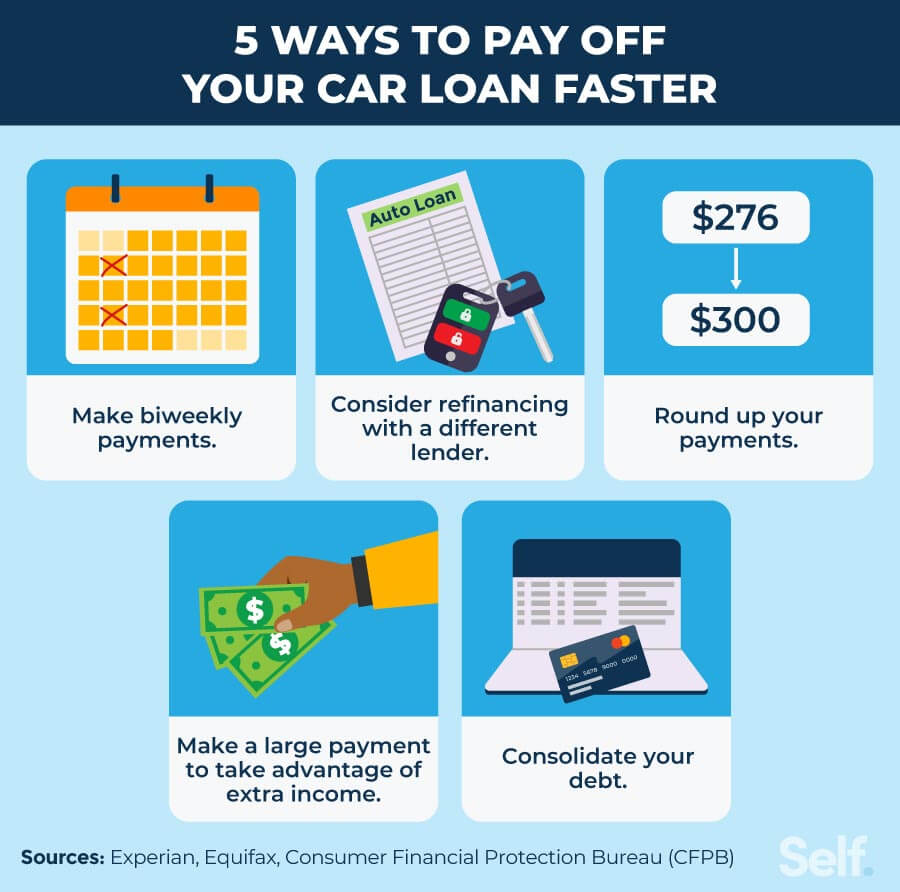
If your goal is to be debt-free sooner and save money on interest, there are several effective strategies you can employ to shorten your car loan payoff period.
Making Extra Payments
This is perhaps the most straightforward and impactful strategy. Even small, consistent extra payments can make a significant difference.
- Bi-weekly Payments: Instead of one monthly payment, divide your payment in half and pay every two weeks. This results in 26 half-payments per year, which equates to 13 full monthly payments instead of 12.
- Rounding Up Your Payment: If your payment is $345, consider paying $350 or $375. The extra amount directly attacks the principal.
- One Extra Payment Per Year: If you receive a bonus, tax refund, or extra income, designate it as an additional loan payment.
- Lump-Sum Payments: Any windfall, such as a work bonus, inheritance, or sale of an asset, can be applied directly to the principal. Always ensure your extra payments are clearly designated by your lender to go towards the principal, not just prepaying the next month’s interest.
Refinancing Your Loan
Refinancing involves taking out a new loan to pay off your existing one. This strategy is particularly effective if:
- Interest Rates Have Dropped: If market rates have fallen since you took out your original loan.
- Your Credit Score Has Improved: A better credit score can qualify you for a lower interest rate.
- You Want a Shorter Term: You can refinance to a shorter term if your financial situation has improved, allowing you to handle higher monthly payments and save on interest. Be cautious about refinancing to a longer term just to lower payments, as this increases total interest paid.
Increasing Your Income or Reducing Expenses
More disposable income means more money available to put towards your loan.
- Side Hustles: Consider a part-time job, freelancing, or selling items online to generate extra cash specifically for loan payments.
- Budget Cuts: Identify areas in your budget where you can reduce spending (e.g., dining out less, canceling unused subscriptions) and redirect those savings to your car loan.
Avoiding New Debt
Taking on additional debt can derail your efforts to pay off your car loan quickly. Focus on one debt at a time, if possible, or prioritize high-interest debts. Every dollar spent on new credit card interest or other loans is a dollar that could have gone towards your car loan principal.
The Pros and Cons of a Shorter vs. Longer Loan Term
Choosing the right loan term involves balancing financial flexibility with the overall cost of borrowing. There are distinct advantages and disadvantages to both shorter and longer repayment periods.
Benefits of a Shorter Term
- Less Total Interest Paid: This is the most significant advantage. A shorter term means fewer billing cycles for interest to accrue, saving you hundreds or even thousands of dollars over the life of the loan.
- Faster Equity Build-Up: You gain equity in your car more quickly, meaning you owe less compared to its market value.
- Less Risk of Being Upside Down: With faster principal reduction, you are less likely to owe more than the car is worth, which is crucial if you need to sell or if the car is totaled.
- Psychological Benefit: Being debt-free sooner provides a sense of financial accomplishment and frees up your monthly budget for other goals.
Drawbacks of a Shorter Term
- Higher Monthly Payments: This can strain your monthly budget and reduce your financial flexibility, potentially making it harder to save for emergencies or other goals.
- Less Financial Flexibility: Higher fixed expenses mean less wiggle room in your budget for unexpected costs or investment opportunities.
Benefits of a Longer Term
- Lower Monthly Payments: The primary appeal of longer terms is the reduced monthly burden, making more expensive vehicles seem more affordable.
- Greater Financial Flexibility: Lower payments free up cash flow for other purposes, such as saving for a down payment on a home, investing, or building an emergency fund.
Drawbacks of a Longer Term
- Significantly More Total Interest Paid: The longer interest is calculated on your principal, the more it accumulates, leading to a much higher total cost for the vehicle.
- Slower Equity Build-Up: It takes longer to pay down the principal, meaning you build equity at a slower rate.
- Higher Risk of Being Upside Down: Cars depreciate rapidly. With a long loan term, you’re more likely to owe more than your car is worth for an extended period, which can create problems if you need to sell or if the car is stolen or totaled.
- Longer Period of Debt: You remain in debt for a longer time, potentially impacting your ability to secure other loans or pursue different financial objectives.
Making the Right Decision for Your Financial Future
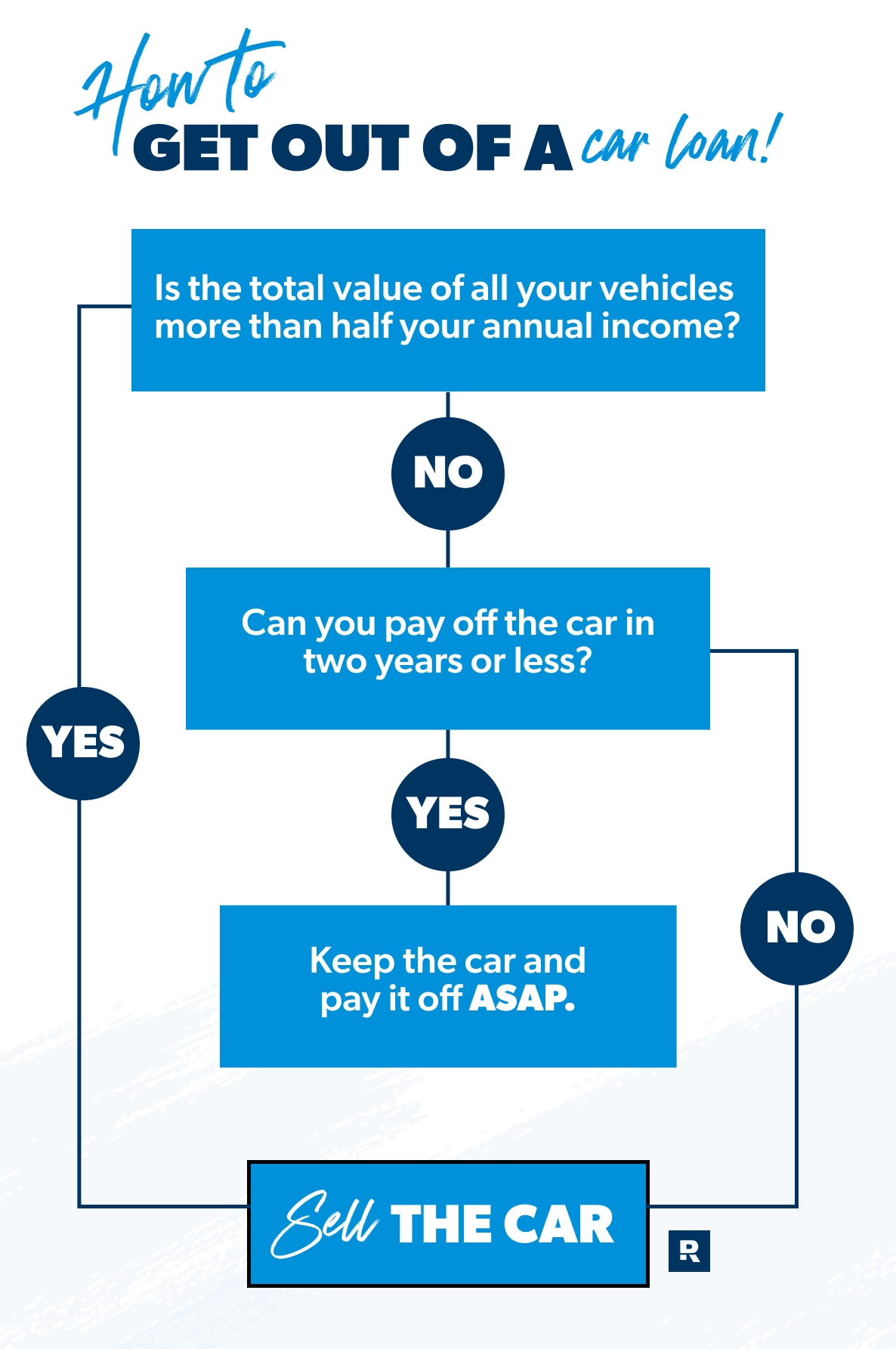
Determining the ideal car loan payoff duration is a highly personal decision that should be integrated with your broader financial plan.
Assess Your Budget
Before committing to a loan, thoroughly analyze your income and expenses. Use a budgeting tool or spreadsheet to understand what you can realistically afford each month without compromising other essential financial commitments or your quality of life. Don’t stretch your budget too thin for a car.
Consider Your Financial Goals
Where does car debt reduction fit into your overall financial priorities? Is it more important to pay off your car quickly, or are you prioritizing saving for a house, retirement, or paying off higher-interest debt (like credit cards)? Your car loan strategy should complement these larger goals, not detract from them.
Factor in the Car’s Depreciation
Automobiles are depreciating assets. Most lose a significant portion of their value in the first few years. It’s prudent to consider how quickly your car will lose value relative to how quickly you’re paying off the loan. Aim to reduce the principal faster than the car is depreciating to avoid the dreaded “upside down” scenario.
Seek Professional Advice
If you’re unsure about the best approach for your specific situation, consulting a financial advisor can be invaluable. They can help you analyze your budget, understand the implications of different loan terms, and integrate your car loan strategy into your comprehensive financial plan.
Paying off a car loan is a significant financial milestone. While the initial loan term sets the baseline, your choices regarding extra payments, refinancing, and overall financial management can dramatically alter how long you remain indebted. By understanding the terminology, recognizing the influencing factors, and strategically applying payoff techniques, you can take control of your car loan, minimize interest costs, and accelerate your path to financial freedom. Make an informed decision that aligns with your financial capacity and long-term aspirations.
aViewFromTheCave is a participant in the Amazon Services LLC Associates Program, an affiliate advertising program designed to provide a means for sites to earn advertising fees by advertising and linking to Amazon.com. Amazon, the Amazon logo, AmazonSupply, and the AmazonSupply logo are trademarks of Amazon.com, Inc. or its affiliates. As an Amazon Associate we earn affiliate commissions from qualifying purchases.