
For anyone navigating the complex world of personal finance and investing, a fundamental understanding of how long the stock market is open is more than just a trivial fact; it’s a cornerstone of effective strategy, risk management, and timely decision-making. The traditional image of frantic trading floors operating during specific daylight hours still holds significant sway, but the reality of modern financial markets encompasses far more than just the widely publicized 9-to-4 window. From pre-market skirmishes to after-hours analytics, and considering a global tapestry of varying schedules, the nuances of market operational times are critical for both seasoned traders and burgeoning investors alike.
This comprehensive guide will delve into the standard trading hours of major U.S. stock exchanges, explore the increasingly popular extended trading sessions, shed light on market holidays, and discuss the strategic implications of these schedules. We’ll examine why these timings exist, how they affect liquidity and volatility, and what investors need to know to harness this knowledge for their financial benefit. Whether you’re a day trader, a long-term investor, or simply curious about the mechanics of the financial world, grasping the intricacies of market open times is essential for informed participation and successful wealth building.
The Core Trading Hours: A Global Perspective
The heartbeat of global finance often resonates loudest during specific windows, dictated by the operating hours of major stock exchanges. While these hours might seem arbitrary to the uninitiated, they are the result of decades of tradition, regulatory frameworks, and the practicalities of a human-driven industry.
Standard U.S. Stock Market Hours (NYSE and NASDAQ)
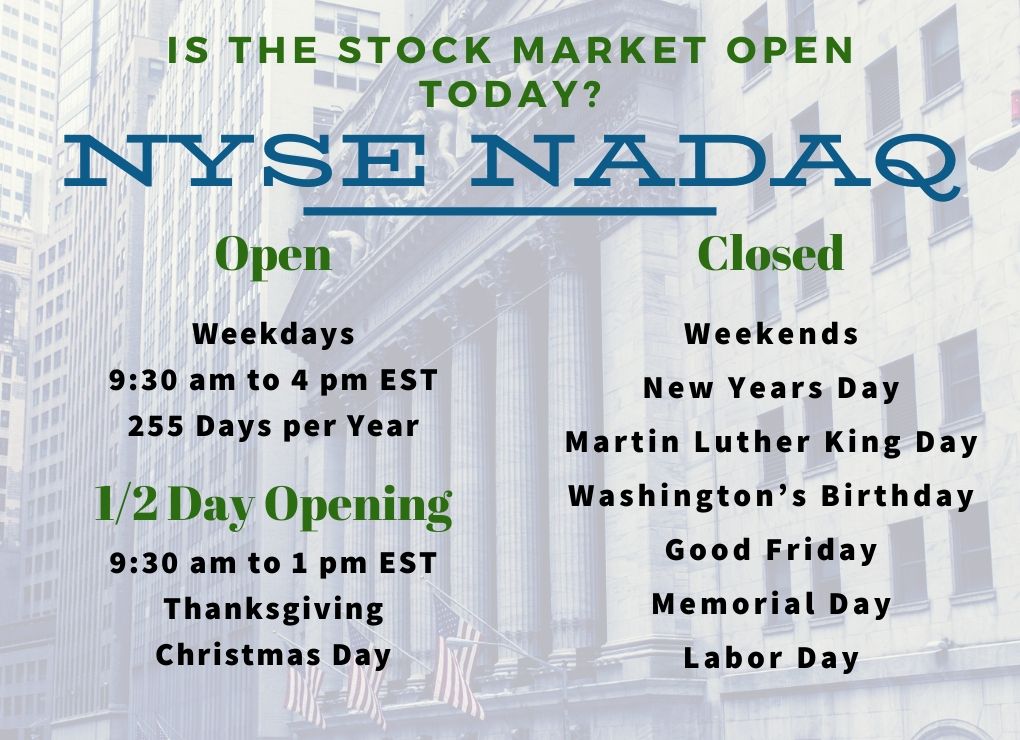
In the United States, the two primary stock exchanges, the New York Stock Exchange (NYSE) and the NASDAQ, largely adhere to the same schedule for their regular trading sessions. These are the hours when the vast majority of trading volume and liquidity occur, making them the most critical period for price discovery and execution for most investors.
The standard trading hours for both the NYSE and NASDAQ are:
- Monday through Friday: 9:30 AM Eastern Time (ET) to 4:00 PM Eastern Time (ET).
It’s crucial to note the “Eastern Time” designation. For investors operating in different time zones across the U.S. or internationally, converting these hours to their local time is a necessary step. During these 6.5 hours, markets are bustling, characterized by high liquidity, tighter bid-ask spreads, and typically more predictable price movements compared to extended hours.
The markets are closed on weekends (Saturdays and Sundays) and on a defined set of major federal holidays. Additionally, there are instances of early market closures, usually on the day before or after certain holidays, where trading may conclude at 1:00 PM ET. These specific closures are published well in advance by the exchanges and are critical for investors to monitor, as they can impact trade settlement and strategy.
Understanding Time Zones and Their Impact
The reliance on Eastern Time (ET) for U.S. market hours means that investors in other time zones must adjust accordingly. For example, an investor on the West Coast (Pacific Time, PT) will see the market open at 6:30 AM PT and close at 1:00 PM PT. This early start and early finish can significantly influence an individual’s daily routine, especially for those actively managing their portfolios or engaged in real-time trading.
For international investors, the time zone difference can be even more pronounced, potentially requiring them to trade during their evening or early morning hours. This often leads to strategic decisions about whether to focus on their domestic markets, adapt to U.S. hours, or utilize extended trading sessions. The synchronization of global financial markets means that news and economic data released during one region’s market hours can easily impact markets elsewhere once they open, underscoring the interconnectedness that transcends geographical boundaries.
International Markets: A Glimpse
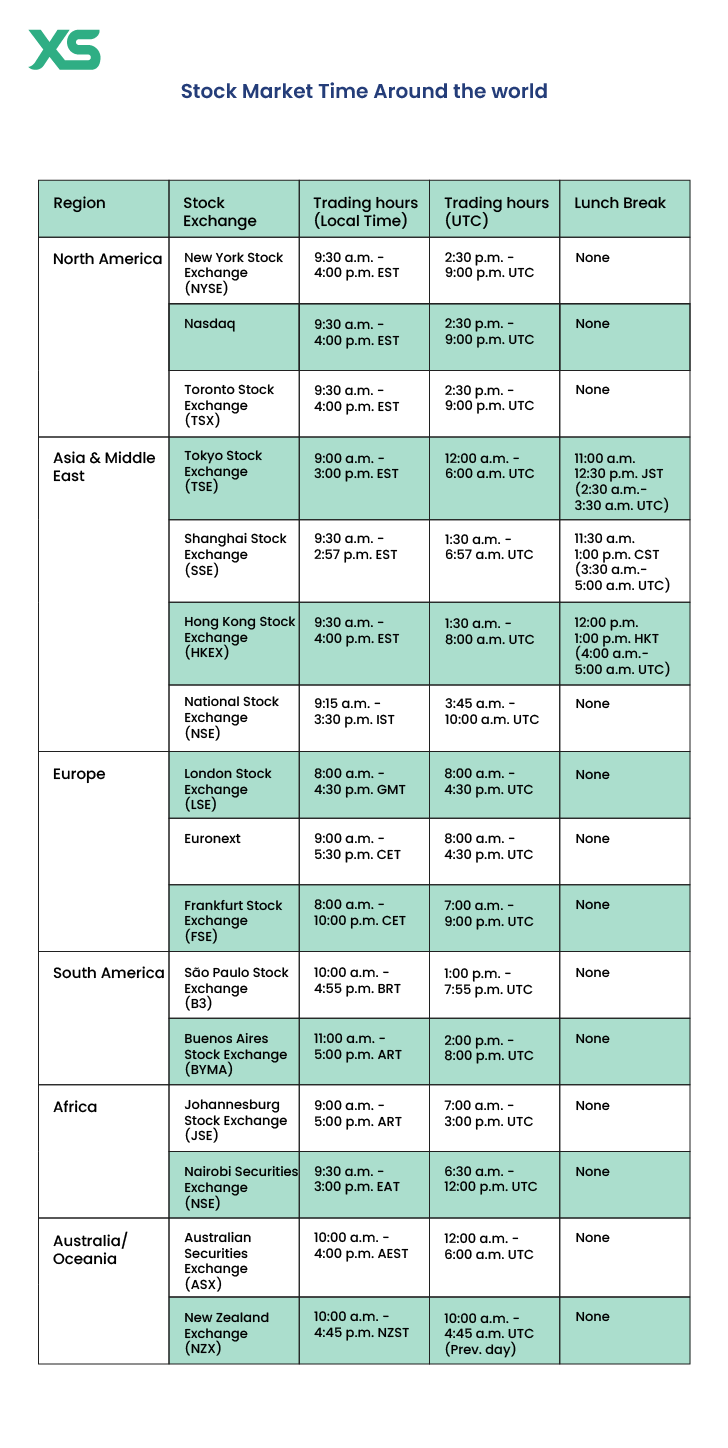
While our focus is primarily on U.S. markets, it’s insightful to briefly consider how other major global exchanges operate. Each continent and major financial hub has its own set of trading hours, often overlapping with or preceding/following other regions, creating a near 24-hour cycle of global trading activity.
- London Stock Exchange (LSE): Generally operates from 8:00 AM to 4:30 PM GMT.
- Tokyo Stock Exchange (TSE): Typically has two sessions, 9:00 AM to 11:30 AM JST and 12:30 PM to 3:00 PM JST, with a lunch break in between.
- Hong Kong Stock Exchange (HKEX): Similar to Tokyo, with morning (9:30 AM to 12:00 PM HKT) and afternoon (1:00 PM to 4:00 PM HKT) sessions.
- European Exchanges (e.g., Euronext Paris, Frankfurt Stock Exchange): Often align closely with London’s schedule, typically 9:00 AM to 5:30 PM local time.
These variations highlight the global nature of finance and the continuous cycle of price discovery. Understanding these different schedules is particularly relevant for investors involved in international equities or those tracking global economic indicators.
Beyond Standard Hours: Pre-Market and After-Hours Trading
The concept of a fixed 9:30 AM to 4:00 PM ET trading window is increasingly becoming an oversimplification. Modern technology and investor demand have paved the way for extended-hours trading, allowing market participants to react to news and execute trades outside the traditional session.
What is Pre-Market Trading?
Pre-market trading refers to the period before the regular stock market opens. For U.S. equities on the NYSE and NASDAQ, this typically runs from 4:00 AM ET to 9:30 AM ET. During this window, investors can place buy and sell orders, and trades are executed through Electronic Communication Networks (ECNs) rather than the traditional exchange floor.
The primary purpose of pre-market trading is to allow investors and institutions to react to news that breaks overnight or in the early morning hours, such as corporate earnings reports, economic data releases, or geopolitical events. It offers an opportunity to position portfolios before the main market opens, potentially capitalizing on or mitigating risks from these developments. However, pre-market trading is characterized by significantly lower liquidity and higher volatility compared to regular hours, leading to wider bid-ask spreads and potentially less favorable execution prices.
What is After-Hours Trading?
Conversely, after-hours trading takes place after the regular market closes, typically from 4:00 PM ET to 8:00 PM ET. Similar to pre-market, trades are facilitated by ECNs, and it serves a similar purpose: allowing market participants to react to news that breaks immediately after the close of the regular session, such as late-day earnings announcements or executive decisions.
Like pre-market, after-hours trading sessions are marked by reduced liquidity and increased volatility. The volume of shares traded is considerably lower than during regular hours, meaning large orders can have a more pronounced impact on stock prices. This environment can present opportunities for savvy traders but also carries elevated risks due to less efficient price discovery and the potential for rapid, significant price swings.
Accessing Extended Hours Trading
Most major online brokerages now offer access to pre-market and after-hours trading, though typically with certain restrictions. Investors usually need to explicitly opt-in for extended-hours trading and are often required to use limit orders. A limit order specifies the maximum price you’re willing to pay or the minimum price you’re willing to accept, which is crucial in low-liquidity environments to prevent unexpected or unfavorable trade executions. Market orders, which simply execute at the best available price, are generally discouraged or disallowed during extended hours due to the risk of significant price discrepancies. Understanding the specific terms and conditions of your brokerage for extended trading is paramount.
Why Do Trading Hours Matter? Implications for Investors
The timing of market operations isn’t just an administrative detail; it has profound implications for investment strategies, risk management, and overall market dynamics.
Liquidity and Price Discovery
The most significant impact of trading hours is on liquidity. During regular market hours (9:30 AM to 4:00 PM ET), millions of participants are actively buying and selling, creating deep liquidity. This means there are many buyers and sellers for most stocks, resulting in tight bid-ask spreads and efficient price discovery. It’s easier to enter or exit positions at a desired price without significantly moving the market.
Conversely, extended trading hours (pre-market and after-hours) suffer from drastically reduced liquidity. Fewer participants mean fewer buyers and sellers, leading to wider bid-ask spreads. This makes it more challenging to execute trades at favorable prices, and even relatively small orders can cause disproportionately large price movements. For investors, this translates into higher transaction costs and the risk of significant slippage – where the executed price differs substantially from the expected price.
Volatility and Risk Management
Lower liquidity directly correlates with increased volatility during extended hours. When there are fewer orders, any significant buy or sell order can have a magnified impact on a stock’s price. News events, which are often released outside regular hours, can trigger rapid and dramatic price swings in an environment with less resistance.
For active traders, this presents both opportunities and heightened risks. While quick gains might be possible, the potential for equally quick and substantial losses is also present. Long-term investors, while less focused on minute-by-minute price movements, should still be aware that extended-hours volatility can influence the opening price of a stock the next day, potentially affecting their portfolio’s value at the start of the regular session. Effective risk management, including the use of limit orders and careful position sizing, is crucial when engaging in extended-hours trading.
Information Flow and Decision Making
A considerable amount of market-moving information, such as quarterly earnings reports, company announcements, economic data releases (e.g., inflation reports, jobs data), and corporate guidance updates, is strategically released outside regular trading hours. This practice allows investors time to digest the information and form an opinion before the primary trading session begins, aiming to reduce abrupt, panicked reactions during market open.
However, this also means that pre-market and after-hours trading become critical periods for initial price reactions to this news. Investors who aren’t monitoring these extended sessions might find themselves at a disadvantage, reacting belatedly to significant price movements. Understanding the schedule of these information releases is vital for making informed decisions, whether to participate in extended-hours trading or to simply anticipate the next day’s market open.
Strategic Considerations for Different Investor Types
The importance of market hours varies significantly depending on an investor’s strategy:
- Day Traders: Are heavily reliant on regular market hours, where liquidity and volume are highest, allowing for rapid entries and exits. They might use extended hours to gauge sentiment but generally prefer the main session.
- Swing Traders: Who hold positions for a few days to a few weeks, are less concerned with intraday volatility but must be aware of how overnight news (and subsequent extended-hours trading) might affect their positions at market open.
- Long-Term Investors: Are generally least affected by hourly fluctuations but should still monitor market closures and holiday impacts, especially for dividend payments or portfolio rebalancing. Extended hours are rarely relevant for their buy-and-hold strategies, beyond observing initial reactions to company-specific news.
Navigating Market Closures and Holidays
Beyond the daily open and close, the stock market observes various holidays and occasional early closures, which are essential for investors to be aware of. These closures don’t just mean a day off; they have practical implications for trade settlement, liquidity, and overall market behavior.
Key U.S. Stock Market Holidays
The major U.S. stock exchanges (NYSE and NASDAQ) observe a standard set of holidays, mostly aligning with federal holidays. Common market holidays include:
- New Year’s Day
- Martin Luther King, Jr. Day
- Presidents’ Day
- Good Friday
- Memorial Day
- Juneteenth National Independence Day
- Independence Day (July 4th)
- Labor Day
- Thanksgiving Day
- Christmas Day
When these holidays fall on a weekend, the market typically observes them on the nearest weekday (e.g., if Christmas falls on a Saturday, the market might close on Friday). Additionally, there are instances of early market closures, typically at 1:00 PM ET, often on days surrounding major holidays (e.g., the day before or after Thanksgiving, Christmas Eve). These schedules are published well in advance by the exchanges and brokerage firms.
Impact of Holidays on Trading Strategies
Market closures due to holidays can have several effects:
- Reduced Liquidity: The days immediately leading up to and following a market holiday often see reduced trading volume and liquidity as institutional traders and investors take time off. This can lead to increased volatility and wider spreads, similar to extended-hours trading.
- “Holiday Effect”: Some market theories suggest a “holiday effect” where stock prices tend to perform better in the days leading up to certain holidays. While not a guaranteed phenomenon, it’s a known historical pattern that some traders observe.
- Settlement Cycles: Stock trades in the U.S. generally settle on a T+2 basis (trade date plus two business days). Market holidays do not count as business days, so a trade executed on a Wednesday before a Friday holiday might not settle until the following Tuesday, potentially delaying access to funds or shares.
- Information Accumulation: Over long holiday weekends, significant news or economic data might accumulate. When the market reopens, there can be a strong reaction as all this information is processed simultaneously, leading to a potentially volatile open.
Staying Informed
To avoid surprises, investors should regularly check the holiday calendars published by the NYSE and NASDAQ, or consult their brokerage firm’s announcements. Most reputable financial news outlets also publish these schedules. Being informed about upcoming closures allows investors to plan their trades, manage cash flow, and adjust their strategies accordingly, ensuring they are not caught off guard by an unexpected non-trading day.
The Future of Trading Hours: Towards a 24/7 Market?
The discussion around market hours often leads to a speculative question: will stock markets ever transition to a 24/7 model, mirroring the always-on nature of cryptocurrency markets or global forex? While the notion of continuous trading holds appeal for some, the practicalities and challenges are significant.
Arguments for Extended or 24/7 Trading
The idea of round-the-clock trading is driven by several factors:
- Globalization: In an increasingly interconnected global economy, news and events can break at any time, impacting markets worldwide. A 24/7 market would allow immediate reactions, theoretically improving price discovery.
- Accessibility: It would offer greater flexibility for international investors and those in different time zones, removing the need to trade during inconvenient hours.
- Technology: The underlying technology to support continuous trading exists, as demonstrated by other asset classes like cryptocurrencies and foreign exchange.
- Reduced Gaps: Eliminating market closures would reduce the potential for large “gap” openings or closings, where a stock’s price significantly jumps or drops from one day’s close to the next day’s open due to overnight news.
Challenges and Resistance
Despite the allure, significant hurdles stand in the way of a true 24/7 stock market:
- Operational Costs: Extending trading hours indefinitely would drastically increase operational costs for exchanges, clearinghouses, and brokerage firms, requiring continuous staffing and infrastructure maintenance.
- Human Element: Traders, analysts, and support staff require downtime. A 24/7 market could lead to burnout, fatigue, and a decline in human performance, potentially increasing errors and risk.
- Market Stability and Regulation: Regulators rely on defined trading windows to manage market integrity, investigate irregularities, and implement circuit breakers during extreme volatility. Continuous trading would complicate these oversight functions.
- Liquidity Distribution: Even if markets were open 24/7, it’s likely that liquidity would remain concentrated during traditional hours, leading to prolonged periods of low liquidity and high volatility that might not be conducive to efficient trading.
- Need for a ‘Cooling Off’ Period: Market closures provide a natural “cooling off” period, allowing investors and institutions to process information, strategize, and temper emotional reactions before the next trading session.
Current Trends and Potential Evolution
While a full 24/7 stock market for traditional equities seems unlikely in the near future, the trend towards extended accessibility is undeniable. The growth of pre-market and after-hours trading sessions is a testament to this, gradually extending the window for market participation. The rise of fractional shares, automated trading systems, and the increasing integration of digital assets are also pushing the boundaries of traditional market structures.
It’s more probable that any evolution would be incremental, perhaps further extending existing pre-market and after-hours sessions, or introducing limited weekend trading for specific instruments, rather than a sudden leap to continuous operation. The financial industry is inherently conservative, and significant changes to market structure are typically introduced with extreme caution to maintain stability and investor confidence.
Conclusion
Understanding “how long the stock market is open” is a fundamental aspect of financial literacy and a practical necessity for any investor. Beyond the familiar 9:30 AM to 4:00 PM ET regular trading hours, the landscape includes critical pre-market and after-hours sessions, each with its unique characteristics of liquidity, volatility, and access. Moreover, awareness of market holidays and early closures is crucial for planning trades, managing funds, and avoiding unexpected delays.
For individual investors, grasping these dynamics allows for more strategic decision-making, whether it’s timing trades to leverage high liquidity, managing risk during volatile extended hours, or simply anticipating how news released outside the main session might impact their portfolios. While the dream of a true 24/7 stock market remains largely aspirational due to significant operational and human challenges, the ongoing evolution of trading access suggests a future where markets are increasingly accessible, albeit with nuanced implications.
Ultimately, successful participation in the financial markets demands not only an understanding of what to invest in but also when to engage. By respecting the rhythms and boundaries of market operational hours, investors can navigate the complexities of the financial world with greater confidence, precision, and a higher probability of achieving their financial goals.
aViewFromTheCave is a participant in the Amazon Services LLC Associates Program, an affiliate advertising program designed to provide a means for sites to earn advertising fees by advertising and linking to Amazon.com. Amazon, the Amazon logo, AmazonSupply, and the AmazonSupply logo are trademarks of Amazon.com, Inc. or its affiliates. As an Amazon Associate we earn affiliate commissions from qualifying purchases.