
The financial world, for all its complexity, often operates within surprisingly rigid timeframes. For anyone participating in the stock market, whether a seasoned institutional trader or a novice retail investor, understanding the precise hours of operation is fundamental. It’s not merely a matter of knowing when you can place an order; it’s about comprehending the dynamics, liquidity, and strategic implications tied to these defined periods. The question “how long is the stock market open today?” leads us down a path to explore the intricacies of market schedules, the rationale behind them, and how they shape investment decisions in the modern era.
At its core, the U.S. stock market adheres to a standardized schedule, yet this simplicity belies a world of extended hours trading, global market interplay, and the ever-present influence of holidays and unforeseen events. This article delves into these various facets, providing an insightful guide to the operational rhythms of the stock market and equipping investors with the knowledge to navigate its demanding timelines effectively.
Understanding Standard Trading Hours in the U.S.
For most investors, the “stock market” refers to the major U.S. exchanges, primarily the New York Stock Exchange (NYSE) and the Nasdaq Stock Market (NASDAQ). These giants of global finance dictate the widely recognized trading hours that form the backbone of daily market activity.
The Core Session: NYSE and NASDAQ
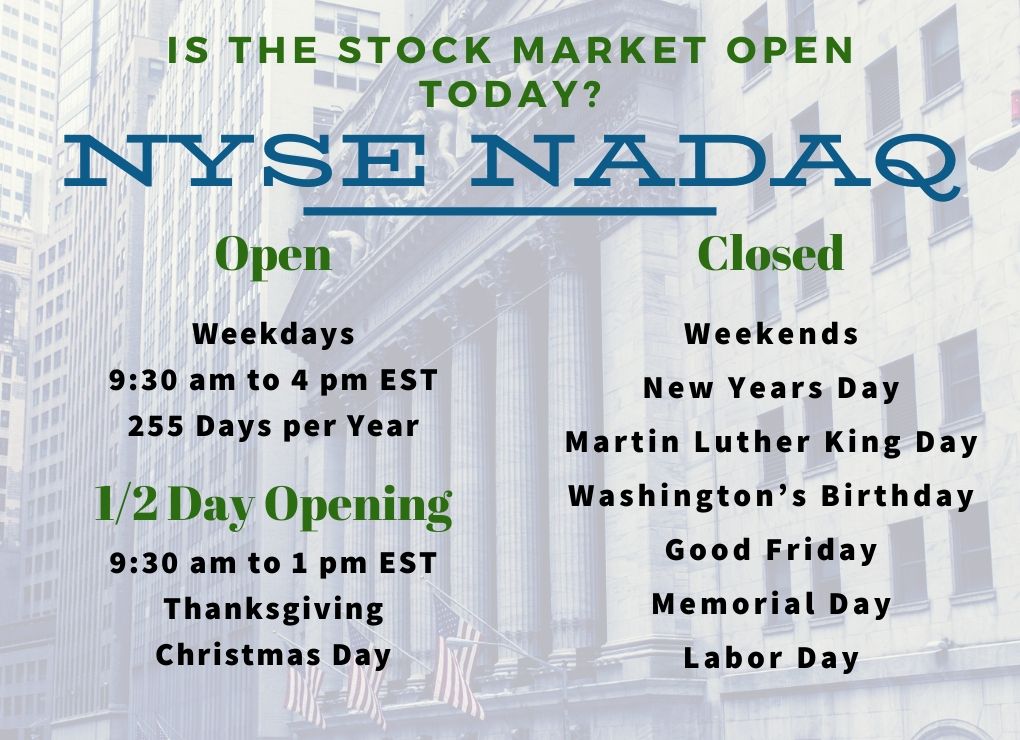
The standard trading session for both the NYSE and Nasdaq begins at 9:30 AM Eastern Time (ET) and concludes at 4:00 PM ET, Monday through Friday. This six-and-a-half-hour window is often referred to as the “regular trading session” or “core market hours.” During these hours, liquidity is typically at its highest, bid-ask spreads are narrowest, and the vast majority of trading volume occurs.
The establishment of these specific hours is rooted in a combination of historical precedent, operational efficiency, and the need for a concentrated period of activity to facilitate fair price discovery. Historically, trading floors were physical spaces where brokers convened, and the 9:30 AM to 4:00 PM schedule allowed for sufficient time for information dissemination, order execution, and settlement processes, while also accommodating diverse participant schedules across the continent. Even with the advent of electronic trading, which now dominates, these hours have largely persisted due to their ingrained nature and the aggregated liquidity they provide. Market makers and specialists play a crucial role during these core hours, ensuring an orderly market by providing continuous bids and offers, thereby reducing volatility and improving efficiency.
Weekends and Federal Holidays: When Markets Rest
While the stock market is a ceaseless global entity, individual exchanges, including those in the U.S., observe weekends and specific federal holidays. The U.S. stock market is closed on Saturdays and Sundays. Additionally, it observes a schedule of nine federal holidays annually, with occasional partial closures.
Key U.S. stock market holidays include:
- New Year’s Day (January 1)
- Martin Luther King, Jr. Day (Third Monday in January)
- Presidents’ Day (Third Monday in February)
- Good Friday (Friday before Easter)
- Memorial Day (Last Monday in May)
- Juneteenth National Independence Day (June 19)
- Independence Day (July 4)
- Labor Day (First Monday in September)
- Thanksgiving Day (Fourth Thursday in November)
- Christmas Day (December 25)
It’s also common for markets to close early (e.g., at 1:00 PM ET) on the day before Independence Day if it falls on a weekday, and on the day after Thanksgiving (Black Friday). If a holiday falls on a Saturday, the market may close on the preceding Friday; if it falls on a Sunday, the market may close on the following Monday. Being aware of these closures is paramount for investors, as news or global events occurring during these periods cannot be immediately acted upon within the U.S. market, potentially leading to significant price gaps when trading resumes.
Beyond the Bell: Exploring Pre-Market and After-Hours Trading
The 9:30 AM to 4:00 PM ET window, while standard, does not represent the entirety of stock market activity. Modern electronic trading systems have opened up “extended hours” trading, allowing investors to trade before the market officially opens and after it closes.
The Mechanics of Extended Hours Trading
Extended hours trading is typically divided into two segments:
- Pre-Market Trading: Generally runs from 4:00 AM ET to 9:30 AM ET.
- After-Hours Trading: Typically runs from 4:00 PM ET to 8:00 PM ET.
These sessions are facilitated by Electronic Communication Networks (ECNs), which are automated trading systems that match buy and sell orders. Unlike the regular session where specialists or market makers play a significant role in providing liquidity and managing order flow, ECNs simply match willing buyers and sellers. This difference in structure has profound implications for trading dynamics. Orders placed during extended hours are often limit orders, specifying a maximum or minimum price, rather than market orders, which execute at the best available current price. This is a crucial distinction given the reduced liquidity.
Advantages and Disadvantages for Investors
Extended hours trading presents a double-edged sword, offering both opportunities and heightened risks.
Advantages:
- Reacting to News: A primary draw is the ability to react immediately to corporate news, earnings reports, economic data, or global events released outside of regular trading hours, potentially capitalizing on early price movements.
- Flexibility: It offers convenience for investors whose schedules prevent them from trading during the standard session.
- Price Discovery: Early trading can help set the tone for the market opening, allowing for some initial price discovery based on fresh information.
Disadvantages:
- Lower Liquidity: Significantly fewer participants trade during extended hours, leading to thinner order books. This means fewer buyers and sellers, making it harder to execute large orders without impacting the price.
- Wider Bid-Ask Spreads: Due to lower liquidity, the difference between the highest price a buyer is willing to pay (bid) and the lowest price a seller is willing to accept (ask) is often much wider. This effectively increases transaction costs.
- Higher Volatility: A small number of trades can disproportionately move prices, leading to unpredictable and rapid price swings.
- Professional Dominance: Institutional investors and professional traders often have superior access to information and faster execution speeds, potentially putting retail investors at a disadvantage.
- Limited Order Types: Not all brokerages offer the same range of order types during extended hours, and market orders are generally discouraged due to the potential for adverse execution prices.
Investors considering extended hours trading must exercise extreme caution, prioritize limit orders, and be fully aware of the magnified risks involved.
Impact of Earnings Reports and News Events
Extended hours are particularly significant for earnings reports and major news announcements. Companies frequently release their quarterly results either after the market closes (e.g., 4:05 PM ET) or before it opens (e.g., 7:00 AM ET). This timing allows analysts and investors to digest the information without the immediate pressure of the regular trading session, but it also means that significant price movements, often violent ones, can occur in the pre-market or after-hours sessions as the market reacts. Traders who position themselves correctly can profit, but those on the wrong side of a surprise announcement can incur substantial losses rapidly.
The Global Perspective: Time Zones and International Markets
While the U.S. market has its specific hours, the world of finance is a 24-hour endeavor. When Wall Street sleeps, exchanges in Asia, Europe, and other regions are wide awake, trading billions. This global interplay adds another layer of complexity for investors.
Synchronizing with Global Clocks
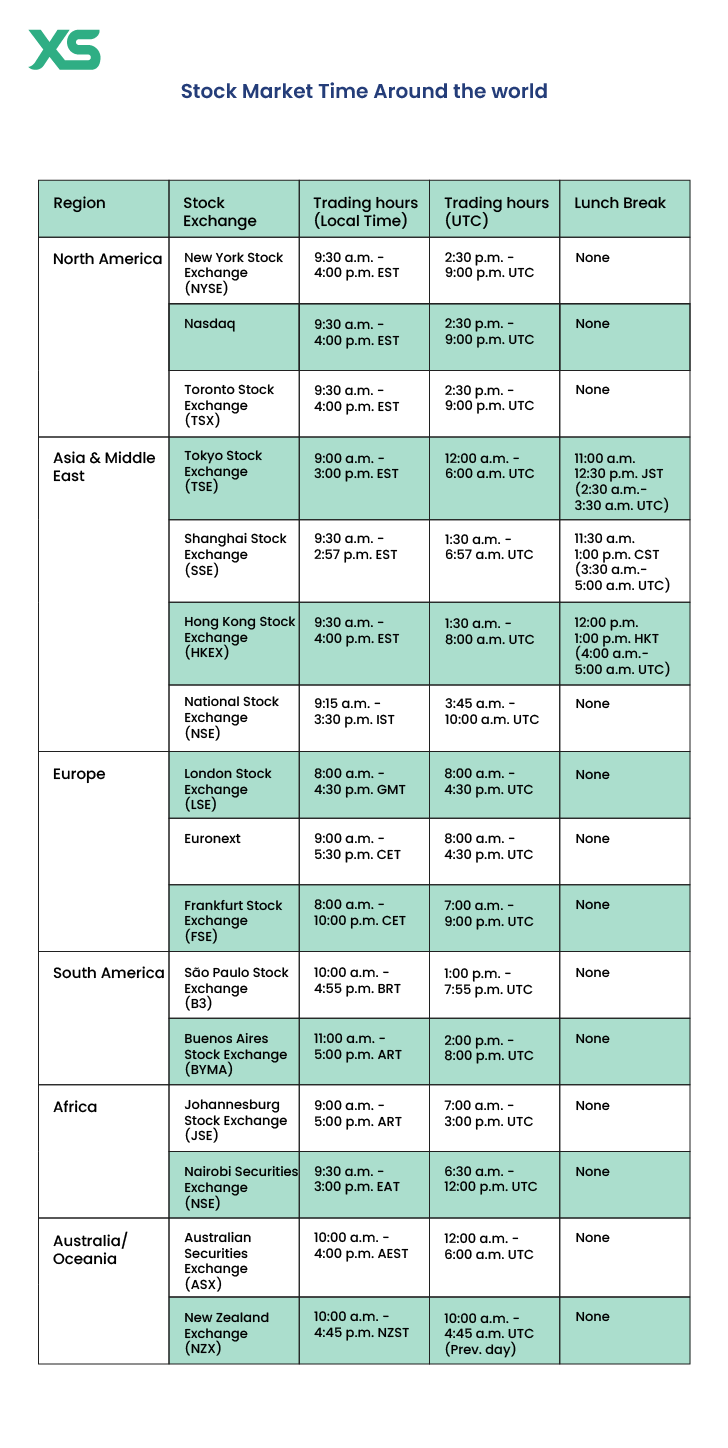
U.S. market hours, based on Eastern Time, dictate when U.S.-listed stocks can be traded directly. However, major events in other time zones—such as economic data releases from China, central bank decisions in Europe, or political developments in the Middle East—can profoundly impact U.S. market sentiment and prices. For instance, a negative economic report from Japan released during U.S. nighttime hours could lead to a sell-off in Asian markets, which then influences U.S. stock futures and potentially the U.S. market open the next morning.
Major global exchanges operate on their own distinct schedules:
- London Stock Exchange (LSE): 8:00 AM to 4:30 PM GMT
- Euronext (Paris, Amsterdam, Brussels): 9:00 AM to 5:30 PM CET
- Tokyo Stock Exchange (TSE): 9:00 AM to 11:30 AM JST, then 12:30 PM to 3:00 PM JST (with a lunch break)
- Shanghai Stock Exchange (SSE): 9:30 AM to 11:30 AM CST, then 1:00 PM to 3:00 PM CST (with a lunch break)
- Australian Securities Exchange (ASX): 10:00 AM to 4:00 PM AEDT/AEST
These varied schedules mean that a truly global investor often needs to monitor markets around the clock or rely on sophisticated news feeds and automated alerts.
Opportunities and Challenges for Cross-Border Trading
Investing in international markets offers significant opportunities for diversification and access to growth in different economic regions. However, it also introduces several challenges:
- Time Zone Coordination: Actively managing a portfolio across multiple time zones can be demanding.
- Currency Risk: Fluctuations in exchange rates can impact returns, even if the underlying stock performs well.
- Regulatory Differences: Each country has its own set of rules, tax implications, and reporting requirements.
- Information Asymmetry: Access to real-time, comprehensive information can be more challenging for foreign markets.
Nonetheless, for sophisticated investors, understanding and navigating these global market hours is crucial for a well-rounded and diversified investment strategy, enabling them to capitalize on opportunities that might not be available within a single market’s trading window.
Factors Influencing Market Operating Hours and Future Trends
Market hours are not immutable; they are influenced by a combination of regulatory requirements, technological capabilities, and evolving market demands. While core hours have been stable, the concept of market access is continually debated and refined.
Market Circuit Breakers and Emergency Closures
In times of extreme volatility, market mechanisms exist to temporarily halt trading. Circuit breakers are predefined thresholds designed to provide a cooling-off period during sharp market declines. For U.S. equity markets, these are typically tied to the S&P 500 index:
- Level 1 Halt: A 7% drop triggers a 15-minute halt (if before 3:25 PM ET).
- Level 2 Halt: A 13% drop triggers a 15-minute halt (if before 3:25 PM ET).
- Level 3 Halt: A 20% drop triggers a market closure for the remainder of the trading day.
These are critical safeguards, preventing panic selling from spiraling out of control. Beyond circuit breakers, rare emergency closures can occur due to unforeseen circumstances, such as major natural disasters (e.g., Hurricane Sandy) or national tragedies (e.g., September 11th attacks), underscoring the market’s dependence on stable infrastructure and societal order. These decisions are typically made by regulatory bodies like the SEC in conjunction with the exchanges.
The Debate for 24/7 Trading
The rise of cryptocurrency markets, which trade 24/7/365, has ignited discussions about the possibility of continuous trading for traditional stock markets. Arguments for a 24/7 stock market include:
- Enhanced Liquidity: Continuous trading could potentially increase overall liquidity by allowing participants from all global time zones to trade simultaneously.
- Immediate Reaction: Investors could react instantly to global news or events without waiting for market open, potentially reducing overnight gaps and volatility.
- Fairness: It could level the playing field between professional traders with access to pre- and after-market sessions and retail investors who find these hours challenging.
- Modernization: Aligns with the always-on nature of the digital economy.
However, significant hurdles and arguments against 24/7 trading persist:
- Investor Burnout: Continuous monitoring would be exhausting for individual investors and potentially stressful for professionals.
- Reduced Oversight: Regulators might struggle to maintain adequate oversight in a truly non-stop environment.
- Technical Challenges: Brokerage systems, clearing, and settlement processes would require substantial upgrades to handle continuous operations.
- Liquidity Dispersion: Instead of concentrating liquidity, a 24/7 market might simply spread it thinner across all hours, potentially increasing volatility during off-peak times.
While a full 24/7 stock market for all securities might be some way off, the trend toward longer trading hours and increasingly automated, electronic markets suggests that the traditional core session may continue to evolve.
Technological Advancements and Market Accessibility
Technological innovation has been the primary driver behind the expansion of market access. Electronic trading platforms, high-frequency trading algorithms, and sophisticated communication networks have made it possible for markets to operate with greater speed and efficiency across wider timeframes. The democratization of investing through commission-free trading apps and readily available market data has also fueled the demand for extended access, allowing millions of retail investors to participate in extended hours trading, albeit with the caveats previously discussed.
Strategic Implications for Investors
Understanding stock market hours is not just an academic exercise; it has profound strategic implications for all investors.
Tailoring Your Trading Strategy to Market Hours
Different trading styles are better suited to different market periods:
- Day Traders: Heavily focus on the regular session due to its high liquidity and concentrated volatility. They often aim to close positions before the 4:00 PM ET bell to avoid overnight risk.
- Swing Traders: May use extended hours to enter or exit positions based on news, but often hold positions for several days to weeks.
- Long-Term Investors: While less concerned with intra-day fluctuations, they still need to be aware of how extended hours trading and holiday closures can impact their portfolio’s value, especially around earnings reports or major economic announcements. Placing limit orders with a longer “good-till-canceled” duration is common.
Knowing when key information (like CPI reports, Fed announcements, or corporate earnings) is released is critical, as these often coincide with pre-market or after-hours, providing specific windows of opportunity or risk.
Leveraging Financial Tools and Resources
Modern financial tools are indispensable for navigating market hours effectively:
- Real-time Data and Charting Software: Essential for monitoring price movements and technical indicators, especially during volatile extended hours.
- News Feeds: Fast access to breaking news is crucial for reacting quickly to market-moving events. Many platforms integrate news directly into their trading interfaces.
- Brokerage Capabilities: Investors should choose a brokerage that offers robust extended-hours trading capabilities, reliable execution, and transparent fee structures.
- Order Types: A thorough understanding of limit orders, stop-loss orders, and other advanced order types is vital, particularly when trading outside of core hours to manage risk effectively.
Risk Management and Due Diligence
Regardless of the time of day, effective risk management remains paramount. For extended hours trading, this means being acutely aware of the lower liquidity and wider spreads. Investors should:
- Use Limit Orders: Always specify the price you are willing to buy or sell at.
- Start Small: Test the waters with smaller position sizes during extended hours.
- Research Thoroughly: Understand the specific factors influencing a stock’s price during off-hours, such as upcoming news or recent announcements.
- Monitor News Continuously: Be prepared for rapid changes in sentiment.
- Avoid Over-Trading: The allure of constant action can lead to poor decisions. Sometimes, the best strategy is to wait for the regular session.
In conclusion, “how long is the stock market open today?” is a question with a nuanced answer. While standard hours provide a familiar rhythm, the market’s pulse extends well beyond the opening and closing bells, influenced by technology, global interconnectedness, and the ceaseless flow of information. Astute investors recognize these dynamics, adapting their strategies to capitalize on opportunities while diligently managing the inherent risks across all operational timeframes.
aViewFromTheCave is a participant in the Amazon Services LLC Associates Program, an affiliate advertising program designed to provide a means for sites to earn advertising fees by advertising and linking to Amazon.com. Amazon, the Amazon logo, AmazonSupply, and the AmazonSupply logo are trademarks of Amazon.com, Inc. or its affiliates. As an Amazon Associate we earn affiliate commissions from qualifying purchases.