
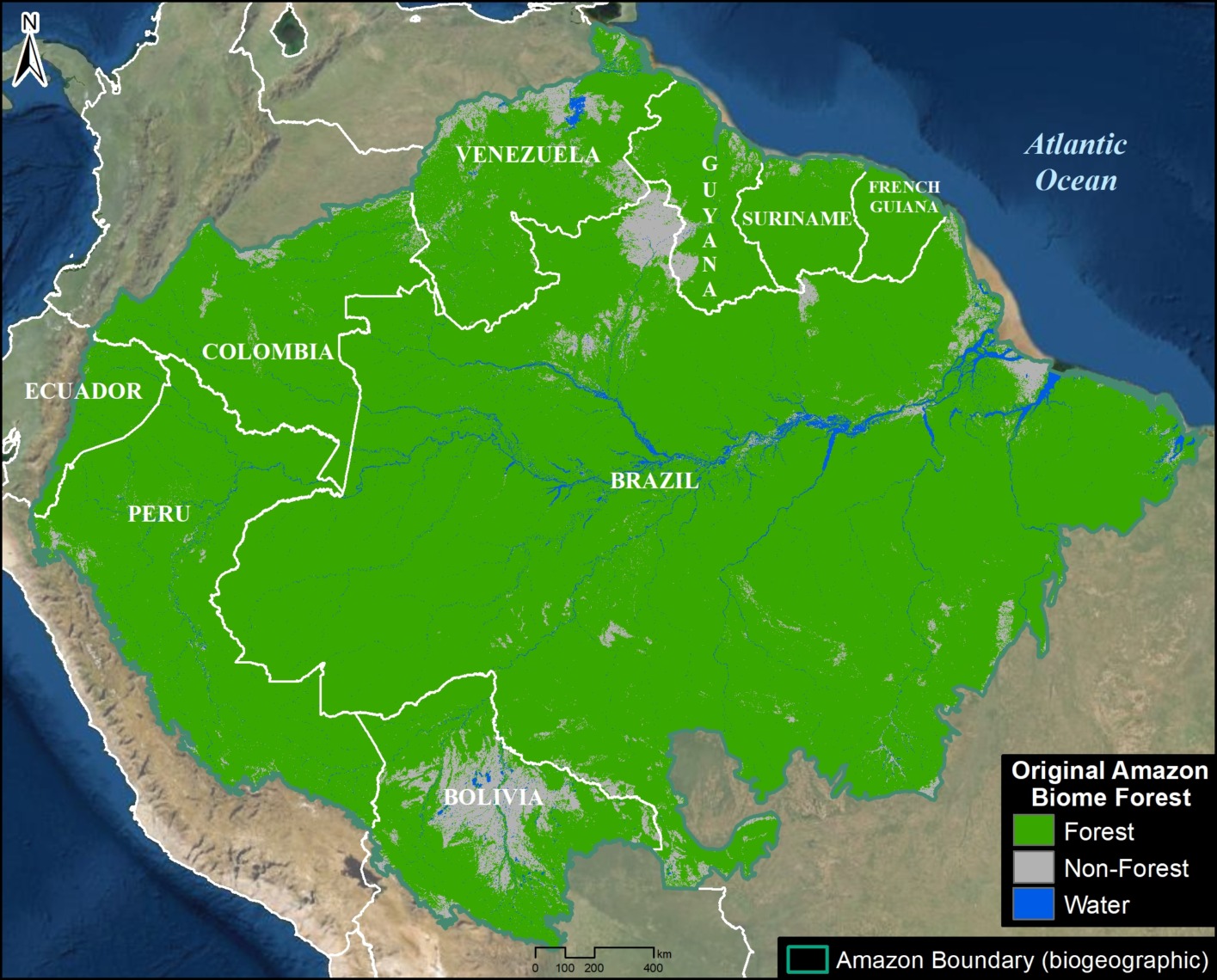
In the lexicon of global finance, few metaphors are as apt as the “Amazon forest.” While the phrase traditionally conjures images of the world’s largest tropical rainforest, in the context of the modern economy, it represents a sprawling, interconnected corporate ecosystem that has redefined the boundaries of retail, technology, and logistics. To ask “how large” this entity is requires more than a simple look at a balance sheet; it demands an analysis of a multi-trillion-dollar infrastructure that touches nearly every aspect of consumer behavior and business operation globally.
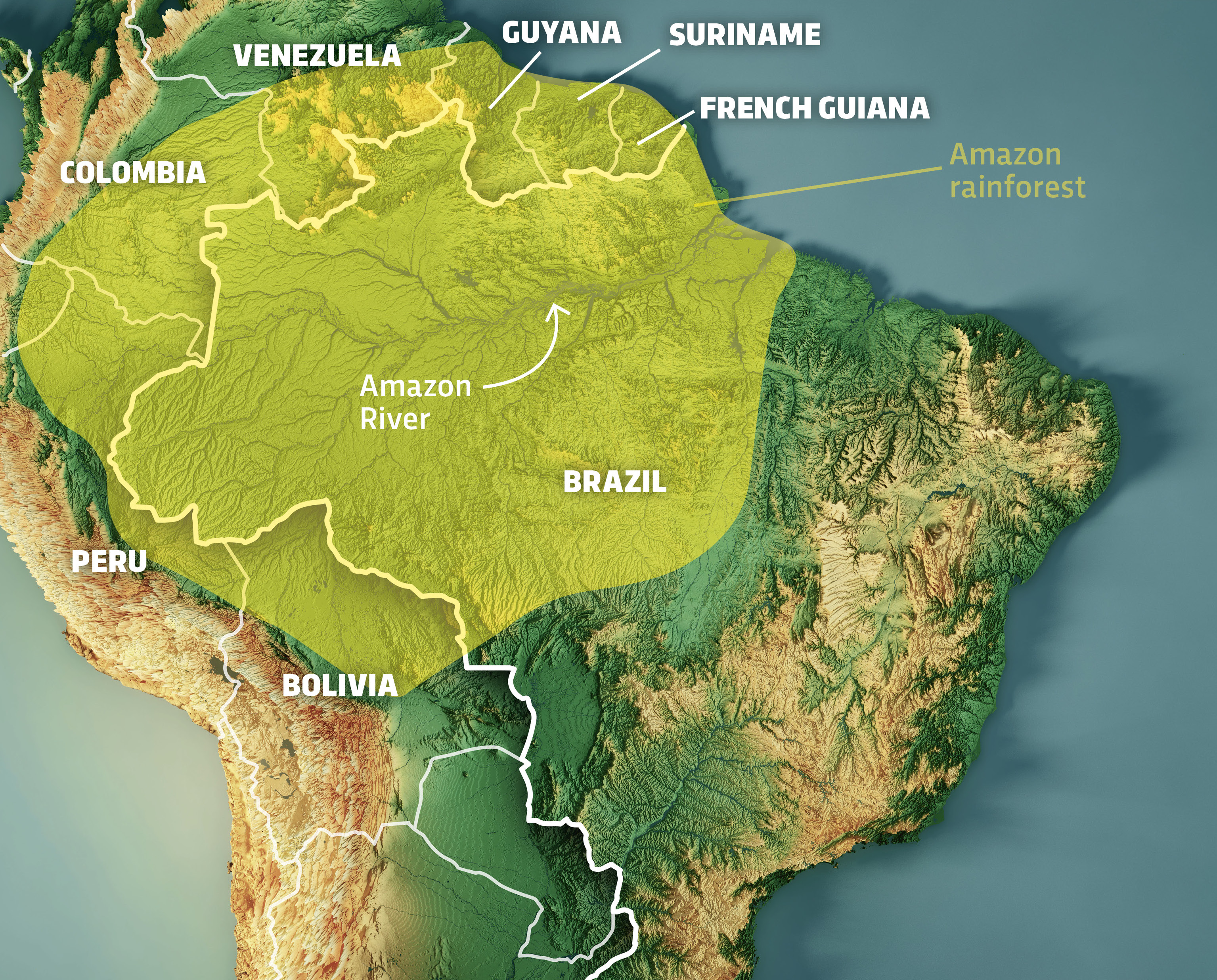
The scale of Amazon is not merely a matter of geographic reach but of economic depth. From its roots as a digital bookstore to its current status as a global hegemon in cloud computing, logistics, and advertising, the “Amazon forest” has grown into a self-sustaining cycle of reinvestment and expansion.
The Financial Canopy: Dissecting Revenue Streams and Profit Engines
To understand the sheer magnitude of Amazon, one must first look at its financial output. Unlike traditional retailers that rely on a single primary margin, Amazon operates a multi-layered revenue model that allows it to capture value at various stages of the consumer and business journey.
AWS: The Profit Powerhouse and Infrastructure Root
Amazon Web Services (AWS) is arguably the most critical “root system” of the entire corporate forest. While the retail side of the business generates the highest volume of top-line revenue, AWS provides the lion’s share of the operating profit. As of recent fiscal years, AWS has consistently commanded a dominant share of the global cloud infrastructure market, often exceeding 30%.
This segment is large not just in terms of dollars, but in its foundational role for the internet itself. Startups, multinational corporations, and government agencies rely on AWS for data storage, machine learning, and computing power. For an investor, the size of AWS represents a high-margin recurring revenue stream that funds the company’s more capital-intensive ventures in logistics and physical retail.
The Third-Party Marketplace and Small Business Integration
One of the most significant metrics of Amazon’s size is the volume of its third-party seller services. More than 60% of the units sold on the platform come from independent sellers, many of whom are small-to-medium-sized businesses. This creates a massive secondary economy within the Amazon ecosystem. By providing fulfillment, advertising, and payment processing for these millions of sellers, Amazon has effectively built a “private tax” on a significant portion of global e-commerce. The revenue from these services—totaling tens of billions annually—often outpaces the growth of Amazon’s own first-party retail sales.
The Advertising Juggernaut
In a relatively short period, Amazon has transformed from a retail site into the third-largest digital advertising platform in the world, trailing only Google and Meta. The “forest” is so large that its internal search engine has become the primary starting point for product discovery, surpassing traditional search engines. This high-margin advertising business allows Amazon to monetize its massive traffic without the overhead associated with shipping physical goods, adding another layer of financial density to its ecosystem.
The Physical Footprint: Logistics and Global Infrastructure
If the financial metrics represent the height of the canopy, the logistics network represents the physical mass of the forest. Amazon’s transition from a tech company to a logistics powerhouse is perhaps the most visible indicator of its scale.
Fulfillment Centers and the Real Estate Empire
Amazon’s physical footprint is measured in hundreds of millions of square feet. The company manages a vast network of fulfillment centers, sortation centers, and delivery stations that span the globe. In the United States alone, Amazon has become one of the largest private owners and tenants of industrial real estate. These facilities are not just warehouses; they are high-tech hubs integrated with proprietary robotics and AI-driven inventory management systems. This physical presence creates a barrier to entry for competitors that is nearly impossible to breach, as the capital expenditure required to replicate this network is measured in the hundreds of billions.
The Transportation Fleet: Controlling the Last Mile
To understand the size of the “forest,” one must look at its veins: the delivery network. Amazon has moved aggressively to reduce its reliance on third-party carriers like UPS and FedEx. Today, Amazon Air operates a fleet of nearly 100 aircraft, and the company manages thousands of branded delivery vans and long-haul trailers. By controlling the “last mile” of delivery, Amazon ensures the speed and reliability that justify its Prime membership fees. This vertical integration makes Amazon one of the largest logistics companies on the planet, operating a private postal service that rivals national institutions in volume and efficiency.
Prime: The Loyalty Moat
The Amazon Prime program is the psychological boundary of the forest. With over 200 million members globally, Prime acts as a recurring revenue engine and a customer retention tool. For a fixed annual fee, users are incentivized to keep their spending within the Amazon ecosystem to maximize their “free” shipping and streaming benefits. From a business finance perspective, Prime members spend significantly more per year than non-members, providing a predictable and growing cash flow that stabilizes the company’s long-term outlook.
Market Valuation and Competitive Dominance
The “size” of Amazon is perhaps most frequently cited in the context of its market capitalization. As a member of the elite group of companies with valuations exceeding $1 trillion, Amazon’s market weight has profound implications for global indices and pension funds.
The Flywheel Effect and Investor Sentiment
Amazon’s growth strategy is famously built on the “flywheel” concept: lower prices lead to more customers, which attracts more sellers, which allows for better economies of scale, which leads back to lower prices. Investors have historically rewarded this strategy, prioritizing long-term market share over short-term dividends. This has allowed Amazon to maintain a valuation that reflects not just current earnings, but its potential to disrupt entirely new industries.
Comparative Scale: Amazon vs. Traditional Retail
When compared to traditional retail giants like Walmart or Target, Amazon’s scale is unique because of its technological agility. While Walmart may have a higher total annual revenue in some years, Amazon’s valuation is typically much higher due to its superior margins in cloud computing and advertising. The “forest” is not just about selling goods; it is about owning the platform through which goods and services are sold, marketed, and delivered. This platform-centric approach gives Amazon a degree of leverage over the consumer economy that no traditional brick-and-mortar retailer has ever achieved.
Expanding the Canopy: Diversification and Future Growth
The Amazon forest is never static; it is constantly encroaching into new territories. Through aggressive acquisitions and internal research and development, the company is diversifying its income streams to ensure future resilience.
Healthcare and Physical Groceries
The acquisition of Whole Foods Market was a pivotal moment in Amazon’s expansion, marking its serious entry into the grocery sector and providing a physical presence in affluent neighborhoods. More recently, the acquisition of One Medical and the launch of Amazon Pharmacy indicate a clear intent to disrupt the multi-trillion-dollar healthcare industry. By integrating healthcare into the Prime ecosystem, Amazon seeks to become a central pillar of the consumer’s daily life, far beyond simple retail transactions.
Content, Media, and MGM
The “Amazon forest” also provides the “oxygen” of entertainment. Through Prime Video and the multi-billion-dollar acquisition of MGM Studios, Amazon has become a major player in Hollywood. This is not a tangential hobby; it is a strategic financial move to increase the value of the Prime subscription and capture a larger share of the “attention economy.” When consumers watch a movie on Prime, they are remaining within the forest, increasing the likelihood that they will use the platform for other purchases.
Satellite Internet and Project Kuiper
The next frontier for Amazon’s scale is literally orbital. Project Kuiper, Amazon’s initiative to launch thousands of low-Earth orbit satellites, aims to provide global broadband internet. This project mirrors the AWS strategy: build a massive, expensive infrastructure and then sell access to it. If successful, it would allow Amazon to provide the very connectivity required for e-commerce and cloud computing in underserved regions, effectively owning both the marketplace and the means of reaching it.

Conclusion: The Unending Reach of the Corporate Ecosystem
When we ask how large the Amazon forest is, the answer is found in the synthesis of these various parts. It is a company that manages the data of the world’s largest corporations, delivers millions of packages a day, produces award-winning cinema, and provides the backbone for small business digital sales. Its size is measured by its $1.5 trillion+ valuation, its 1.5 million employees, and its presence in the pockets of hundreds of millions of consumers.
For the investor, the entrepreneur, or the financial analyst, the “Amazon forest” represents the ultimate case study in the power of the network effect and vertical integration. Its canopy is broad, its root system is deep, and its growth shows no signs of slowing. As it continues to expand into healthcare, finance, and satellite communications, the boundaries of this economic forest will likely continue to push outward, further cementing its status as the most expansive business entity of the 21st century.
aViewFromTheCave is a participant in the Amazon Services LLC Associates Program, an affiliate advertising program designed to provide a means for sites to earn advertising fees by advertising and linking to Amazon.com. Amazon, the Amazon logo, AmazonSupply, and the AmazonSupply logo are trademarks of Amazon.com, Inc. or its affiliates. As an Amazon Associate we earn affiliate commissions from qualifying purchases.