
For the modern investor, checking “how the market is doing” is almost synonymous with checking the status of the S&P 500. As the most widely followed equity index in the world, the Standard & Poor’s 500 serves as a definitive pulse point for the American economy and, by extension, the global financial landscape. When we ask how the S&P is doing today, we are not just asking about a number on a screen; we are inquiring about the collective sentiment of millions of investors, the health of the world’s largest corporations, and the trajectory of global wealth. To understand today’s performance, one must look beyond the green or red percentage points and delve into the mechanics, sectors, and macroeconomic forces that drive this financial titan.
Why the S&P 500 is the Ultimate Barometer for Financial Health
The S&P 500 is often preferred over the Dow Jones Industrial Average or the Nasdaq Composite because of its comprehensive nature. While the Dow tracks only 30 blue-chip companies and the Nasdaq is heavily weighted toward technology, the S&P 500 captures approximately 80% of the total market capitalization of the U.S. stock market.
The Composition and Selection Process
The S&P 500 is not a static list of the 500 largest companies. Instead, it is a curated index managed by a committee at S&P Dow Jones Indices. To be included, a company must meet strict liquidity and size requirements, and it must have a track record of positive earnings over the most recent four quarters. This ensures that the index represents not just “large” companies, but “viable” ones. When you track the index today, you are looking at a cross-section of leaders in every industry from consumer staples to renewable energy.
The Impact of Market-Cap Weighting
One of the most critical aspects of how the S&P 500 performs today is its float-adjusted market-capitalization weighting. This means that larger companies have a disproportionately large impact on the index’s movement. If the “Magnificent Seven”—Apple, Microsoft, Alphabet, Amazon, Nvidia, Meta, and Tesla—experience a surge, the S&P 500 may show a positive gain even if hundreds of smaller companies in the index are declining. Understanding this concentration is vital for any investor trying to interpret daily volatility; the “top-heavy” nature of the index means that today’s performance is often a reflection of the tech giants’ dominance.
Interpreting Today’s Market Movements: Bulls, Bears, and Volatility
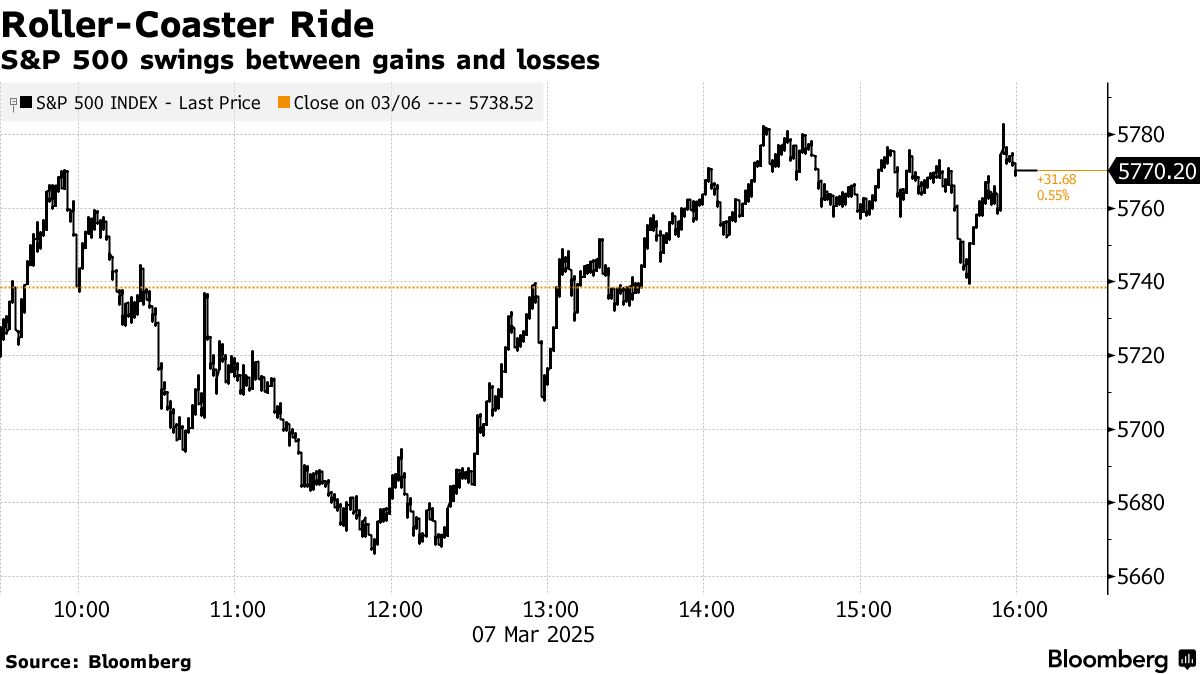
Daily fluctuations in the S&P 500 are rarely the result of a single event. Rather, they are a reaction to a complex web of data points that investors digest in real-time. Whether the index is “up” or “down” today usually boils down to three major factors: corporate earnings, macroeconomic data, and geopolitical sentiment.
Factors Influencing Daily Fluctuations
On any given trading day, the S&P 500 reacts to “surprises.” If the Department of Labor releases a jobs report that shows higher-than-expected unemployment, the index might dip on fears of a recession—or it might rise on the hope that the Federal Reserve will lower interest rates. Similarly, during “earnings season,” the daily movement is heavily influenced by the quarterly reports of its constituent companies. A miss by a major retailer or a guidance downgrade by a semiconductor firm can send ripples through the entire index, dragging down related sectors.
How to Read the VIX Alongside the S&P
To truly understand how the S&P 500 is doing today, professional traders often look at the CBOE Volatility Index, known as the VIX or the “fear gauge.” The VIX measures the market’s expectation of 30-day forward-looking volatility. Usually, there is an inverse relationship: when the S&P 500 drops sharply, the VIX spikes. If the S&P is down today but the VIX remains low, it suggests a “healthy” pullback or a quiet consolidation. However, if the index is down and the VIX is soaring, it indicates panic selling and high uncertainty, signaling that today’s performance might be the start of a deeper trend.
Sector Performance: Where the Growth is Coming From Today

The S&P 500 is divided into 11 GICS (Global Industry Classification Standard) sectors. Analyzing the index’s performance requires looking under the hood to see which sectors are carrying the weight and which are lagging.
The Dominance of Information Technology and AI
In the current market cycle, the Information Technology sector accounts for the largest slice of the S&P 500 pie. Today’s performance is frequently dictated by the “AI trade.” Companies involved in semiconductor manufacturing and cloud computing have become the primary engines of index growth. When investors ask how the S&P is doing, they are often inadvertently asking how the tech sector is doing. This has led to a divergence where “growth” stocks (tech and communication services) often behave very differently from “value” stocks (utilities and financials).
Cyclical vs. Defensive Stocks in the Current Climate
Depending on the day’s economic news, we often see a “rotation.” On days when the S&P 500 is flat, there might be significant movement within its sectors. If inflation data is high, “Defensive” sectors like Healthcare, Consumer Staples, and Utilities—which provide essential services regardless of the economy—tends to outperform. Conversely, in a booming economy, “Cyclical” sectors like Consumer Discretionary (travel, luxury goods) and Industrials lead the way. Today’s “winners” within the index tell a story about where investors believe the economy is headed in the next six months.
Investment Strategies for Navigating the S&P 500
Knowing how the S&P 500 is doing today is helpful, but for the long-term investor, the goal is to turn that information into a coherent strategy. Because the index is so difficult for individual stock pickers to beat over time, it has become the gold standard for passive investing.
Index Funds and ETFs: The Passive Revolution
The most common way to “buy the S&P 500” is through Exchange-Traded Funds (ETFs) such as SPY, VOO, or IVV. These funds seek to mirror the performance of the index exactly. They offer high liquidity and incredibly low expense ratios. For an investor, tracking the S&P 500 today is essentially tracking their own portfolio’s health. The rise of these funds has created a self-reinforcing cycle: as more money flows into S&P 500 ETFs, those funds must buy shares of the underlying 500 companies, which can provide a “floor” for the index price even during turbulent days.
The Power of Dollar-Cost Averaging (DCA)
While today’s price matters for those looking to enter or exit a position, the most successful S&P 500 investors use a strategy called Dollar-Cost Averaging. This involves investing a fixed amount of money at regular intervals, regardless of whether the index is “doing well” or “doing poorly” on a specific day. By buying more shares when prices are low and fewer when prices are high, investors lower their average cost per share over time. In this context, a “bad” day for the S&P 500 is actually viewed as a “sale” for the long-term accumulator.
Looking Ahead: Economic Indicators to Watch
To predict how the S&P 500 will do tomorrow, we must look at the catalysts currently on the horizon. The index does not trade in a vacuum; it is a forward-looking mechanism that tries to price in future events today.
Inflation, Interest Rates, and Federal Reserve Policy
The single most influential factor for the S&P 500 in the current era is the Federal Reserve’s interest rate policy. When rates are high, borrowing becomes expensive, which can squeeze corporate profits and lower the valuation multiples investors are willing to pay for stocks. If today’s market is sluggish, it may be because investors are waiting for the latest Consumer Price Index (CPI) reading. If inflation shows signs of cooling, the market often rallies on the expectation of future rate cuts.
Earnings Season and Corporate Guidance
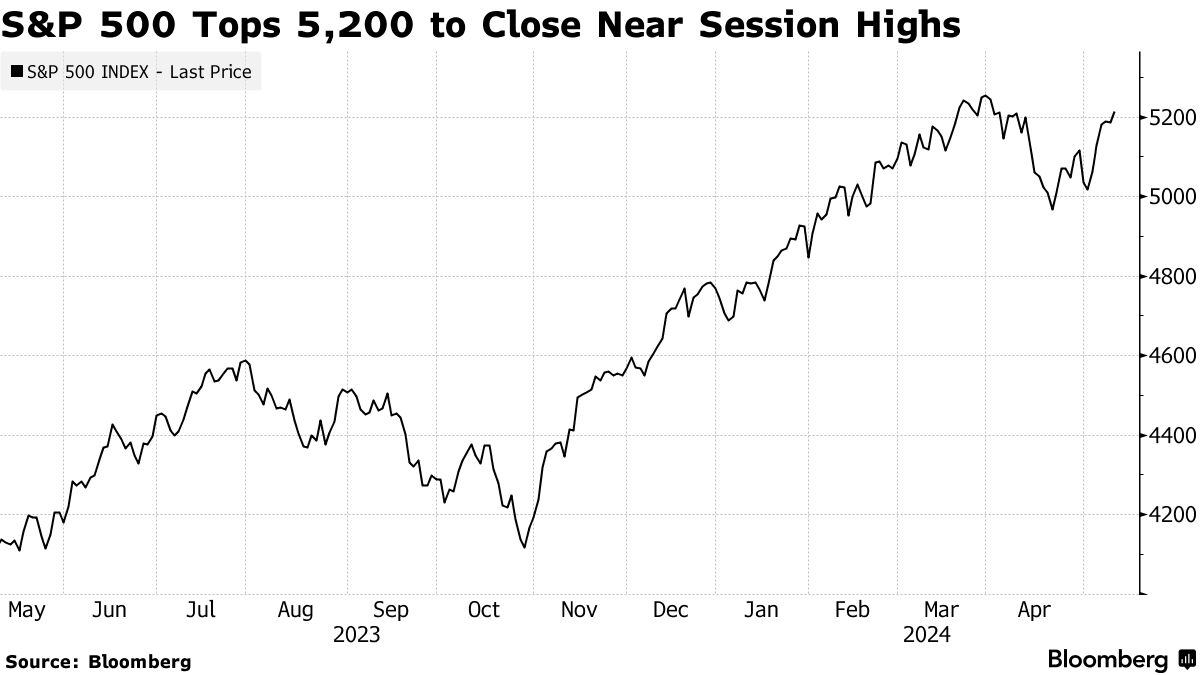
Four times a year, the market enters “Earnings Season.” During these periods, the daily performance of the S&P 500 becomes highly sensitive to individual company reports. However, the most important part of these reports isn’t what the company did in the past quarter, but what they say about the future—their “guidance.” If the 500 largest companies in America collectively signal that consumer spending is slowing or that supply chain costs are rising, the S&P 500 will reflect that pessimism immediately. Conversely, a positive outlook on productivity gains from technology can sustain a multi-month bull run, regardless of the current day’s minor fluctuations.
In conclusion, “how the S&P is doing today” is a multifaceted question. It is a reflection of current corporate profitability, a reaction to the Federal Reserve’s latest signals, and a testament to the long-term growth of the American economy. While daily volatility is inevitable, the historical trajectory of the index suggests that for those who focus on the long-term fundamentals rather than the daily noise, the S&P 500 remains one of the most powerful tools for wealth creation in the history of finance.
aViewFromTheCave is a participant in the Amazon Services LLC Associates Program, an affiliate advertising program designed to provide a means for sites to earn advertising fees by advertising and linking to Amazon.com. Amazon, the Amazon logo, AmazonSupply, and the AmazonSupply logo are trademarks of Amazon.com, Inc. or its affiliates. As an Amazon Associate we earn affiliate commissions from qualifying purchases.