
The daily movements of the Nasdaq Composite Index are a constant point of fascination and analysis for investors, economists, and technology enthusiasts worldwide. Often perceived as a vibrant barometer for the health of the innovation economy, its performance on any given day can signal shifting investor sentiment, reflect the impact of global events, or underscore the earnings power of the world’s leading technology and growth companies. For those with investments tied to this index, or for anyone tracking the broader market’s pulse, understanding the “how” and “why” behind its daily fluctuations is crucial.
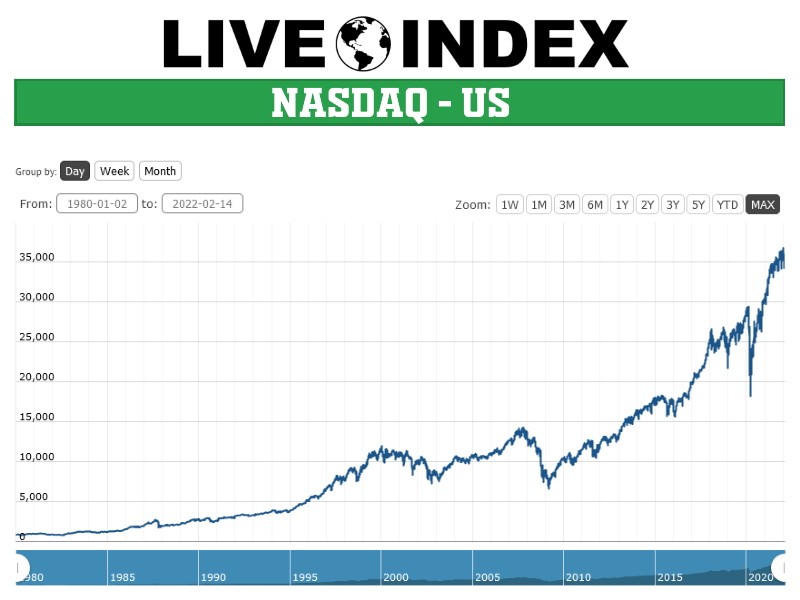
Today’s snapshot of the Nasdaq Composite is never an isolated event. It is the culmination of myriad forces ranging from macroeconomic shifts to individual company news, all interpreted and acted upon by millions of market participants. While an immediate answer to “how is it doing today?” might be a simple percentage change, a deeper dive reveals a complex interplay of factors that shape its trajectory, offering valuable insights into current market dynamics and potential future trends.
Understanding the Nasdaq Composite: More Than Just Tech
To truly grasp the significance of the Nasdaq Composite’s daily performance, one must first understand what it represents and why its movements carry such weight within the financial ecosystem. It is often conflated with “tech stocks,” and while technology companies indeed form its backbone, its scope is broader, encompassing a diverse range of growth-oriented industries.
What is the Nasdaq Composite Index?
The Nasdaq Composite Index is a market-capitalization-weighted index of all common stocks and similar securities listed on the Nasdaq stock market. Unlike the Dow Jones Industrial Average, which is price-weighted and composed of just 30 large companies, or even the S&P 500, which selects 500 large-cap companies from various exchanges, the Nasdaq Composite is comprehensive. It includes over 3,000 stocks, ranging from the mega-cap tech giants that dominate headlines to smaller, innovative biotech firms and emerging growth companies across various sectors.
Its market-capitalization weighting means that companies with larger market values have a greater impact on the index’s movement. This structural feature naturally amplifies the influence of behemoths like Apple, Microsoft, Amazon, Google (Alphabet), Nvidia, and Meta Platforms, whose individual stock performance can significantly sway the entire index. It is this characteristic that often leads to the perception that the Nasdaq Composite is synonymous with “tech,” though it also includes companies in healthcare, industrials, consumer services, and more, all with a common thread of being listed on the Nasdaq exchange, known for its emphasis on innovation and growth.
Why its Daily Movements Matter
The daily performance of the Nasdaq Composite serves multiple critical functions for different market participants:
-
Indicator of Investor Sentiment: A strong upward move often signals robust investor confidence in growth companies and the broader economic outlook, especially regarding future innovation and earnings potential. Conversely, a sharp decline can reflect increasing risk aversion, concerns about economic slowdowns, or worries about specific sectors.
-
Impact on Portfolios: For countless investors, retirement funds, mutual funds, and exchange-traded funds (ETFs) are benchmarked against or directly invest in Nasdaq-listed companies. The index’s daily changes directly translate into gains or losses for these portfolios, influencing personal wealth and institutional returns.
-
Broader Economic Implications: While not a perfect proxy for the entire economy, the Nasdaq Composite’s performance can offer insights into the health of critical, forward-looking sectors that drive innovation and job growth. Sustained trends in the Nasdaq can indicate shifts in capital allocation, appetite for risk, and the overall pace of technological advancement, all of which have profound economic repercussions.
-
Gauge for the “New Economy”: The index is widely regarded as a barometer for the “new economy,” characterized by digital transformation, high-growth industries, and disruptive technologies. Its daily performance provides a real-time assessment of how investors value these sectors amidst evolving market conditions.
Factors Influencing Today’s Nasdaq Performance
The Nasdaq Composite’s performance on any given day is not random; it is the result of a complex interplay of macroeconomic forces, sector-specific developments, and market sentiment. Understanding these drivers is key to interpreting the day’s numbers beyond just a percentage change.
Economic Indicators and Macro Trends
Global economic conditions form the bedrock upon which market valuations are built. Several key macroeconomic factors exert significant influence on the Nasdaq:
-
Interest Rates and Inflation: Growth stocks, which dominate the Nasdaq, are particularly sensitive to interest rate movements. Higher interest rates increase the cost of borrowing for companies and, more importantly, discount the value of future earnings more heavily. Since many growth companies promise significant earnings far in the future, higher rates can make those future profits less valuable today, leading to downward pressure on stock prices. Inflation concerns often lead central banks to raise rates, creating a challenging environment for growth-oriented assets.
-
GDP Growth and Employment Data: Strong economic growth and low unemployment typically bode well for corporate earnings across the board, including technology and growth sectors. Conversely, signs of an economic slowdown or recession can dampen investor enthusiasm, leading to selling pressure.
-
Geopolitical Events: Global conflicts, trade disputes, energy price volatility, and political instability can introduce significant uncertainty into markets. Such events often lead investors to seek safer assets, causing a flight from riskier growth stocks and impacting the Nasdaq negatively. For example, disruptions to global supply chains, often triggered by geopolitical tensions, can directly affect the manufacturing and distribution capabilities of tech companies.
-
Consumer Spending and Confidence: Strong consumer spending, particularly on technology products and services, directly benefits many Nasdaq-listed companies. Reports on consumer confidence, retail sales, and personal consumption expenditures are therefore closely watched.
Sector-Specific News and Earnings Reports
Given the concentration of technology and growth companies within the Nasdaq Composite, news specific to these sectors can dramatically alter its daily trajectory.
-
Big Tech Earnings: The sheer market capitalization of companies like Apple, Microsoft, Amazon, and Google means their quarterly earnings reports, revenue forecasts, and commentary on business conditions can single-handedly move the entire index. A surprise earnings beat or miss from one of these giants can set the tone for the entire trading day.
-
Semiconductor Industry Performance: Semiconductors are the foundational technology for virtually all modern electronics and AI applications. News related to chip demand, supply chain issues, or innovations from major players like Nvidia, Intel, or AMD can have a ripple effect across the Nasdaq.
-
Biotech and Other Innovative Sectors: Beyond traditional tech, the Nasdaq is home to numerous biotech, healthcare innovation, and renewable energy companies. Breakthroughs, regulatory approvals, clinical trial results, or significant funding rounds in these sectors can cause localized surges or declines that collectively contribute to the index’s overall movement.
-
AI Developments: The rapid advancements and increasing adoption of Artificial Intelligence (AI) have become a dominant theme. News related to AI investments, product launches, competitive landscapes, or regulatory discussions in this space can significantly impact the valuations of companies perceived to be leaders or beneficiaries of the AI revolution.
Market Sentiment and Technical Factors
Beyond fundamental economic and corporate news, the collective psychology of investors and technical trading patterns also play a role in daily movements.
-
Investor Sentiment: Indicators like the “Fear & Greed Index” attempt to measure the prevailing mood of the market. Extreme fear can lead to panic selling, while excessive greed can fuel speculative buying, both contributing to daily volatility. News headlines, analyst upgrades/downgrades, and social media trends can quickly shift sentiment.
-
Momentum Trading and Institutional Flows: Large institutional investors (pension funds, hedge funds, mutual funds) move massive amounts of capital. Their daily buying and selling decisions, often driven by momentum strategies or rebalancing acts, can create significant price swings.
-
Technical Levels: Chartists and technical analysts look for patterns in price and volume data. Breaking through a “resistance” level or falling below a “support” level can trigger automated trading programs and influence human decision-making, leading to accelerated moves in either direction.
-
Volatility (VIX Index): The CBOE Volatility Index (VIX), often called the “fear index,” measures expected market volatility. A rising VIX typically accompanies sharp market declines and can reflect increasing investor anxiety, which often impacts growth stocks more severely.
Interpreting Daily Swings: Short-Term vs. Long-Term Perspective

While the daily performance of the Nasdaq Composite grabs headlines, it’s crucial for investors to differentiate between short-term noise and long-term trends. A single day’s movement, whether up or down, rarely tells the whole story.
The Noise of Daily Volatility
Financial markets are inherently volatile, and the Nasdaq Composite, with its concentration of growth stocks, tends to exhibit higher volatility than broader market indices. Daily fluctuations of 1%, 2%, or even more are not uncommon. These movements can be triggered by:
-
Intraday News: A single economic report, a comment from a central bank official, a geopolitical development, or even a widely circulated analyst note can cause immediate, sometimes irrational, reactions.
-
Algorithmic Trading: A significant portion of today’s trading volume is executed by high-frequency trading algorithms. These algorithms can react to news, market imbalances, or technical signals in milliseconds, amplifying price movements in the short term.
-
Momentum Chasing: Retail and institutional investors alike can get caught up in momentum, buying into rising stocks or selling falling ones, which can exacerbate daily swings unrelated to fundamental changes in company value.
Overreacting to daily movements can be detrimental to an investment strategy. A significant drop one day might be partially recovered the next, or a strong gain might consolidate. Fixating on these micro-movements can lead to emotional trading decisions that undermine long-term financial goals.
Identifying Underlying Trends
Instead of getting caught up in the daily ebb and flow, savvy investors look for sustained patterns and underlying trends. This involves:
-
Analyzing Performance Over Longer Durations: Examining weekly, monthly, quarterly, and annual performance helps smooth out the daily noise and reveals whether the index is truly in an uptrend, downtrend, or consolidation phase.
-
Relationship to Broader Market Indices: Comparing the Nasdaq’s performance to the S&P 500 or Dow Jones Industrial Average can indicate whether specific sectors (like tech) are outperforming or underperforming the broader market. This provides context on investor preference for growth versus value or defensive stocks.
-
Economic Cycles: The Nasdaq tends to perform exceptionally well during periods of strong economic growth and technological expansion but can struggle during downturns or periods of rising interest rates. Understanding where we are in the economic cycle provides a framework for interpreting longer-term movements.
Investor Psychology and Decision Making
A crucial aspect of navigating daily market fluctuations is managing one’s own psychology. Emotional responses to market movements are common but often lead to suboptimal decisions.
-
Avoiding Emotional Decisions: Panic selling during market dips or speculative buying during irrational exuberance are common pitfalls. A disciplined approach, sticking to a pre-defined investment plan, is key.
-
Importance of a Long-Term Investment Strategy: For most investors, the long-term compounding of returns far outweighs the significance of daily volatility. A buy-and-hold strategy, focused on quality assets, often outperforms attempts to time the market.
-
Diversification and Asset Allocation: The Nasdaq Composite is a valuable index, but it represents a specific segment of the market. Diversifying across different asset classes, geographies, and investment styles can help mitigate the impact of any single index’s performance on an overall portfolio.
What Investors Should Consider When Monitoring the Nasdaq
For those actively engaged in the financial markets, monitoring the Nasdaq Composite is an essential practice. However, effective monitoring goes beyond merely checking the percentage change. It involves strategic considerations and informed analysis.
Diversification Beyond Growth Stocks
While the allure of high-growth technology companies is undeniable, a well-balanced portfolio typically incorporates diversification. Relying solely on the Nasdaq, or a high concentration of growth stocks, can expose an investor to undue risk, especially during periods when value stocks or other asset classes are outperforming.
-
Balancing High-Growth Exposure: Consider complementing Nasdaq-heavy investments with exposures to value stocks, dividend-paying companies, bonds, real estate, or international markets. This balance can help cushion portfolios during sector-specific downturns.
-
Risk Management: Align investment choices with individual risk tolerance and financial goals. A younger investor with a long time horizon might comfortably accept more Nasdaq-related volatility, while someone nearing retirement might prioritize capital preservation.
Staying Informed, Not Overwhelmed
The sheer volume of financial news and data available can be overwhelming. The key is to be informed without being consumed by every fleeting headline.
-
Reliable Sources: Prioritize information from reputable financial news outlets, analyst reports, and academic research. Be wary of speculative tips or unverified information, especially on social media.
-
Understanding the “Why”: Focus on understanding the underlying reasons for market movements rather than just the immediate outcome. Why did the Fed make that statement? What are the implications of those earnings reports? This deeper understanding fosters better decision-making.
-
Consulting Financial Advisors: For complex financial situations or investment planning, seeking advice from a qualified financial advisor can provide personalized guidance and a disciplined approach to managing a portfolio, including exposure to the Nasdaq.

The Future Outlook for Nasdaq Companies
The Nasdaq Composite is perpetually forward-looking, driven by companies at the forefront of innovation. Its future performance will largely hinge on several key themes:
-
Innovation as a Constant Driver: The long-term success of Nasdaq-listed companies, particularly in tech, relies on their ability to innovate and disrupt. Continued breakthroughs in AI, biotechnology, cloud computing, sustainable energy, and other emerging fields will be critical.
-
Potential Regulatory Headwinds: As technology companies grow in size and influence, they often face increased scrutiny from regulators regarding antitrust, data privacy, and market dominance. Future regulations could impact business models and profitability.
-
Global Competition and Market Shifts: The global landscape for technology and growth is intensely competitive. Companies on the Nasdaq must continuously adapt to evolving consumer preferences, geopolitical shifts affecting supply chains, and the emergence of new competitors from around the world.
In conclusion, understanding “how the Nasdaq Composite is doing today” requires moving beyond a simple glance at a ticker. It demands an appreciation for the index’s composition, the complex interplay of economic, corporate, and psychological factors that influence its daily movements, and a discerning eye to distinguish short-term noise from enduring trends. For any investor, integrating this knowledge with a well-thought-out, long-term financial strategy remains the most robust approach to navigating the dynamic world of financial markets.
aViewFromTheCave is a participant in the Amazon Services LLC Associates Program, an affiliate advertising program designed to provide a means for sites to earn advertising fees by advertising and linking to Amazon.com. Amazon, the Amazon logo, AmazonSupply, and the AmazonSupply logo are trademarks of Amazon.com, Inc. or its affiliates. As an Amazon Associate we earn affiliate commissions from qualifying purchases.