
For over a century, the Dow Jones Industrial Average (DJIA) has served as the primary “fever thermometer” for the American economy. When people ask, “How is the market doing?” they are often referring to this elite group of 30 blue-chip companies. However, understanding how the Dow is doing requires more than just looking at a daily percentage change. It involves dissecting the complex interplay between interest rates, corporate earnings, and the shifting landscape of global trade.
In the current financial climate, the Dow’s performance offers a unique narrative—one that often diverges from the tech-heavy Nasdaq or the broader S&P 500. To truly grasp the health of the Dow, investors must look beneath the surface of the price-weighted index to see how the titans of industry are navigating a “higher-for-longer” interest rate environment and a shifting consumer landscape.
Understanding the Current Pulse of the Dow Jones Industrial Average
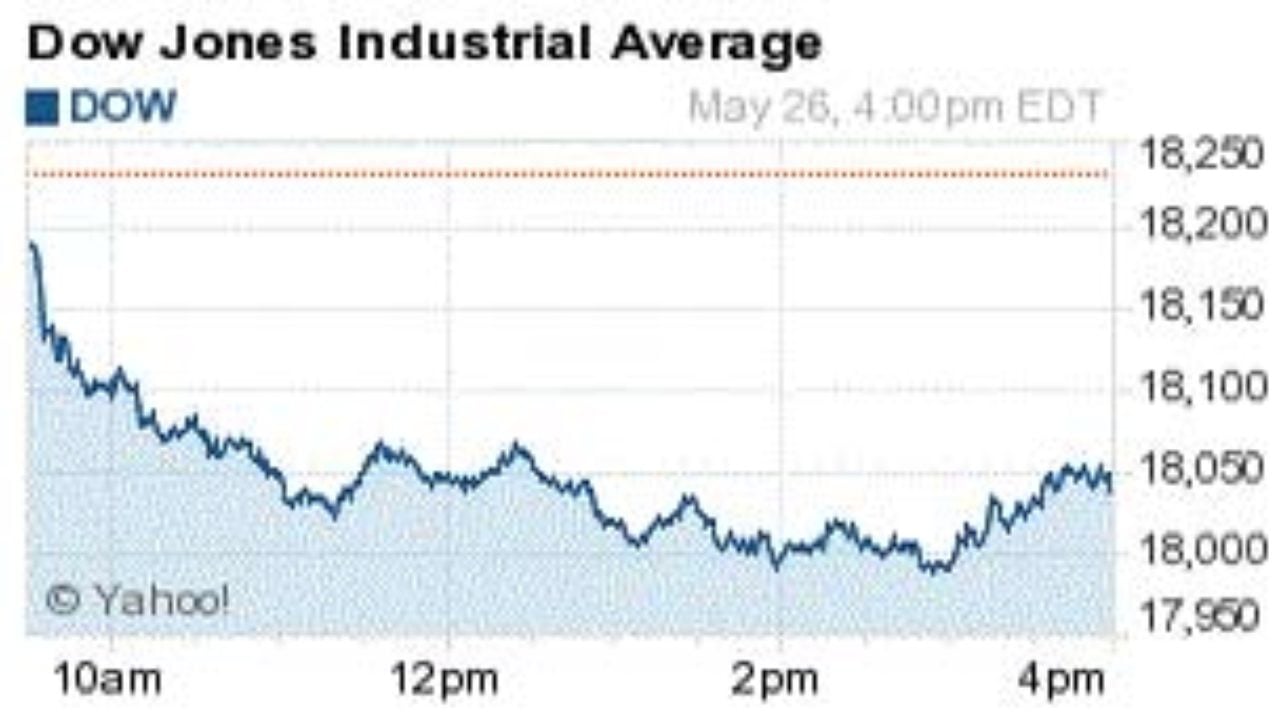
The performance of the Dow in recent months has been a study in resilience. Unlike the volatile swings seen in the growth-oriented sectors, the Dow represents established giants with stable cash flows. When we evaluate how the Dow is doing today, we are essentially evaluating the stability of the traditional American corporate engine.
The Impact of Monetary Policy and Interest Rates
The single most influential factor in the Dow’s recent trajectory has been the Federal Reserve’s monetary policy. As the central bank navigated the aftermath of historic inflation, the Dow became a battleground between recessionary fears and “soft landing” hopes.
Because many components of the Dow—such as Caterpillar, Goldman Sachs, and Home Depot—are highly sensitive to borrowing costs and the housing market, the index often reacts sharply to Fed commentary. When the market senses a pivot toward rate cuts, the Dow tends to rally as investors anticipate lower capital expenditures and increased consumer spending. Conversely, when inflation data comes in “hotter” than expected, the Dow often retreats, reflecting the burden that sustained high rates place on industrial expansion and consumer debt.
Earnings Season and Corporate Resilience
While macro trends set the stage, individual corporate earnings provide the script. To understand how the Dow is doing, one must look at the quarterly reports of its 30 constituents. In recent cycles, we have seen a “bifurcated” earnings season.
On one hand, financial institutions within the Dow have benefited from higher net interest margins, boosting the index’s floor. On the other hand, consumer staples and discretionary brands have faced the challenge of “price fatigue.” Companies like Coca-Cola and Procter & Gamble have had to balance price increases with volume growth. The Dow’s ability to maintain its levels in the face of these headwinds suggests a high level of corporate adaptability and a disciplined approach to cost management among the world’s largest firms.
The Mechanics of the Dow: Why It Moves Differently Than Other Indices
To answer “how is the Dow doing,” an investor must understand that the Dow is fundamentally different from almost every other major global index. Its unique construction means that its performance can sometimes be misleading if not viewed through the proper lens.
Price-Weighted vs. Market Cap-Weighted
The Dow is a price-weighted index, meaning the companies with the highest share prices—not the largest market valuations—have the greatest influence on the index’s movement. This is a stark contrast to the S&P 500, which is market-cap weighted.
For example, a $5 move in a high-priced stock like UnitedHealth Group has a significantly larger impact on the Dow than a $5 move in a lower-priced stock like Verizon, even if Verizon’s total market value were to shift more significantly in percentage terms. Consequently, when analyzing how the Dow is doing, analysts often have to “adjust for the outliers.” If a single high-priced component has a bad earnings day, it can drag the entire index into the red, even if the other 29 companies are performing well.
The Role of the “Blue-Chip” 30
The Dow’s exclusivity is both its strength and its weakness. By only tracking 30 companies, it offers a concentrated look at “Big Business.” These are companies that have survived world wars, depressions, and technological revolutions.
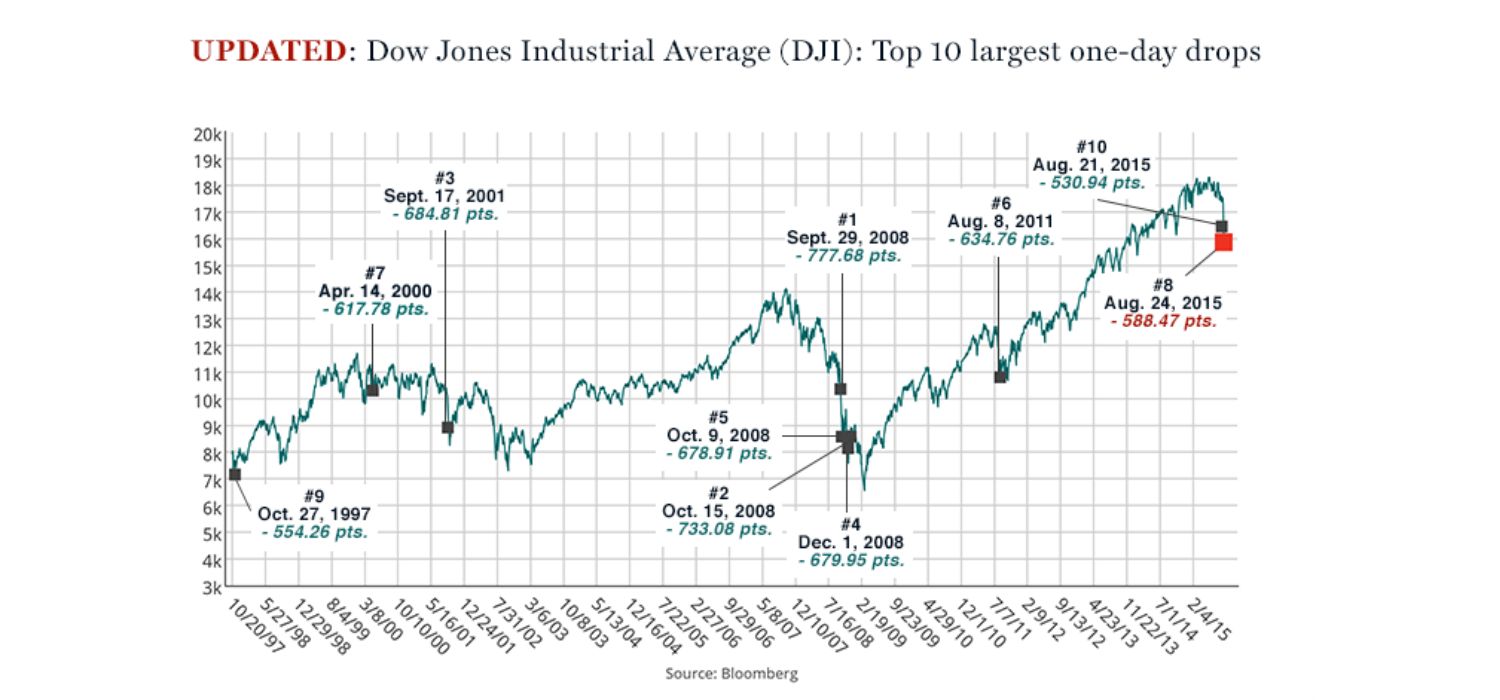
Because these companies are often “value” stocks rather than “growth” stocks, the Dow frequently outperforms during periods of market volatility. When investors flee the “froth” of high-valuation tech startups, they seek refuge in the Dow’s dividends and established balance sheets. This “flight to quality” is a recurring theme in the Dow’s history; when the Nasdaq is down 2% but the Dow is only down 0.2%, it’s a signal that the market is prioritizing stability over speculative growth.
Key Sectors Driving the Dow’s Performance
The Dow is often categorized by its diversity across sectors, excluding utilities and transportation (which have their own specific Dow averages). Currently, a few specific sectors are doing the heavy lifting in maintaining the index’s upward momentum.
Industrial Giants and Consumer Staples
The “Industrial” in Dow Jones Industrial Average is more of a legacy term than a literal one, but the sector still carries immense weight. Companies like Boeing, Honeywell, and 3M are crucial barometers for global infrastructure and manufacturing.
When global supply chains stabilize and international demand for heavy machinery rises, these stocks propel the Dow forward. Simultaneously, the Consumer Staples sector—represented by companies like Walmart—provides a defensive buffer. In times of economic uncertainty, the Dow often stays afloat because people still need to buy groceries and household essentials, regardless of what the broader economy is doing.
The Financial Sector’s Influence on Index Stability
With heavyweights like JPMorgan Chase and American Express, the financial sector is a cornerstone of the Dow. The health of these institutions is inextricably linked to the broader economy’s credit health.
When we ask how the Dow is doing, we are often asking how the banking sector is handling credit spreads and loan defaults. Recently, the Dow has been bolstered by the strength of the American consumer, as evidenced by robust credit card spending. However, the index remains sensitive to “yield curve” fluctuations. A healthy financial sector usually points to a healthy Dow, as these companies provide the liquidity necessary for the other 28 components to thrive.
How to Use Dow Performance to Inform Your Investment Strategy
Monitoring the Dow is not just for stockbrokers on Wall Street; it is a vital practice for any individual looking to build long-term wealth. However, the data must be interpreted correctly to be useful for a personal finance strategy.
Measuring Market Sentiment vs. Economic Reality
The Dow is often more of a sentiment indicator than a pure economic one. Because it is comprised of household names, it is the index that the general public follows most closely. When the Dow hits a new “milestone” (like 40,000), it creates a psychological “wealth effect.” Consumers feel richer, leading to increased spending, which in turn can actually help the economy catch up to the stock market’s optimism.
For the individual investor, seeing how the Dow is doing helps gauge the “mood” of the market. Is there a “risk-on” appetite where the Dow is trailing the Nasdaq? Or is there a “risk-off” sentiment where the Dow is leading the way? Recognizing these cycles can help you decide when to rebalance your portfolio or when to hold steady during a dip.
Diversification Beyond the Industrial Average
While the Dow is a prestigious club, it is far from an exhaustive list of the economy. An investor who only looks at the Dow might miss out on the explosive growth of mid-cap companies or the burgeoning AI sector that isn’t yet represented in the 30-stock list.
The best way to use the Dow’s performance data is as a benchmark for your “core” holdings. Most diversified portfolios should have a foundation of blue-chip stability. If your personal portfolio is consistently underperforming the Dow during a bull market, it may be a sign that you are taking on too much uncompensated risk or that your fees are eroding your returns. Conversely, if the Dow is plummeting but your diversified portfolio is holding steady, it validates your risk management strategy.
Conclusion: The Long-Term Outlook for the Dow
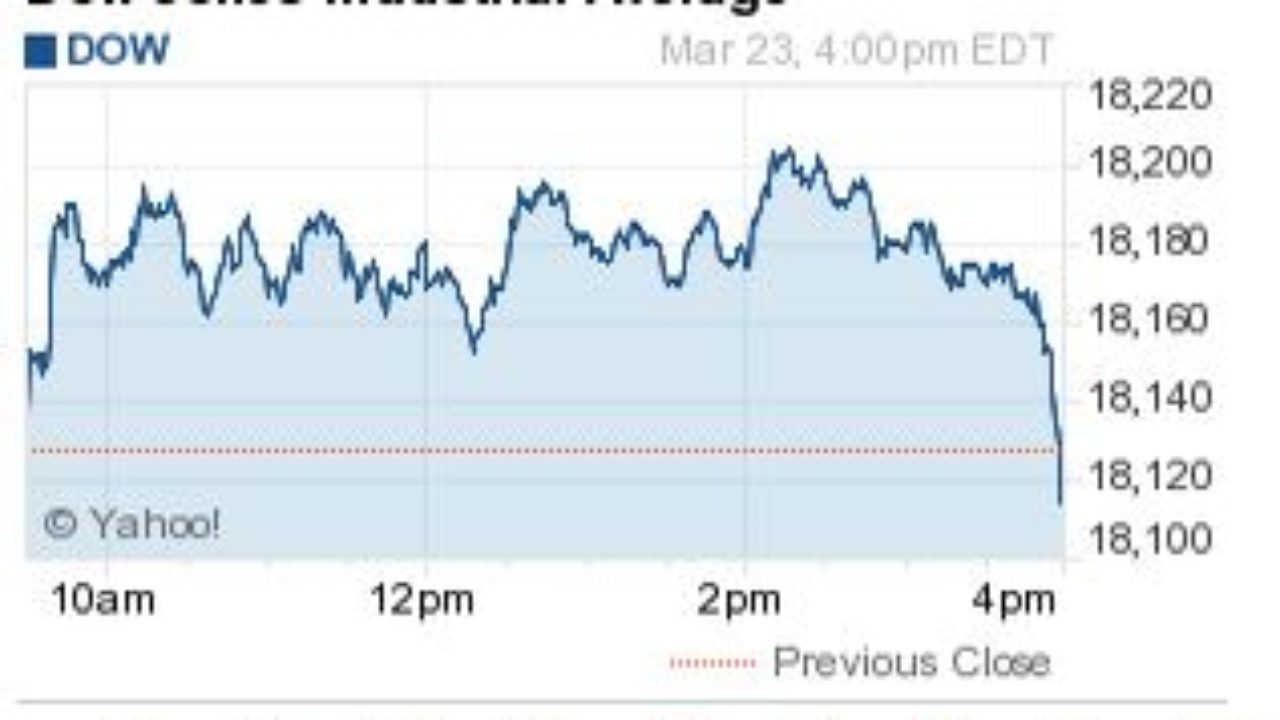
In the final analysis, “how the Dow is doing” is a question that changes by the minute but finds its true meaning over decades. The index is designed to evolve; as companies lose their relevance, they are replaced by the new titans of industry. This survivorship bias ensures that the Dow remains a reflection of the best that the corporate world has to offer.
Currently, the Dow is navigating a complex transition from an era of “easy money” to one of fiscal discipline. Its performance suggests a market that is cautious but fundamentally sound. For the disciplined investor, the Dow’s steady—if sometimes slow—climb is a reminder that while individual stocks may come and go, the collective power of industry leaders remains the most reliable engine for long-term financial growth. By keeping a close eye on the Dow, you aren’t just watching numbers on a screen; you are observing the heartbeat of the global economy.
aViewFromTheCave is a participant in the Amazon Services LLC Associates Program, an affiliate advertising program designed to provide a means for sites to earn advertising fees by advertising and linking to Amazon.com. Amazon, the Amazon logo, AmazonSupply, and the AmazonSupply logo are trademarks of Amazon.com, Inc. or its affiliates. As an Amazon Associate we earn affiliate commissions from qualifying purchases.