
The performance of the Dow Jones Industrial Average (DJIA) is a daily headline, a widely watched barometer reflecting a significant slice of the U.S. stock market and, by extension, the broader economy. For investors, economists, and even casual observers, understanding how the Dow is doing “today” involves more than just glancing at a number; it requires grasping the index’s mechanics, the myriad forces that shape its movements, and how to interpret these fluctuations within a broader financial context. In the realm of personal finance and investing, interpreting these daily shifts is crucial for informed decision-making, though often it’s the long-term trends, not daily noise, that truly matter.

Understanding the Dow Jones Industrial Average
The Dow Jones Industrial Average is one of the oldest and most recognized stock market indices globally, established in 1896 by Charles Dow. It is not, as some might assume, a direct measure of the entire U.S. economy, but rather a price-weighted average of 30 significant, publicly traded companies listed on stock exchanges in the United States. These “blue-chip” companies are carefully selected by the editors of The Wall Street Journal to represent various major sectors of the U.S. economy, excluding transportation and utilities, which have their own dedicated Dow Jones averages.
What Makes Up the Dow?
The composition of the DJIA is crucial to understanding its movements. While the name suggests an industrial focus, the index today includes a diverse array of companies spanning technology, finance, healthcare, consumer goods, and more. Companies like Apple, Microsoft, Goldman Sachs, Johnson & Johnson, and Walmart are typically found within the Dow, demonstrating its broad reach across modern industries. The selection criteria emphasize reputation, sustained growth, and interest to a large number of investors. Changes to the Dow’s composition are rare but significant, reflecting major shifts in the U.S. economic landscape.
Price-Weighted Versus Market-Cap Weighted
A key distinction of the DJIA is its price-weighted nature. This means that stocks with higher share prices have a greater impact on the index’s value than stocks with lower share prices, regardless of their market capitalization (total value of outstanding shares). This contrasts with market-capitalization-weighted indices, like the S&P 500, where companies with larger overall market values exert more influence. This price-weighted methodology can sometimes lead to situations where a substantial percentage move in a low-priced stock has less impact on the Dow than a smaller percentage move in a high-priced stock, even if the low-priced stock represents a larger total company value. Understanding this nuance is vital when dissecting the Dow’s daily performance, as a significant move in just one or two high-priced component stocks can disproportionately affect the entire index.
Factors Influencing the Dow’s Daily Performance
The daily ebb and flow of the Dow are not random; they are the cumulative result of a complex interplay of economic, corporate, geopolitical, and psychological factors. Investors continuously process new information, adjusting their expectations for future corporate earnings and economic growth, which then translates into buying and selling activity.
Economic Indicators and Data Releases
Macroeconomic data plays a pivotal role in shaping investor sentiment and, consequently, the Dow’s daily trajectory. Key indicators that routinely move the market include:
- Inflation Reports: The Consumer Price Index (CPI) and Producer Price Index (PPI) are closely watched, as higher inflation can erode purchasing power and corporate profits, and often signals potential interest rate hikes from the Federal Reserve.
- Employment Data: Non-farm payrolls, unemployment rates, and wage growth figures provide insights into the health of the labor market and consumer spending capacity.
- Gross Domestic Product (GDP): Quarterly GDP reports offer a comprehensive look at economic growth.
- Retail Sales: Indicates consumer spending trends, a major driver of the U.S. economy.
- Manufacturing and Services PMIs: Purchasing Managers’ Index reports offer a forward-looking view of economic activity in critical sectors.
- Interest Rates and Monetary Policy: Decisions and statements from the Federal Reserve regarding interest rates, quantitative easing, or tightening can have immediate and profound effects on the market, as they influence borrowing costs for businesses and consumers.
Positive economic data generally spurs investor confidence, leading to upward pressure on the Dow, while disappointing figures often trigger sell-offs.
Corporate Earnings and News
Given that the Dow comprises 30 specific companies, news related to these individual giants has a direct and often immediate impact.
- Quarterly Earnings Reports: The performance of Dow components during earnings season is a major driver. Strong revenue growth, profit margins, and optimistic forward guidance can send a stock soaring, contributing positively to the index. Conversely, missed expectations or a gloomy outlook can drag it down.
- Mergers & Acquisitions (M&A): Announcements of significant M&A deals involving Dow components can trigger substantial price movements in the involved companies, influencing the index.
- Product Launches and Innovation: Breakthrough products or strategic shifts can boost investor confidence in a company’s future prospects.
- Leadership Changes and Scandals: Significant changes in management or corporate controversies can introduce uncertainty and volatility.
Geopolitical Events and Global News
The globalized nature of modern commerce means that events far beyond U.S. borders can ripple through financial markets.
- International Trade Relations: Tariffs, trade agreements, and disputes between major economic powers can affect the global supply chain, corporate profitability, and investor sentiment.
- Geopolitical Conflicts: Wars, civil unrest, and political instability in critical regions can create uncertainty, drive up commodity prices (like oil), and trigger flights to safety, impacting risk assets like stocks.
- Pandemics and Health Crises: As demonstrated recently, global health emergencies can severely disrupt economic activity, supply chains, and consumer behavior, leading to widespread market volatility.
Market Sentiment and Technical Factors
Beyond fundamental news, market psychology plays a considerable role.
- Investor Sentiment: Fear and greed are powerful emotions. A prevailing sense of optimism can lead to buying frenzies, while fear can trigger panic selling. This collective sentiment can amplify trends.
- Technical Analysis: Many traders use technical analysis, studying chart patterns, trading volumes, and historical price movements to predict future directions. Breakouts above resistance levels or drops below support levels can trigger automated trading strategies that exacerbate moves.
- Algorithmic Trading: A significant portion of today’s trading is executed by high-frequency algorithms that react to market conditions and news faster than humans, potentially amplifying short-term volatility.
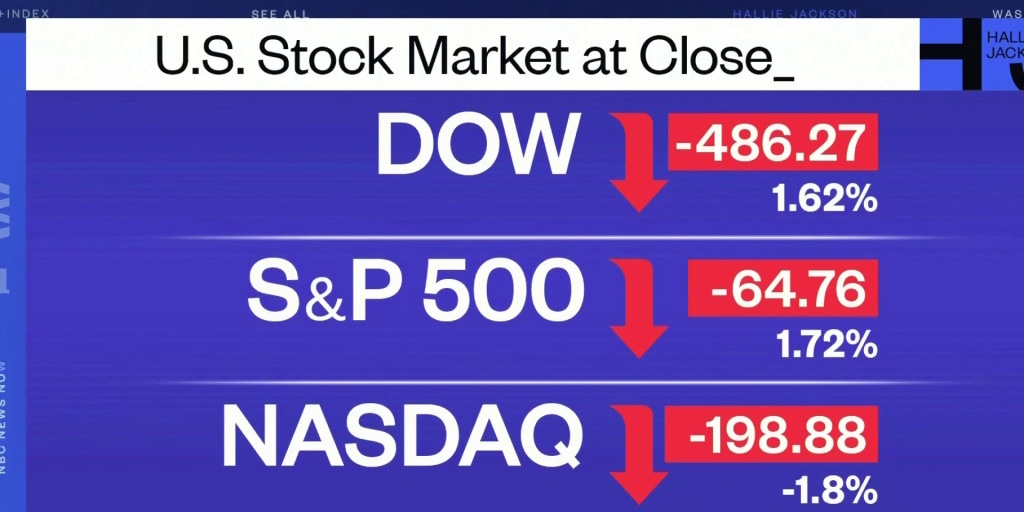
Interpreting Today’s Dow Movements
When the news reports “the Dow is up X points” or “down Y points today,” it’s a snapshot, not the full picture. Interpreting this information effectively requires context.
The Significance of Point Changes vs. Percentage Changes
While a large point change might sound dramatic, its true significance depends on the index’s current level. A 500-point move, for example, is more significant when the Dow is at 10,000 than when it’s at 35,000. Therefore, the percentage change is often a more accurate measure of the magnitude of the day’s movement. A 1-2% move is considered a notable daily change, while anything greater could signal a significant event or shift in sentiment.
Connecting Moves to the News Cycle
A critical part of interpreting the Dow’s daily performance is identifying the catalysts. Was there a major economic report released that morning? Did a Dow component announce groundbreaking news? Is there significant geopolitical uncertainty? Often, market commentators will attribute the day’s move to specific events, helping investors understand the “why” behind the numbers. A broad-based rally driven by positive GDP figures is different from a rally driven by strong earnings from just one or two tech giants.
Looking Beyond the Daily Close
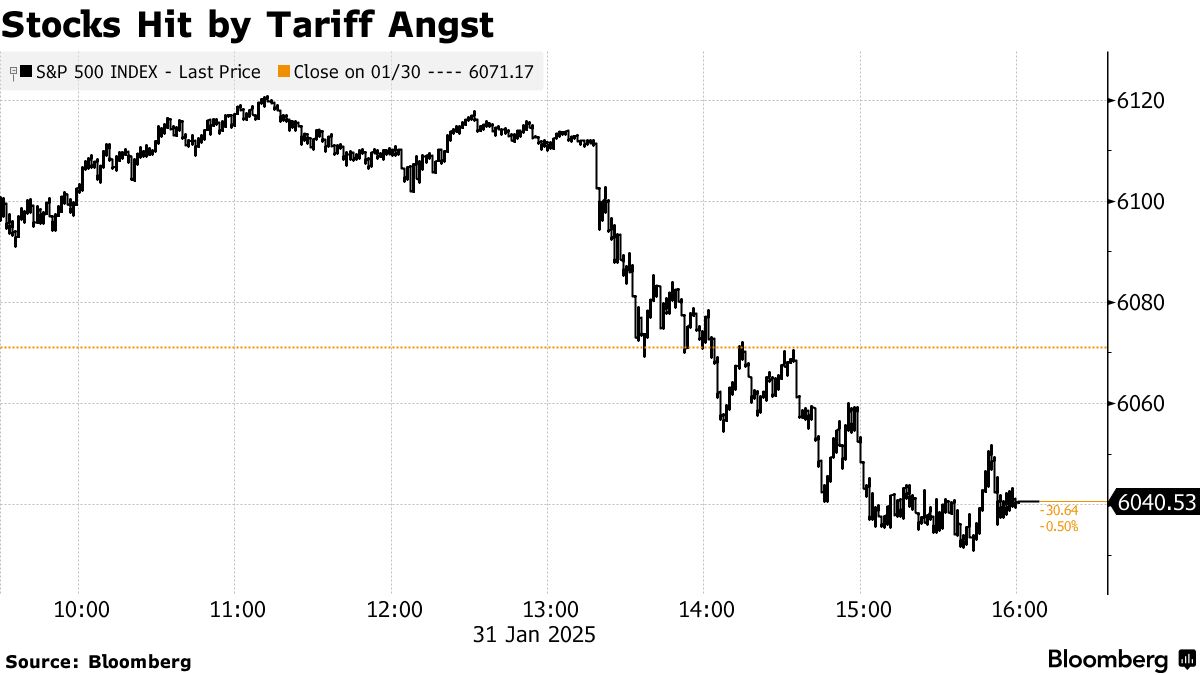
The Dow’s performance throughout the trading day can be volatile, with peaks and troughs. The closing number represents the final sentiment, but the intraday swings can reveal much about market participants’ reactions to unfolding events. Furthermore, “today’s” performance doesn’t exist in a vacuum. It’s often a continuation or reversal of trends from previous days, weeks, or months. Understanding whether today’s move fits into a larger pattern of upward momentum, downward correction, or consolidation provides a richer understanding.
Beyond Today: A Long-Term Investment Perspective
For most personal investors, the daily fluctuations of the Dow, while interesting, should not dictate investment strategy. A fundamental principle of sound investing is maintaining a long-term perspective.
Short-Term Noise vs. Long-Term Growth
Daily market movements are often referred to as “noise” for long-term investors. They are influenced by a multitude of transient factors and herd mentality. Historically, despite numerous crises and corrections, the stock market, as represented by indices like the Dow, has demonstrated a remarkable upward trend over decades. Trying to time the market based on daily swings is notoriously difficult and often leads to suboptimal returns.
Diversification and Investment Goals
A well-diversified portfolio that aligns with personal financial goals (retirement, home purchase, education savings) is far more important than reacting to daily Dow performance. Diversification means spreading investments across various asset classes (stocks, bonds, real estate), geographies, and sectors, rather than concentrating solely on the 30 companies of the Dow. For example, while the Dow represents large-cap U.S. companies, a holistic portfolio might include small-cap stocks, international equities, and fixed-income assets.
Dollar-Cost Averaging
For those contributing regularly to investment accounts, strategies like dollar-cost averaging can mitigate the impact of daily volatility. By investing a fixed amount of money at regular intervals, investors buy more shares when prices are low and fewer when prices are high, averaging out the cost over time and reducing the risk of making a single, poorly timed lump-sum investment.
Seeking Professional Guidance
Navigating the complexities of the stock market and its daily news cycle can be overwhelming. For many, consulting with a qualified financial advisor is invaluable. Advisors can help set realistic financial goals, construct a diversified portfolio tailored to individual risk tolerance, and provide guidance on staying disciplined during periods of market volatility. Their expertise helps individuals focus on their long-term objectives rather than getting sidetracked by the Dow’s daily performance.
In conclusion, understanding how the Dow is doing today involves much more than a simple numerical change. It requires an appreciation for its composition, the economic and corporate forces at play, and the nuanced interpretation of daily data. Yet, for individual investors, the true wisdom lies in integrating this daily awareness into a disciplined, long-term investment strategy that prioritizes personal financial goals over transient market headlines.
aViewFromTheCave is a participant in the Amazon Services LLC Associates Program, an affiliate advertising program designed to provide a means for sites to earn advertising fees by advertising and linking to Amazon.com. Amazon, the Amazon logo, AmazonSupply, and the AmazonSupply logo are trademarks of Amazon.com, Inc. or its affiliates. As an Amazon Associate we earn affiliate commissions from qualifying purchases.